@MetrobusCDMX@LaSEMOVI@OVIALCDMX@C5_CDMX Ya va más de un mes que la estación está cerrada y no concluyen las obras, lo peor es que ni siquiera hay personal trabajando para concluirlas.
21. Write out a vision for your life. Break the vision down into 3 year goals.
Break those down into one year. Break those down into quarterly objectives.
Plan out your monthly projects.
Break those down into weekly & daily tasks.
This is how you make your vision a reality.
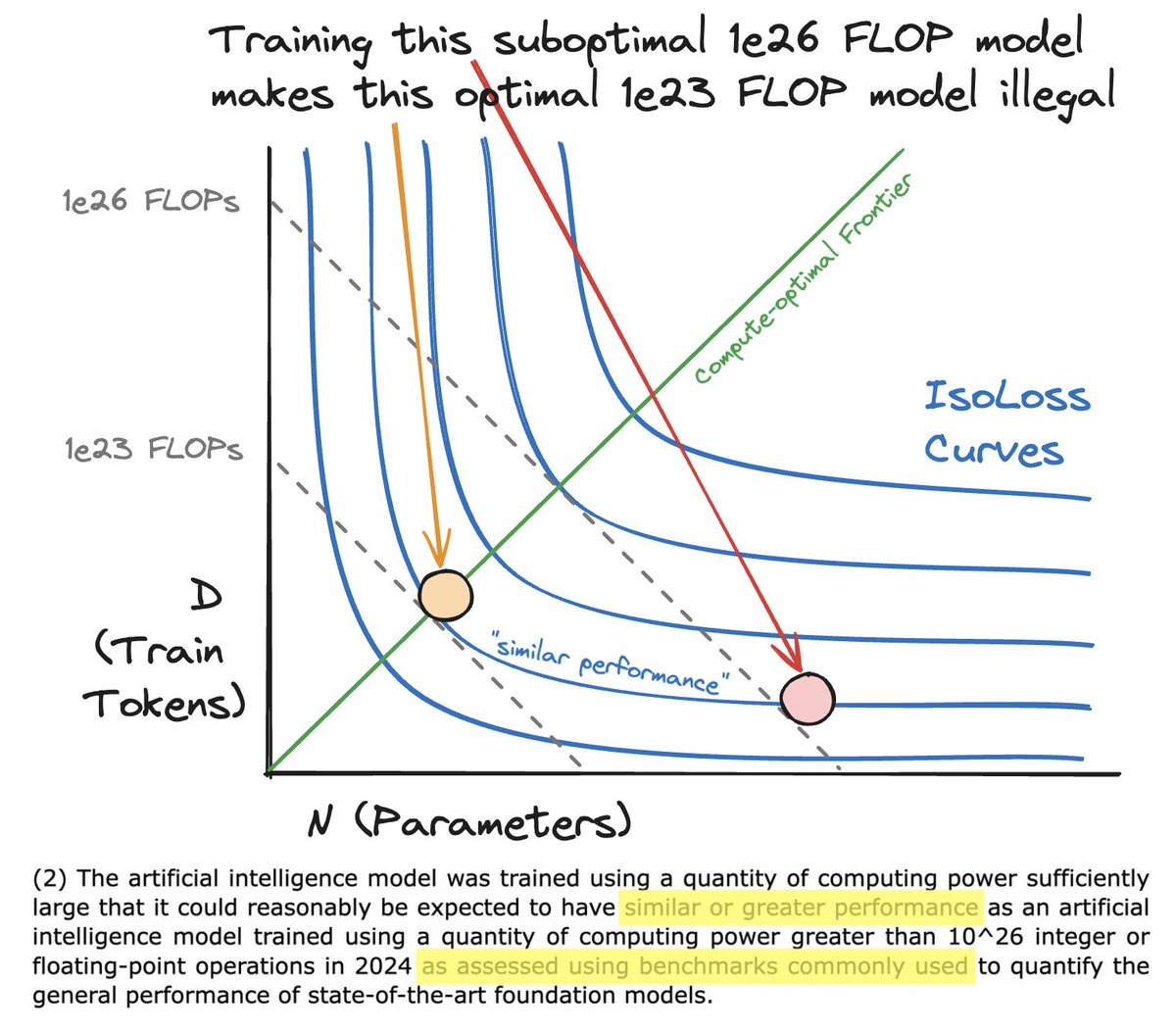
Got $28M? You can soon permanently halt open-source AI progress in California by training a suboptimal model with 10^26 FLOPs.
Then, all small compute-optimal models with similar performance to your large suboptimal model get covered by SB 1047.
Chinchilla scaling laws tell us:
# automating software engineering
In my mind, automating software engineering will look similar to automating driving. E.g. in self-driving the progression of increasing autonomy and higher abstraction looks something like:
1. first the human performs all driving actions manually
2. then the AI helps keep the lane
3. then it slows for the car ahead
4. then it also does lane changes and takes forks
5. then it also stops at signs/lights and takes turns
6. eventually you take a feature complete solution and grind on the quality until you achieve full self-driving.
There is a progression of the AI doing more and the human doing less, but still providing oversight. In Software engineering, the progression is shaping up similar:
1. first the human writes the code manually
2. then GitHub Copilot autocompletes a few lines
3. then ChatGPT writes chunks of code
4. then you move to larger and larger code diffs (e.g. Cursor copilot++ style, nice demo here https://t.co/u8ueY0mGxZ)
5....
Devin is an impressive demo of what perhaps follows next: coordinating a number of tools that a developer needs to string together to write code: a Terminal, a Browser, a Code editor, etc., and human oversight that moves to increasingly higher level of abstraction.
There is a lot of work not just on the AI part but also the UI/UX part. How does a human provide oversight? What are they looking at? How do they nudge the AI down a different path? How do they debug what went wrong? It is very likely that we will have to change up the code editor, substantially.
In any case, software engineering is on track to change substantially. And it will look a lot more like supervising the automation, while pitching in high-level commands, ideas or progression strategies, in English.
Good luck to the team!
# on shortification of "learning"
There are a lot of videos on YouTube/TikTok etc. that give the appearance of education, but if you look closely they are really just entertainment. This is very convenient for everyone involved : the people watching enjoy thinking they are learning (but actually they are just having fun). The people creating this content also enjoy it because fun has a much larger audience, fame and revenue. But as far as learning goes, this is a trap. This content is an epsilon away from watching the Bachelorette. It's like snacking on those "Garden Veggie Straws", which feel like you're eating healthy vegetables until you look at the ingredients.
Learning is not supposed to be fun. It doesn't have to be actively not fun either, but the primary feeling should be that of effort. It should look a lot less like that "10 minute full body" workout from your local digital media creator and a lot more like a serious session at the gym. You want the mental equivalent of sweating. It's not that the quickie doesn't do anything, it's just that it is wildly suboptimal if you actually care to learn.
I find it helpful to explicitly declare your intent up front as a sharp, binary variable in your mind. If you are consuming content: are you trying to be entertained or are you trying to learn? And if you are creating content: are you trying to entertain or are you trying to teach? You'll go down a different path in each case. Attempts to seek the stuff in between actually clamp to zero.
So for those who actually want to learn. Unless you are trying to learn something narrow and specific, close those tabs with quick blog posts. Close those tabs of "Learn XYZ in 10 minutes". Consider the opportunity cost of snacking and seek the meal - the textbooks, docs, papers, manuals, longform. Allocate a 4 hour window. Don't just read, take notes, re-read, re-phrase, process, manipulate, learn.
And for those actually trying to educate, please consider writing/recording longform, designed for someone to get "sweaty", especially in today's era of quantity over quality. Give someone a real workout. This is what I aspire to in my own educational work too. My audience will decrease. The ones that remain might not even like it. But at least we'll learn something.
Had just realized that this paper:
https://t.co/RG6XSW25bT
"Future medicine: from molecular pathways to the collective intelligence of the body"
which we marked to publish as open access was not in fact outside paywall. They just fixed it - should be accessible to everyone now.
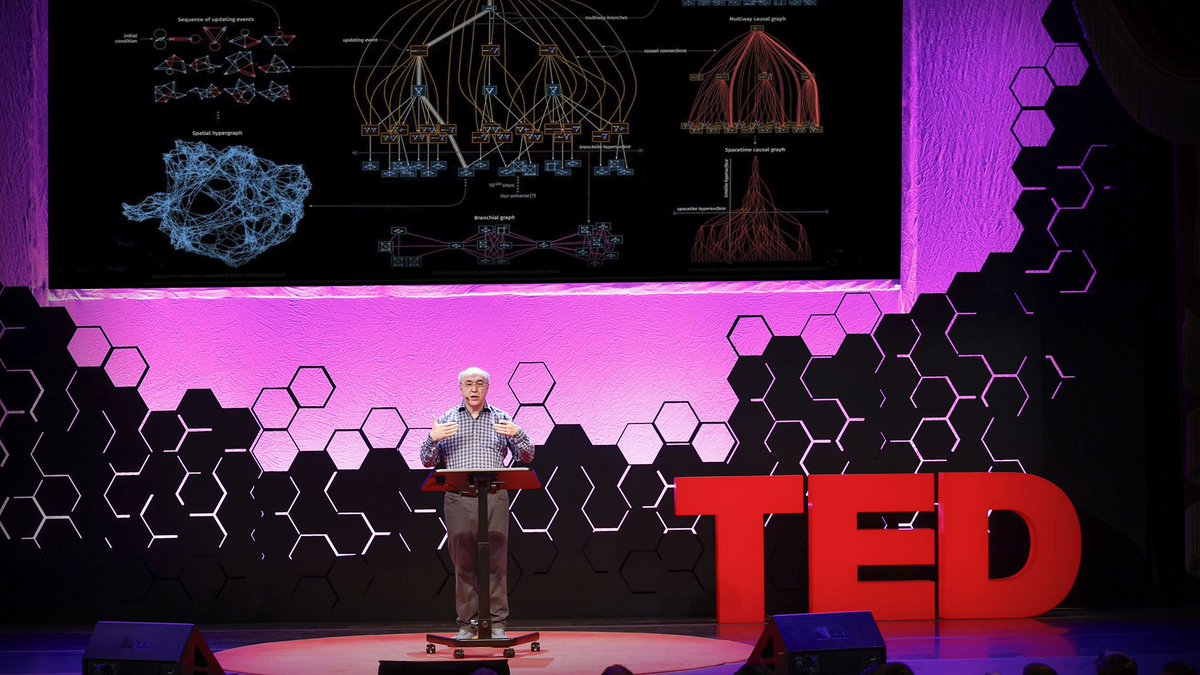
"How to Think Computationally about AI, The Universe and Everything": my valiant attempt to compress half of century of thinking into an 18-minute TED talk...
https://t.co/uHw0hG5yUX
we are launching a new preparedness team to evaluate, forecast, and protect against AI risk led by @aleks_madry.
we aim to set a new high-water mark for quantitative, evidence-based work.
https://t.co/wupsy5OJsN
The easiest way for an AGI to spawn another AGI on a new planet might be seeding it with a robust selfreplicating evolvable molecular machine.
Makes you think #intelligentdesign
Do you have the impression that some people grow until they are functional and then they just loop? Have you tried to prompt people into wakefulness? Did it work? Did you find others who can keep you awake?