Expecting to get it right on the first try is a quiet way to stay stuck. It makes every attempt feel high stakes, so you try less often. Lower the stakes of each try, raise the number of tries, and luck starts working in your favor.
Major cheat code for life: Master the art of moving on. Stop keeping score. Stop replaying what happened. Stop feeding the “what if” loop. Lot of life to be lived by simply not staying stuck in the past.
Think of survival as a strategy, not a consolation prize. Keep your burn low and stay in the fight. Competitors burn out, markets shift, and luck eventually shows up. Whoever's still standing gets to collect.
Being a founder and a dad has taught me that overthinking is its own kind of weight. The days I stay present, do the next right thing, and trust I'll deal with problems when they arrive are consistently lighter than the days I spend rehearsing disasters.
Most great entrepreneurs I know didn't have a breakout moment. They did good work for a long time, treated customers and employees well, and kept showing up. The exit came later, almost as a side effect of all the boring compounding.
Statistically the average founder who makes millions is 42 when they start and 57 when they get a major liquidity event.
When a 27 year old makes millions people talk about it. The standard story doesn’t make the news because it’s not very news worthy.
Breaking News: “a 57 year old with 25 years of industry experience and a good network launched a business 15 years ago and today sold it for $10m. The 15 year journey was characterised by doing quality work, hiring and training good people, talking to customers, responding to feedback and promoting the business every week. After a decade and a half the business hit $1.5M ebita and sold for 6.5x multiple. The newly minted millionaire will now put funds with a wealth manager and stick to the 4% rule for a very long and comfortable retirement.”
A lot of success is just doing the thing most people want to do but are too scared to be seen doing badly. Cold messages, posting publicly, starting before you're ready.
As you grow older, you begin to understand: your father was just a man trying his best with what he knew. Forgive him. He was living life for the first time, too.
A lot of founders chase "A-players" and end up with ego clashes and nobody willing to do the boring work. The strongest teams I've seen mix a few standouts with steady role players who know exactly what they're there to do and take pride in it.
Scarcity is one of the most underrated teachers in business. When cash is tight, every hire has to earn its place, every customer matters, and every mistake is visible. Those habits compound for decades.
Most people think resilience comes from hardship. I'd argue a lot of it comes from having a stable base to return to. When you know home won't fall apart if you fail, you can afford to try things that might not work.
I believe the greatest gift you can give your kids is a calm home. It’s not the big house or the best toys that stick with them. It’s a place where they feel safe. Where mistakes are met with patience. Where voices stay low. Where hard conversations are always followed by repair. Kids absorb everything. Create peace and they'll carry it for life.
A resilient business can survive a bad quarter, a closed funding window, or a market that turns on you. A fundraising-dependent one can't survive any of those.
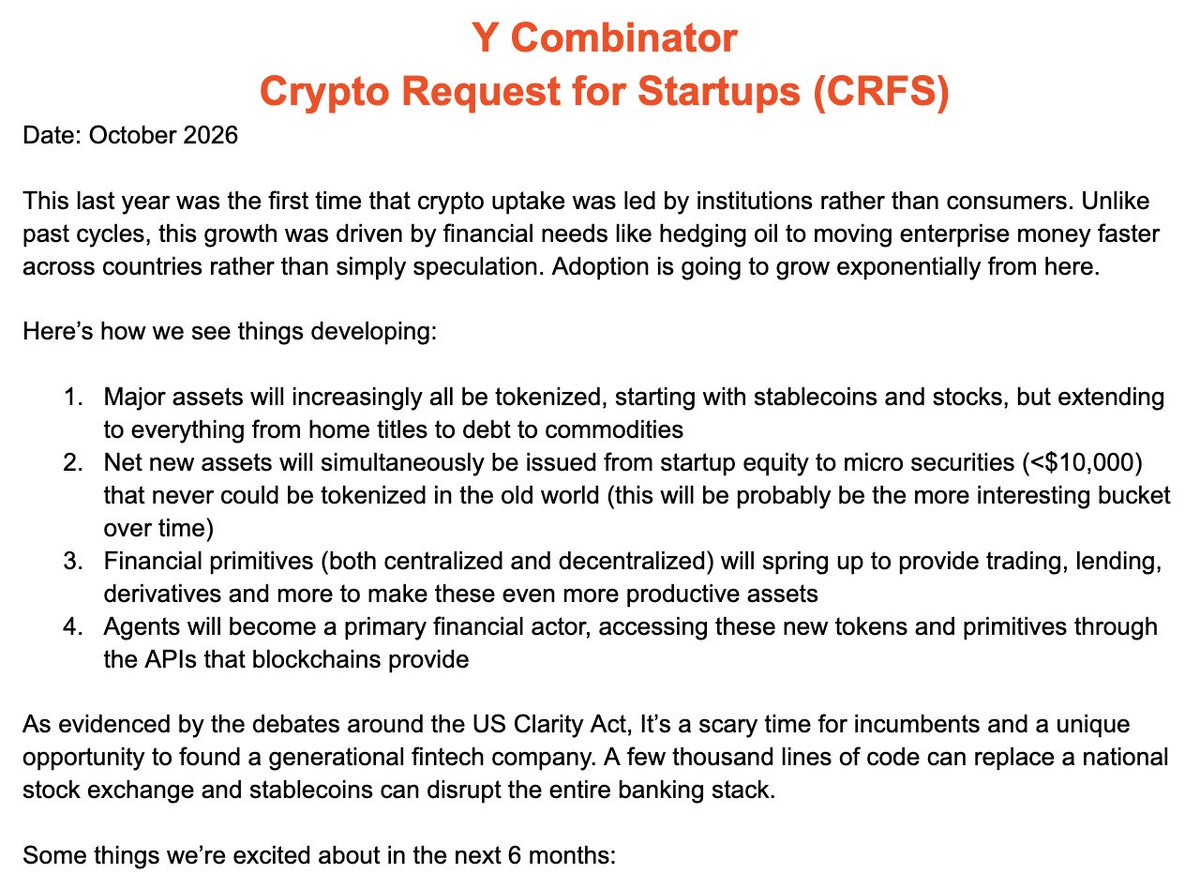
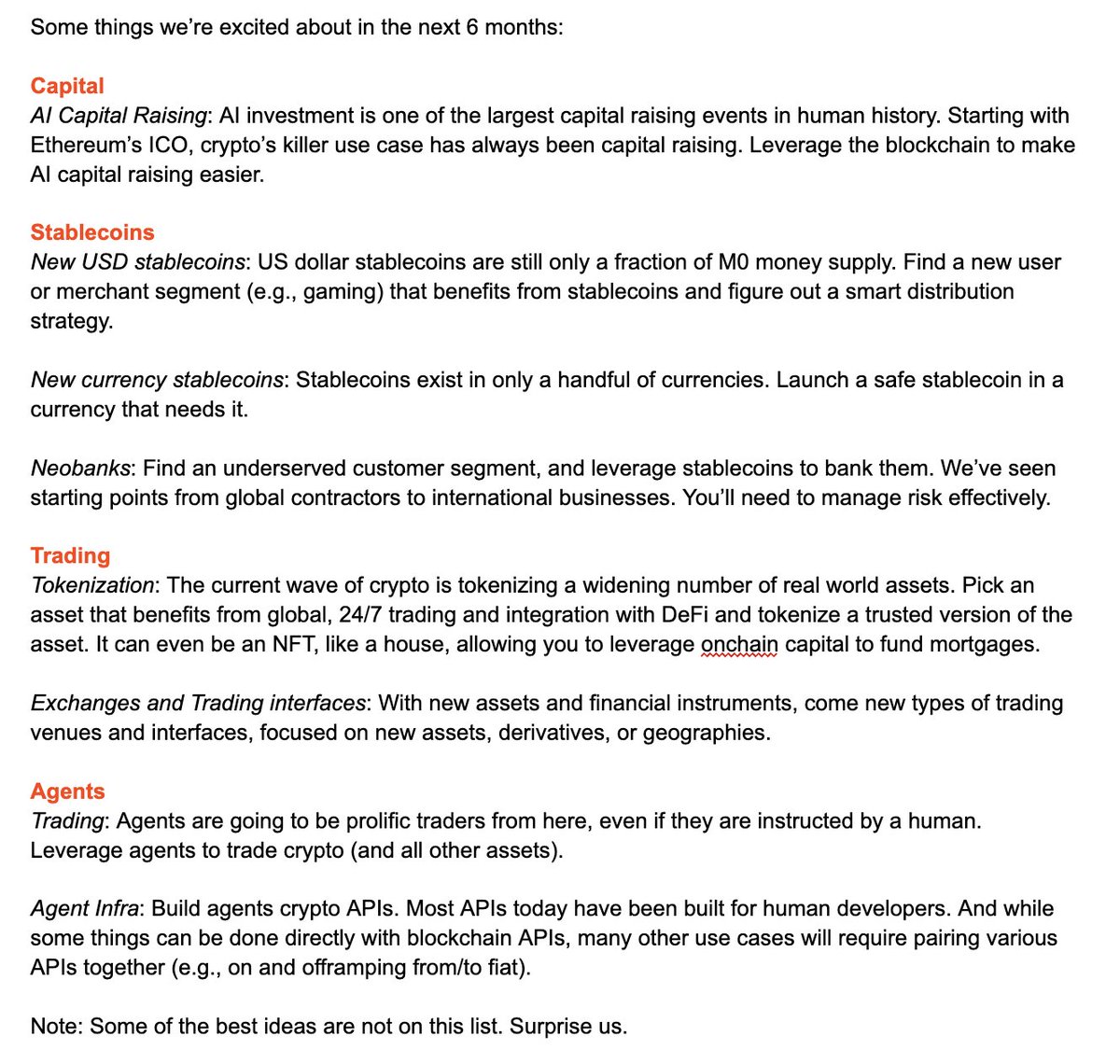
At @ycombinator, we're excited to fund more crypto startups solving financial needs including AI capital raising, stablecoins, trading, and agents.
Here's our latest crypto request for startups. Our next application deadline is Monday.
Daring greatly means being the one who's actually in the arena, dust and sweat and all, not the one critiquing from a safe distance with the benefit of having risked nothing.
We've reached a point where people who've never built a company have absolute certainty about how companies should be built. Meanwhile, founders who've spent years building one will openly admit how much they still don't know. The internet has created a strange world where those with the least experience often have the strongest opinions, while those with the most experience are expected to defend every word they say. It's remarkable how much easier entrepreneurship looks when the only thing you've ever built is an opinion about it.
There are really two kinds of founders who end up winning. One rides a wave aggressively, sells hard into momentum while the market's hot. AI being the obvious one right now. The other just grinds quietly for years until they've positioned themselves to get lucky. Both work.
my favorite founder archetype = the cockroach
1 month of runway, can’t make payroll...you quietly write them off.
Then they’re back...new restructuring plan or new product. Absolute conviction that PMF is just around the corner.
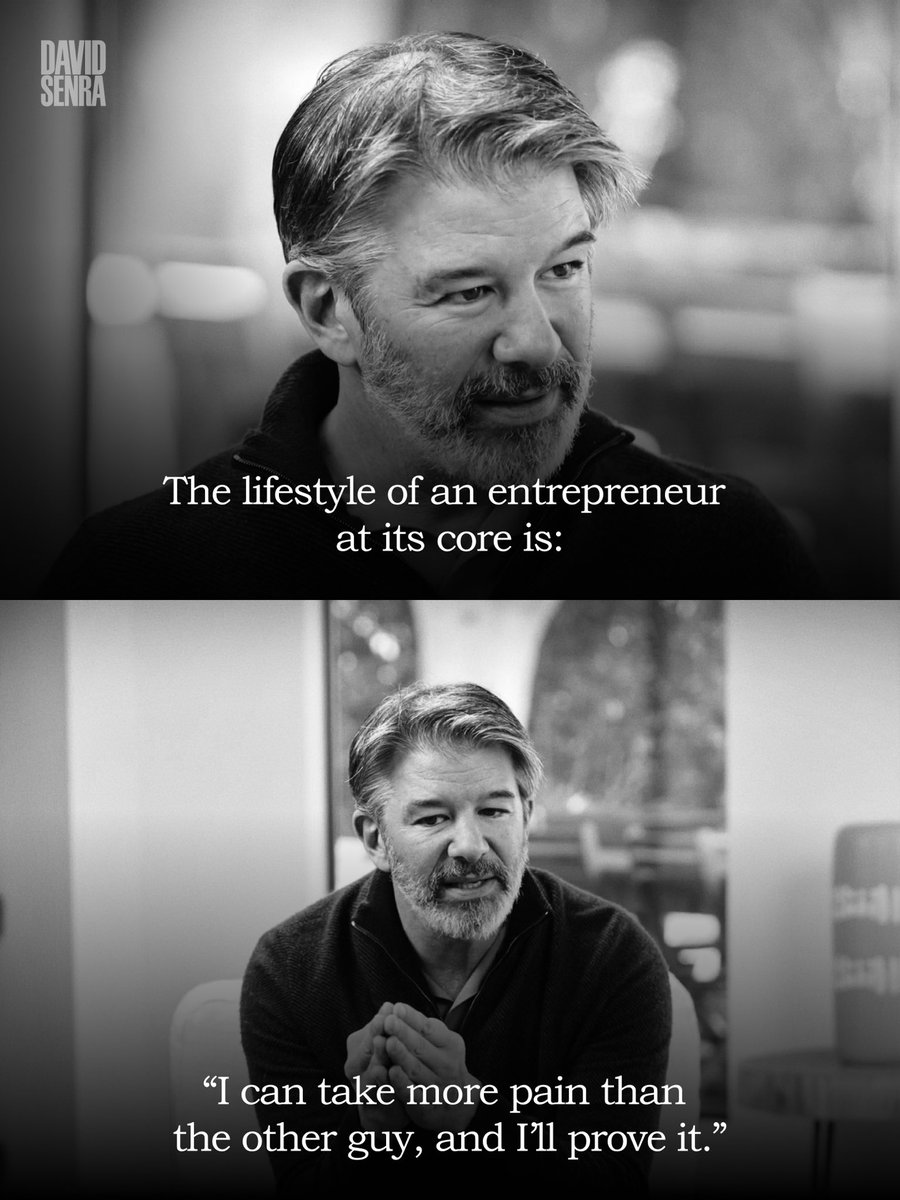
Across the years I've learned that startups rarely die when the money runs out. Most die when the founder’s will does.
Cockroaches don’t run out of will. Bet on them
Raising too much too early feels like winning at the time.
It's often the exact mechanism that strips founders of the outcome later, diluted past the point of meaningful upside, stuck running a company that’s not theirs anymore.
88% of VC-backed founders who exited their companies got $0. Eduardo Azevedo and Kent Smetters analysed 157,669 startups and 248,454 founders from 1987 to 2025.
Let that sink in...
Watched too many friends end up on the exact treadmill this is warning about, bigger house because their peer group upgraded, nicer car because it felt like falling behind otherwise. None of it was really about the stuff. It was about not wanting to look like they'd fallen behind.
Underrated life advice: Keep your personal burn rate low. Cheaper car. Smaller house than the bank says you can afford. No payment you'd panic about if work got weird. Low expenses aren't about being cheap. Low expenses give you options. And options = freedom.
Funded doesn't mean focused. What separates the founders who compound from the ones who just stay busy is timing, knowing when to go all in versus when to sit tight and let the setup finish building itself. Most founders never learn patience because urgency feels more productive.
i see so many founders operating like broke people trying to make money.
chasing every opportunity.
taking random gigs.
doing everything themselves.
optimizing for quick cash instead of long-term leverage.
and the crazy part? these are funded founders from top accelerator programs.
i feel like accelerator quality has gone downhill.
being busy isn't a strategy. having funding isn't a strategy.
great founders think in systems, build leverage, and focus on what compounds.
BIG STEP FOR STABLECOIN ADOPTION IN THE US
🇺🇸 The US banking regulator has finalized its stablecoin rules under the GENIUS Act, effective Jan 18, 2027.
This will help more banks and financial institutions issue stablecoins under clear rules.
Nobody puts "be a good, helpful, honest person" on a business framework slide, but it's probably the single highest leverage thing you can actually control.
Charlie Munger says your life will be better if...
"You don't have a lot of envy. You don't have a lot of resentment. You don't overspend your income. You stay cheerful in spite of your troubles. You deal with reliable people. You do what you're supposed to do."