HEO Robotics visually monitors satellites for governments and defence, by enabling existing Earth observation satellites to image other satellites as they fly close by.
We launched with YC as part of the S21 batch.
https://t.co/wy1AyNIwaT
The countdown to #Ignis is ON 🔥⏰
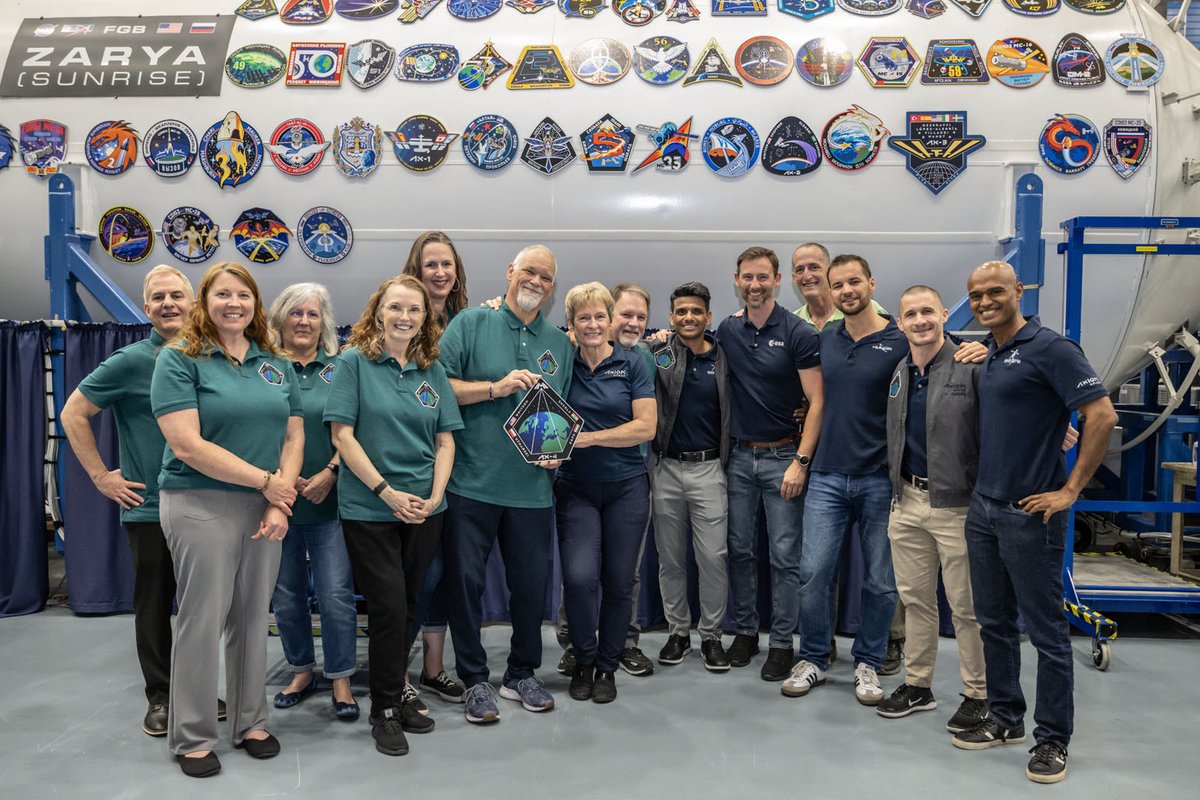
@astro_slawosz and his #Ax4 crew mates will travel to the International @Space_Station on a two-week mission. The four astronauts are scheduled to launch NET 8 June.
From Cologne 🇩🇪 to Houston 🇺🇸 and beyond, Sławosz shares how training around the world prepared him for liftoff 🚀
🔗 https://t.co/pVuYEZaEe3
Are you ready to deep dive into space engagement? 🚀
Save the date: we will be at Ecsite 2025!
📅When: 3 to 5 June 2025
📍Where: The Copernicus Science Centre in Warsaw, Poland
Find out more and register here ➡️ https://t.co/S7JZsjnQDZ
🌦️ Webb's Titan forecast: partly cloudy with occasional methane showers.
A science team has combined data from the NASA/ESA/CSA James Webb Space Telescope and the Keck II telescope to see evidence of cloud convection on Saturn’s moon Titan in the northern hemisphere for the first time!
Most of Titan’s lakes and seas are located in that hemisphere, and are likely replenished by an occasional rain of methane and ethane.
🔗 https://t.co/HPOsygjohp
3, 2, 1... LIFTOFF!
We are proud to unveil our brand-new ESA Shop – a reimagined online destination for official ESA merchandise.
Whether you’re a dreamer, scientist, or space enthusiast, the ESA Shop connects you to our bold vision to elevate the future of Europe.
🔗 https://t.co/8OGbxEsRDw
The NASA/ESA/CSA James Webb Space Telescope has observed Jupiter’s aurora.
The observations help astronomers better understand how Jupiter’s upper atmosphere is heated & cooled, and may prove useful to our Juice mission, en route to the gas giant.
Read more 👉 https://t.co/E5mFvkGqmI
💡 Back to light.
👀 A space POV: the blackout in Spain and Portugal into the night, captured by @NASA polar satellites.
⚡️ Though electricity was restored to most areas by evening, some regions remained in darkness until early morning.
✨ On a cloudless night, the stars shone brighter.
https://t.co/N6KM4sAli9
🗓️Save the date!
We will be present at the 55th edition of International Paris Air Show, taking place on 16-22 June at Le Bourget airport.
Here we celebrate 50 years of advancing space for Europe, as well as highlighting our vision for the future, ESA’s Strategy 2040.
Find out more ➡️ https://t.co/z4ymhGTT3K
What is an exoplanet? 🪐
Watch as astrophysicist and Nobel Prize Laureate, Didier Queloz, answers all your questions about exoplanets in our new series.
🎥 https://t.co/SwbPgirWgh
At ESA, we are committed to sparking curiosity among young minds.
What better way to inspire future explorers than with a fully equipped lunar rover?
We have joined forces with @playmobil to ignite young imaginations with a ‘Starter Pack Space Mission’!
Find out more ➡️ https://t.co/7XZRAEZ6A2
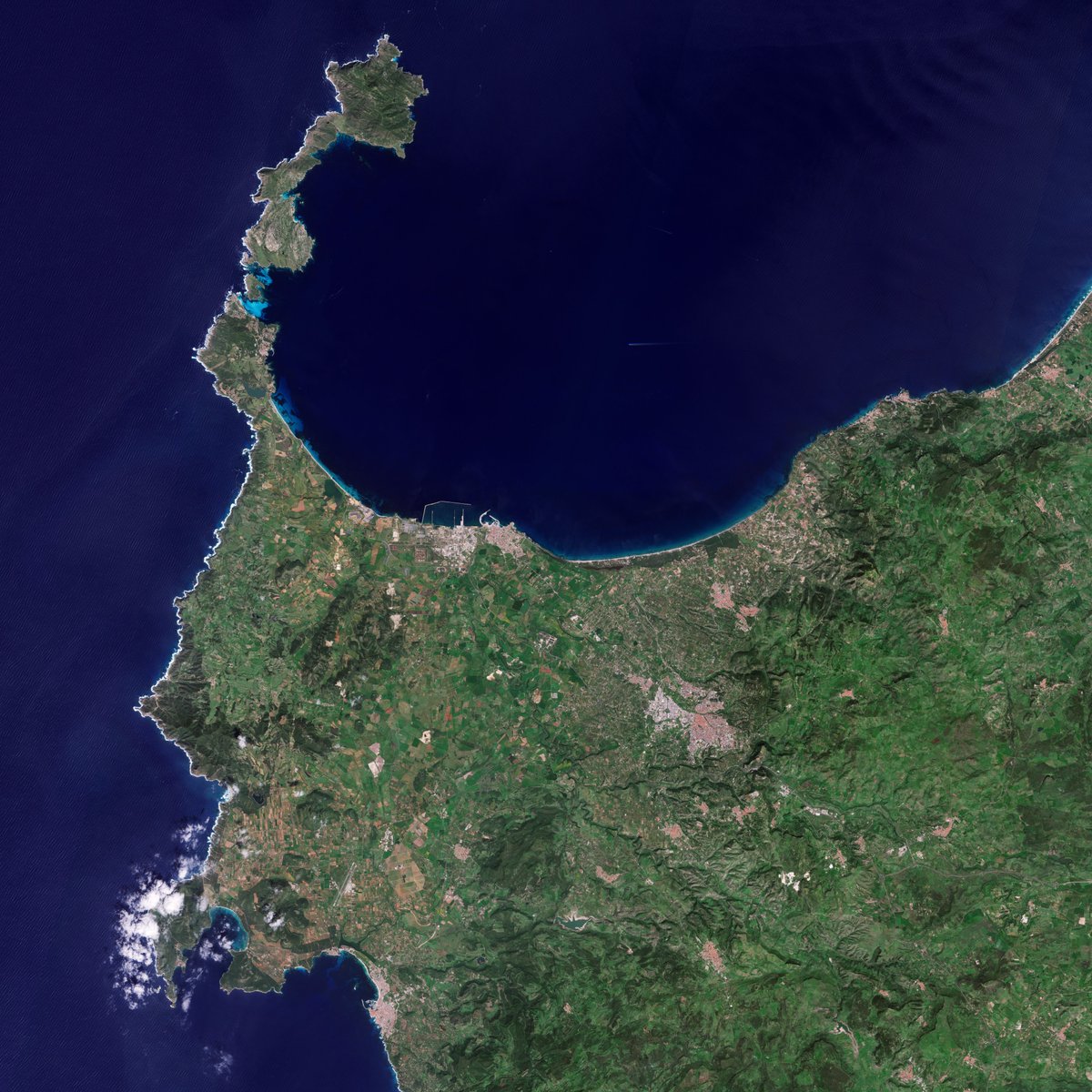
Northwest Sardinia🇮🇹 as seen from space.
This @CopernicusEU Sentinel-2 image shows part of the Italian island, featuring the city of Sassari, located on a plateau 225 m above sea level, the port of Porto Torres, and the coastal city of Alghero.
Also visible is Asinara Island, once the location of a prison, now a protected marine and wildlife reserve.
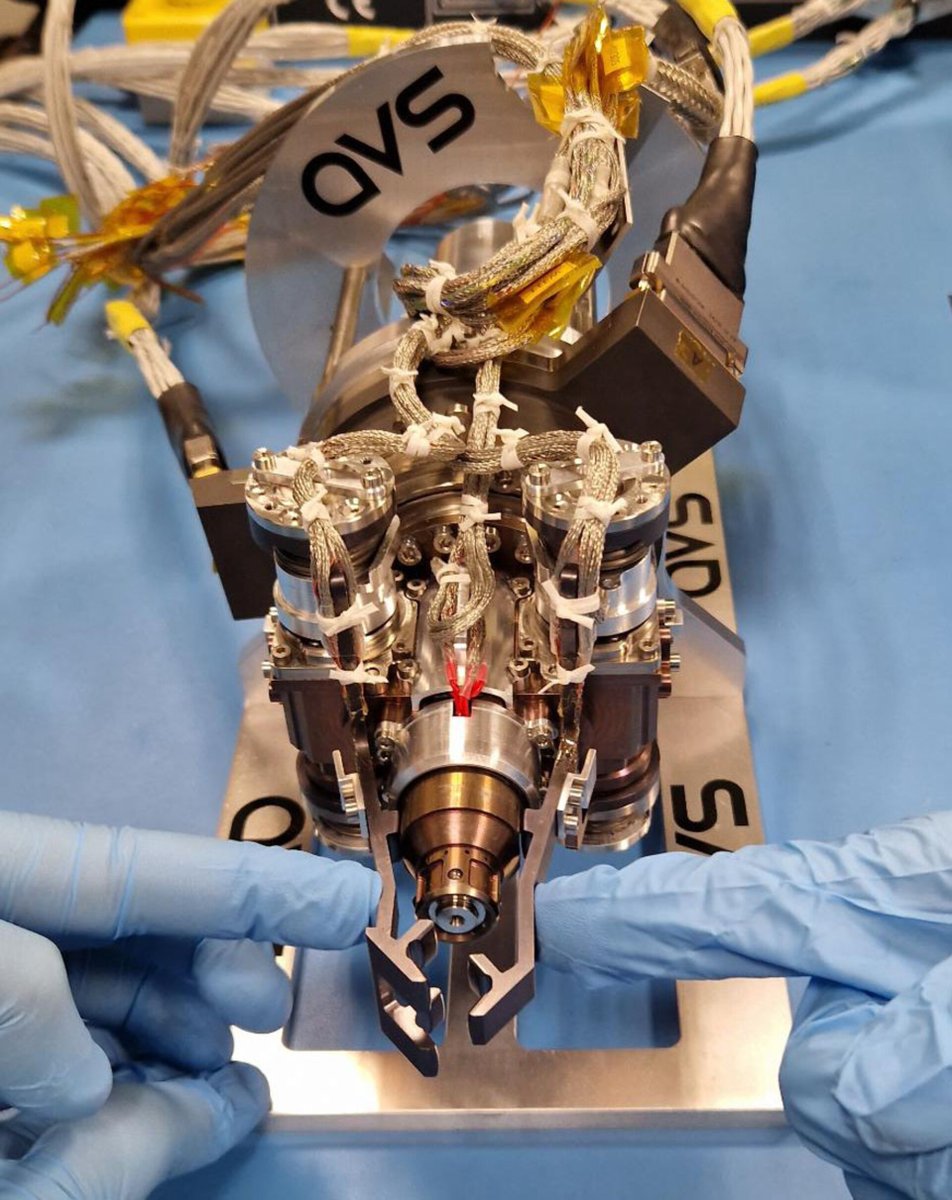
🦾 A robotic hand designed to collect samples on other worlds has its mechanical fingers assembled.
This “hand” uses two tools to secure its treasure:
🖖 Fingers to grip sample tubes.
🪠A plunger to transfer them to a container.
More about this clever mechanism: https://t.co/ldakxcnKGX
📸 Added Value Solutions.
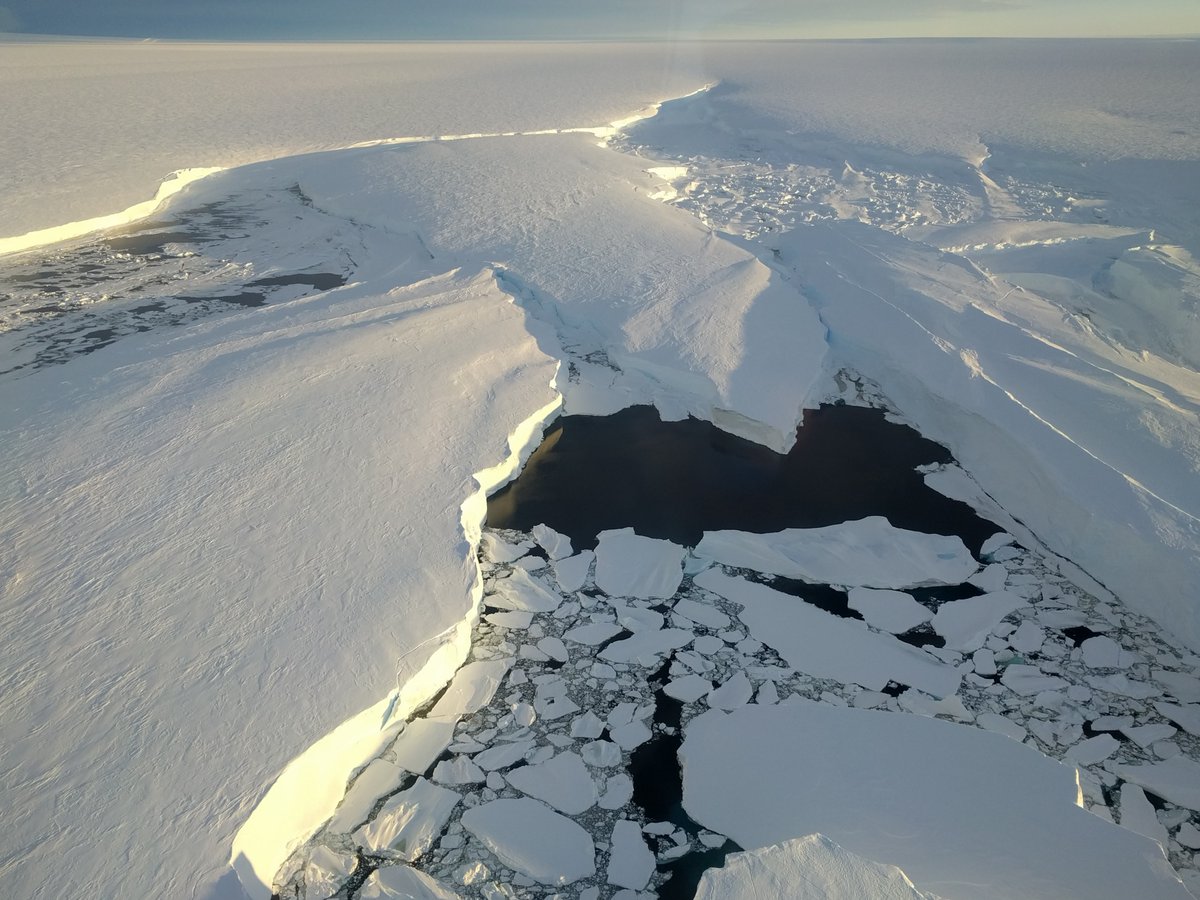
Did you know that glaciers steal each other's ice?
Thanks to data from @CopernicusEU Sentinel1, @esa_cryosat, and other satellites, scientists have observed an example of a very quick ' ice piracy': a process usually thought to take centuries (or even millennia) happening in less than 18 years in this case: https://t.co/C6VIZTEdhl
Rain, rain, go away 🌧️
@NASAWebb peered through the thick atmosphere of Saturn's moon Titan to see the cycle of weather occurring there. On Titan, methane goes through similar condensation, precipitation, and evaporation as water on Earth.
https://t.co/4p5Ba84Rx7
I'll spy with my panoramic eye... 👁️
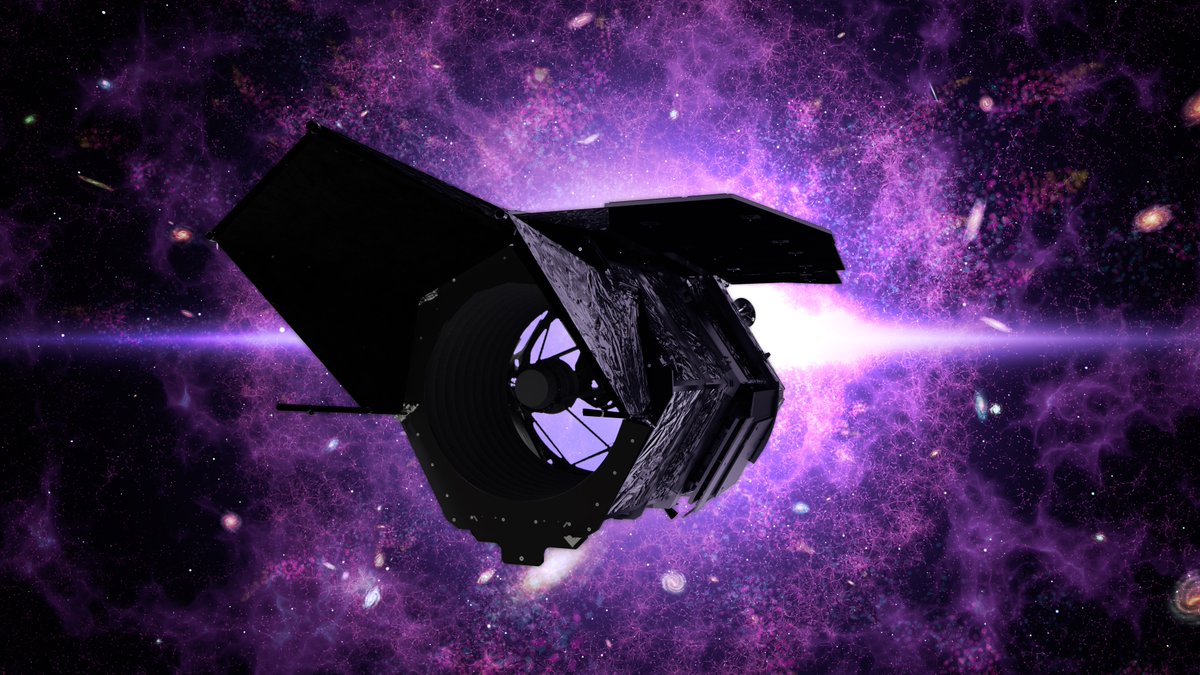
The @NASARoman team released plans for three core surveys the telescope will conduct after launch: the High-Latitude Wide-Area Survey, High-Latitude Time-Domain Survey, and Galactic Bulge Time-Domain Survey.
Who's hungry...for data?!
For more than 50 years, satellites have provided information about crop health. In this episode of our Curious Universe podcast, hear how @NASAEarth science makes it from space to your table.
https://t.co/WHr9YvI0jt
For decades, scientists have been puzzled by intriguing streak features down slopes on Mars 🤔
🧹 Something sweeping dust?
🌊 Underground water seeping out?
🌪️ Dust devils at work?
@esa's ExoMars Trace Gas Orbiter helps find an answer: https://t.co/Qt6G7Tj4vQ
Cosmic candy floss ✨
Today’s NASA/ESA Hubble Space Telescope Picture of the Week features a sparkling cloudscape from one of the Milky Way’s galactic neighbours, a dwarf galaxy called the Large Magellanic Cloud.
When viewing such a vivid cosmic scene, it is natural to wonder whether the colours are ‘real’.
When image-processing specialists combine raw filtered data into a multi-coloured image like this one, they assign a colour to each filter. Visible-light observations are typically matched to the colour that the filter allows through. Shorter wavelengths of light such as ultraviolet are usually coloured blue or purple, while longer wavelengths like infrared are typically coloured red.
🔗 https://t.co/fj4Zw8523N