O dia nasce no Pico do Inficionado, Santuário do Caraça. O sol banha os mares de morros de Minas, sob um cobertor de nuvens cremosas.
---
The day breaks at Inficionado's Peak, Caraça Sanctuary. The sun bathes the sea of hill of Minas Gerais, under a blanket of creamy clouds.
@miguel_boente82@JFreiress_ É bom lembrar que, apesar de o lula ser o presidente e ser contra as bets, quem impede a proibição das mesmas são os deputados e senadores, muitos financiados por elas. Em especial os do centrão e os de direita, que são maioria.
https://t.co/MMGs9RP9ZG
https://t.co/frHjbjXMUm
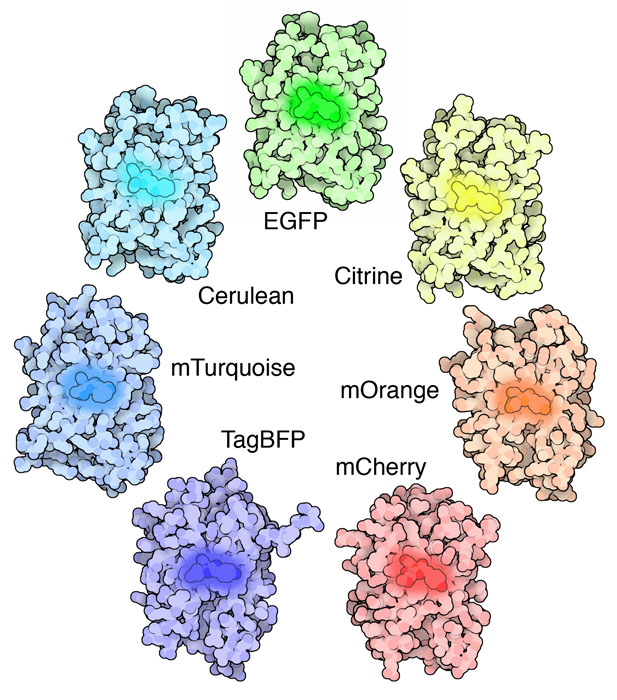
PDB-101 Focus: Biotechnology
Learn how researchers are using biology in industry. Learn how GFP-like proteins found in nature or engineered in the laboratory now span every color of the rainbow
https://t.co/lcZFDRy1zb
Some molecular machines, like ribosomes, persist for long periods in cells
Could molecular aging of ribosomes shape how proteins are made?
In our preprint we track ribosomes as they age in cells and uncover unexpected effects on translation (1/10)
https://t.co/kT2WTUN7T9
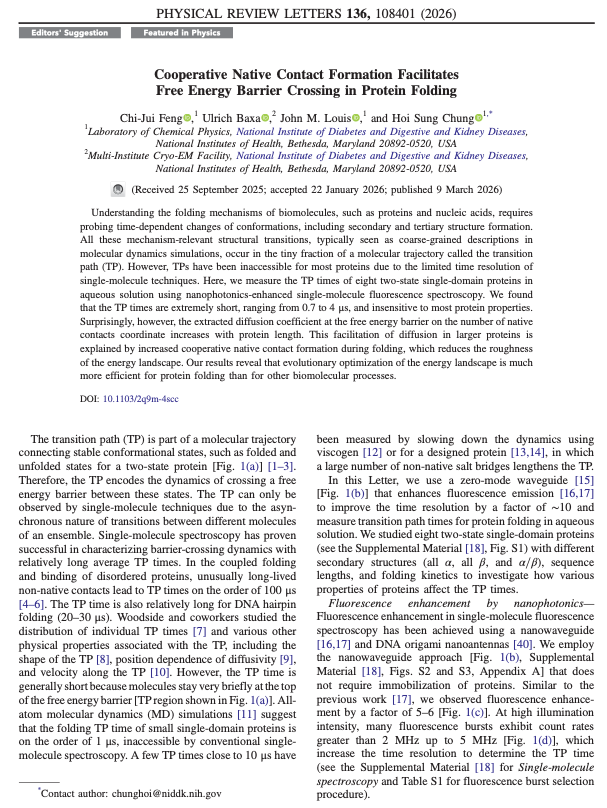
A protein moves between its “folded” and “unfolded” forms in less than one-millionth of a second. For a new study, researchers captured this transition for single proteins.
The researchers studied eight small proteins, in fact, ranging in size from 35 to 81 amino acids. (An average human protein, for context, is about 400 amino acids.) Each of these proteins has a single domain, and each protein can only exist in one of two states; “unfolded” or “folded.”
Because these proteins are so small, they switch between states incredibly fast (like I said, millionths of a second). Coming up with an experiment to measure this switching, especially at the level of individual molecules, seems really, really, really difficult. I mainly decided to read this paper so that I could understand this experiment, and it did not disappoint!
First, the researchers purified each protein and put it into a liquid with urea. Urea destabilizes proteins and coaxes them to unfold, so if you place the molecules in *just* the right concentration of urea, then there will be a roughly equal chance the molecule will exist in either its folded or unfolded form. The goal is to find the urea concentration that causes each protein to switch back-and-forth as often as possible.
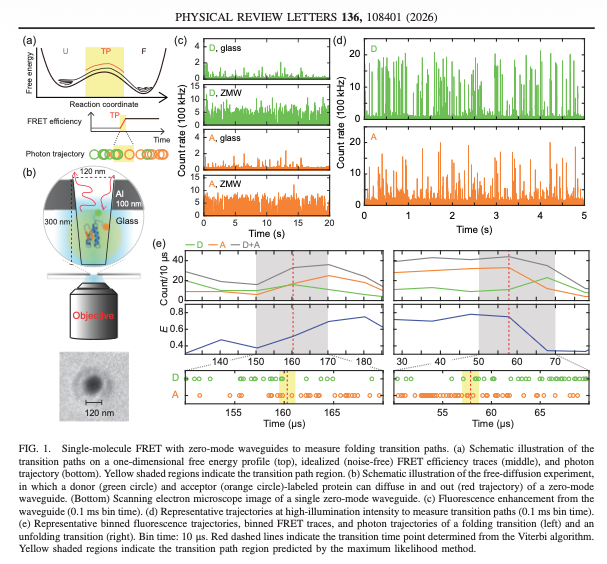
Next, the researchers attached two fluorescent dyes to each protein; one green and one red. These dyes fuse to cysteine amino acids located far apart when the protein is unfolded, but that come closer together when each protein folds. (Importantly, each protein already has many solved structures, so it’s easy to figure out which amino acids are most suitable for the dyes. The dyes are a bit bulky, though, so you need to make sure they don’t disrupt the protein folding.)
When the green and red dyes come together, the green dye transfers its energy over to the red instead of emitting its own light. The result is that an unfolded protein appears in roughly equal parts of green and red. But as it transitions into its “folded” state, it emits a larger and larger fraction of solely red photons.
But because this folding happens in less than one millionth of a second, and it’s not really possible to see the tiny number of photons emitted by a single protein, the next step was to — somehow — amplify the fluorescent signal emitted from each protein as its folding. Not easy!
To solve this problem, the researchers used something called a zero-mode waveguide, which is a tiny sheet of aluminum with holes punched into it. These holes are only about 120 billionths of a meter wide; just enough for a protein to float inside. (Zero-mode waveguides were also used to build the PacBio DNA sequencer.) When a protein drifts into one of these holes, the metal walls concentrate light in a way that makes the dyes glow five to six times brighter than normal.
And finally, the researchers used single-photon detectors to measure the signals from each zero-mode waveguide. These are extremely sensitive light sensors that produce an electrical pulse every time a single photon hits them. The sensors record the exact arrival time of each photon with nanosecond precision. They used two of these detectors for each well. A special mirror, called a dichroic beamsplitter, sits in the light path and reflects green light toward one detector while allowing red light to pass through to the other detector.
(These sensors are not recording videos. They literally just record the color of photon and the delay from the prior photon. So the dataset looks like this:
- 0.000000 ms, green
- 0.000003 ms, green
- 0.000005 ms, red
- 0.000006 ms, green)
The researchers used this setup to measure two things: “Waiting time,” which just says how long a protein stays unfolded before it starts to fold; and the “transition path” time, which describes how long the actual crossing from unfolded —> folded takes after it starts.
The major takeaway was that smaller proteins have shorter waiting times on average, meaning they move back-and-forth between folded and unfolded states more frequently. (The protein with 35 amino acids had an average waiting time of 42 microseconds, compared to 1.6 seconds for the protein with 81 amino acids.)
Surprisingly, though, larger proteins have SHORTER transition times, meaning they transit between the two states faster after the process has begun. The largest protein had a transition time of 0.7 microseconds, compared to 3.1 microseconds for the smallest.
TL;DR Evolution has optimized larger proteins to fold more efficiently via cooperativity, where one part of the protein coaxes another part to snap into place. The whole molecule works together, rather than each chain moving independently.
I love biophysics <3
🚨Preprint! From my PhD “Genome delivery of a contractile tailed phage and its superinfection exclusion mechanism”. We use #cryoEM to study the genome ejection of the #phage T4, revealing how the tape measure protein regulates the process @NMITaylorLab
https://t.co/syOhafWv7g
- Não adianta votar em presidente progressista e em deputado conservador
- Não queira melhorar suas condições de trabalho se você vota no seu patrão
- Não vote em latifundiário se quiser fazer reforma agrária
- Não coloque uma raposa no galinheiro ou vão comer suas galinhas
Alerta de spoiler!! ⚠️⚠️⚠️
Atendendo aos pedidos dos nossos usuários,
Estamos desenvolvendo uma nova funcionalidade.
O ranking das emendas e as cidades.
Ajudem a divulgar.
#emendas#transparencia
Enquanto isso vamos divulgar a plataforma.
https://t.co/DlUDfZ7faR