With AI, "be so good they can’t ignore you" becomes "Be so good they can’t replicate you."
"So good" will not mean "features" anymore. It will mean design, delight, customer service, opinionation, attitude, brand, community, and more.
If you don’t know what to do, try sitting some place cozy and doing nothing, absolutely nothing but resting until an authentic desire to do something appears in your gut.
Agents write code "much better on average at scale" is right. The "at scale" part comes from verification. Agents make checking cheap.
The stuff that made "Good Code" expensive (tests, benchmarks, specs, real e2e runs) is now a cheap thing you can ask an agent for. You can improve the checks.
So our work is less "review every line" and more "build loops the agent can run itself". Give the agent a way to verify the work. That loop is where quality comes from.
And make taste compound. When the agent gets something wrong, write it down (shared config, a hook, a test) so it doesn't happen twice. A human still owns what ships but now they're reviewing evidence and not just diffs.
@compuficial "every time you find yourself wanting to open the diff "just to make sure," that's signal that something in the system is still relying on human eyeballs instead of a hard constraint."
^ THIS
codebases have always contained slop. we have always been okay with this because code rarely needs to be perfect, outside of mission critical "hard" (eg embedded) software.
swe is a unique form of engineering because you're often building something that constantly evolves and is almost organic - user tastes change, your mental models evolve, and features come and go.
admittedly, i and many others who've been coding for a long time were initially (like back in 2024) skeptical that agents would write production code. "but what about all the slop that would enter our beautiful codebase?".
well, even before, we had human slop, and there was a lot of it! if we're being truthful, most people call "code i didn't write" slop. the reality is that 99% of people (i include myself in that number) don't even know what Good Code looks like, let alone be capable of writing it. i would propose that Good Code is:
• correct
• bug free
• fast and cost efficient to run
it has always been exceedingly difficult and expensive to write truly Good Code, because for the longest time (maybe @bendlang will change that), code was not something you could cheaply and formally guarantee to have all 3 of these properties. this is why writing hard software is much more difficult and expensive, because depending on the use case, you may only get one chance and so you have to be right from the start.
but the vast majority of software we use does not need to be Good Code to provide value to users. in fact, it is very likely that most software we use is not formally verifiable! we accepted some bugs in exchange for velocity and progress, so we rely on tests and o11y instead and have adopted a more incremental approach. this is a good thing!
agents help us move faster, and if you're open to the idea, are capable of helping us write better code. it won't be Good Code (that is still expensive), but it is likely to be much better on average at scale.
the new craft of swe is to figure out how to do this. it's your job now! if your productivity with and without agents is not significantly different, you're doing something wrong. but it's not too late to embrace it and use it as an opportunity to learn a whole new skill tree
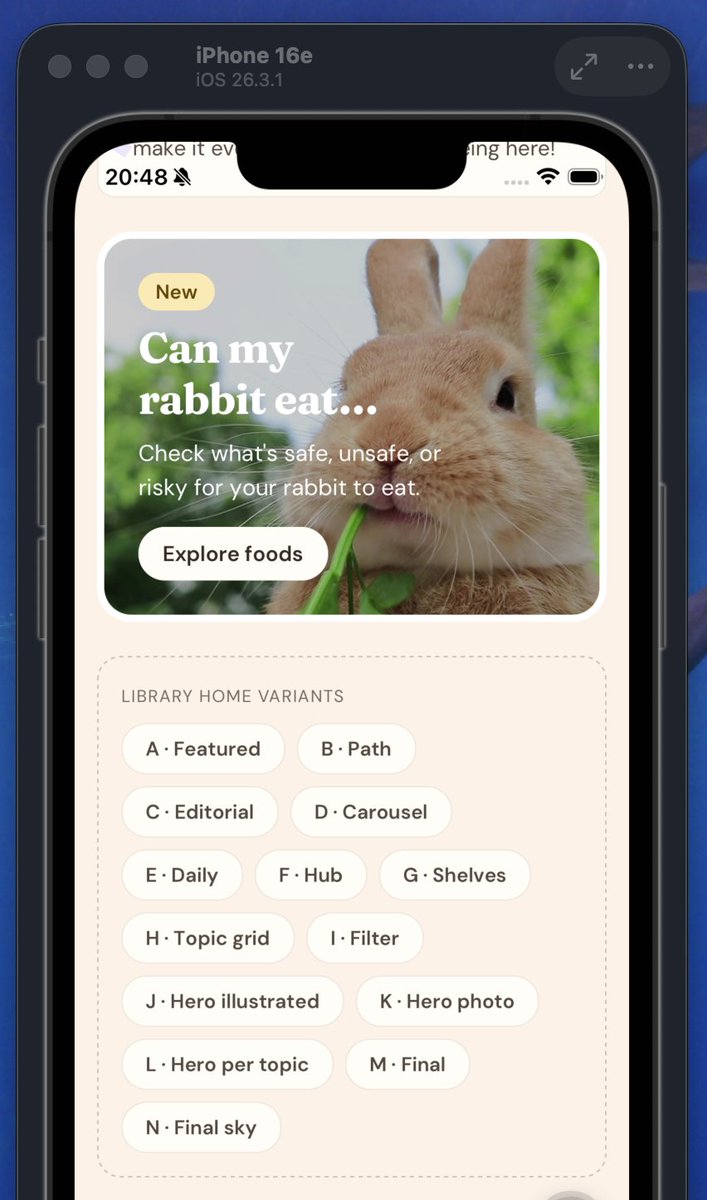
one thing I really appreciate about working with Claude is that it can quickly generate multiple variants of a component that I can test directly on the emulator, with zero pixel pushing in Figma
the /variant skill by @jakubkrehel also helps with this https://t.co/XiDDjYkCvB
Introducing Anatomy
Describe a machine in one line. Claude brings it to life.
- Interactive isometric wireframes you can rotate, inspect and explore
- WebGL shaders for fire, water, plasma and more
- Real 3D motion, with individual parts that rotate and move
Install it as an agent skill. Fully open source.
people underestimate how much of life is just increasing your surface area for luck:
- travel alone & make friends
- go to events where you know no one
- show up to events where you know everyone
- talk to people at your fav coffee shop
- tell people what you actually want
- share what you’re working on
- follow up with people you liked
- send the bold dm to the “big” person
- make the thing before anyone asks you to
- if you’re underqualified, apply anyway
- help someone without making it transactional
- be a decent, kind human to people
- post the thing before you overthink it
make it easier for good things to find you
@LukeW that’s not necessarily a bad thing. for some tasks where the inference and prompting takes longer than the task itself sure it’s a waste.
but i've found it useful and more accurate for in-app docs questions
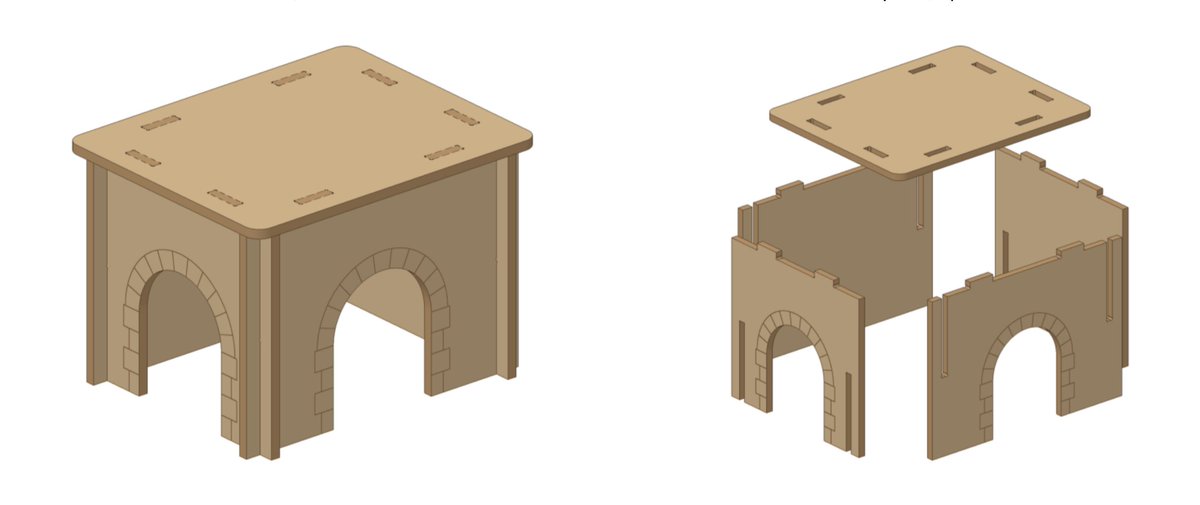
i've been meaning to create a hideaway house for my pet rabbits and this post inspired me to test whether i could vibe-fabricate one with claude. 5 mins later i have the renderings ready to send to the CNC guy.
my forgotten industrial designer self couldn't be more excited
We are now entering into an era where any product can be created exactly to a consumer's preferences & needs.
I vibe-fabricated a dog door with a wifi-controlled lock, perfectly to the specifications & design of my house.
I know nothing about metal fabrication or electrical engineering.
It's now getting manufactured and delivered in 2 weeks -- for almost the same cost if I bought a mass-produced item off-the-shelf.
Making products.
Deciding what matters, what doesn't. Developing insights into behaviors. Understanding what people are already doing, how their days actually unfold, where the hassles are, where the emotion is. Feeling what relief and satisfaction and delight feels like. Study awe. Discover the potent point where fun+utility swirl together.
Code was always in service of the things above. And 1000 other things. Now you can get to focus on the things themselves. No more abstrations.
“ship faster” gives me an instant tech ick.
speed is for mcdonald’s.
i like taking my time. iterating. trying different directions. experimenting with interactions and working on the flows. and i like wiping it all out when i suddenly have a completely different idea, take a walk and try it again and better.
i like being human doing what i do.