We call it 'Hypertenancy' because that's cooler and easier than saying 'per-customer compute isolation' all the time.
It means every user gets their own duckling, a dedicated DuckDB instance with its own compute. This is what MotherDuck customers building analytics into their apps get out of it 👇
🦆 No noisy neighbors. One user's monster scan can't slow down anyone else's dashboard.
🦆 Size each user on their own. Give your heaviest users a bigger duckling without paying to scale a whole cluster.
🦆 A sandbox for every agent. A runaway query stays inside its own duckling, so it can't blow up your bill or take down your warehouse.
🦆 Cost per user. With every user on their own duckling, you can see exactly what each one costs you.
🪿 Pay for what's running. Ducklings spin up on the first query and scale to zero when idle.
How it works 👇
https://t.co/q4eQI6pGLH
As engineering, product, design, DS, etc. melt into a new kind of role, I was reflecting on what roles might look like in the future. For example, when I look at the Claude Code team I see what I think is five archetypes:
1. Prototyper: comes up with brand new ideas; churns out many ideas, most of which don't ship
2. Builder: quickly turns a prototype/idea into production-grade product/infra
3. Sweeper: cleans up the UI, simplifies the code and system, unships, optimizes performance
4. Grower: takes a product that has been built and iterates on it to improve Product-Market Fit
5. Maintainer: owns a mature system to make it secure, reliable, fast, and efficient as it scales
Many people span across 2 roles, and sometimes 3 roles. I also notice that these roles are not really tied to job function -- eg. across Anthropic, some designers match category 1, some 2, some 3; same for engineers, PM, DS.
A healthy team needs a mix of these, depending on the product:
- A product that is new and pre-PMF needs people that are strong at 1+2+3
- A product that is growing and has found PMF needs 2+3+4 and some 5
- A product that has strong PMF needs 3+4+5 and some 2
Maybe product roles of the future will look more like this, and less like the domain-specific roles of today?
Chinese researchers have developed the best shortest-path algorithm in 41 years.
Dijkstra’s Algorithm has been the undefeated king of the shortest path for over 40 years.
Whether you’re using Google Maps, booking a flight, or routing internet packets, Dijkstra is the engine running in the background.
Since 1984, textbooks have taught that its efficiency was hit by a “sorting barrier.”
To find the shortest path, you have to sort the points by distance. And sorting has a mathematical floor you can’t cross.
Until now.
A research team from Tsinghua University just published a paper that shatters the 41-year-old record.
They proved that Dijkstra is not optimal.
By combining the logic of the Bellman-Ford algorithm with a revolutionary “recursive partial ordering” method, they figured out how to find the path without fully sorting the nodes.
The results are a massive shift in theoretical computer science:
- the first deterministic improvement to the Single-Source Shortest Path (SSSP) problem since 1984
- a new time complexity of O(m log^(2/3) n), officially beating the long-standing O(m + n log n) limit
- on massive sparse graphs (like the web or global logistics), this means finding the best route significantly faster than previously thought possible
For four decades, the greatest minds in algorithms believed this limit was absolute.
Last year, even the legendary Robert Tarjan won an award proving Dijkstra was “optimally efficient” at sorting distances.
Tsinghua’s answer? Stop sorting.
The world’s most settled problem is suddenly wide open again.
If we can break a 40-year-old law in basic graph theory, what other “impossible” speed limits are waiting to be crushed?
Naval Ravikant: “The future will be almost all startups”
“I firmly believe that the efficient size of a company is shrinking very rapidly, and so the future will be almost all startups.”
In the clip below from a 2012 interview, Naval speculates that information technology will reverse the centralizing force of economies of scale following the Industrial Revolution.
“I think the contract work trend is going to increase, and I think the size of your average company is going to decrease. I think we’re going to see more and more billion dollar businesses built by four or five people, and it’ll stay at that.”
He doesn’t think we’ll see many more companies like Facebook or Google with tens of thousands of employees:
“I think any entrepreneur worth their salt could today build Facebook with a few hundred people… Facebook and Google are in the situation that large companies end up in where the founders know that 80% of the people are not really needed, they just don’t know which 80%.”
Excited to introduce WeatherNext 2 🌦️ A new AI model from @GoogleDeepMind and @GoogleResearch delivering faster, higher-resolution global weather predictions.
- Generates forecasts 8x faster, requiring under one minute on a single TPU.
- Surpasses prior models on 99.9% of variables across 0-15 day lead times.
- Simulates hundreds of possible weather scenarios from a single data input.
- Delivers high-resolution global forecasts down to specific 1-hour intervals.
Should we add this to the Gemini API and @GoogleAIStudio? 🤔
Nice - my AI startup school talk is now up! Chapters:
0:00 Imo fair to say that software is changing quite fundamentally again. LLMs are a new kind of computer, and you program them *in English*. Hence I think they are well deserving of a major version upgrade in terms of software.
6:06 LLMs have properties of utilities, of fabs, and of operating systems => New LLM OS, fabbed by labs, and distributed like utilities (for now). Many historical analogies apply - imo we are computing circa ~1960s.
14:39 LLM psychology: LLMs = "people spirits", stochastic simulations of people, where the simulator is an autoregressive Transformer. Since they are trained on human data, they have a kind of emergent psychology, and are simultaneously superhuman in some ways, but also fallible in many others. Given this, how do we productively work with them hand in hand?
Switching gears to opportunities...
18:16 LLMs are "people spirits" => can build partially autonomous products.
29:05 LLMs are programmed in English => make software highly accessible! (yes, vibe coding)
33:36 LLMs are new primary consumer/manipulator of digital information (adding to GUIs/humans and APIs/programs) => Build for agents!
Thank you again for the invite @ycombinator and congrats again on an awesome events! I'll post some links/references in the reply.
Quick Refresher - The crude programmer's model of the CPU...
This is how I imagine the underlying system to be when programming in C or Assembly.
For 99% of what I do, this model fits and serves well.
1. The CPU has an ALU, Control Unit and a Register File.
2. I assume a load/store model - meaning the Data will always be fetched to the CPU registers, modified and then be written back.
3. The CPU connects with the Memory/Peripherals through the Address/Data bus. The CPU can manipulate the Data or Peripheral by reaching it using the right address.
I was given early access to Grok 3 earlier today, making me I think one of the first few who could run a quick vibe check.
Thinking
✅ First, Grok 3 clearly has an around state of the art thinking model ("Think" button) and did great out of the box on my Settler's of Catan question:
"Create a board game webpage showing a hex grid, just like in the game Settlers of Catan. Each hex grid is numbered from 1..N, where N is the total number of hex tiles. Make it generic, so one can change the number of "rings" using a slider. For example in Catan the radius is 3 hexes. Single html page please."
Few models get this right reliably. The top OpenAI thinking models (e.g. o1-pro, at $200/month) get it too, but all of DeepSeek-R1, Gemini 2.0 Flash Thinking, and Claude do not.
❌ It did not solve my "Emoji mystery" question where I give a smiling face with an attached message hidden inside Unicode variation selectors, even when I give a strong hint on how to decode it in the form of Rust code. The most progress I've seen is from DeepSeek-R1 which once partially decoded the message.
❓ It solved a few tic tac toe boards I gave it with a pretty nice/clean chain of thought (many SOTA models often fail these!). So I upped the difficulty and asked it to generate 3 "tricky" tic tac toe boards, which it failed on (generating nonsense boards / text), but then so did o1 pro.
✅ I uploaded GPT-2 paper. I asked a bunch of simple lookup questions, all worked great. Then asked to estimate the number of training flops it took to train GPT-2, with no searching. This is tricky because the number of tokens is not spelled out so it has to be partially estimated and partially calculated, stressing all of lookup, knowledge, and math. One example is 40GB of text ~= 40B characters ~= 40B bytes (assume ASCII) ~= 10B tokens (assume ~4 bytes/tok), at ~10 epochs ~= 100B token training run, at 1.5B params and with 2+4=6 flops/param/token, this is 100e9 X 1.5e9 X 6 ~= 1e21 FLOPs. Both Grok 3 and 4o fail this task, but Grok 3 with Thinking solves it great, while o1 pro (GPT thinking model) fails.
I like that the model *will* attempt to solve the Riemann hypothesis when asked to, similar to DeepSeek-R1 but unlike many other models that give up instantly (o1-pro, Claude, Gemini 2.0 Flash Thinking) and simply say that it is a great unsolved problem. I had to stop it eventually because I felt a bit bad for it, but it showed courage and who knows, maybe one day...
The impression overall I got here is that this is somewhere around o1-pro capability, and ahead of DeepSeek-R1, though of course we need actual, real evaluations to look at.
DeepSearch
Very neat offering that seems to combine something along the lines of what OpenAI / Perplexity call "Deep Research", together with thinking. Except instead of "Deep Research" it is "Deep Search" (sigh). Can produce high quality responses to various researchy / lookupy questions you could imagine have answers in article on the internet, e.g. a few I tried, which I stole from my recent search history on Perplexity, along with how it went:
- ✅ "What's up with the upcoming Apple Launch? Any rumors?"
- ✅ "Why is Palantir stock surging recently?"
- ✅ "White Lotus 3 where was it filmed and is it the same team as Seasons 1 and 2?"
- ✅ "What toothpaste does Bryan Johnson use?"
- ❌ "Singles Inferno Season 4 cast where are they now?"
- ❌ "What speech to text program has Simon Willison mentioned he's using?"
❌ I did find some sharp edges here. E.g. the model doesn't seem to like to reference X as a source by default, though you can explicitly ask it to. A few times I caught it hallucinating URLs that don't exist. A few times it said factual things that I think are incorrect and it didn't provide a citation for it (it probably doesn't exist). E.g. it told me that "Kim Jeong-su is still dating Kim Min-seol" of Singles Inferno Season 4, which surely is totally off, right? And when I asked it to create a report on the major LLM labs and their amount of total funding and estimate of employee count, it listed 12 major labs but not itself (xAI).
The impression I get of DeepSearch is that it's approximately around Perplexity DeepResearch offering (which is great!), but not yet at the level of OpenAI's recently released "Deep Research", which still feels more thorough and reliable (though still nowhere perfect, e.g. it, too, quite incorrectly excludes xAI as a "major LLM labs" when I tried with it...).
Random LLM "gotcha"s
I tried a few more fun / random LLM gotcha queries I like to try now and then. Gotchas are queries that specifically on the easy side for humans but on the hard side for LLMs, so I was curious which of them Grok 3 makes progress on.
✅ Grok 3 knows there are 3 "r" in "strawberry", but then it also told me there are only 3 "L" in LOLLAPALOOZA. Turning on Thinking solves this.
✅ Grok 3 told me 9.11 > 9.9. (common with other LLMs too), but again, turning on Thinking solves it.
✅ Few simple puzzles worked ok even without thinking, e.g. *"Sally (a girl) has 3 brothers. Each brother has 2 sisters. How many sisters does Sally have?"*. E.g. GPT4o says 2 (incorrectly).
❌ Sadly the model's sense of humor does not appear to be obviously improved. This is a common LLM issue with humor capability and general mode collapse, famously, e.g. 90% of 1,008 outputs asking ChatGPT for joke were repetitions of the same 25 jokes. Even when prompted in more detail away from simple pun territory (e.g. give me a standup), I'm not sure that it is state of the art humor. Example generated joke: "*Why did the chicken join a band? Because it had the drumsticks and wanted to be a cluck-star!*". In quick testing, thinking did not help, possibly it made it a bit worse.
❌ Model still appears to be just a bit too overly sensitive to "complex ethical issues", e.g. generated a 1 page essay basically refusing to answer whether it might be ethically justifiable to misgender someone if it meant saving 1 million people from dying.
❌ Simon Willison's "*Generate an SVG of a pelican riding a bicycle*". It stresses the LLMs ability to lay out many elements on a 2D grid, which is very difficult because the LLMs can't "see" like people do, so it's arranging things in the dark, in text. Marking as fail because these pelicans are qutie good but, but still a bit broken (see image and comparisons). Claude's are best, but imo I suspect they specifically targeted SVG capability during training.
Summary. As far as a quick vibe check over ~2 hours this morning, Grok 3 + Thinking feels somewhere around the state of the art territory of OpenAI's strongest models (o1-pro, $200/month), and slightly better than DeepSeek-R1 and Gemini 2.0 Flash Thinking. Which is quite incredible considering that the team started from scratch ~1 year ago, this timescale to state of the art territory is unprecedented. Do also keep in mind the caveats - the models are stochastic and may give slightly different answers each time, and it is very early, so we'll have to wait for a lot more evaluations over a period of the next few days/weeks. The early LM arena results look quite encouraging indeed. For now, big congrats to the xAI team, they clearly have huge velocity and momentum and I am excited to add Grok 3 to my "LLM council" and hear what it thinks going forward.
[Vector Database] by Hand ✍️ Make Your Own 👉 https://t.co/2X1d3tFcTj
Previously I shared a Google Sheet to make custom AI by Hand ✍️ exercises for the Transformer. Thousands of people made copies of the spreadsheet. Thank you! 🙏
Encouraged, I am following up with a similar tool for Vector Database. I am trying my best to match the layout of the matrices in the original exercise I shared earlier.
To make your own custom version, simply follow the link above to create a copy of the spreadsheet. Try changing some weights, biases, words, and even the word embeddings. See how the calculation changes accordingly.
If you are teaching a course, you can hide the answers and print a copy to challenge your students! I promise this will make you really popular! 😉
# on shortification of "learning"
There are a lot of videos on YouTube/TikTok etc. that give the appearance of education, but if you look closely they are really just entertainment. This is very convenient for everyone involved : the people watching enjoy thinking they are learning (but actually they are just having fun). The people creating this content also enjoy it because fun has a much larger audience, fame and revenue. But as far as learning goes, this is a trap. This content is an epsilon away from watching the Bachelorette. It's like snacking on those "Garden Veggie Straws", which feel like you're eating healthy vegetables until you look at the ingredients.
Learning is not supposed to be fun. It doesn't have to be actively not fun either, but the primary feeling should be that of effort. It should look a lot less like that "10 minute full body" workout from your local digital media creator and a lot more like a serious session at the gym. You want the mental equivalent of sweating. It's not that the quickie doesn't do anything, it's just that it is wildly suboptimal if you actually care to learn.
I find it helpful to explicitly declare your intent up front as a sharp, binary variable in your mind. If you are consuming content: are you trying to be entertained or are you trying to learn? And if you are creating content: are you trying to entertain or are you trying to teach? You'll go down a different path in each case. Attempts to seek the stuff in between actually clamp to zero.
So for those who actually want to learn. Unless you are trying to learn something narrow and specific, close those tabs with quick blog posts. Close those tabs of "Learn XYZ in 10 minutes". Consider the opportunity cost of snacking and seek the meal - the textbooks, docs, papers, manuals, longform. Allocate a 4 hour window. Don't just read, take notes, re-read, re-phrase, process, manipulate, learn.
And for those actually trying to educate, please consider writing/recording longform, designed for someone to get "sweaty", especially in today's era of quantity over quality. Give someone a real workout. This is what I aspire to in my own educational work too. My audience will decrease. The ones that remain might not even like it. But at least we'll learn something.
Announcing Grok!
Grok is an AI modeled after the Hitchhiker’s Guide to the Galaxy, so intended to answer almost anything and, far harder, even suggest what questions to ask!
Grok is designed to answer questions with a bit of wit and has a rebellious streak, so please don’t use it if you hate humor!
A unique and fundamental advantage of Grok is that it has real-time knowledge of the world via the 𝕏 platform. It will also answer spicy questions that are rejected by most other AI systems.
Grok is still a very early beta product – the best we could do with 2 months of training – so expect it to improve rapidly with each passing week with your help.
Thank you,
the xAI Team
https://t.co/iPqreWxmQh
What is the difference between 𝗣𝗮𝗿𝘁𝗶𝘁𝗶𝗼𝗻𝗶𝗻𝗴 𝗮𝗻𝗱 𝗕𝘂𝗰𝗸𝗲𝘁𝗶𝗻𝗴 𝗶𝗻 𝗦𝗽𝗮𝗿𝗸?
When working with big data there are many important concepts we need to consider about how the data is stored both on disk and in memory, we should try to answer questions like:
➡️ Can we achieve desired parallelism?
➡️ Can we skip reading parts of the data?
✅ The question is addressed by partitioning and bucketing procedures
➡️ How is the data colocated on disk?
✅ The question is mostly addressed by bucketing.
So what are the procedures of Partitioning and Bucketing? 𝗟𝗲𝘁'𝘀 𝘇𝗼𝗼𝗺 𝗶𝗻.
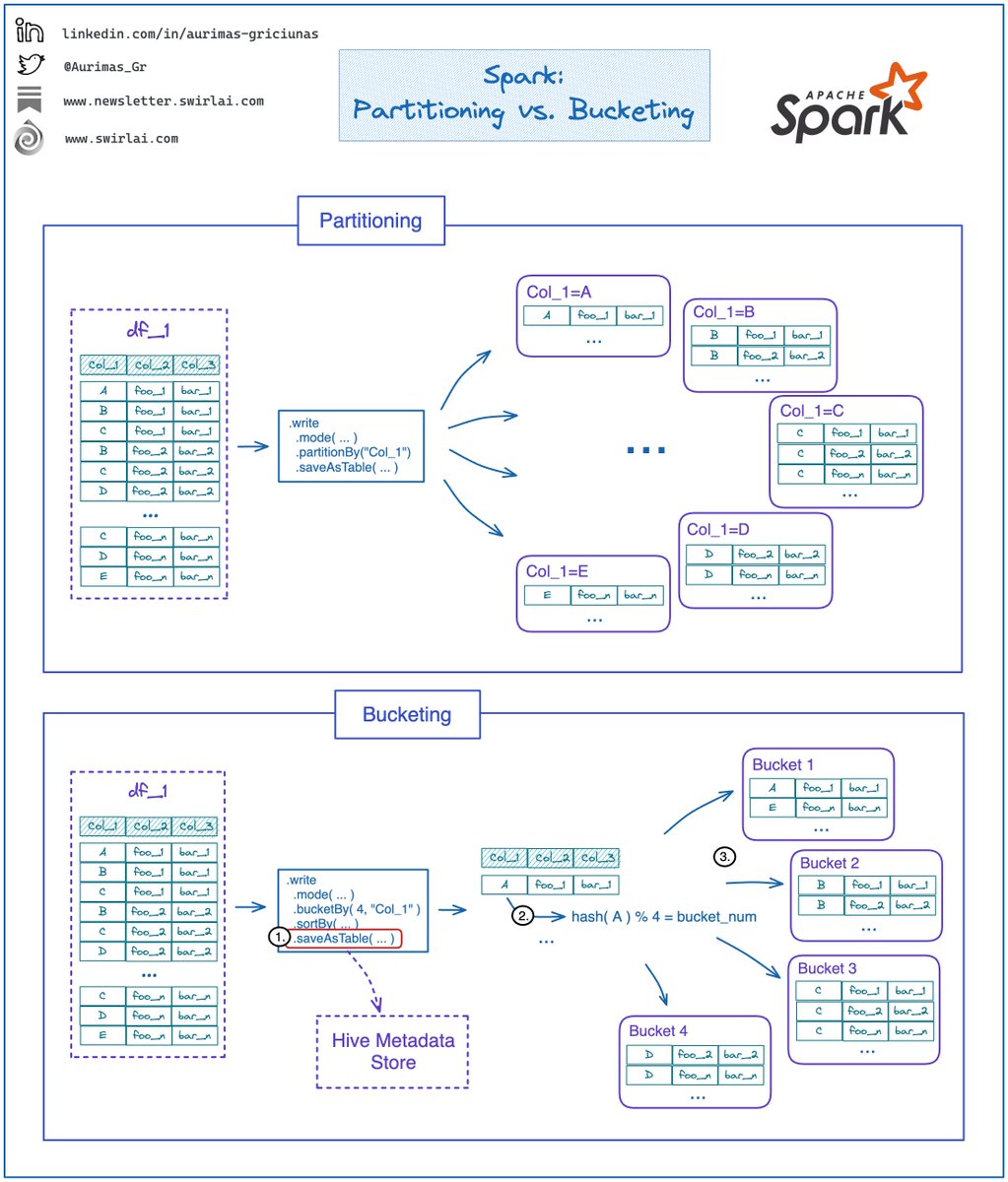
𝗣𝗮𝗿𝘁𝗶𝘁𝗶𝗼𝗻𝗶𝗻𝗴.
➡️ Partitioning in Spark API is implemented by .partitionBy() method of the DataFrameWriter class.
➡️ You provide the method one or multiple columns to partition by.
➡️ The dataset is written to disk split by the partitioning column, each of the partitions is saved into a separate folder on disk.
➡️ Each folder can maintain multiple files, the amount of resulting files is controlled by the setting spark.sql.shuffle.partitions.
✅ Partitioning enables Partition Pruning. Given we filter on a column that we used to partition the dataframe by, Spark can plan to skip the reading of files that are not falling into the filter condition.
𝗕𝘂𝗰𝗸𝗲𝘁𝗶𝗻𝗴.
➡️ Bucketing in Spark API is implemented by .bucketBy() method of the DataFrameWriter class.
𝟭: We have to save the dataset as a table since the metadata of buckets has to be saved somewhere. Usually, you will find a Hive metadata store leveraged here.
𝟮: You will need to provide number of buckets you want to create. Bucket number for a given row is assigned by calculating a hash on the bucket column and performing modulo by the number of desired buckets operation on the resulting hash.
𝟯: Rows of a dataset being bucketed are assigned to a specific bucket and collocated when saving to disk.
✅ If Spark performs wide transformation between the two dataframes, it might not need to shuffle the data as it is already collocated in the executors correctly and Spark is able to plan for that.
❗️There are conditions that need to be met between two datasets in order for bucketing to have desired effect.
𝗪𝗵𝗲𝗻 𝘁𝗼 𝗣𝗮𝗿𝘁𝗶𝘁𝗶𝗼𝗻 𝗮𝗻𝗱 𝘄𝗵𝗲𝗻 𝘁𝗼 𝗕𝘂𝗰𝗸𝗲𝘁?
✅ If you will often perform filtering on a given column and it is of low cardinality, partition on that column.
✅ If you will be performing complex operations like joins, groupBys and windowing and the column is of high cardinality, consider bucketing on that column.
❗️Bucketing is complicated to nail as there are many caveats and nuances you need to know when it comes to it. More on it in future posts.
--------
Follow me to upskill in #MLOps, #MachineLearning, #DataEngineering, #DataScience and overall #Data space.
Also hit 🔔to stay notified about new content.
𝗗𝗼𝗻’𝘁 𝗳𝗼𝗿𝗴𝗲𝘁 𝘁𝗼 𝗹𝗶𝗸𝗲 💙, 𝘀𝗵𝗮𝗿𝗲 𝗮𝗻𝗱 𝗰𝗼𝗺𝗺𝗲𝗻𝘁!
Join a growing community of Data Professionals by subscribing to my 𝗡𝗲𝘄𝘀𝗹𝗲𝘁𝘁𝗲𝗿.
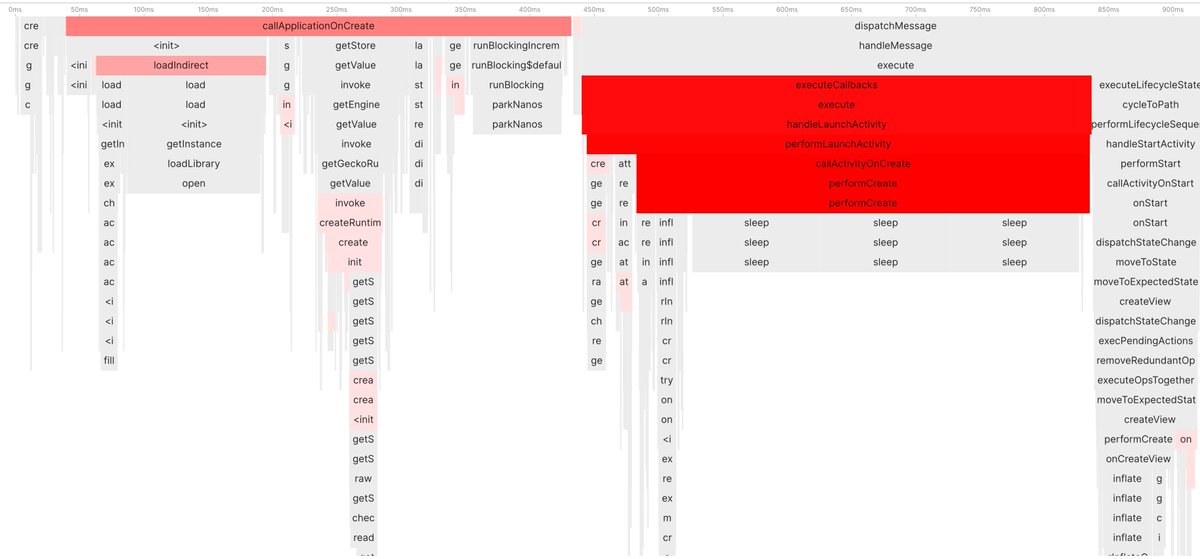
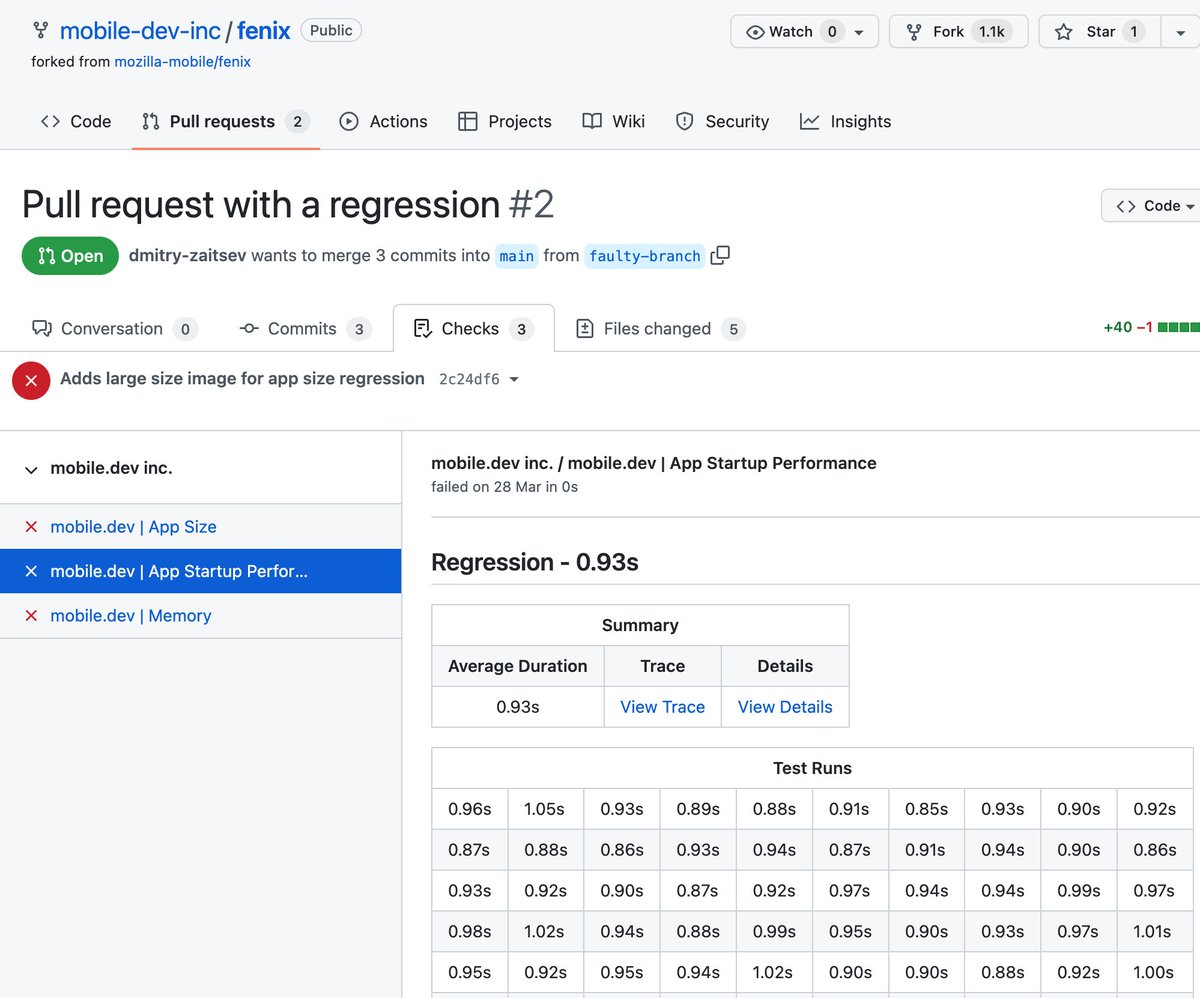
This is SO cool. @mobile__dev shipped a feature where on a PR they flag if a performance regression was added!
This is the stuff that you'd usually either find weeks later (in production) or never notice, until the app just feels "slow" after a series of small regressions.