867-5309.
You know it's a phone number.
You probably know it's Jenny's number.
That's memory working its magic.
Not because the number matters, but because it was set to music.
We were once architects of memory, constructing cognitive cathedrals.
Our childhood phone number.
Our best friend's address.
Our one password.
We stored what mattered in mental rooms, hallways, basements. Our minds were real estate, and brands fought for prime locations.
But we don't live there anymore.
There's no storage happening. No filing system. No carefully constructed memory palace with rooms and drawers and labels.
We just watch.
Half-listen.
There's just now. And now. And now again.
The stream doesn't ask to be remembered. It doesn't need to be. It only exists in that moment, fully aware another will replace it in seconds.
Brands today can't rely on mental availability anymore.
There are no more empty lots in our overcrowded minds. No foundations to build on. No walls to paint logos on.
Instead, brands must learn to swim.
To catch the current rather than try to dam it. To accept they're not building monuments anymore, they're creating moments.
The Coca-Cola of yesterday spent billions making sure you'd never forget them. The Coca-Cola of tomorrow will spend billions making sure you see them right now.
Because the memory palace is dead.
Long live the stream.
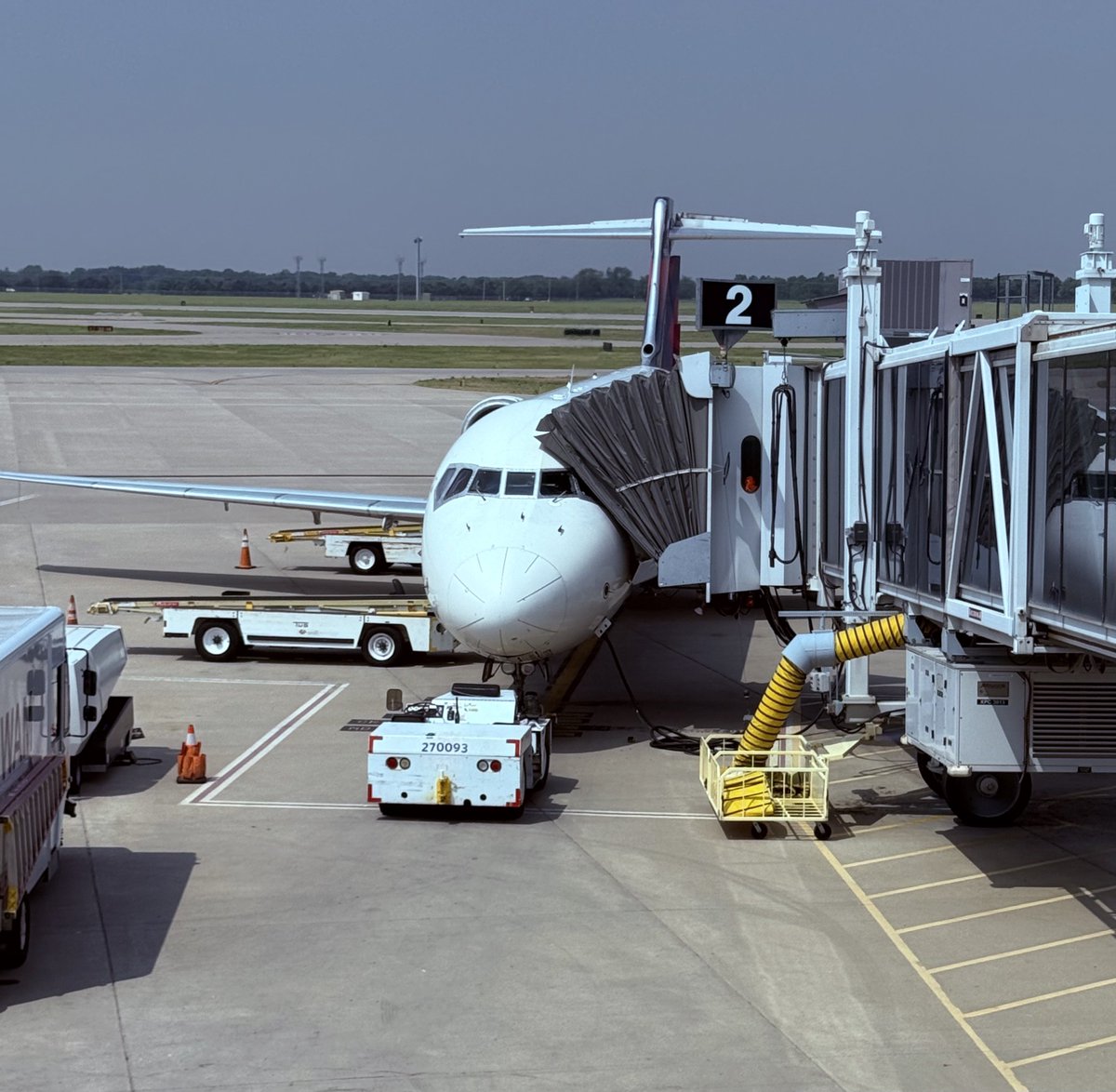
I just had the craziest experience at the airport.
We are about to board a flight to Atlanta when the pilot from the incoming plane walks out of the jetway. Guy is probably late 50s, salt and pepper hair, military look. The kind of pilot you instantly feel good about seeing on your flight.
Pilot walks over to the counter, gets on the PA system, and starts addressing everyone. “Folks, I’ve been doing this a long time. Flying one of these jets is easy. The hard part is looking at 130 people and telling them their flight is going to be delayed.”
Audible groans throughout the boarding gate. Most people here are flying to Atlanta as a layover before another flight. 130 people just had their day become a complete mess.
The pilot goes on. “I get it, trust me. But here’s the deal: During our landing, we had a small mechanical issue. I’m not your pilot for the next leg, but I don’t feel confident the jet’s safe to fly until we have a mechanical team look it over, and I don’t feel comfortable asking the next pilots to fly you guys until we get confirmation.”
He points at the agents next to him behind the counter: “Now, none of this is the agents’ fault. Please be kind to them. I’m the one who made this decision, not them, so any inconvenience you experience is my fault. Just please know that I don’t do this lightly, and I’m only doing it because I believe it’s in the best interests of everyone’s safety.”
Now this is where the story gets crazy. The pilot puts the microphone down, grabs his suitcase, and all the people in the gate…
Start clapping.
I’m not joking, everyone starts clapping for the guy. 130 people who just had their travel plans ruined give an ovation to the guy who made the decision and delivered the message.
All because he addressed them with decency and transparency, took ownership of the decision, made it clear that it was necessary, and explained why it was in everyone’s best interest.
It’s honestly one of the best examples of strong communication—of strong leadership, for that matter—that I’ve seen in a long time.
@Delta, whoever your Atlanta to Wichita pilot was this morning, he’s one of the good ones. Please tell him the delayed passengers of flight 1637 appreciate what he did.
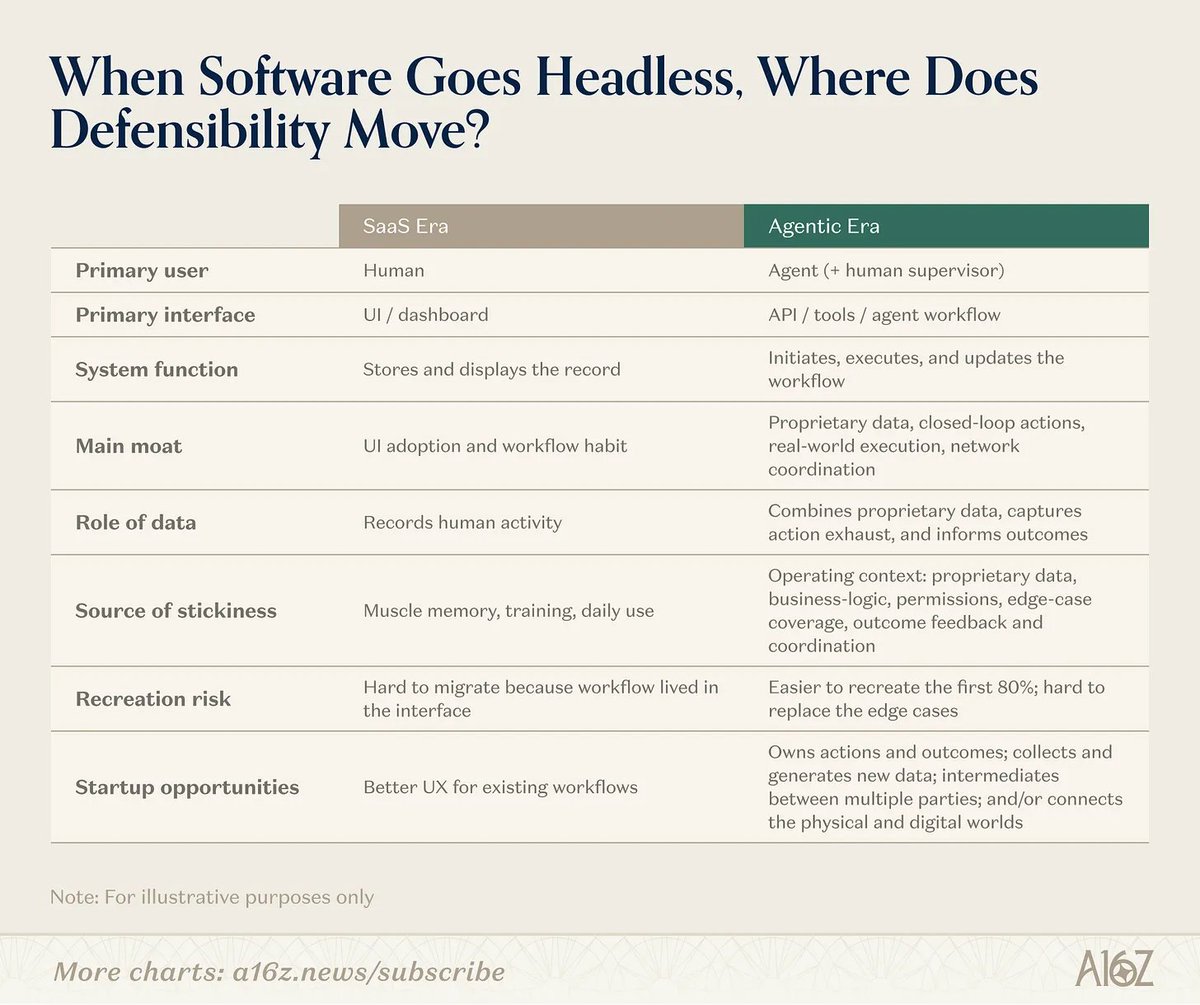
Last month Salesforce announced it would open its APIs and launch a headless product, essentially betting that in an agentic world, its value lies in the data layer, not the UI.
The announcement is a useful prompt for a more interesting question: if you strip away the UI and expose the database, what are you actually left with?
a16z's Seema Amble on where defensibility moves in the agentic era & how businesses will adapt: https://t.co/8hOj26bPuf
Does anyone else agree with me that Amazon is a total fail on the copywriting front? If they actually employed someone with basic writing skills to write product descriptions with some emotional appeal, they could raise prices by 10% and sell more.
They don't need to become the J Peterman catalogue, but just make an effort.
Have you seen the two-hundred-foot-long
billboards in the country beyond town?
Did you know that once billboards were only twenty feet long? But cars started rushing by so quickly they had to stretch the advertising out so it would last.
Ray Bradbury wrote that in 1953.
It could have been written yesterday.
The feed moves faster every year.
So we make the billboard longer.
Nobody asks the better question:
What if the message were strong enough to make someone slow down?
That's message market fit.
--
Quote from Fahrenheit 451.
@zerohedge TV’s culture code was GATHERING.
Streaming’s code is ESCAPE.
One brought families together around shared time. The other lets individuals disappear into personal feeds.
The death of TV is the death of collective attention.