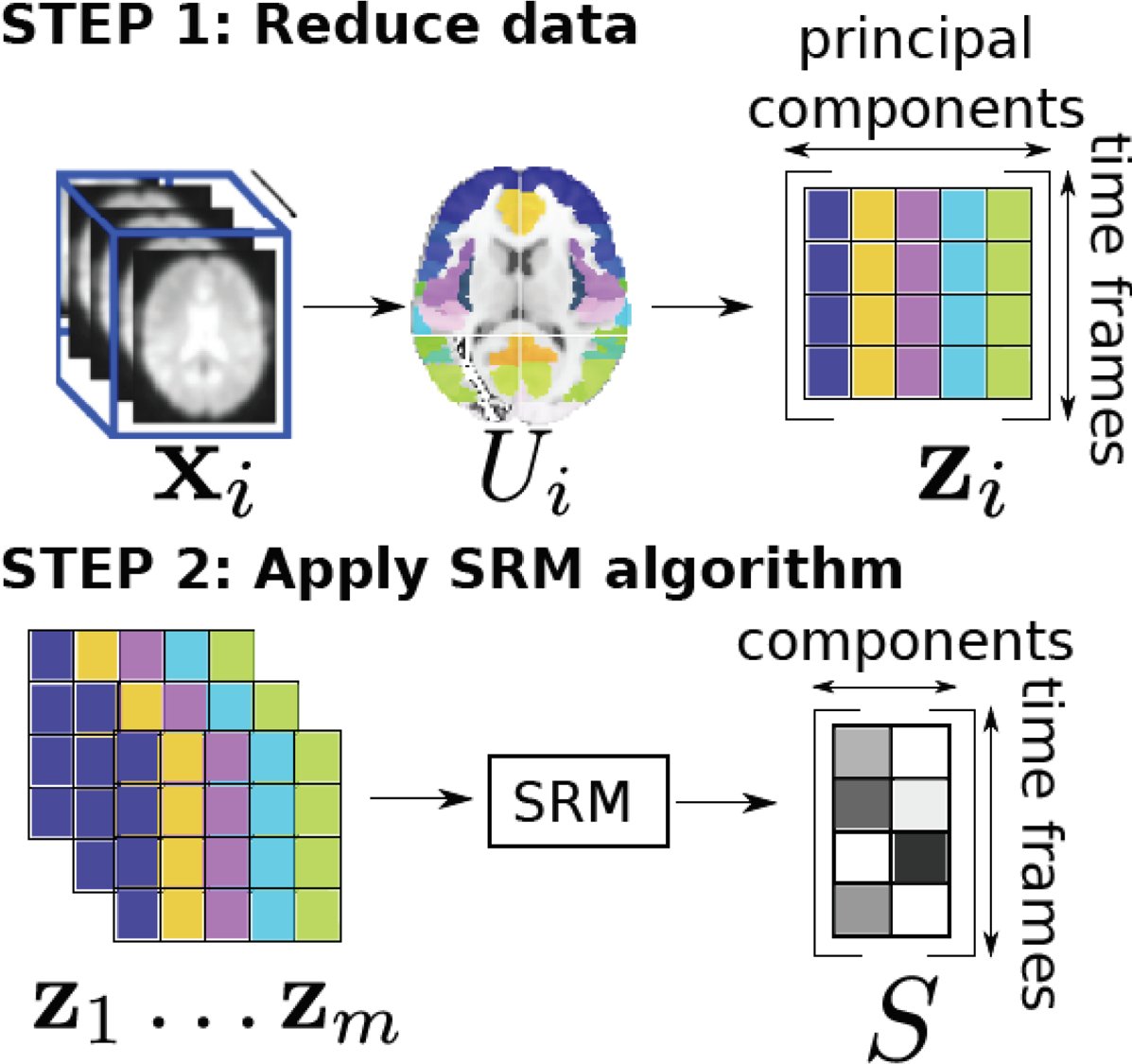
The #IBC 3rd-release data-paper is out! We validate naturalistic tasks using #FastSRM, an unsupervised model where a shared response and individual maps are learnt jointly from fMRI time series. Check it out! https://t.co/Qaj6ota2hs @BertrandThirion @hr1ch3rd@NeuroSpin_91
Since I joined @CriteoAILab, I started digging into applied causality topics. Our recent work “Maximizing the Success Probability of Policy Allocations in Online Systems” got accepted to AAAI-24 🥳!
https://t.co/XFjziS9bEI
Ping @artembetley@RahierThibaud
🧵🧵🧵
Looking forward to present at #NeurIPS2023, NOLA & Paris, a unification framework for diffusion models and GANs.
It opens up the possibility to train generators with diffusion and GANs without generators!
📜 https://t.co/TRTjgFRFnW
🖥️ https://t.co/HOLfG2nTz2
The preprint on the #IBC-dataset 3rd-release is out! We showcase the application of #FastSRM to extract, from naturalistic stimuli, functional networks of the visual, auditory and language systems. Check it out! https://t.co/SKcqbhFGuN @BertrandThirion
New paper by @hr1ch3rd and @BertrandThirion offers a fast, memory efficient, and identifiable application of the shared response model https://t.co/ijd7Qxd2Ol
Notably, we demonstrate, both theoretically
and through simulations, how preemptive algo-
rithms can greatly outperform non-preemptive
ones when the durations of different job types
are far from one another, a phenomenon that does
not occur when the type durations are known. 6/6
In both cases, we design algorithms that achieve sublinear excess cost, compared to the performance with known types, and prove lower bounds for the non-preemptive case. 5/6
We then move to two learning scenarios where
the types are unknown: non-preemptive problems,
where each started job must be completed before
moving to another job; and preemptive problems,
where job execution can be paused in the favor of
moving to a different job. 4/6
We study single-machine scheduling of jobs, each
belonging to a job type that determines its dura-
tion distribution. We start by analyzing the scenario where the type characteristics are known. 3/6
Joint work with Nadav Merlis*, Flore Sentenac*, Corentin Odic, Mathieu Molina and Vianney Perchet.
Paper: https://t.co/EjH7TO2f8J
Code: https://t.co/NDmSOyWZPI
*equal contribution
Come see our poster today between 2PM and 3:30PM at Exhibit Hall 1 ! 2/6
[ICML 2023, Exhibit Hall 1, Today at 2 PM] On a scheduling problem, we learn hints about job sizes as more jobs are scheduled. We use hints to make better scheduling decision via a combination of bandits methods and worse case scheduling algorithm. 1/6
📢📢 New preprint: https://t.co/GIjdbnFMmv
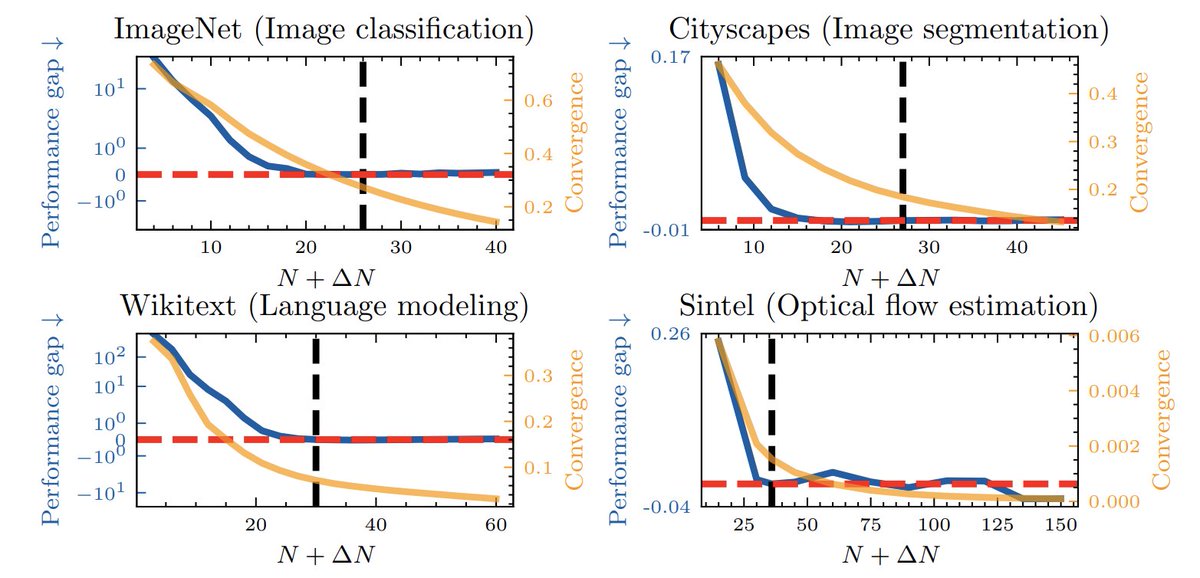
"Test like you Train in Implicit Deep Learning"
w. @PierreAblin@tomamoral@gabrielpeyre
We investigate whether implicit deep learning models benefit from more test-time inner iterations.
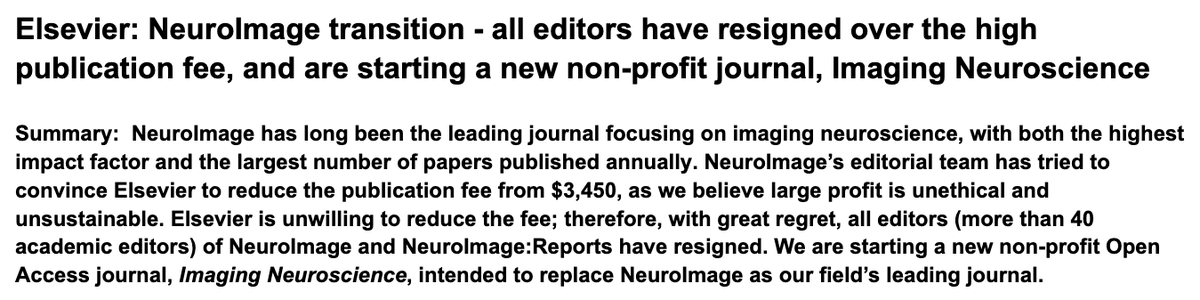
Following Elsevier's decision to raise the APC for NeuroImage to $3,450, all editors (inc. EiCs @fmrib_steve@tobergmann@BirteUta) from NeuroImage and NeuroImage:Reports have resigned, effective immediately. I am joining this action and have also resigned https://t.co/0aamG7bemJ
C'est un honneur de recevoir le #SophIA Award 2022, et d'être intégrée et soutenue par @InriaStartup, @IncubatPacaEst, et @3IAcotedazur. Merci à Marco Lorenzi d'avoir collaboré avec nous, et nous avons hâte de poursuivre notre plan d'action cette année!
Our paper on using Optimal Transport to compare human cortical surfaces was accepted at #NeurIPS22 🥳
We implement a new OT solver (FUGW) to compare human brains although their anatomy and functional activity patterns differ a lot.
https://t.co/MvB7Xevoel
https://t.co/djYFTIonmX
Thrilled to give an oral tomorrow at 10:30 at #OHBM22!
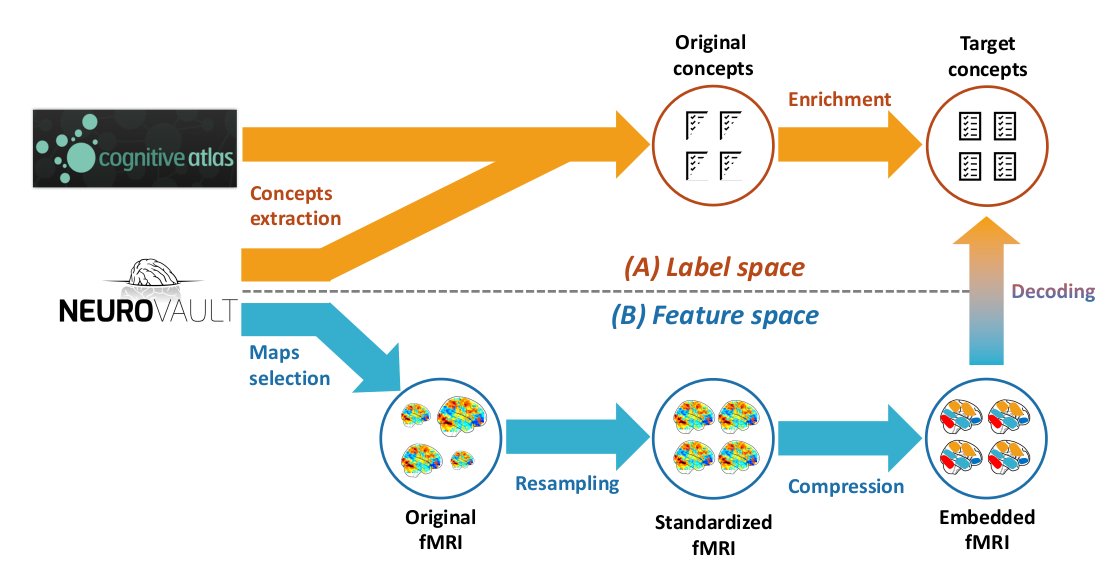
We successfully decode 50 cognitive processes from fMRI maps by exploiting the large amount of data in @Neurovault and leveraging the @CognitiveAtlas ontology
See you in M1 for the Modeling and Analysis Activation session!
Thrilled to give a demo brain-cockpit 🧠🚀, a web-based viewer @StanDehaene, @BertrandThirion and I have been working on to explore deep phenotyping fMRI data and individual alignments!
See you @OHBM friends in M1 at 13:00 ☺️
Now out in @ApertureOHBM! Our comprehensive overview, led by @manojneuro, of the @UseBrainIAK toolkit for advanced fMRI analysis https://t.co/3tgGANtkCJ


![hr1ch3rd's tweet photo. [ICML 2023, Exhibit Hall 1, Today at 2 PM] On a scheduling problem, we learn hints about job sizes as more jobs are scheduled. We use hints to make better scheduling decision via a combination of bandits methods and worse case scheduling algorithm. 1/6 https://t.co/lCkwcJJV0l](https://pbs.twimg.com/media/F15SavXacAMwqoo.jpg)