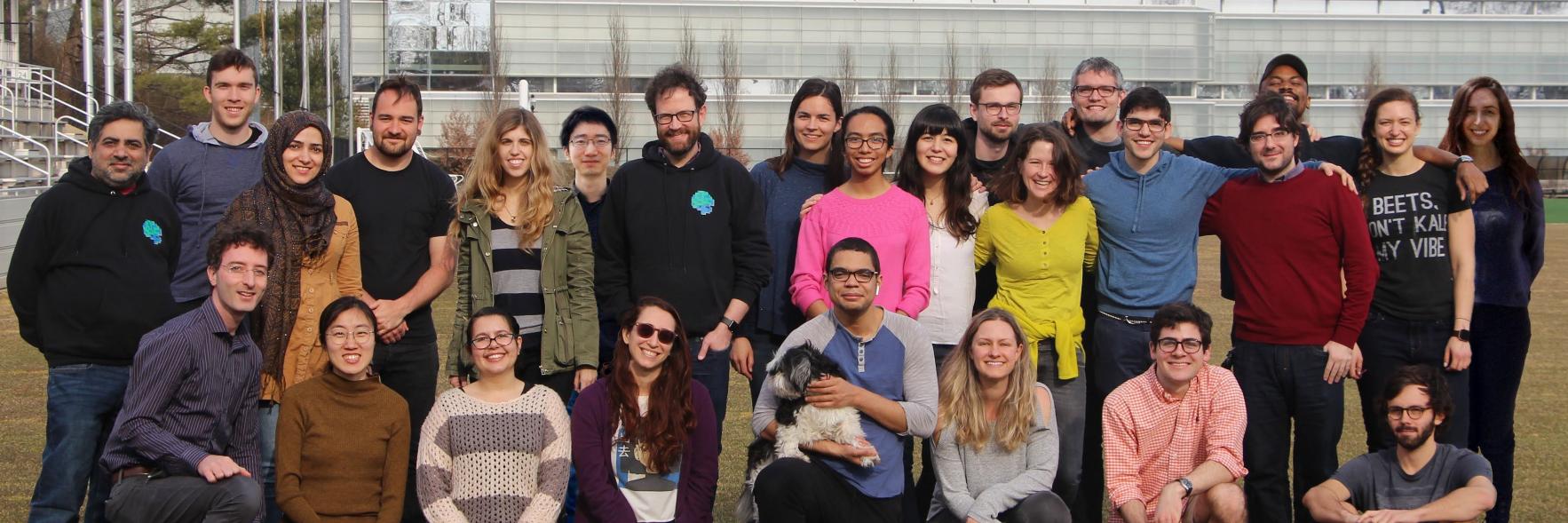
Come work with us! The Neuroscience Institute and the Department of Psychology at Princeton University are searching for a tenure-track Assistant Professor in the area of human cognitive neuroscience, to be hired jointly in Psychology and Neuroscience: https://t.co/J51o21uDfQ
Towards large language models with human-like episodic memory
Review by Cody Dong, Qihong Lu, Kenneth Norman, & Sebastian Michelmann (@s_michelmann)
Free access before Sep 14: https://t.co/cgahQIlDkZ
New paper with Cody Dong, @Qihong_Lu, and @s_michelmann out today in @TrendsCognSci, exploring the relationship between memory-augmented LLMs and human episodic memory -- see Sebastian's post below for a link to a thread and the paper
This was such a fun collaboration! I am thrilled to see this out today!! Amazing work by Cody Dong comparing memory-augmented LLMs to human episodic memory. https://t.co/QG9tfK17tQ
New paper led by @jay_neuro: Repetition of musical themes in Eternal Sunshine of the Spotless Mind reactivates memories of earlier scenes, and this neural reactivation correlates with subsequent memory for those scenes! Check out Jamal's thread below 👇
Music is an incredibly powerful retrieval cue. What is the neural basis of music-evoked memory reactivation? And how does this reactivation relate to later memory? In our new study, we used Eternal Sunshine of the Spotless Mind to find out. https://t.co/6yXyRLdyZT
@Qihong_Lu is starting his lab at City U of Hong Kong! This is a truly amazing opportunity for trainees interested in computational cognitive neuroscience and neuroAI
I’m thrilled to announce that I will start as a presidential assistant professor in Neuroscience at the City U of Hong Kong in Jan 2026!
I have RA, PhD, and postdoc positions available! Come work with me on neural network models/experiments on human memory!
RT appreciated!
(1/5)
1/n🤖🧠 New paper alert!📢 In "Assessing Episodic Memory in LLMs with Sequence Order Recall Tasks" (https://t.co/S8BZzkFVM6) we introduce SORT as the first method to evaluate episodic memory in large language models. Read on to find out what we discovered!🧵
How can we efficiently find task representations online that work well for the ongoing task while leveraging relations with other tasks? Our simulations show that episodic memory can help!
URL: https://t.co/5QmakrVJDs
Here’s a summary:
(1/n)
Happy to share our new project led by @beukersandre on how blocked training facilitates learning of multiple schemas, with @collinsilvy, @rosskempner, Nick Franklin, and @gershbrain – see 🧵below https://t.co/1NWMg3R32q
A Bayesian model incorporating representational splitting explains better memory performance in blocked compared to interleaved learning contexts. @ptoncompmemlab
https://t.co/A0AzCccZEr
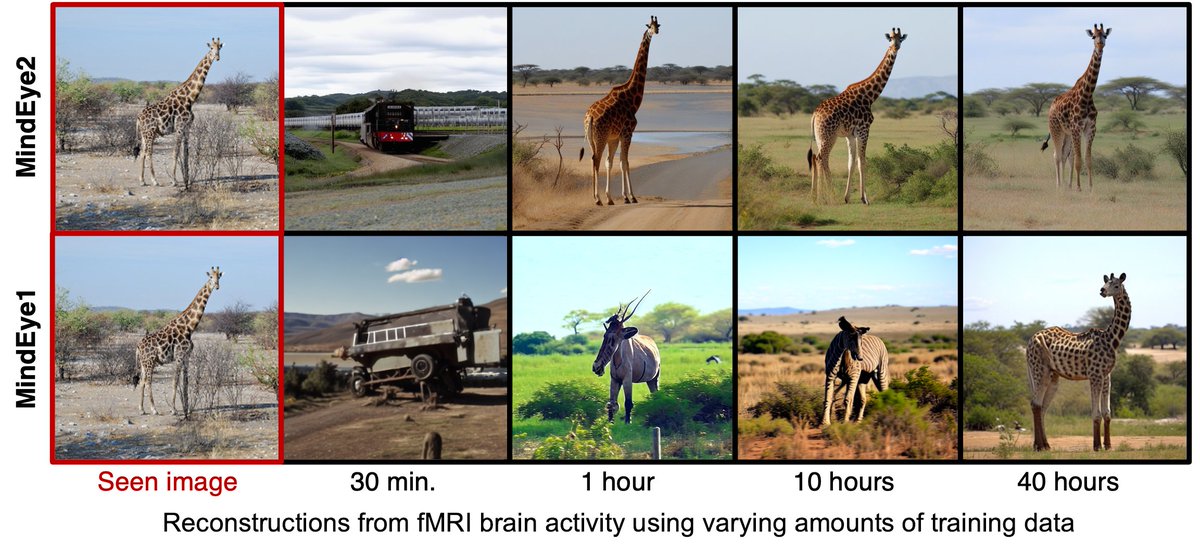
🧠👁️Our MindEye2 preprint is out!
We reconstruct seen images from fMRI brain activity using only 1 hour of training data.
This is possible by first pretraining a shared-subject model using other people's data, then fine-tuning on a held-out subject with only 1 hour of data.🧵
I’m excited to announce our new preprint -- Neural codes track prior events in a narrative and predict subsequent memory for details! URL: https://t.co/0cMiLCLsl1 @ptoncompmemlab
Happy to share MindEye got accepted for spotlight poster at #NeurIPS2023! See you in New Orleans!
Updated camera ready paper is also now live on arxiv: https://t.co/i35fQ81uQv
Has various revisions including new appendix figures and more comprehensive references to other work.
Come work with us! @PrincetonNeuro and @PrincetonCS are searching for a joint faculty member in NeuroAI and intelligent systems. On the PNI side, our human cog neuro group (already v. computational) is esp keen to develop more connections with AI and CS. https://t.co/GPznvXSFa1
🎉 Many of you already know, but I'm thrilled to be joining @nyuniversity Psychology as an Assistant Professor this fall. I'll be looking for at least one postdoc, a lab manager, and I will be recruiting PhD students. Please retweet and stay tuned for details! (1/2)
@Psychonomic_Soc It is such an honor to receive this award! I am deeply grateful to all of the colleagues who have supported me throughout my career, and to the *truly amazing* trainees that I've been privileged to work with here at Princeton.
Announcing 🧠👁️ MindEye!
Our state-of-the-art fMRI-to-image approach that retrieves & reconstructs images from brain activity, is out as a preprint!
MindEye takes human brain activity as input and outputs reconstructed images like these.
Project page: https://t.co/CRJXeyK1pc
How do we search through naturalistic memories? Join me at my poster 4.3.4 “Tracking the reinstatement of event representations during continuous memory search with human ECoG.” for event boundaries, memory-scanning, ECoG, hippocampo-cortical interactions, and more #LEARNMEM2023
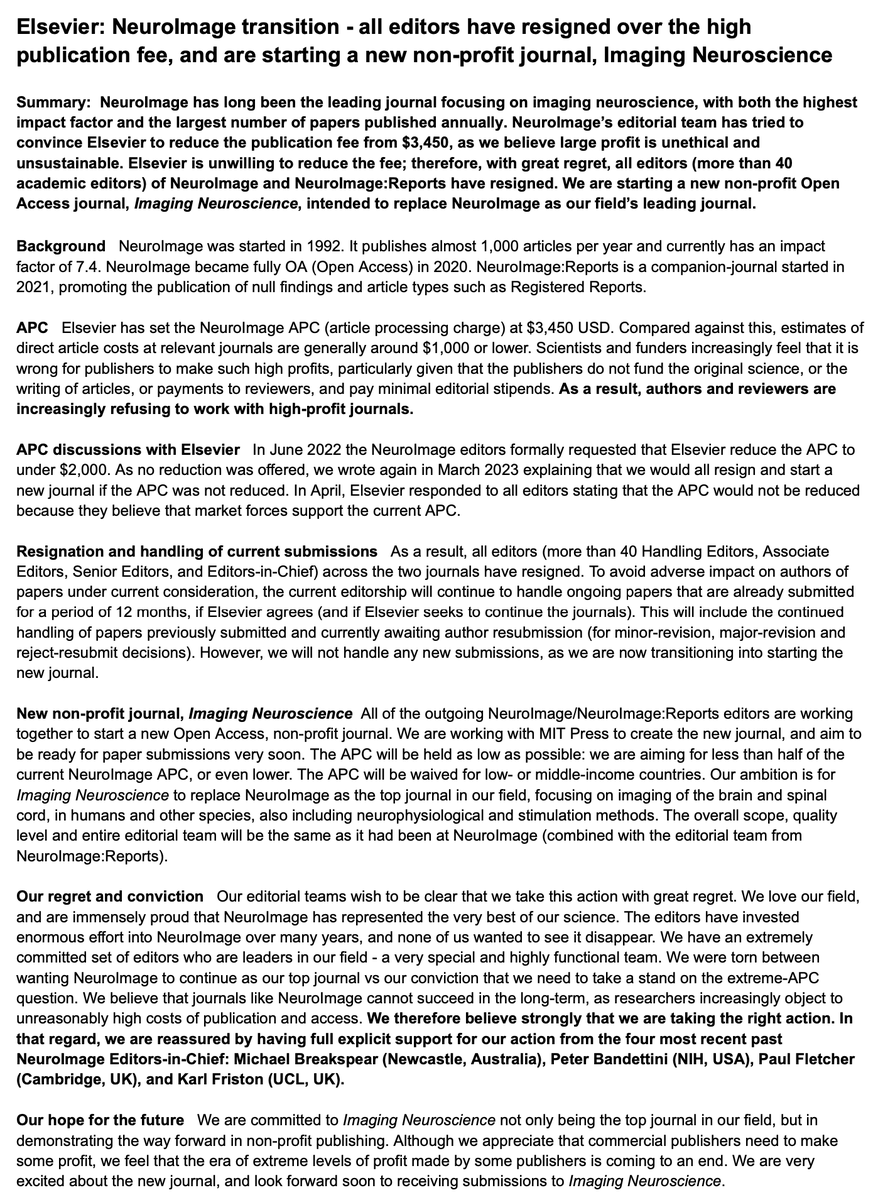
All NeuroImage and NeuroImage:Reports editors have resigned over the high publication fee, and are starting a new non-profit journal
https://t.co/DmnwDKVCK7
This comes with great regret, and a huge amount of thought and discussion- please read announcement to get more details.
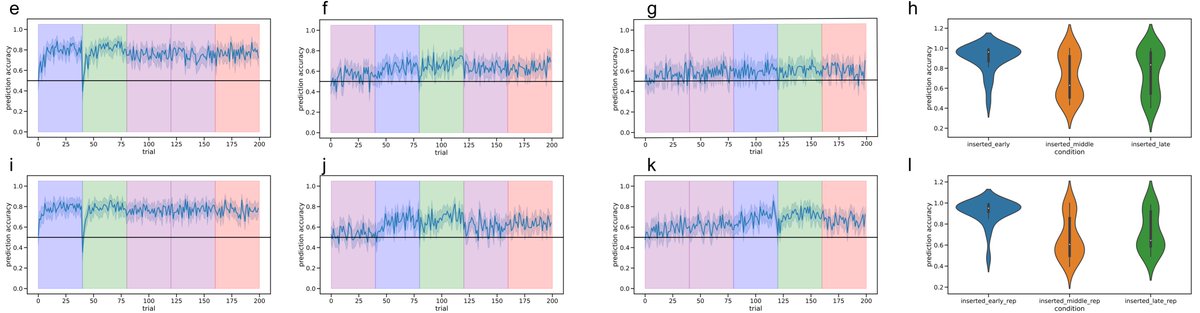
Overall, these results provide strong support for splitting models: When an environment is generated by different latent causes, splitting can provide critical benefits for life-long learning, allowing us to hold onto knowledge even when training occurs in blocks.
Happy to share our new project led by @beukersandre on how blocked training facilitates learning of multiple schemas, with @collinsilvy, @rosskempner, Nick Franklin, and @gershbrain – see 🧵below https://t.co/1NWMg3R32q