found a guy charging dentists $3,500/year to file paperwork
$2.4 million last year
zero followers
the glitch:
every dentist in america needs compliance documents filed or they get fined
osha stuff
hipaa updates
infection control logs
boring paperwork that changes every year
dentists have no idea what to file
they went to dental school not compliance school
so they panic and pay someone to handle it
680 practices paying him $3,500/year
recurring
team of 3 handles everything
he works 15 hours a week
mostly golf
no content
no courses
no brand
no audience
asked why he stays invisible
"attention attracts competition"
hes been running this for 6 years
while guys with 100k followers fight over $8k months
he files paperwork and deposits checks
unsexy problem + wealthy customer + recurring need
thats the whole formula
stay invisible
get rich
strategic exit is the best option for founders stuck with good logos, low revenue
you have maybe 500k, maybe a million ARR, slow growth, a few million raised (high pref stack)
the series A market wants 10x growth and you're at 1.5x. the AI hype cycle means every big company is building what you built. and you're having honest conversations with yourself about whether this is the thing you want to grind on for another decade
you've started taking partnership calls. integrations. strategic conversations. you're wondering if any of these could turn into something more
you may have heard that the best acquisitions often start as partnership conversations. but there's a right way and a wrong way to make that transition
this is the playbook and a checklist for partnership conversation to strategic acquisition
Part 1: Get Clear Before You Do Anything
before you try to convert a single conversation, you need to answer questions you've probably been avoiding
- write down why you want to exit. not the version that sounds good. what's actually true
- separate external noise (competitor raises, market panic, exhaustion) from internal signal
- is this your life's work or act one? neither answer is wrong but you need to know which one it is
- define what success looks like in real numbers. be specific
understand this: once you commit to selling, every decision optimizes for that outcome. you can't half-commit to an exit
the founders who struggle most are the ones running parallel tracks - trying to raise and trying to sell simultaneously. investors can smell it. acquirers can smell it. pick a lane
Part 2: Map Your Buyer Universe
you probably have 3-4 companies in your head that "might acquire us someday"
that's not enough. you need 20+
- list every company where your product could extend their roadmap
- research acquisition history. have they bought companies at your stage? your size?
- find founders they acquired. cold outreach if you have to. ask: how did it happen, who made the decision, what did the process look like
- identify overlapping customers. shared customers = easier integration story = higher willingness to pay
- understand their product roadmap. where's the gap you fill?
- note the financial structure of these companies, which companies have PE backing, which are venture funded, which are profitable, etc - try to figure out if they have cash to pay (it'll also help positioning it the right way with your investors and the board)
most founders skip this work and then wonder why they only got one lowball offer
Part 3: Reading Signals in Partnership Conversations
you're already talking to potential acquirers. you just might not know which ones yet
signals they're only interested in partnership:
- questions about APIs, SLAs, integration timelines
- focus stays on product mechanics
- conversation moves at normal business development pace
- only BD or product people in the room
signals something bigger might be brewing:
- questions about financials, runway, team size, your plans
- asking what you're thinking or where you're headed
- questions that go beyond partnership scope
- unusual urgency in scheduling follow-ups
- senior people showing up unexpectedly
- they start asking about your team's background and experience
if there's real acquisition interest, they won't wait for you to be obvious. they'll start asking the questions themselves
Part 4: The Slow Reveal
you cannot go from "let's discuss API integration" to "want to buy us?" in one conversation. that's how you kill deals before they start
stage 1 - relationship building (weeks 1-8)
- keep conversations product-focused
- build genuine rapport with people who matter
- understand their problems, roadmap gaps, strategic priorities
- gather intel on decision makers and internal politics
- do not mention acquisition. do not hint
stage 2 - strategic alignment (weeks 8-16)
- start discussing how your product fits their long-term roadmap
- share your perspective on where the market is going
- let them connect the dots between your capabilities and their gaps
- ask about their build vs buy philosophy (this is recon, not a pitch)
- still don't mention acquisition explicitly
stage 3 - soft signal (only when you sense reciprocal interest)
- mention you're "thinking about the next chapter" or "exploring what's next"
- gauge reaction carefully. do they lean in or change subject?
- clarifying questions = interest. moving on = not interested
- if they bite, you can be slightly more direct: "we've had some inbound interest and we're figuring out what makes sense"
stage 4 - explicit conversation (only after you have another horse in the race)
- once a different company is formally diligencing you, now you can be obvious with others
- this creates urgency without desperation
- "we're in conversations with a couple of strategic partners about potential acquisition and wanted to see if [company] might be interested"
- never be obvious before you have at least one real process running
Part 5: Timing the "Obvious" Moment
this is where most founders mess up. they either reveal too early (desperation) or too late (no leverage)
too early to be obvious:
- no one has expressed formal acquisition interest
- you haven't mapped the full buyer universe
- you don't have runway to walk away from a bad deal
- you're hoping someone will rescue you
right time to be obvious:
- one company has explicitly said they're diligencing you for acquisition
- you've signed mutual NDAs
- their team is actively reviewing your business
- you have enough runway to negotiate from strength
too late:
- after you've signed a term sheet with exclusivity
- now you can't talk to anyone else and you have no leverage
remember once you're obvious, word travels fast in your market. competitors will use it against you with shared prospects. customers may get nervous about signing annual contracts. there is no going back
Part 6: Separating Real Interest from Noise
you'll waste months chasing phantom interest if you can't tell the difference
it's real when:
- they send an NDA or ask you to send one
-they explicitly use the word "acquisition" not "partnership" or "strategic opportunity"
- they want financials, cap table, customer contracts
- conversations accelerate rapidly (weeks not months)
- decision makers are in the room or on the call
- corp dev gets involved (but is not only team)
- they're asking about your team's retention and equity situation
it's noise when:
- conversations drag with no clear next steps
- they keep exploring but never commit to anything
- questions stay surface level
- only junior people are involved
- they're vague about timeline or process
- they want to "keep talking" indefinitely
slow conversations mean low interest. if they wanted you, they'd move fast. real deals happen in weeks. fake interest drags for months
Part 7: Running a Competitive Process
you have almost no leverage with one buyer. you have significant leverage with two or more
- never negotiate with just one party if you can avoid it
- use diligence with company A to create urgency with companies B and C
- verbal offers or term sheets are your key leverage points
- once you sign a term sheet you're usually in exclusivity - that's your last moment to create competition
- maintain warm relationships with backup buyers throughout the process
- warm relationships convert 10x faster than cold outreach when you need them
a sample phrase that creates urgency: "we're in active discussions with another party and expect to have a term sheet soon. wanted to give you a chance to participate in the process if there's interest"
Part 8: Protecting the Business During the Process
acquisitions fall through constantly. you cannot let your business die while chasing a deal
- assume anything you share could reach competitors
- be careful what you reveal before NDAs are signed
- competitors may weaponize "they're trying to sell" against you with shared customers
- keep your team focused on execution. tell them nothing until there's something real to tell
- don't let pipeline die. keep selling. keep shipping
- a business that's still growing is worth more than one that stalled during a sale process
Part 9: Understanding Valuation Reality
most founders have no idea how acquirers actually value companies at your stage
strategic acquisition math:
- buyer pays based on strategic value to them, not your revenue multiple
- what gap do you fill? what do they avoid building? what customers do you bring?
- lightning in a bottle is possible (someone pays $50M for a $600k ARR company) but it's not the median case
- your leverage: competing interest, strategic fit, team quality, technology moat, customer relationships
financial acquisition math:
- buyer pays based on cash flow potential
- at sub-$5M ARR, multiples are compressed (often 1-3x)
- they're buying a small business, not a strategic asset
- outcome often goes to founders OR investors, rarely both
- proceed only if you're okay with smaller numbers
the gap between these two is massive. a strategic buyer might pay $30M for something a financial buyer values at $1.5M. know which game you're playing
Part 10: The Process Timeline
knowing what normal looks like helps you spot when things are off
typical timeline:
- initial interest to term sheet: 4-12 weeks
- term sheet to close: 6-12 weeks
- fastest deals (strong buyer need, clean company): 2-3 weeks to term sheet
- slow deals (lukewarm interest): drag for months, often die
key milestones in order:
- first conversation that goes beyond partnership
- explicit statement of acquisition interest
- mutual NDA signed
- data room access shared
- management presentations / deep dives
- verbal offer
- written LOI or term sheet
- exclusivity period begins
- full legal and financial diligence
- definitive agreement signed
- close and wire
if you're stuck between steps for more than 2-3 weeks with no clear reason, something is wrong
Part 11: Who to Cultivate, Who to Deprioritize
your time is limited. spend it on people who can actually make things happen
prioritize:
- founders who sold to your target buyers (best intel you'll get)
- people with direct line to decision makers
- product leaders who own the roadmap you'd fit into
- corp dev if the company has an active M&A function
- executives who would sponsor the deal internally
deprioritize:
- people who can't influence decisions no matter how friendly they are
- BD folks with no strategic authority
- anyone who seems to be collecting intel rather than evaluating
- junior employees who take meetings but can't escalate
one warm intro to the right person beats twenty coffees with the wrong people
Part 12: Red Flags to Watch For
not everyone negotiating with you has your interests in mind
- buyer trying to extract IP through "partnership" before acquiring (or instead of acquiring)
- endless diligence with no movement toward term sheet
- verbal offers that never become written
- term sheets with unusual conditions, aggressive reps and warranties, or escrow that eats your proceeds
- pressure for exclusivity before they've given you real terms
- acqui-hire framing when they're really getting product + customers + team
- "we need more time" repeated more than once
- radio silence after you've shared sensitive information
trust your gut. if something feels off, it probably is
the meta point:
most founders in your situation know the options. the hard part isn't knowing what to do. it's deciding which path and committing fully
half-committed founders get half-committed outcomes. you can't simultaneously optimize for series A and strategic exit. pick the path that matches your internal motivation - not what vcs are telling you, not what other founders are doing, not what your investors want
then execute against that path with everything you have
the founders who get the best outcomes are the ones who answer the hard questions early, commit to a direction, and make every subsequent decision in service of that outcome
good luck
I want to be life maxxing more
Feel as though I've developed poor habits recently and not as sharp as I was (reduced attn span, doomscrolling more, not doing as much sports)
What are some of the best habits to develop to be your optimal self?
I'm talking about things that require minimal financial investment (it is a bear market after all)
today is my 35th birthday, so here are 35 things I’d recommend to anyone:
- Take less melatonin. The actual effective dose is closer to 0.5mg, not the 5mg that some pills advertise.
- Do 6 cycles of 4-7-8 breathing before you speak in public to bring your heart rate down by ~10 bpm.
- Buy little chocolates for your house. When you have people visiting overnight, put the chocolates on their pillows. Tiny money spent, gets a big smile every time.
- Use text replacement shortcuts (e.g. $ph for your phone number, $em for your email, $ad for your address, $pass for your passport, etc). Takes 5 min to set up and saves so much hassle.
- Take Lactaid. You are probably at least a little lactose intolerant. Try it for a week and see what happens to your stomach.
- Buy fewer clothes, but get them tailored to you. A $50 shirt with $10 worth of tailoring beats a $150 shirt most of the time.
- Buy expensive socks and underwear. Costs basically nothing over the course of a year.
- Do 50 little jumps right when you wake up. I don’t know why this works. But it does. Try it for a week and tell me it doesn’t.
- Don’t overthink it. Especially if you’re below 30 years old, you’re probably overthinking it. Just do it.
- When you meet a child under 3 years old, give them an exploding high five and you will become best friends every time.
- Rent, don’t buy. Buying a home is dramatically overrated in your 20s and 30s when location flexibility is one of your biggest advantages.
- Never sell bitcoin.
- When you travel to a new city, pick one song and play it on repeat. For the rest of your life, that song will teleport you back to that time and place.
- Drink Tequila or Mezcal for reduced hangovers.
- Learn how to take a compliment (it’s surprisingly hard!). My usual response: “that’s kind of you to say”.
- Buy a good pair of compression socks, they make a meaningful difference for jet lag on overnight flights.
- Use the Pomodoro Technique for more productivity. 25 minutes on, 5 min off.
- Play padel tennis. Much more fun than pickleball.
- Learn to write clearly. It’s the most underrated cheat code for your career. You spend all day writing messages, docs, etc - it pays to get good at it.
- Use Letterboxd to track movies you watch and find movie reviews (more helpful than rotten tomatoes most of the time)
- Get a water flosser. It's as good as they say it is.
- Configure your Focus Modes on your phone. Takes 6 minutes and will make your phone roughly 56% more enjoyable to own.
- Use the Airalo app for eSims when traveling. Only fools use roaming data.
- Get married. The compounding benefits of a relationship are strangely overlooked by ambitious people.
- Meditate every day. This has fallen out of the culture as a recommendation. It shouldn’t have. Waking Up remains a good place to start.
- Take 3-5g of creatine monohydrate every day. It’s the most studied supplement on earth, and the studies are glowing.
- Read "Man’s Search for Meaning" by Viktor Frankl.
- Wait to have kids until you have some money, if you can. Kids are great whenever you have them, but all things being equal parenthood is much much much easier when you have some financial comfort.
- Whenever you are missing someone, text them and tell them. Everyone wants to be missed.
- Writing, if only for yourself. Journaling, gratitude or otherwise, will change the way you see your own life and give you actual main character energy.
- Sweat 5 times a week. Saunas and steam rooms remain underrated. Working out also great, of course.
- Have at least 5% of your net worth in crypto. Do not have more than 75% of your net worth in crypto.
- Use Readwise to surface highlights from books and articles. Helps dramatically to actually remember the things you learn.
- Play bullet chess. It is the most fun and addictive hobby that actually makes you smarter. Learn the Danish Gambit for double the fun.
- Just use Jupiter
Why so many fail in achieving their dreams?
Most people dream of changing the world, dream of achieving big $, or dream of achieving status & power, a select few even have the ambition to achieve serious inner development, but most can barely get out of bed, why is that?
So many fail in their big ambitions since they can´t even properly take care of themselves:
take care first of:
- physical body
- energy body (emotions and flow energy in body)
- state of your consciousness
also take care of basic details:
- get up in the morning
- take care of yourself
- don´t put toxins in your body
- steady work rhythm
all the essential basics to just be a normal human being
once you get that figured out (and 99% that dream of big goals have not figured that out hence auto-sabotage themselves), you can start trying to achieve bigger goals. For example, even something as simple as building this X account, or getting a nice stack of coins, took years of daily work, providing quality in writing, daily inner work, etc. Results simply take time and effort, so be patient and focused and realize you have many years on this planet
So many fail to achieve their dreams since they want to get to the top of the pyramid without building a proper base first
Crypto is the most profitable asset class for traders.
But it's maturing fast and the edge won't last forever.
Here’s how you can build, test, and deploy systematic portfolios that survive every regime:
#HyperEVM is live on Fireblocks
Built for speed, security, and institutional #DeFi—this was a highly requested integration, and it’s here.
@HyperliquidX 🚀
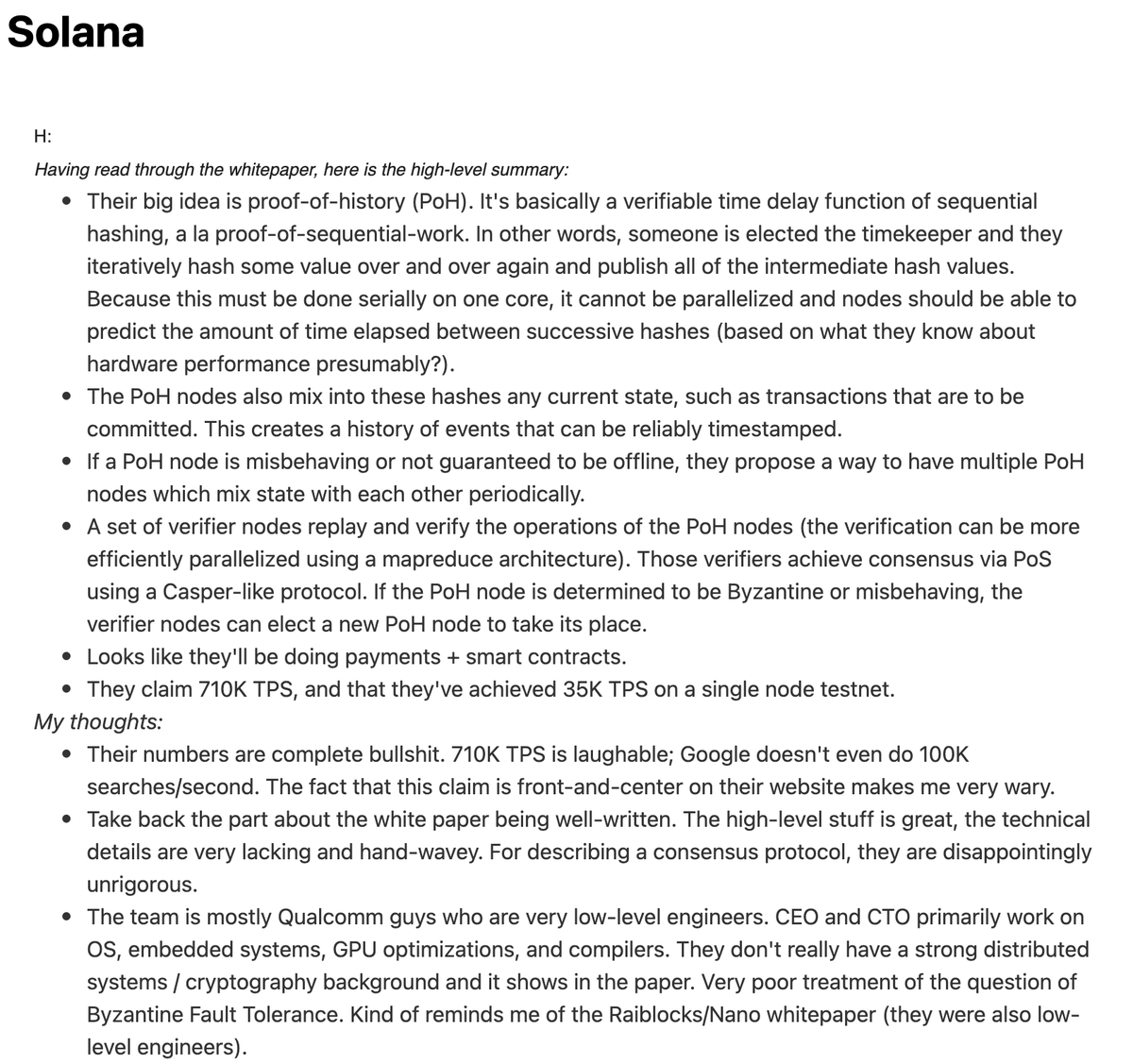
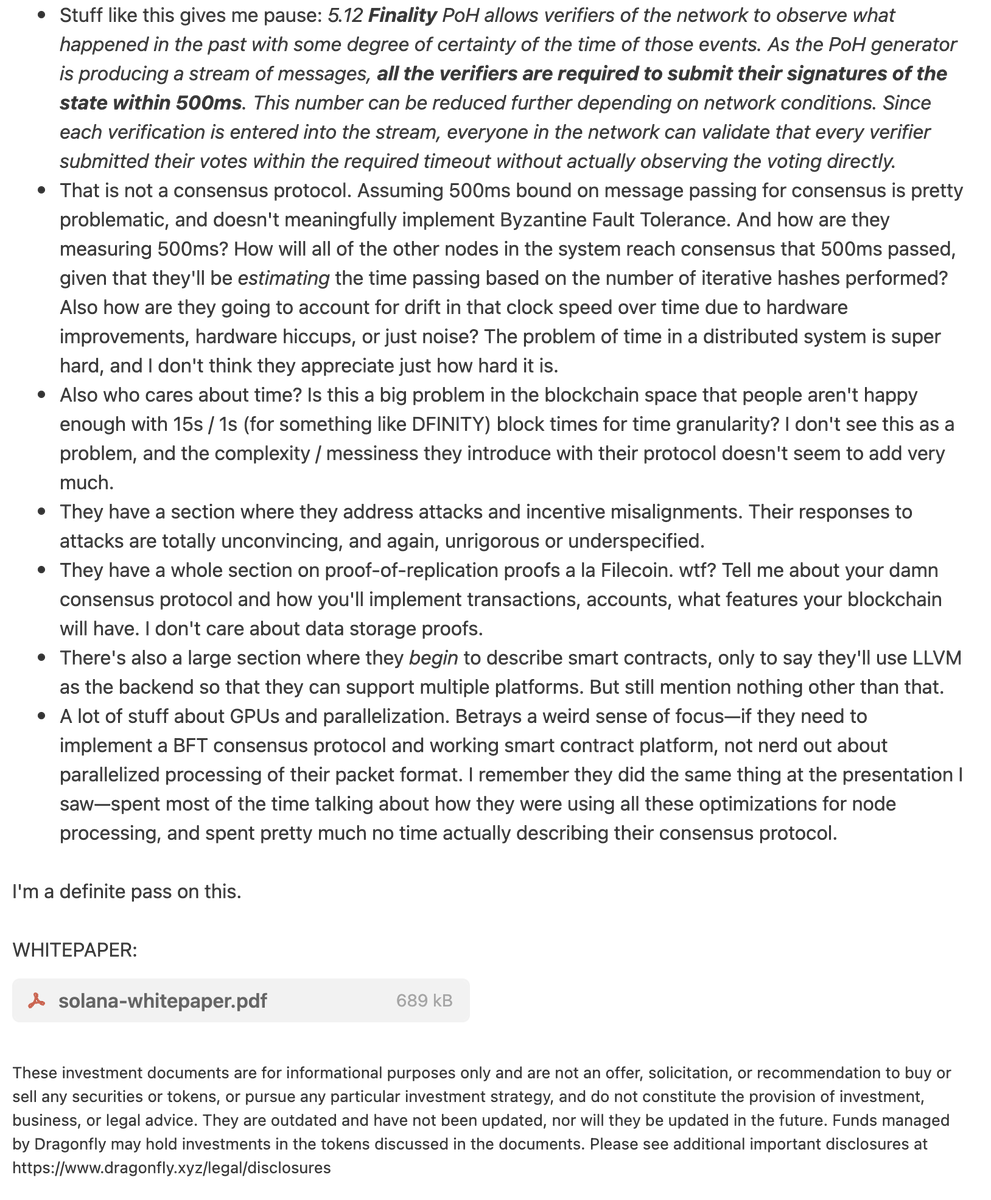
I passed on @solana's seed round in early 2018 at $0.04.
At current prices, that's a 3,250x.
Solana was one of my first ever pitches as a junior VC, and back then I wrote memos for every deal I passed on (adorably naive and overconfident).
Re-reading this memo now is peak junior VC cringe. At the time we were obsessed with "Ethereum killers," consensus protocols, and what was going to replace the EVM / eWASM.
So here it is, fully unedited—the worst investing miss of all time.
Happy birthday, Solana! 🎂
Goodbye ChatGPT
It’s only been 5 days since Deepseek R1 dropped, and the World is already blown away by its potential.
13 examples that will blow your mind (Don't miss the 5th one):
AGiXT's new interface first demo! First of many to come that covers the registration and basic chat. We will do many more soon! Can you guess the voice? @AGi_XT
I made nearly a MIL on $TRUMP (it wasn't luck)
My insider wallets I'm tracking rn bought it at $2M
So I just copied them AHAHAHAHAHAHAHAH
GG, here're the insiders and how I did that 🧵👇