"Multi-agent systems" has officially entered the healthcare buzzword hall of fame, right up there with "value-based care" and "interoperability."
Everyone's throwing agents at everything and calling it innovation. But every so often, a company actually shows their work. And that's exactly what Predoc (@predoc_ai) did with a new report on how they built the multi-agent architecture behind their medical records retrieval and curation engine.
The full report (link below) is a useful blueprint for any healthcare exec trying to figure out what "building with AI" should actually look like in practice or where AI can have the highest impact.
4 things worth digging into:
1. Bespoke work is the opportunity, not the obstacle. Predoc makes the case that the most valuable automation opportunities aren't the clean, standardized tasks. Those get commoditized fast. It's the messy, facility-specific, exception-riddled workflows that are actually defensible. I think that's right, and it's a useful gut-check for any exec evaluating an AI vendor's ROI or worth buying.
2. The dataset is your moat. Predoc built its system on 300K-400K provider-research tasks, nearly 3 years of transcribed retrieval calls, and millions of reviewed record pages. The foundation models are swappable. That accumulated, structured "tribal knowledge" is not.
3. Start from first principles. Break the workflow down into its simplest parts. Bound each job, structure the handoff, escalate the exception. Predoc lays out how they gave each agent a job (research, voice, indexation, extraction, curation) and a structured output the next agent can act on immediately. When something doesn't fit, the agent escalates to a human, and that resolution gets fed back into the system.
4. The numbers back it up. I was pretty intrigued by some of the results in this piece: A 2-week-plus turnaround compressed to a median of 3 business days. Provider-research time down 70%. First-pass retrieval success up nearly 50%. 94.6% of pages indexed without human intervention.
The bigger theme I keep coming back to: this is a case study in systems of intelligence sitting on top of disorganized, disparate systems of record. Predoc's real output isn't "faster fax retrieval." It's a normalized, longitudinal clinical data layer that other applications can actually query.
Big thanks to brand partner Predoc for sitting down with me and showing their work on this one.
https://t.co/jV7bBcExqH
I built a global directory of AI Biology labs and research teams:
Awesome AI Biology Labs 🧬🤖
A lab/team-centric map of the people and groups building at the intersection of AI and biology — searchable by category, type, country, and tier, with provenance tags for every entry.
The goal is simple: make the global AI × Bio research landscape easier to explore.
https://t.co/ciR7LPyo8R
More labs will be added continuously. Contributions and corrections are welcome.
🚨 We're very happy to introduce TRIBE v2: a foundation model of the brain's responses to sight, sound & language.
📄 Paper: https://t.co/uHwgOvTrRD
▶️ Demo: https://t.co/9ZX6XcOXSM
💻 Code: https://t.co/PCc2yKyh1D
🤗 Model: https://t.co/GiTKzsHUhY
If you feel like giving up, you must read this never-before-shared story of the creator of PyTorch and ex-VP at Meta, Soumith Chintala.
> from hyderabad public school, but bad at math
> goes to a "tier 2" college in India, VIT in Vellore
> rejected from all 12 universities for US masters despite 1420 on the GRE
> fuckit.jpg
> goes to the US anyway on a J-1 visa to CMU with no plan
> applies for masters (again) to 15 universities
> rejected from all except USC and with late admissions, NYU in 2010
> finds this guy called Yann LeCun (before he was famous)
> starts getting into open source
> rejected from all jobs including DeepMind
> only job is Amazon as test engineer
> his PhD mentor helps him get a job at a small startup (MuseAmi)
> rejected from DeepMind
> couldn't get H-1B because of J-1 home return issue; gets waiver through months of approval with USCIS and US State Dept
> very low on confidence
> In 2011/12 builds one of the fastest AI inference engines on phones
> rejected from DeepMind
> emailed Yann again and joins FAIR because of Torch7 open-source work
> scrapes through bootcamp at Facebook, struggling on an HBase task
> L8/L9 engineers at Facebook struggle to get ImageNet working
> figures out numerics / hyperparam issue as an L4
> first big win!
> FAIR goes well, runs 3 person torch7 team and co-creates PyTorch
> because of politics, management wants to shut down PyTorch
> cries-at-bar.jpg, literally
> eventually some people save PyTorch and it launches in 2017
> gets a EB-1 green card!
> the rest is history...
Think about that. He went to a tier 2 college. Was rejected from all Masters programs 2x. Rejected from every single job except Amazon test engineering. Rejected from DeepMind 3x. Nearly had his baby project shut down. Struggled with visa issues. After 12 years of failures (2005-17), he eventually rose to became a VP at Meta one of the most influential people in AI!
Soumith's story is one of resilience and he's living proof that no matter how down in the dumps you are, there's always hope.
Facebook just released Meta CLIP 2 on Hugging Face.
This is the first recipe to train CLIP from scratch on worldwide web-scale image-text pairs.
It achieves state-of-the-art multilingual performance in vision-language tasks.
🚨 DeepMind finally dropped the Veo3 paper which shows what we all realize from playing with video-gen models.
Just like LLMs, visual reasoning on is an emergent property of training on tons of video. It can solve tasks not explicitly in training data.
"Veo 3 is the GPT-3 moment for visual reasoning"
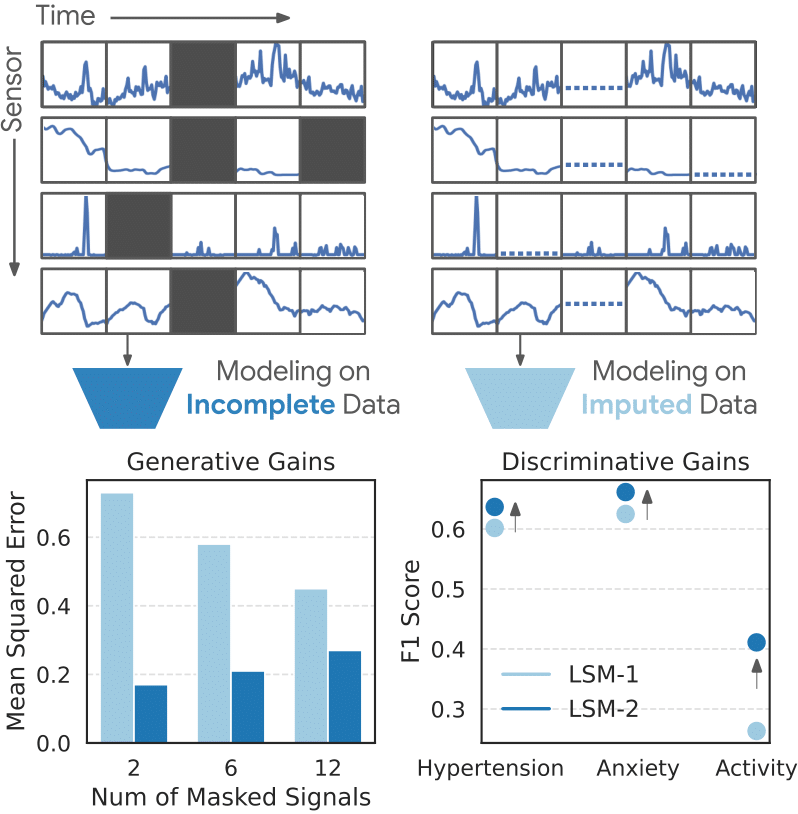
Introducing LSM-2, our newest foundation model for wearable sensor data. LSM-2 uses Adaptive & Inherited Masking, a novel self-supervised framework, to learn from incomplete data & achieve strong performance without requiring explicit imputation. More → https://t.co/jeMvzVupZg
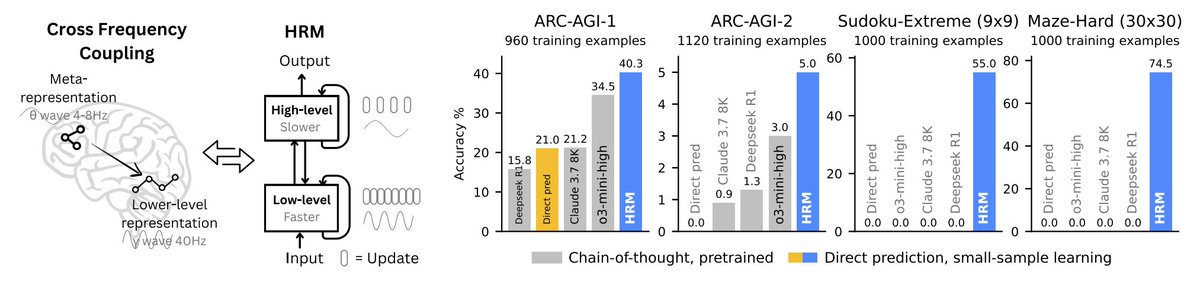
🚀Introducing Hierarchical Reasoning Model🧠🤖
Inspired by brain's hierarchical processing, HRM delivers unprecedented reasoning power on complex tasks like ARC-AGI and expert-level Sudoku using just 1k examples, no pretraining or CoT!
Unlock next AI breakthrough with neuroscience. 🌟
📄Paper: https://t.co/Sxprojsv0c
💻Code: https://t.co/k15cUS2wlf
🚀 Big news in healthcare AI! I'm thrilled to announce the launch of OpenMed on @huggingface, releasing 380+ state-of-the-art medical NER models for free under Apache 2.0.
And this is just the beginning! 🧵
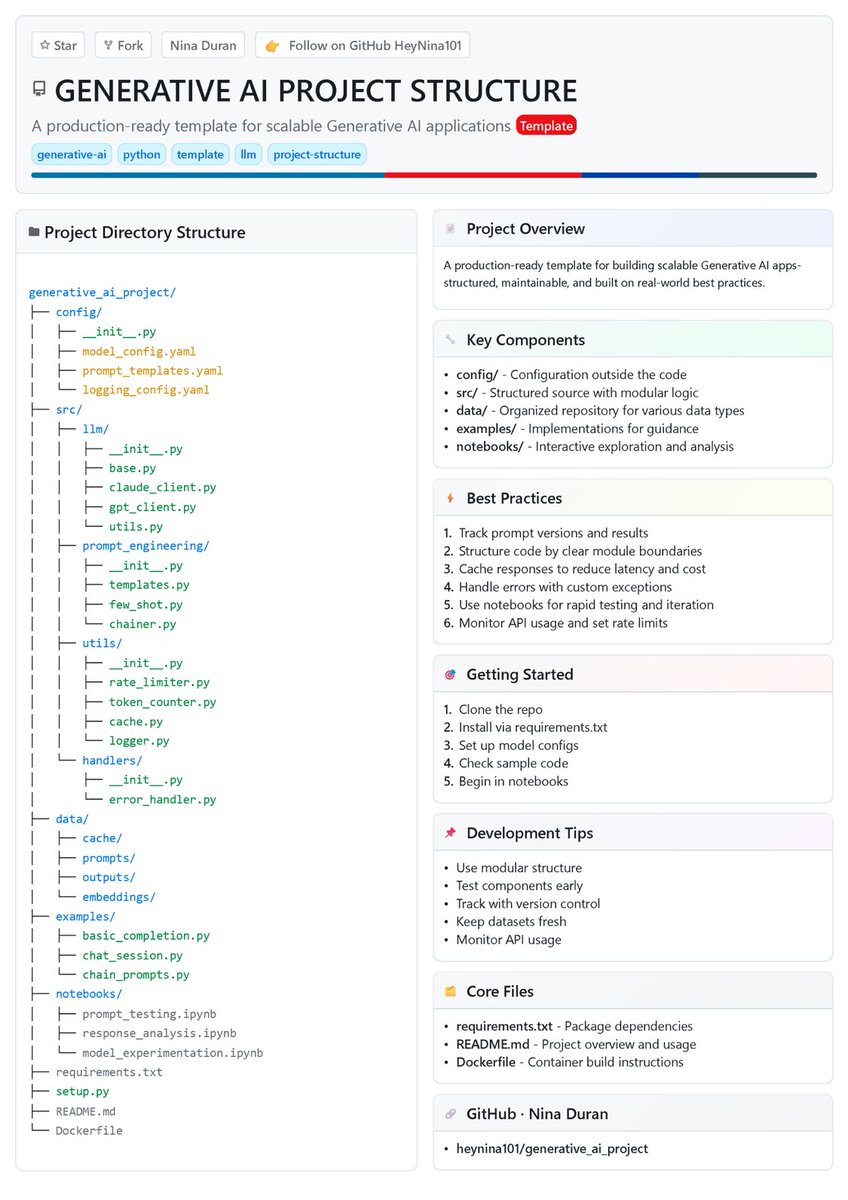
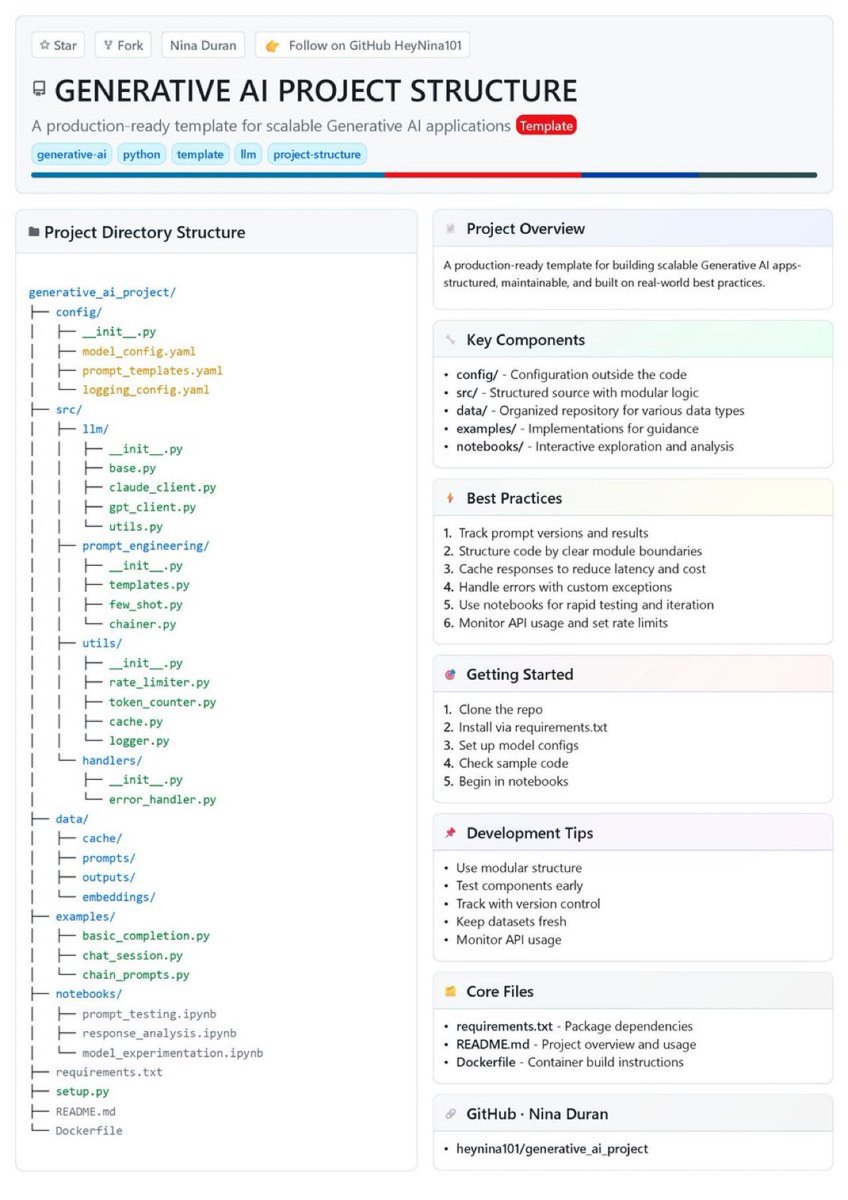
this is the most organized structure of an ai project,
it’s not just about clean code, it’s also easy to navigate for LLMs and Cursor.
always separate config from code, and notebooks from src code
@HeyNina101 actually turned this into a repo template (in replies)
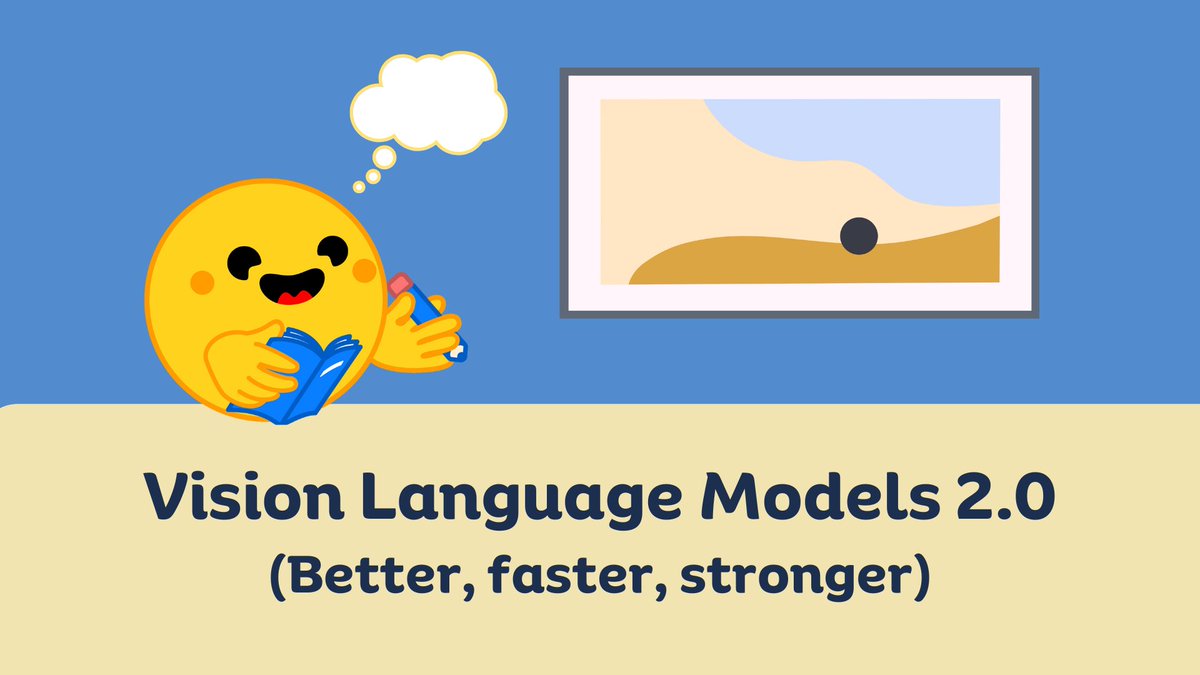
VLMS 2025 UPDATE 🔥
We just shipped a blog on everything latest on vision language models, including
🤖 GUI agents, agentic VLMs, omni models
📑 multimodal RAG
⏯️ video LMs
🤏🏻 smol models
..and more!
find it on the next one ⤵️







![shao__meng's tweet photo. [Anthropic 团队视频] 打造 Claude Code 无头自动化:从代码生成到 GitHub 工作流革新
主要内容:Claude Code SDK 和 GitHub Action
5 月份 'Code w/ Claude' Anthropic 团队视频,主要围绕 Claude Code SDK 和新推出的 Claude GitHub Action 展开,展示如何用这些工具实现无头自动化编程,简化开发流程。Sid 通过讲解和现场演示,介绍了这些工具的强大功能和实际应用场景。
1. Claude Code SDK 是什么?
Claude Code SDK 让开发者可以通过代码调用 Claude 的能力,特别是在“无头模式”下运行。无头模式的意思是,Claude 可以在后台自动执行任务,比如写代码、分析日志或处理复杂的工作流,而不需要用户界面。
这个 SDK 的亮点在于:
· 像 Unix 工具一样灵活**:你可以像用���令行工具一样,把 Claude “插入”到你的工作流中。比如,输入命令、管道数据,让 Claude 处理后再输出结果
· 支持多种任务:
· 简单任务:比如让 Claude 生成一个 Fibonacci 序列的代码,或者分析日志文件,总结错误
· 复杂任务:比如自动化代码审查、编写新的代码检查工具,甚至开发一个基于 Claude 的聊天机器人
· 多语言支持:目前有 Python 和 TypeScript 的 SDK 绑定,未来还会扩展
· JSON 输出:支持结构化输出(JSON 格式),方便开发者解析和进一步处理
· 权限管理:通过 -allow-tools 参数,可以提前给 Claude 设置权限,比如允许它写入文件或运行 bash 命令,确保安全又实用
2. Claude GitHub Action:自动化开发利器
Claude GitHub Action 是基于 SDK 构建的一个开源工具,专门为 GitHub 工作流设计。它的作用是让 Claude 直接参与你的 GitHub 项目,比如:
· 代码审查:Claude 可以自动审阅你的代码,提出建议
· 生成新功能:根据 GitHub Issue 描述,Claude 能直接生成代码并提交 PR
· 修复 Bug:分析问题并提供解决方案
· 修改现有 PR:比如,Sid 在演示中让 Claude 把背景颜色从蓝色改成绿色,Claude 直接在现有 PR 上添加了新提交
这个 Action 的好处是完全依赖 GitHub 的现有基础设施(GitHub Runners),不需要你自己搭建服务器,简单易用。
3. 现场演示:从理论到实践
Sid 通过一个开源的 Trivia Quiz 应用展示了 GitHub Action 的实际效果:
· 场景:他克隆了一个小型 Quiz 应用,里面有几个 GitHub Issue,比如“添加50/50选项和跳题功能的 Power-up” 以及“为每道题添加计时器”
· 操作:Sid 在 Issue 下评论“@ Claude 请实现这个功能”,Claude 自动开始工作,生成代码、创建 PR,甚至还附上了任务清单
· 结果:几分钟后,Claude 完成了任务,添加了 Power-up 功能(在配置页面增加了50/50和跳题选项),并且成功运行。Sid 还展示了 Claude 如何修改现有 PR(把蓝色背景改成绿色),证明它能灵活处理各种任务
演示中,Sid 特别提到 Claude 的输出是 JSON 格式,方便开发者查看日志和结果。他还展示了如何在本地拉取 Claude 生成的代码分支,运行后确认新功能正常工作。
4. 高级功能:让 SDK 更强大
· 权限控制:默认情况下,Claude 没有修改权限(为了安全)。但你可以用 -allow-tools 参数给它特定的权限,比如运行 npm run build 或写入文件
· 结构化输出:支持两种模式:
· Stream JSON:实时流式输出,适合需要快速响应的场景
· JSON:一次性输出完整结果,适合需要完整数据的场景
· 自定义系统提���:比如让 Claude “像海盗一样说话”,增加趣味性或定制化交互
· 会话状态管理:Claude 会返回一个 session ID,开发者可以用它来保持上下文,构建交互式应用(比如用户反馈后,Claude 继续优化)
· 动态权限提示:通过 -permission-prompt-tool,Claude 可以动态请求权限,交给 MCP 服务器处理,减少手动配置的麻烦](https://pbs.twimg.com/media/GxV70HVaIAAFPSW.jpg)