High school athletic directors occupy one of the most demanding, and rewarding, leadership positions in education. On any given day, they’re expected to be administrators, event managers, marketers, fundraisers, compliance officers, transportation coordinators, counselors, conflict mediators, and public relations specialists. Then, when the lights come on Friday night, they’re simply expected to make sure everything runs flawlessly.
It’s a role that’s often misunderstood because the most important work happens behind the scenes. If everything goes according to plan, no one notices. If one small detail falls through the cracks, everyone does.
The hurdles are real.
Athletic directors constantly balance limited budgets against growing expectations. Facilities need repairs. Equipment wears out. Officials are becoming harder to recruit. Transportation costs continue to rise. State association regulations evolve. Every year seems to bring more responsibility without additional resources.
Then there are the people.
Every coach wants more opportunities for their program. Every parent wants what’s best for their child. Every booster group has ideas. Every principal has priorities. Every student-athlete deserves an exceptional experience.
The challenge isn’t deciding who is right. The challenge is finding a way to serve everyone while understanding that not every request can become reality.
Communication may be the single most valuable skill an athletic director possesses.
One schedule change can affect multiple schools, officials, transportation departments, custodians, coaches, families, and hundreds of student-athletes. A weather delay can reshape an entire week. One misunderstood email can create unnecessary conflict that takes days to resolve. Great athletic directors understand that overcommunicating is almost always better than undercommunicating.
Perhaps the greatest challenge is that athletic directors are often evaluated by outcomes they control the least. They don’t coach the games. They don’t make the shots. They don’t score the touchdowns. Yet when things go wrong, the athletic department is often the first place people look for answers.
Despite all of that, few careers offer the rewards this profession does.
You watch nervous freshmen become confident seniors. You see struggling students find purpose through athletics. You hire coaches who influence lives far beyond the playing field. You build cultures and traditions that continue long after you’ve moved on.
The best athletic directors know that banners eventually collect dust, trophies become decorations, and records are eventually broken.
What lasts are the relationships.
It’s the former athlete who returns years later to introduce you to their family. It’s the coach who tells you your support helped them through a difficult season. It’s the parent who thanks you not because their child won, but because their child grew.
The hours are long. The criticism can be loud. The responsibility is constant.
But somewhere in the middle of the chaos, athletic directors help shape students into better and/or more well rounded leaders, teammates, and people .
There are few callings more meaningful than that.
Acabei de saber porque esse jogador Cucurella da Espanha deixa o cabelo Crescer, e o motivo não tem nada haver com vaidade, ele deixa o cabelo crescer e para que o filho Mateo que é autista o possa reconhecer em campo quando ele está jogando, isso é um gesto muito mas muito bonito e grandioso , parabéns a esse Papai.
The World Cup is over. Most of you visitors are packing, heading to the airport, and going home.
Before you go, there's something I want to say.
I have made several posts about all the things you were discovering here. Free refills. Free water. Ice. Chips and salsa arriving with the menu. Air conditioning, without some harpy dragging you into a moral debate. Drive-throughs. Ranch. Gallons of Ranch, in assorted flavors. Premade, and in packets. Y'all standing in the meat aisle in overwhelmed silence. Why we don't have trains becoming clear. Walmart, Target, Home Depot, Bass Pro Shops, and Buc-ee’s - that last one, some of us still gaze in wonder upon.
Your posts blew up, because you were incredulous at what you were discovering in our nation, and delightfully stunned by it all.
You lamented your pre-visit attitudes and condemnations, your fears and worries. You chastised the media and politicians that mislead you. That lied to you.
While you were learning about us, we learned and/or were reminded of a few things about ourselves. That Elon Musk, the richest man on the planet, goes to the grocery store, himself. Wanders in, and grabs a spot in line for fresh tortillas, like everybody else. He could buy the tortilla company, a fair chunk of the state it's in, maybe even the moon above it, yet he's standing in line at the hot tortilla counter like the rest of us, because that is where the best tortillas are. Only in America is the wealthiest human alive elbow to elbow with a couple of moms at the fixin's bar.
That's the sum of our nation in one section of a store.
None of it was fake - a show.
We didn't do all of this because you were coming. The ice dispensers were always there. The refills were always free. The stores were always big enough to store zeppelins. The strangers who adopted your whole section at the matches, the people who gave you rides, the waitress who remembered your order from the day before, the family that invited you to the cookout/barbeque - that's America. That is a Tuesday.
We are exactly like this, pretty much always. Loud, ridiculous, generous, overfed, and honestly thrilled you came.
We will still be exactly like this next Tuesday, when the stands are empty and some of the flags come down.
Thank you. Thank you for coming, for singing in our streets and bars. Thank you for helping clean our stadiums. For filling our bars and clubs, and teaching us your chants. The Viking Row. You were fantastic guests.
And, you joined in the celebrations of our 250th anniversary like natives. You celebrated our nation's founding as if it were your own. Thank you for that, too.
To those who could not come this time, or who heeded the naysayers of their media and political class, choosing not to come, the door does not close today. We've enjoyed your company, and look forward to doing so again.
America's door is always open to friends. The porch light on. The fridge full. The guest bed freshly made.
Safe travels, friends!
So after all the pre-tournament criticism, angst, and fearmongering (much done with anticipatory glee), the 2026 World Cup was a historic success. Incredible games, record crowds/viewers, and a cultural phenomenon. People were safe, entertained, and joyous. Visitors discovered, and Americans were reminded, just how wonderful our country is, all through the lens of soccer. I’m so happy for, and proud of, my country. Best World Cup ever. Thank you, America. 🇺🇸
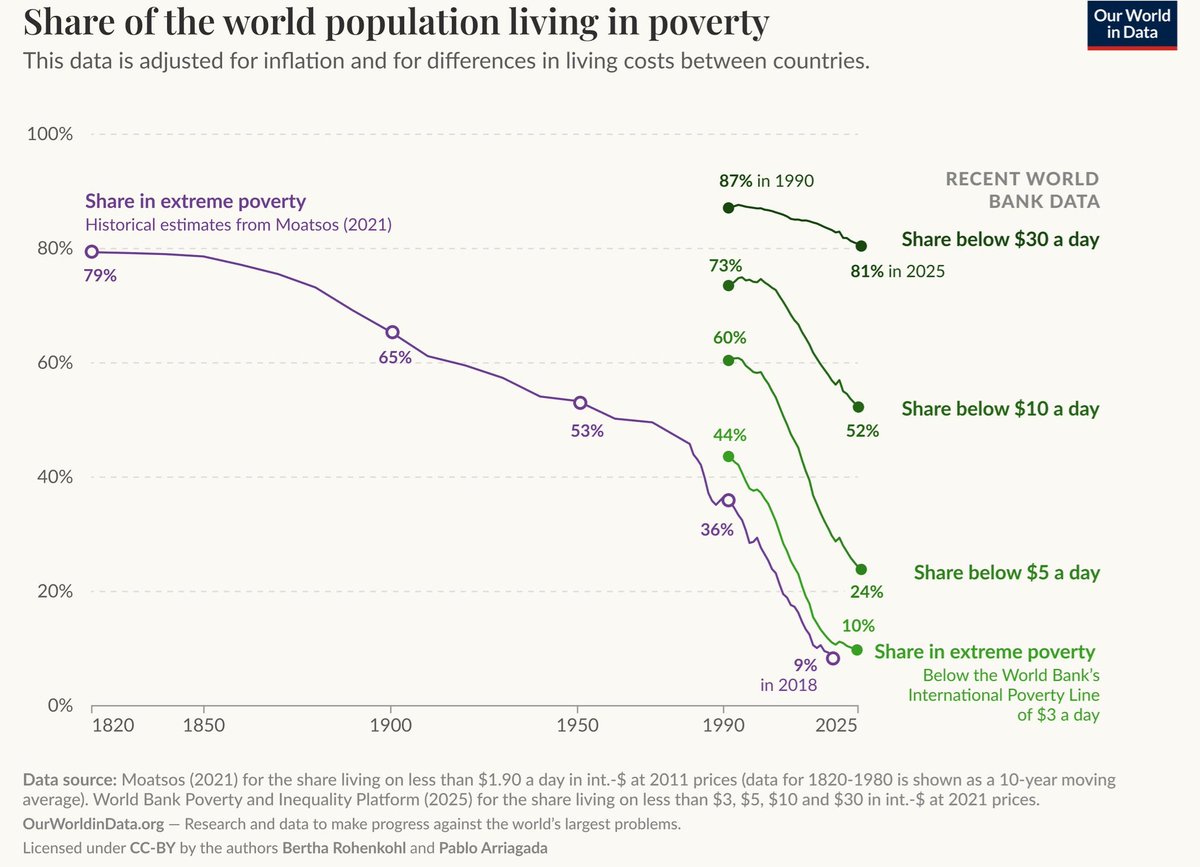
One of the greatest achievements in human history:
In 1990, 44% of the world lived in extreme poverty.
Today, it’s down to 10%.
The world is far from perfect, but this is what extraordinary progress looks like.
The better team won the football match in Atlanta. Congratulations Argentina. But England and Tuchel will kick themselves for sitting on a 1-0 lead. Invited a very good team to camp out in the box. Result was inevitable after that. Could have been 4-1.
We lost our final game of the NCAA viewing period by 20. And I had an absolute blast coaching it. 🤷♂️
Why? Because 14 hours earlier, we played way *below* our potential in the controllables. Our effort. Our communication. Our focus. Our execution.
Today, we looked like a different team. We competed. We communicated. We trusted each other.
The other team was simply better. It is, what it is.
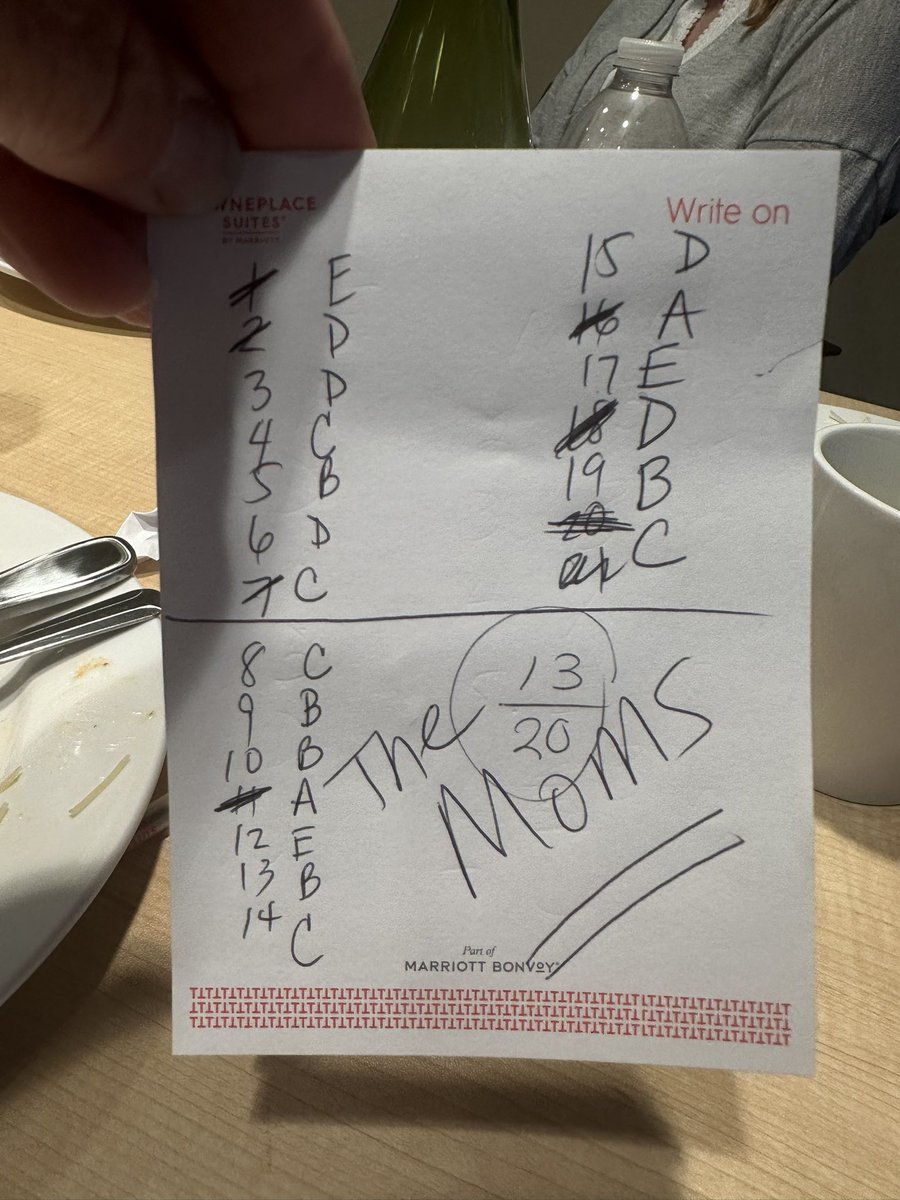
Maybe it was the conversations. Maybe the light bulb came on. Maybe it was the girls basketball history trivia competition we did with the players, parents, and coaches earlier in the weekend (shoutout to the team moms for taking home the championship 😂).
Whatever it was, they responded!
Sometimes you can do a lot right… and still lose. That’s okay.
As a coach, there’s something rewarding about watching a team become a little closer to who they’re capable of becoming… even when the scoreboard doesn’t go your way.
The scoreboard tells you who won. It doesn’t always tell you who grew.
That’s why you keep coaching.
The U.S. soccer federation is a poor return on invested capital.
I played soccer for 20+ years.
Grassroots.
Academy.
D1 college.
Pursued professionally after.
And I’ll say the quiet part out loud:
The US soccer infrastructure is broken.
In America, we treat playing D1 soccer like it is the peak achievement.
For most families, clubs, coaches, and players, the entire youth soccer machine is built around one goal:
Get recruited.
Get a scholarship.
Play college soccer.
But if the objective is to produce world-class players, D1 soccer is a terrible development path.
From 18-22, some of the most important technical development years of your career, you are preparing for a 3-4 month season built largely around athleticism, direct play, set pieces, fitness, and survival.
Now compare that to an 18-year-old in Spain, Argentina, Morocco, Italy, England, or France.
That player has likely been in a professional environment for years.
Training daily.
Playing meaningful matches year-round.
Competing against grown professionals.
Getting thousands more touches.
Learning how to solve the game under pressure.
The gap is massive.
And it shows.
American players are usually athletic.
They are usually fit.
They usually compete hard.
But at the highest levels, that is not enough.
The biggest difference is technical comfort.
We do not move the ball like Spain.
We do not combine like Argentina.
We do not play with the same fluidity, rhythm, and confidence you see from countries where the game is embedded into the culture from childhood.
That comes down to volume.
Volume of touches.
Volume of street soccer.
Volume of futsal.
Volume of unstructured play.
Volume of high-level training environments.
Volume of meaningful games.
In the US, youth soccer is expensive, overly organized, overly coached, tournament-driven, and too often built around winning games at 13 instead of developing players for 23.
Parents spend thousands.
Clubs charge thousands.
Travel teams fly all over the country.
Showcases become the product.
Recruiting becomes the scoreboard.
But the return on invested capital is poor.
We probably spend more money on youth soccer than almost any country in the world, yet the technical output does not match the investment.
That is a broken operating model.
And like any business, if the output is weak, you do not blame the customer.
You inspect the system.
The US has talent.
The US has athletes.
The US has money.
The US has facilities.
But the foundation is wrong.
We built a pay-to-play, college-recruiting machine and confused it for a world-class player development system.
Those are not the same thing.
Until we fix the grassroots layer, increase meaningful touches, make development less dependent on family income, and stop treating college soccer as the top of the mountain, the US will keep underperforming relative to its resources.
I’m not saying this to trash US Soccer.
I’m saying it because I lived it.
And if we actually want to become a powerhouse, we have to be honest about the infrastructure first.
This 3-minute @smerconish about America might be the best “feel good” clip you’ll watch this 4th of July.
Over a million foreign World Cup fans arrived expecting the tense, angry, divided America their screens had shown them.
Then they met us and found the friendly, generous, welcoming country we were promised growing up.
The polls measure Washington. The visitors measured us. The gap between the two might be the most American story of all. Happy 250th, America. 🇺🇸
Scrolling through this reel and my heart just swelled with gratitude. ❤️
Watching people come together in American neighborhoods — laughing, cheering, waving flags, and pouring that unmistakable American energy into the beautiful game. It’s not just soccer. It’s the freedom to gather without fear, the joy of strangers becoming friends over a shared moment, and the welcoming spirit that has always made this country feel like home to so many.
In a world that loves to highlight division, these scenes quietly remind us of something deeper: America still knows how to celebrate, how to open its arms, and how to let joy be louder than the noise. That’s the heart of who we are — a place where the world can come, kick a ball, wave a flag, and feel the warmth of community under one sky.
God Bless America 🇺🇸⚽
As we head into the 4th of July, I’m praying we never lose sight of this gift. May we keep being the kind of people who make moments like these possible — full of light, laughter, and love for our neighbors.
What’s one thing about American community or hospitality that makes you grateful? Drop it in the comments — let’s fill this space with hope and thanksgiving. 🙏
I can't stop listening to this song. Best thing that came out of the World cup being in the United States this year. 🇺🇸
Watching this compilation of fans from all over the world at the 2026 World Cup in America is so heartwarming.
USA USA USA 🇺�
This article was written by a 26 yr old college student by the name of Alyssa Ahlgren, who's in grad school for her MBA. What a GREAT perspecitve..👍🏽
My Generation Is Blind to the Prosperity Around Us!
I'm sitting in a small coffee shop near Nokomis (Florida) trying to think of what to write about. I scroll through my newsfeed on my phone looking at the latest headlines of presidential candidates calling for policies to "fix" the so-called injustices of capitalism. I put my phone down and continue to look around.
I see people talking freely, working on their MacBook's, ordering food they get in an instant, seeing cars go by outside, and it dawned on me. We live in the most privileged time in the most prosperous nation and we've become completely blind to it.
Vehicles, food, technology, freedom to associate with whom we choose.These things are so ingrained in our American way of life we don't give them a second thought.
We are so well off here in the United States that our poverty line begins 31 times above the global average. Thirty One Times!!!
Virtually no one in the United States is considered poor by global standards. Yet, in a time where we can order a product off Amazon with one click and have it at our doorstep the next day, we are unappreciative, unsatisfied, and ungrateful. ??
Our unappreciation is evident as the popularity of socialist policies among my generation continues to grow. Congresswoman Alexandria Ocasio-Cortez recently said to Newsweek talking about the millennial generation, "An entire generation, which is now becoming one of the largest electorates in America, came of age and never saw American prosperity."
Never saw American prosperity! Let that sink in.
When I first read that statement, I thought to myself, that was quite literally the most entitled and factually illiterate thing I've ever heard in my 26 years on this earth. Many young people agree with her, which is entirely misguided.
My generation is being indoctrinated by a mainstream narrative to actually believe we have never seen prosperity. I know this first hand, I went to college, let's just say I didn't have the popular opinion, but I digress.
Why then, with all of the overwhelming evidence around us, evidence that I can even see sitting at a coffee shop, do we not view this as prosperity? We have people who are dying to get into our country.
People around the world destitute and truly impoverished. Yet, we have a young generation convinced they've never seen prosperity, and as a result, we elect some politicians who are dead set on taking steps towards abolishing capitalism.
Why? The answer is this,?? my generation has only seen prosperity. We have no contrast. We didn't live in the great depression, or live through two world wars, the Korean War, The Vietnam War or we didn't see the rise and fall of socialism and communism.
We don't know what it's like to live without the internet, without cars, without smartphones. We don't have a lack of prosperity problem. We have an entitlement problem, an ungratefulness problem, and it's spreading like a plague."
Thomas Sowell describes how he taught students:
“I’d spend a great deal of time putting together a reading list, where I’d find the strongest argument on one side and then the best example of the opposing view.”
“I didn’t test students on which side they believed. I tested them on whether they understood the arguments on both sides.”
Superb dissection of the shocking collapse of liberal comedy. This is the best explanation of how we've reached the nader where Late Night host Jimmy Kimmel can say “It’s not my job to be funny.” As this author shows, he was hired as a comedian but he made himself a priest.
Ken Griffin just revealed the only thing he actually looks for when hiring at Citadel.
Not your GPA. Not your pedigree. Not your internship list.
He wants one type of person: the athlete who excelled academically.
Here's why that combination matters to him.
The athlete knows what it takes to win. They've also felt what it's like to lose. That experience of pushing through both, and still showing up, is something you can't learn in a classroom.
The academic side tells him something different. It tells him the person knows how to manage their time. That they have the discipline to apply their mind under pressure. That when things get hard, they'll find a way through.
Griffin calls it perseverance and grit paired with high aspirations.
That's the profile he's building Citadel's AI team around.
Think about what that means for where the talent wars in finance and AI are headed.
The people running the biggest pots of money in the world aren't just looking for quants anymore.