I am amazed how many investors are holding $TSLA because they believe $SPCX will buy it. IMO, that won’t happen anytime soon since the potential dilution to SPCX shareholders is too significant if SPCX paid a 20% premium for TSLA only to have the combined entity trade at TSLA’s lower multiple. Own $TSLA if you believe unsupervised autonomous FSD will lead more consumers to buy Teslas, or you believe unsupervised autonomy will scale much quicker than the market believes, or some other fundamental driver of TSLA earnings. Owning TSLA for a buyout by SPCX is buying the greater fool theory.
The buzz over DeepSeek this week crystallized, for many people, a few important trends that have been happening in plain sight: (i) China is catching up to the U.S. in generative AI, with implications for the AI supply chain. (ii) Open weight models are commoditizing the foundation-model layer, which creates opportunities for application builders. (iii) Scaling up isn’t the only path to AI progress. Despite the massive focus on and hype around processing power, algorithmic innovations are rapidly pushing down training costs.
About a week ago, DeepSeek, a company based in China, released DeepSeek-R1, a remarkable model whose performance on benchmarks is comparable to OpenAI’s o1. Further, it was released as an open weight model with a permissive MIT license. At Davos last week, I got a lot of questions about it from non-technical business leaders. And on Monday, the stock market saw a “DeepSeek selloff”: The share prices of Nvidia and a number of other U.S. tech companies plunged. (As of the time of writing, some have recovered somewhat.)
Here’s what I think DeepSeek has caused many people to realize:
China is catching up to the U.S. in generative AI. When ChatGPT was launched in November 2022, the U.S. was significantly ahead of China in generative AI. Impressions change slowly, and so even recently I heard friends in both the U.S. and China say they thought China was behind. But in reality, this gap has rapidly eroded over the past two years. With models from China such as Qwen (which my teams have used for months), Kimi, InternVL, and DeepSeek, China had clearly been closing the gap, and in areas such as video generation there were already moments where China seemed to be in the lead.
I’m thrilled that DeepSeek-R1 was released as an open weight model, with a technical report that shares many details. In contrast, a number of U.S. companies have pushed for regulation to stifle open source by hyping up hypothetical AI dangers such as human extinction. It is now clear that open source/open weight models are a key part of the AI supply chain: Many companies will use them. If the U.S. continues to stymie open source, China will come to dominate this part of the supply chain and many businesses will end up using models that reflect China’s values much more than America’s.
Open weight models are commoditizing the foundation-model layer. As I wrote previously, LLM token prices have been falling rapidly, and open weights have contributed to this trend and given developers more choice. OpenAI’s o1 costs $60 per million output tokens; DeepSeek R1 costs $2.19. This nearly 30x difference brought the trend of falling prices to the attention of many people.
The business of training foundation models and selling API access is tough. Many companies in this area are still looking for a path to recouping the massive cost of model training. Sequoia’s article “AI’s $600B Question” lays out the challenge well (but, to be clear, I think the foundation model companies are doing great work, and I hope they succeed). In contrast, building applications on top of foundation models presents many great business opportunities. Now that others have spent billions training such models, you can access these models for mere dollars to build customer service chatbots, email summarizers, AI doctors, legal document assistants, and much more.
Scaling up isn’t the only path to AI progress. There’s been a lot of hype around scaling up models as a way to drive progress. To be fair, I was an early proponent of scaling up models. A number of companies raised billions of dollars by generating buzz around the narrative that, with more capital, they could (i) scale up and (ii) predictably drive improvements. Consequently, there has been a huge focus on scaling up, as opposed to a more nuanced view that gives due attention to the many different ways we can make progress. Driven in part by the U.S. AI chip embargo, the DeepSeek team had to innovate on many optimizations to run on less-capable H800 GPUs rather than H100s, leading ultimately to a model trained (omitting research costs) for under $6M of compute.
It remains to be seen if this will actually reduce demand for compute. Sometimes making each unit of a good cheaper can result in more dollars in total going to buy that good. I think the demand for intelligence and compute has practically no ceiling over the long term, so I remain bullish that humanity will use more intelligence even as it gets cheaper.
I saw many different interpretations of DeepSeek’s progress here in X, as if it was a Rorschach test that allowed many people to project their own meaning onto it. I think DeepSeek-R1 has geopolitical implications that are yet to be worked out. And it’s also great for AI application builders. My team has already been brainstorming ideas that are newly possible only because we have easy access to an open advanced reasoning model. This continues to be a great time to build!
[Original text: https://t.co/yiOHeGJgLZ ]
For the first time since the 🇷🇺 war in 🇺🇦,
🇨🇳 President Xi Jinping and 🇺🇦 President Volodymyr Zelenskyy spoke on the phone.
What did they talk about?
What are the implications for 🇨🇳 role as a facilitator for a path towards peace?
🧵
@boo My apologies, you must be a genius, which is why Twitter has the worst ad relevance on Earth.
Almost nobody buys anything on Twitter, but almost everyone on Instagram does.
That is being fixed.
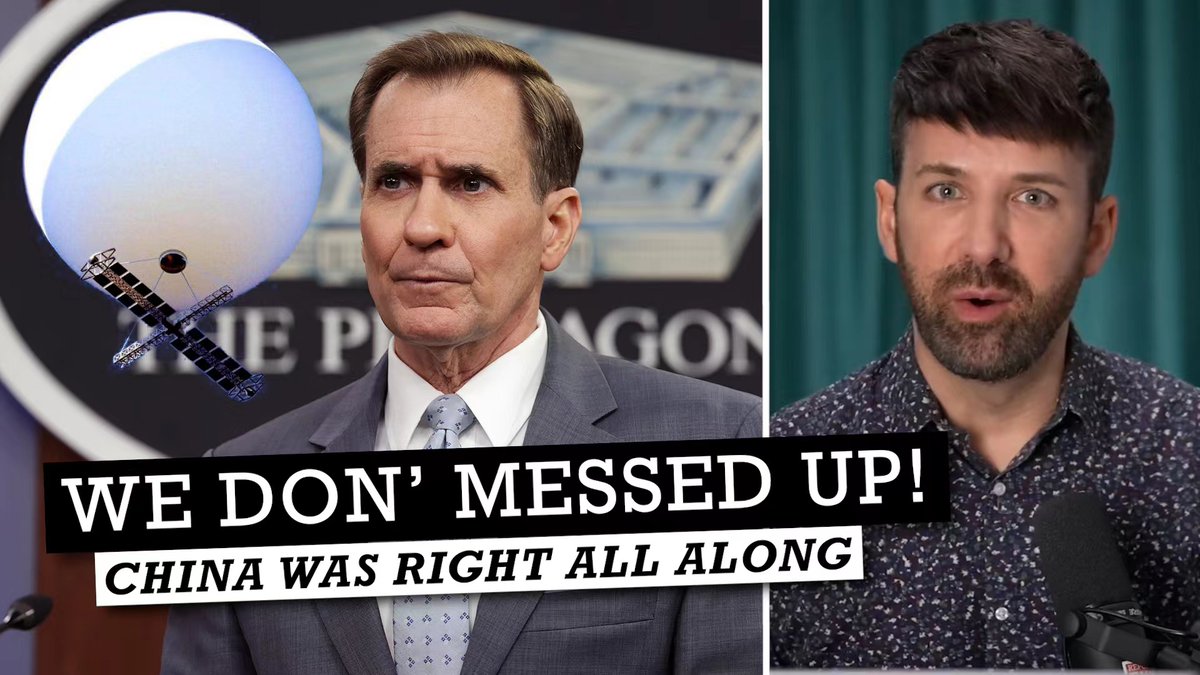
🎈🗯️US officials and media have begun to admit that recent "UFO" shooting spree targets were "benign" and "not a threat." This is no shock to those of us with functioning brains. 🤡
I explain all in today's video, hot off the press!
⚠️WATCH: https://t.co/YYJOQrtdhp
Looking forward to Tesla Investor Day on March 1.
By this, we mean the broadest definition of investor, as in the people & life of Earth.
It will be a message of good hope & positivity for the future.
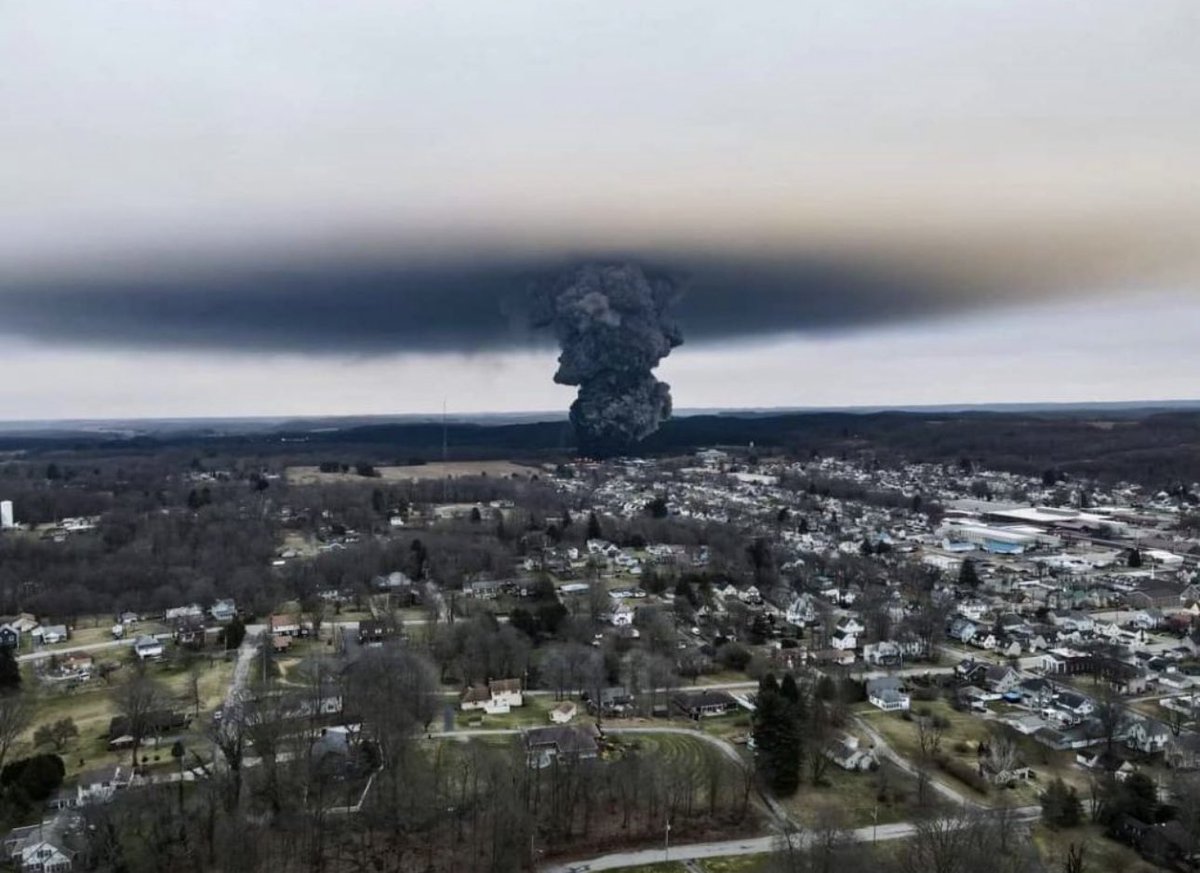
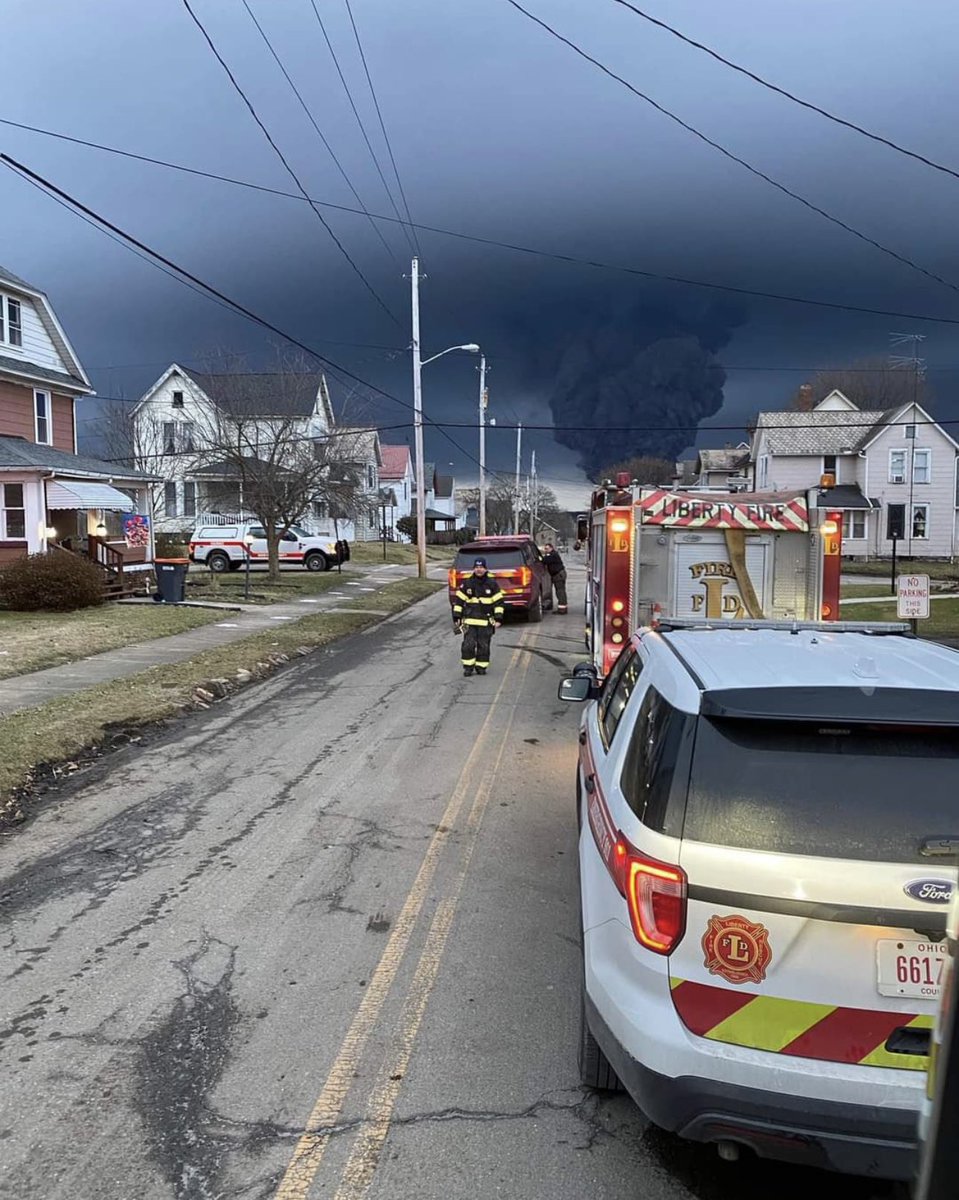
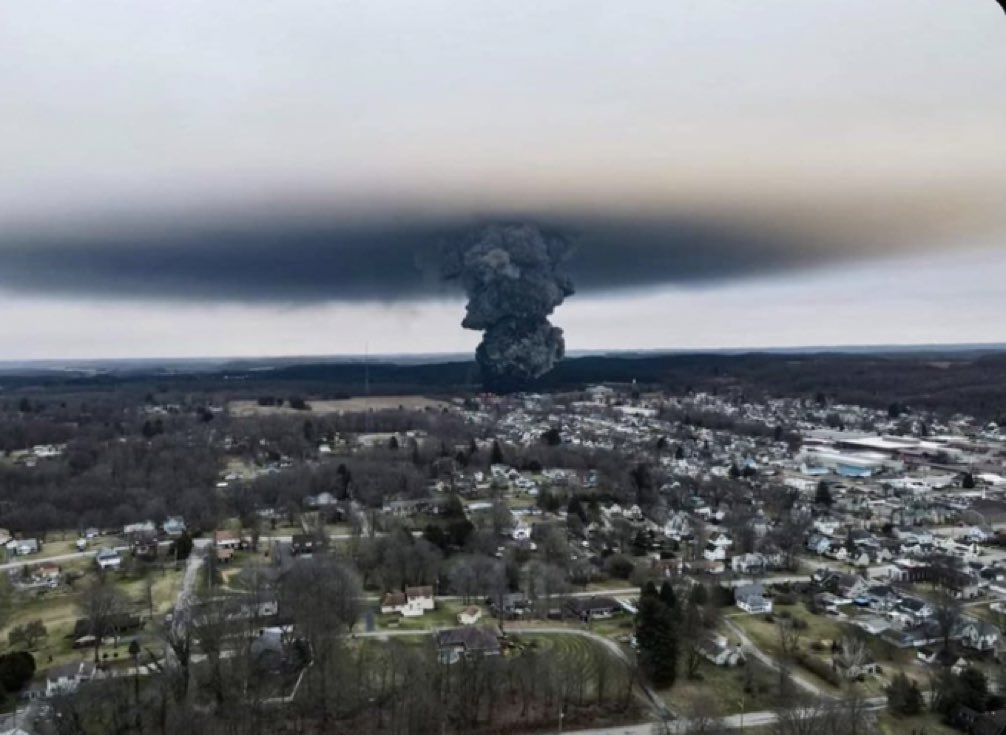
OHIO: US media are barely covering a massive environmental disaster unfolding there after a train carrying vinyl chloride derailed and exploded.
A journalist reporting the incident has been arrested.
⚠️This disaster would not occur in China. Why? A short thread. 🧵
Ohio: Dead fish and cattle being reported as far as 100 miles away from the site.
Journalists covering the story have been arrested.
What the HELL is going on?
Not a single story on CNN’s homepage
Not a mention on Drudge
Journalists are getting arrested for investigating the Ohio train explosion and animals are dropping dead miles away
What the hell is going on in Ohio and why is the media not talking about it?!