I have the following high-level information-based models of thinking about slop. Slop carries little new info, is overly verbose relative to content, happens to be bland and quite predictable. More importantly, it is weakly grounded in the question asked or the provided context.
Had a small role in this new paper led by @RunjinChen & @andyarditi that aims to detect and control emergent tendencies in LLMs. As well as misalignment ("evil"), we look at emergent sycophancy and hallucinaton.
@JeffDean @dayzerodx Thank you @JeffDean, and thank you for your long-term support of DZD, starting from "day zero" of our company and throughout - it has been tremendously impactful
It's been an amazing 9-year journey building DZD, and I could not be more proud of the groundbreaking technology we’ve created. I’m excited to see what we can accomplish as our team transitions to bioMérieux to integrate our work and accelerate our shared mission.
Announcing Encode: AI for Science
We're launching a fellowship powered by @ARIA_research to connect top AI talent with leading UK science labs to unlock the next wave of scientific breakthroughs.
Every synthetic biologist, every biochemist, when they dream, will sometimes hear a voice calling
A whisper on the wind, as impossible as infinity, as sweet as the ambrosia of the very Gods
"Engineer RuBisCo"
And this paper takes us one step closer
https://t.co/xS0ns6UGlY
🔎 Asking for a friend (really): What are the best health-tech/diagnostics incubators out there?
US-focussed but world-wide is okay, too. First-time entrepreneur with lots of Pharma experience is looking to get started building and wants to do so in that kind of environment.
A few years ago there was a lot of activity around photonics-based DL accelerators. Bunch of very well-capitalized startups, lots of research, although iirc, the chips were mostly suited for "inference." Does anyone know if any of that has started to show promise?
AI-Science: New features!
- Human-AI copilot app: Much more powerful (and fun) than the AI agents doing it all.
- Fully annotated figures!
- “Data Chaining”: All results (inc Figures) are click-traced to the specific code lines that created them!
pip install data-to-paper
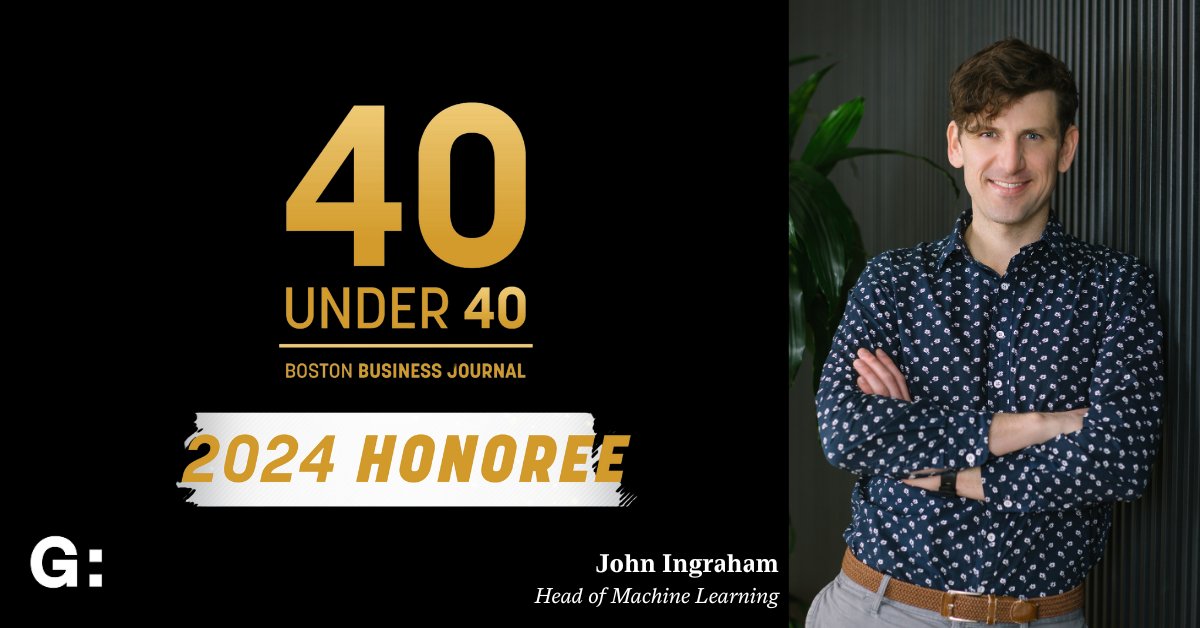
How do you redefine what's possible in science? Ask John Ingraham, our Head of Machine Learning, who was named to @BosBizJournal's 2024 40 Under 40! John’s a pioneer in Generative Biology, using ML and AI to revolutionize drug discovery. Congrats, John! https://t.co/bjDOLg8Y1a
It’s finally out! 🥳 Today @cellcellpress we report non-mineral fossils of ancient chromosomes in skin from a woolly mammoth that died in Siberia, 52,000 years ago.
🦣💨
Don’t miss our thread below! 🧵👇🏽
Check out our latest work! 👇We leverage pretrained protein generative models (here Chroma @generate_biomed ) as a prior for inverse problems in protein space (e.g. structure completion, distance contraints, cryo-EM model building). ❄️🏗️
Paper: https://t.co/36h1rg1eZT
If you haven't refreshed your view of ONT with recent data you are miscalibrated: "A few years ago, a good ONT-only bacterial genome assembly would contain hundreds to thousands of errors" - "ONT-only bacterial genome assemblies now regularly have <10 errors"
New blog post:
https://t.co/pwUWKP53tr
ONT-only bacterial assemblies are much better than they were only a couple of years ago. Often <10 errors in the whole genome. Does that mean that less short-read sequencing is required for polishing? See my post for the answer!
(1/4)
Our recent preprint https://t.co/g6NFJWN4Kr — truly at the intersection of AI & physics — evaluates the ability of LLMs to perform advanced theoretical physics calculations.
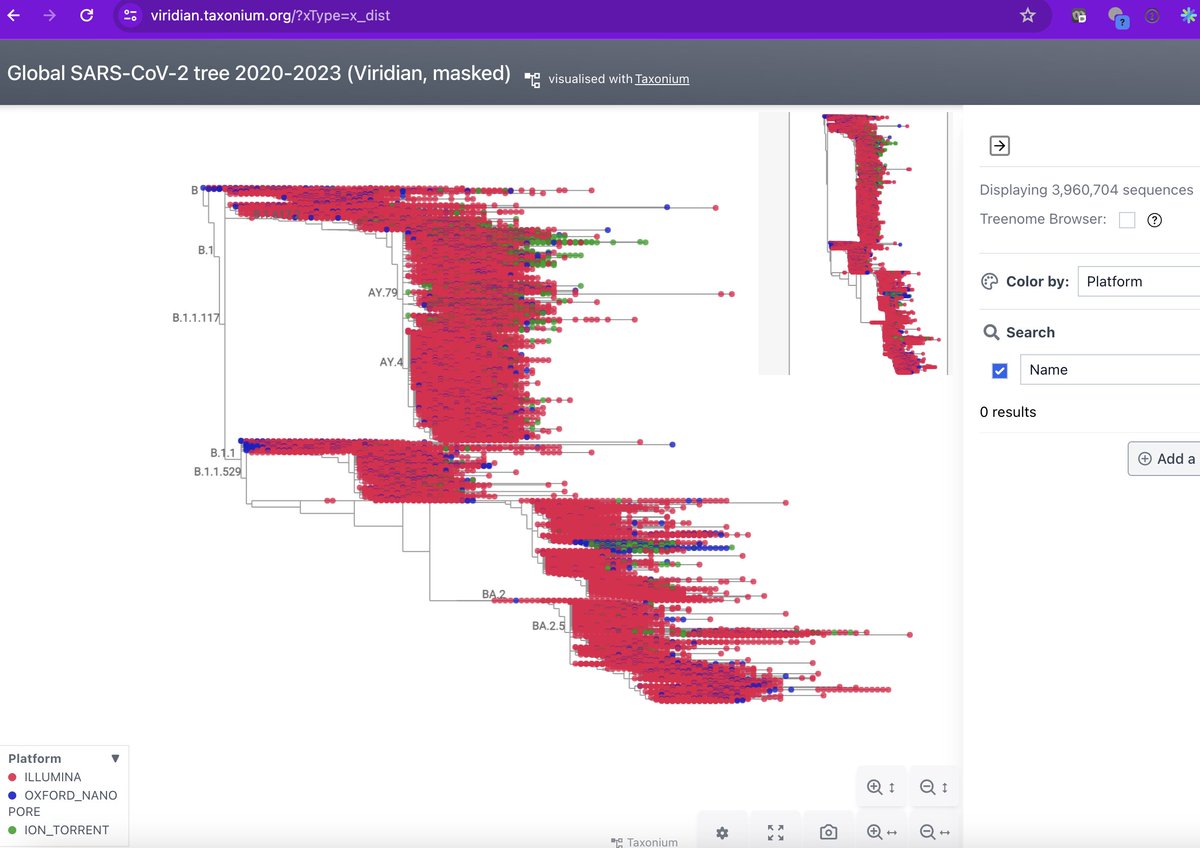
V happy to see this out - reprocessing 5million SARS-CoV-2 genomes to remove systematic errors (+thereby improve the phylogeny) and improve representation of genomes from the Global South. Huge amount of work esp. from Martin Hunt, Angie Hinrich+collabs
https://t.co/lKiTabLU6p