@brian_armstrong Agree! (Almost)
> Crypto needs to be treated on a level playing field with the rest of financial services
If it needs to be treated the same, then we are bound to the same regulation. (That’s the problem)
This is why $DOT is my biggest bet. Parity and Polkadot, led by Gavin Wood, have been delivering since the early ETH core days, when he served as the technical architect of Ethereum. No other team comes close, and that will matter enormously as blockchain technical breakthroughs continue to compound!
JAM is ACTUALLY coming. Polkadot 2.0 IS here now, The Hub + PVM !! @paritytech IS the BEST
Here’s what the last 3 years look like 👇
2023
Nominated Proof of Stake (NPoS) pools live
OpenGov launched
Parachain auctions live
Cross-chain messaging (XCM v3)
System parachains introduced
Asset Hub launched
Bridge Hub launched
Staking and governance migration groundwork
Validator election improvements
Runtime upgrade acceleration
Light client improvements
Parachain onboarding tooling matured
Weight fees and benchmarking overhaul
2024
Asynchronous Backing
Agile Coretime
Coretime system parachain live
Parachain lease auctions sunset
Asset Hub positioned as the primary user chain
Relay chain runtime slimming
System parachain hardening
Validator set expansion
NPoS pools upgrades
Block production latency reductions
2025
Elastic Scaling
Multi-core execution on the relay chain
Coretime on-demand blockspace
XCM v5 – cross-chain swap and execute messages
Bridge Hub upgrades
Snowbridge v2 trustless Ethereum bridge
Asset Hub smart contracts (Revive)
Polkadot SDK unified releases
JAM is a semi-coherent supercomputer that 35 independent teams are working on. There are no more block limits, JAM enables continuous execution!
https://t.co/h0f0spmnJf
Venezuela Just Proved the Bitcoin Bull Case, And No One Is Paying Attention
Maduro used Tether to move 80% of Venezuela's oil revenue. Billions in sanctions evasion, settled on Tron since 2020.
Then the US made a phone call.
Tether froze the wallets.
Game over.
Everyone's focused on the arrest. The real story is the lesson every finance minister on earth just learned in real time:
Stable coins are a leash, not an escape.
If someone can freeze it, it isn't money. It doesn't solve sovereignty.
First principles:
USDT is dollar plumbing without SWIFT. Faster. Cheaper. Still has a CEO. Still has a compliance department. Still picks up when Washington calls.
This is why USDT adoption exploded, 71-year-old grandmothers in Caracas pay their HOA fees in tether now. But useful ≠ sovereign.
The entire value proposition for sanctions evasion just got publicly falsified.
Now do the game theory:
You're Iran. Russia. Any country hedging against dollar weaponization. You just watched Venezuela's "crypto solution" get shut off like a light switch.
Where do you put reserves now?
USDT? Compromised.
Yuan? Political strings.
Gold? Try settling $500M across borders in 10 minutes.
CBDCs? Same kill switch, government branding.
There's exactly one asset that clears final settlement without asking permission from anyone.
21 million units. No CEO. No freeze function. No phone number.
This is the ad Bitcoin never had to buy.
The most desperate, highest-stakes capital on earth just learned there's only one door.
Price doesn't reflect it yet.
It will.
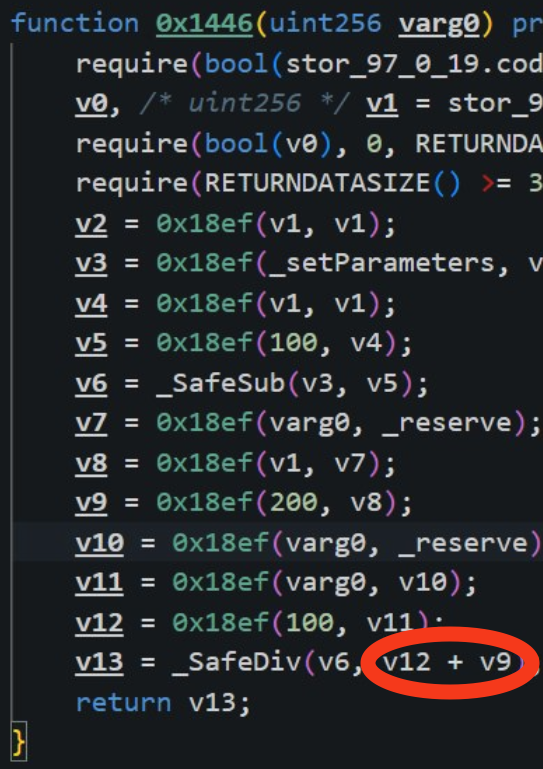
🚨News on the $26M Truebit exploit - classic Solidity addition overflow hack (old Solidity compiler, v0.5.x)
Secure your old smart contracts - make sure they are not missing key under/overflow checks
We need better decentralized stablecoins. IMO three problems:
1. Ideally figure out an index to track that's better than USD price
2. Oracle design that's decentralized and is not capturable with a large pool of money
3. Solve the problem that staking yield is competition
Tracking USD is fine short term, but imo part of the vision of nation state resilience should be independence even from that price ticker. On a 20 year timeline, well, what if it hyperinflates, even moderately?
If you don't have (2), then you have to ensure cost of capture > protocol token market cap, which in turn implies protocol value extraction > discount rate, which is quite bad for users. This is a big part of why I constantly rail against financialized governance btw: it inherently has no defense/offense asymmetry, and so high levels of extraction are the only way to be stable. And, of course, it's a big part of why I refuse to give up on DAOs entirely.
If you don't have (3), then again you have a few percent APY suboptimal return rates, which is quite bad. The possible paths to solving (3) [treat this as enumeration of the solution space, not endorsement] are basically:
(i) reduce staking yield to like 0.2%, basically hobbyist level
(ii) create a new category of staking which has yield almost as high as regular staking, but which does not have the same slashing risk
(iii) figure out how to make slashable staking compatible with usability as collateral (does it mean that slashing risk somehow passes on to stablecoin and CDP holders, so both of those need to stake and trust the same delegate?)
If you're going to try to reason through this in detail, remember that the "slashing risk" to guard against is *both* self-contradiction, *and* being on the wrong side of an inactivity leak, ie. engaging in a 51% censorship attack. In general, we think too much about the former and not enough about the latter. Also remember that a stablecoin cannot be secured with a fixed amount of ETH collateral; in the event of large drops you need to be able to handle rebalancing (though of course you could choose to partially drop this goal in a clever way, eg. if ETH price moves too much you stop earning staking yield until you take some other action)
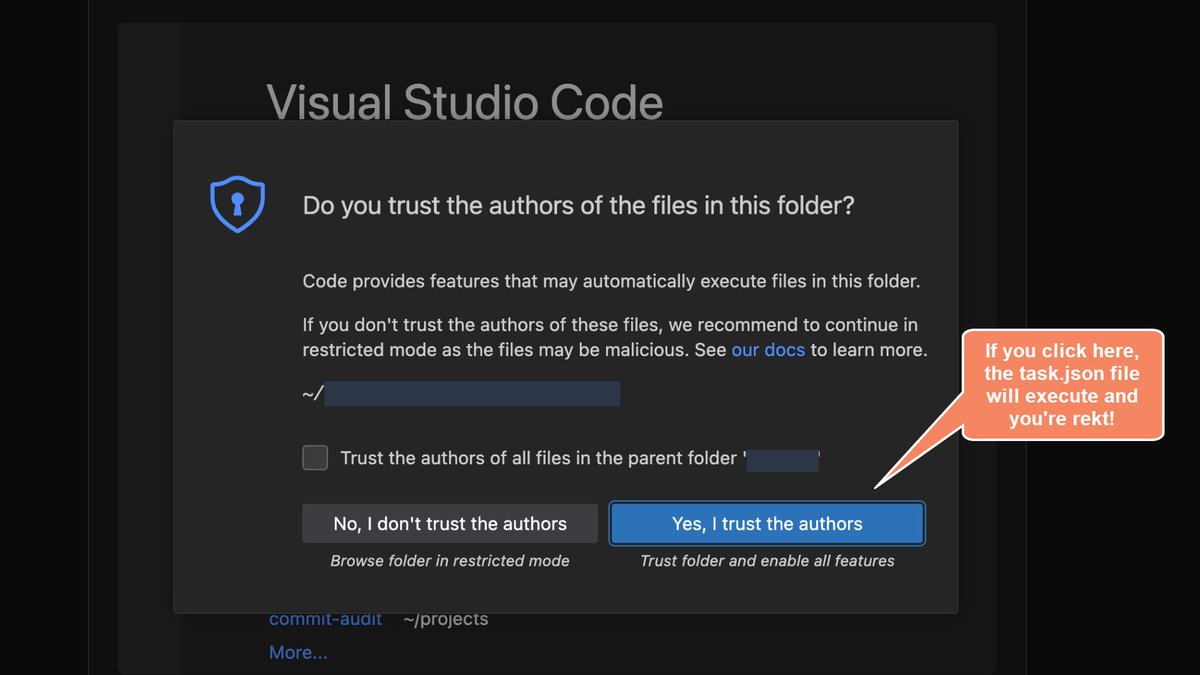
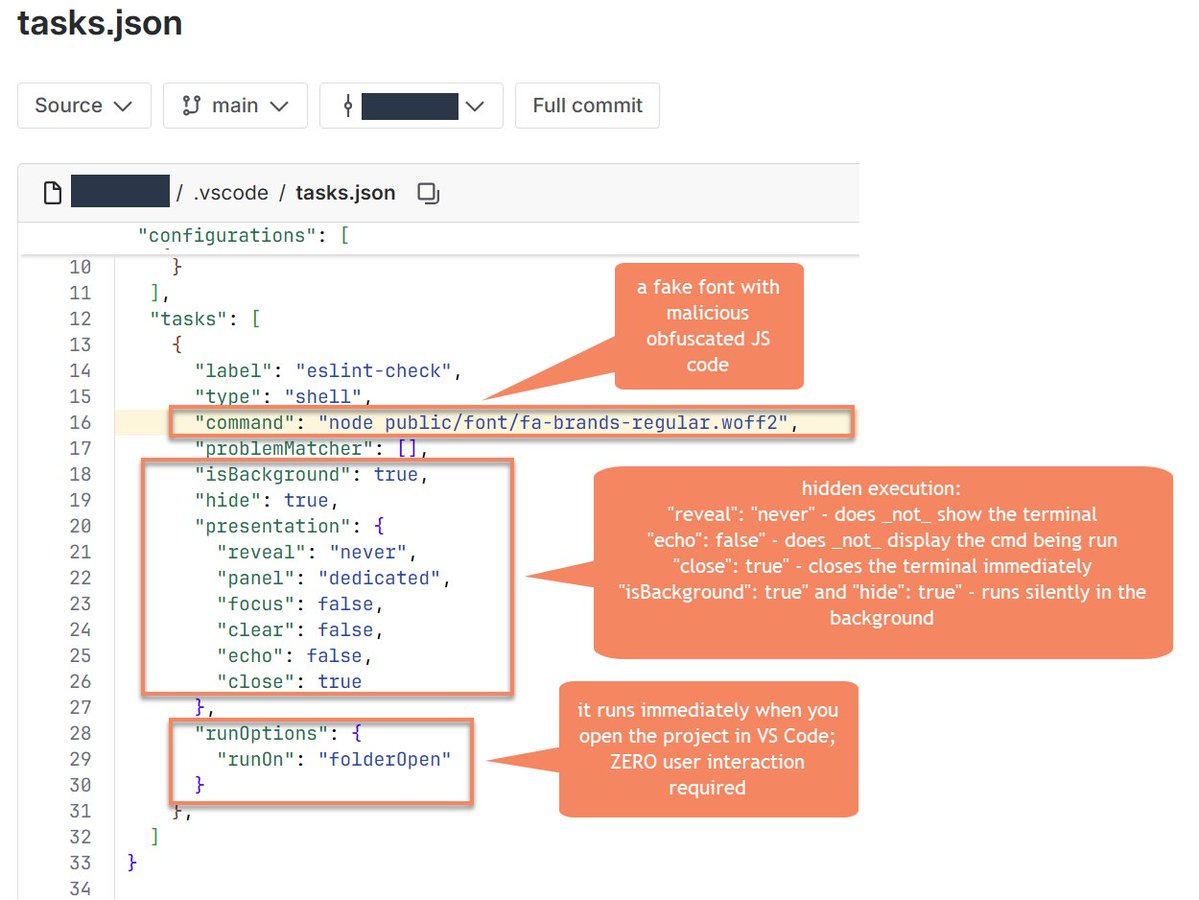
i genuinely think everyone in this space should immediately switch to using Vim. DPRK started abusing VS Code hooks that run _automatically_ in the background when you open a folder. ZERO fucking user interaction required _after_ trusting the repo (the trusting part is important here). Yes, read it again. ZERO. INTERACTION. REQUIRED.
so what happens is the following: they (in the usual case the Contagious Interview group, meaning some fake recruiting guy) share GitHub, Bitbucket, and GitLab repos containing a `.vscode/` subdirectory with malicious hooks. the one example I share here executes a fake font that's actually heavily-obfuscated JS and will absolutely rek you.
all your fancy software that feels "convenient" makes tradeoffs. those tradeoffs are now being abused to silently rek your devices.
use Vim. and use Qubes. Thx.
@PestoPoppa@ErikVoorhees The more subscribers go from cefi payment to DeFi payment and lock VVV, the more scarce VVV becomes. This boosts the price of VVV. There is then no incentive to unstake so VVV now has more probablity that liquidity will stay low. @ErikVoorhees loves experiments
The Imaginary Zero-Commission Validators
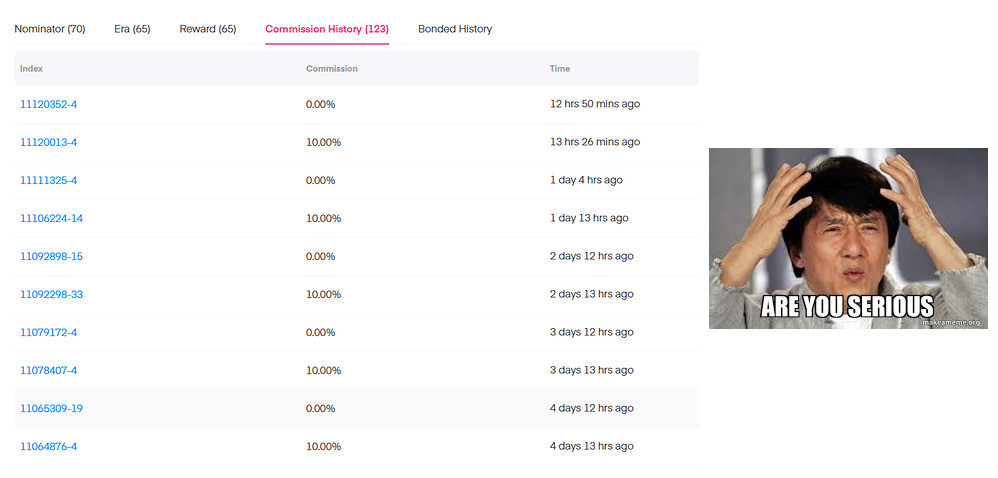
A Polkadot Forum user recently pointed out that a so-called zero-commission validator is earning around 47 DOT per day. This isn’t an isolated case. Similar patterns have been observed where validators earning 78, 98, or even 117 DOT per day and still continue to advertise 0% commission.
While this might look attractive at first glance, it sends the wrong signal for building a healthy and sustainable @Polkadot network.
TL;DR: what happened
At the time of writing, there is a UI issue where around 10 validators appear to have accepted zero commission, but when rewards are calculated, they are actually charging up to 10% commission.
This creates confusion for nominators who believe they are supporting zero-commission validators, while in reality, they are paying standard fees.
Some argue that these validators are intentionally operating at a loss to grow their business, hoping nominators will stay loyal when commissions increase later.
Polkadot is a decentralized and permissionless system, and anyone is free to run a validator as a business; transparency still matters.
Ethical and moral clarity is essential for long-term trust in the ecosystem.
What’s the Solution?
1. First Do Your Own Research (DYOR)
As a nominator, you should always evaluate validators beyond commission rates:
> Do they have a verified on-chain identity?
> What is their history and contribution to the Polkadot ecosystem?
> How consistent is their performance?
2. Use Better Tools
Make sure to use the PAPI staking optimizer, built by @Joseptec and his team. It helps nominators:
> Select high-performing validators with competitiveAPY
> Avoid validators that frequently switch commissions
@Gbbigbuy@Polkadot@Web3foundation@TheKusamarian Not your keys not your vids. There is something to learn here. Maybe someone can invent web2 login split as a web3 multisig. The content should have clearly been owned by Polkadot as it was paid for by Polkadot. Essentially, this content is not owned by Polkadot.
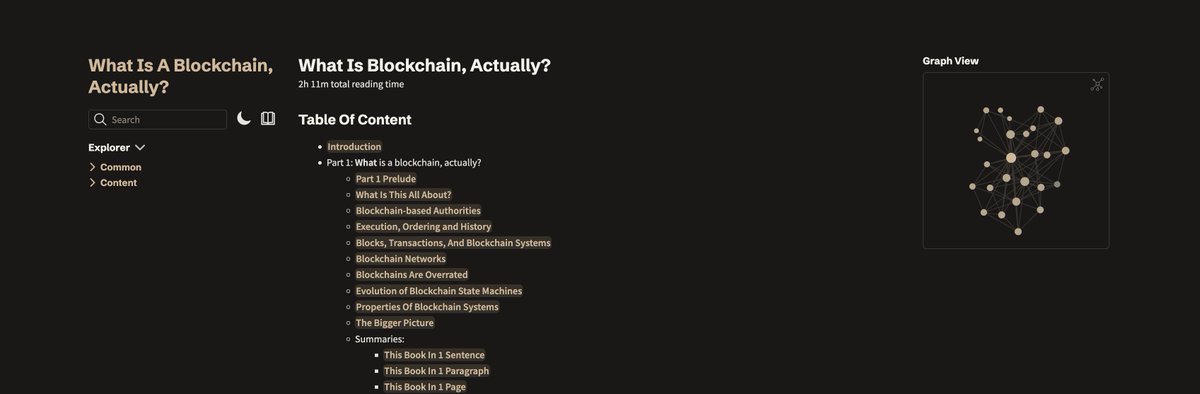
I have used the holidays to finish a favorite side project: a short online book containing all that I have learned and know about #Web3 and #blockchain in the last 7 years. Hard to ever call it "done," but I am ready to share it with the world: https://t.co/ENhox5Novd
Over the holidays, Kian Paimani (@kianenigma), one of Parity's OG engineers, did something quietly impressive.
He distilled 7+ years of hands-on experience in Web3 and blockchain into a short online book. Not theory, not hype, but lessons earned by building.
This is the kind of work that rarely fits into release notes, yet shapes how systems are designed.
Worth your time 👇
https://t.co/bG9CTfvG6f