@Cyberhijabitech Maa shaa Allah. Almost through with same Module too. Applied for Beginner but got advanced. Did well on the selection exams maybe that was why.
Did a short iSc2 course a year ago and that was it.
Really excited about this though.
A Heart-Shaking Reminder: Words of al-Hasan al-Baṣrī That Awakened a Sixty-Year-Old Man!
May Allah awaken our hearts, forgive our shortcomings, and grant us a righteous ending. آمين
Shaykh ʿAbd al-Razzāq al-Badr حفظه الله
@YusufAsunmogejo … I’m also for the idea that one Hadith per week followed by a session with Q & A’s would be great. I believe the aim is for people to understand and apply the teachings and not rush to complete the book.
@YusufAsunmogejo Assalamu alaikum. Speaking for myself, I prefer the detailed approach you adopted but as I was reading it I also was saying to myself most people wont read this. Honestly, people thesedays are always in rush and don’t like reading, especially on this app.
JazakAllah khair.
China has cracked the code on tiny-home design. Every square metre is thoughtfully planned for privacy, functionality, and beautiful aesthetics. Something many UK and US homes could learn from.
This guy on LinkedIn casually dropped the blueprint to building anything with Claude👨🏽💻🙌🏽
→ Ai is going to make soo many millionaires
→ Claude is going to make soo many millionaires
Check out article if you like 👉🏽 https://t.co/m5dwdSwJ4s
Easy stuff
Step 1. Search for jobs in your niche. E.g product designer, product manager, data analyst and the likes
Step 2: Filter by location, remote or onsite (focus on the remote ones) and click on Job
Step 3: check each job. To do this, click the JD, check the name of the company (usually the first thing you see), and sometimes, LinkedIn includes the job poster. I mean the profile of the person that posted the job. Send a connection request to the person (could be your 2nd or 3rd degree connection)
Step 4: since that person works in the company, or automatically opens up your degree of connection. This is very important because LinkedIn works on network effect (it’s why you see something like “LinkedIn member” instead of names on some profile
- step 5: start connecting with decision makers at those companies after step 4. Make sure you connect with C-suites and leaders (CEOs, COOs, CMOs, head of product, CIO,, CSOs and the likes)
All the best
Start doing these things now to build a thriving freelancing career and position yourself for global opportunities online:
1. Master Your Craft:
✅ Dedicate 3–4 focused learning sessions per week (30–60 minutes each)
✅ Focus on high-demand skills: Coding, design, data, tech, Strategy, sales and marketing or Ai automation
✅ Apply progressive learning. Build on what you already know
✅ Share your progress publicly (Twitter, LinkedIn, communities)
✅ Consistency over perfection. show up even when it feels slow
2. Simplify Your Learning Path:
✅ Stick to one core skill at a time before branching out
✅ Use the 1-1-3 formula: 1 skill + 1 portfolio project + 3 platforms
✅ Batch-create samples of your work (case studies, designs, write-ups)
✅ Stop chasing “shiny new skills” and focus on depth and mastery
✅ Track your learning for 2 weeks to uncover gaps and strengths
3. Optimize Your Visibility:
✅ Post 3–4 times weekly to share your work, insights, and lessons learned
✅ Build in public. Talk about what you’re doing, not just the results
✅ Keep your online profiles (LinkedIn, X, personal site) polished
✅ Take 1–2 hours weekly to engage with other creators and clients online
✅ Visibility is when opportunities actually find you
4. Build Daily Consistency Habits:
✅ Write or create content for 30 minutes a day (threads, posts, short videos)
✅ Engage with at least 5 people daily in your niche or industry
✅ Document small wins (your process, not just the outcome)
✅ Collaborate with peers on projects, challenges, or open calls
✅ Every small action compounds toward global opportunities
5. Create Systems That Stick:
✅ Treat freelancing like a business (set work hours, track progress)
✅ Set up your environment for success (clear workspace, tools ready)
✅ Track your income streams, outreach, and projects over time
✅ Find an accountability partner, mentor, or mastermind group (tell us more about what you do in the comment section. You may just find an accountability partner)
6. Protect Your Eyes with Anti-Blue Glasses:
✅ Block harmful blue light from screens that cause fatigue and headaches
✅ Stay focused longer without burning out
✅ Remember that your vision is your most important freelancing tool
✨ Buy your Anti-Blue Glasses today and protect your future.
👉 Chat with us on WhatsApp to order: https://t.co/p7MNxwjXpa
BIG CHANGE:
YOU CAN NOW OFFICIALLY
GENERATE ELECTRICITY FOR YOURSELF, USE WHAT YOU NEED, AND SELL EXCESS ELECTRICITY BACK TO THE GRID THROUGH YOUR DISCO
The Nigerian Electricity Regulatory Commission (NERC) has commenced the Net Billing Regulations 2026, a new framework that allows eligible electricity users to generate power mainly through solar energy for their own use and export excess electricity back to the distribution network.
In simple terms, if your solar system generates more electricity than you consume, you can now send the extra power back to your DisCo and receive credits under a regulated billing arrangement.
This effectively creates what the sector calls a “Prosumer” ;meaning you are both a consumer and producer of electricity.
However, there are conditions.
This is not yet targeted at the average small residential solar setup.
To qualify:
-You must already be connected to a DisCo network.
-Your renewable energy system must have a minimum installed capacity of 50kWp and a maximum of 1.5MWp
-You must obtain approval from your DisCo.
-You must sign a Net Billing Agreement and register with NERC.
Approved users will receive bidirectional meters that track: ➡️Electricity imported from the grid
⬅️Electricity exported back to the grid
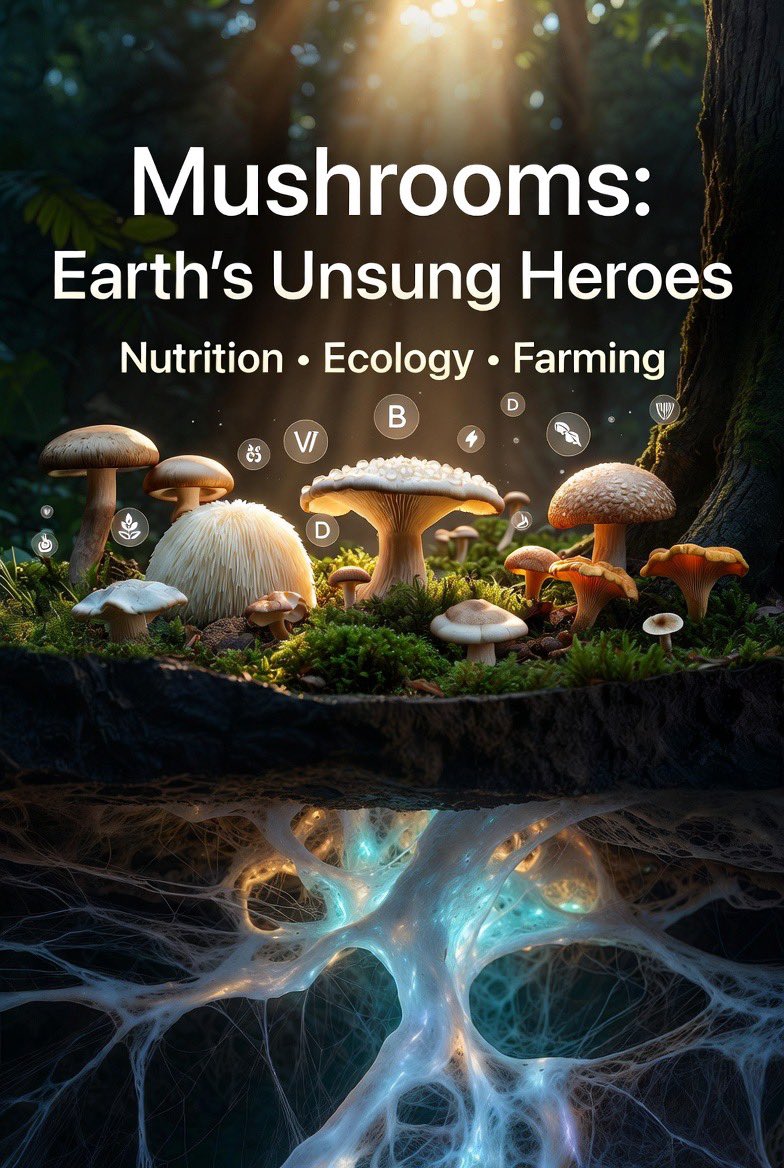
Mushrooms: Earth’s Unsung Heroes – Nutrition, Ecology, and How We Farm Them
Mushrooms captivate with their earthy flavors and mysterious growth, yet they offer far more than a tasty addition to meals. These fungi deliver impressive nutritional benefits while playing vital roles in natural ecosystems. Farmers have mastered techniques to bring them from wild habitats straight to kitchens worldwide.
Far from empty calories, mushrooms pack a surprising nutritional wallop. They stay low in calories and fat but supply valuable B vitamins like riboflavin, niacin, and pantothenic acid that support energy production and nervous system health. Many varieties provide vitamin D—especially after sunlight exposure—along with minerals such as selenium, copper, and potassium. Their modest protein and fiber content make them excellent choices for plant-based diets, and compounds like polysaccharides contribute antioxidant and potential anti-inflammatory properties. A simple cup of mushrooms can meaningfully boost daily nutrient intake without adding much to the waistline.
Yet their value extends deep beneath the surface. In the environment, mushrooms and their vast mycelial networks act as nature’s recyclers. As decomposers, they break down dead plants and animals, releasing essential nutrients back into the soil and driving the carbon cycle. This process enriches soil fertility and sequesters carbon, helping combat climate change. Mycorrhizal species form symbiotic partnerships with tree roots, creating an underground web that helps plants absorb water and minerals while sharing sugars and even chemical signals for defense or stress warnings. Because these connections enhance soil health and support biodiversity, entire ecosystems thrive where mushrooms flourish—sometimes even aiding in cleaning polluted sites through bioremediation.
Humans capitalize on these remarkable organisms through careful cultivation that recreates their natural conditions on a commercial scale. The process begins with spawn production, where mushroom mycelium grows on sterilized grains in controlled laboratory settings. Growers then prepare a nutritious substrate from materials like compost, straw, or wood chips, pasteurizing or sterilizing it so the desired fungi face no competition. Inoculation mixes the spawn throughout the substrate, which therefore allows the mycelium to thoroughly colonize its food source during an incubation period in warm, dark conditions. Once ready, growers shift to fruiting conditions with increased humidity, fresh air exchange, and sometimes cooler temperatures or light to trigger mushroom formation. A casing layer of peat or similar material often covers the surface for species like button mushrooms. Finally, workers harvest the mature fruiting bodies at peak size and flavor before the cycle potentially repeats with new flushes.
This journey from spore to plate highlights mushrooms’ unique position at the intersection of food, science, and ecology. Their cultivation demands precision but rewards with sustainable, high-value crops that require minimal space and resources compared to traditional agriculture.
A Nigerian engineer once told me something I haven’t stopped thinking about.
He said, “The day I got my offer letter from Amsterdam, my colleague reported me to HR.”
I asked him why.
He said, “Because I was about to earn in one month what he’d earned in three years.”
Then he said, “And the worst part? I understood him.”
The youths in Aiyetoro Gbede, Ijumu LGA, are protesting against an alleged plot to remove INEC Chairman Joash Amupitan, who hails from the community.
Watch 👇🏿
Dear Parents,
Let me share a secret with you. I pray it benefits you.
After my post on the anatomical psychology of a child yesterday, I received some questions about how to help children who struggle to focus on their studies and what parents can do to help them. If your child or your children is struggling academically, or lose focus easily, then this post is for you.
What you are likely seeing is a child who starts a task but wanders off. You might see them staring at a book for an hour without remembering a single line. It is easy to think they are being lazy, but what you ought to see is a mind where the internal powers are not connected.
The Almighty God in the Quran mentions the Nasiyah in Surah Al-Alaq (96:15) as the place of decision and control. Science has shown this to be the prefrontal cortex, the part behind the forehead.
In Kitab al-Shifa, Ibn Sina identified a power box called Al-Quwwah al-Mutakhayyilah (the Composative Imagination). This power is the pilot of the brain. Its job is to take information and turn it into focused thought. When focus is gone, the bridge is broken.
To help them overcome this problem, you can use a mental drill called Reverse Narrating (RN). Reverse Narrating is a modern concept, but, it has root in our religion too.
The principle behind RN is deeply anchored in the works of Abu Zayd al-Balkhi. He is considered the father of Islamic psychology. In his book Masalih al-Abdan wa al-Anfus (Sustenance of the Soul), he talked about Riyadat al-Nafs (disciplining the mind). He taught that the mind needs specific "mental rehearsals" to regain control over wandering thoughts.
This mental rehearsals through reverse narrating is what you should adopt going forward because it forces the brain to reorganize information in a way that is not natural.
Here is how you can do it:
1.Ask your child what they are doing right this moment (when you call them).
2.Ask them what they did ten minutes before that.
3.Keep asking what happened before each step, moving backward through the day.
4.Continue until they reach the moment they woke up in the morning.
Do you know what you have done? You have just forced the Mutakhayyilah of your child to work in overdrive to pull data from the memory and flip it.
What this does is that It strengthens the pilot seat in their forehead. If you do this for a few minutes every evening, you would be building the mental glue your child needs to stay on a task. This is how struggling children improve their mental power and succeed in their studies. GIVE IT A TRY.
Allah knows best.