Who defines AI, and whose interests does it serve?
That is the question Dr Margaret Mitchell @mmitchell_ai will bring to the Deep Learning Indaba 2026 keynote stage in Lagos this August.
Dr Mitchell is a Researcher and Chief Ethics Scientist at @huggingface Face, where she leads work on ML data processing, responsible AI development and AI ethics. She was previously at Google where she founded and co-led Google's Ethical AI group to advance foundational AI ethics research and operationalise AI ethics Google-internally. She holds a PhD in Computer Science from the University of Aberdeen and a Master's in Computational Linguistics from the University of Washington.
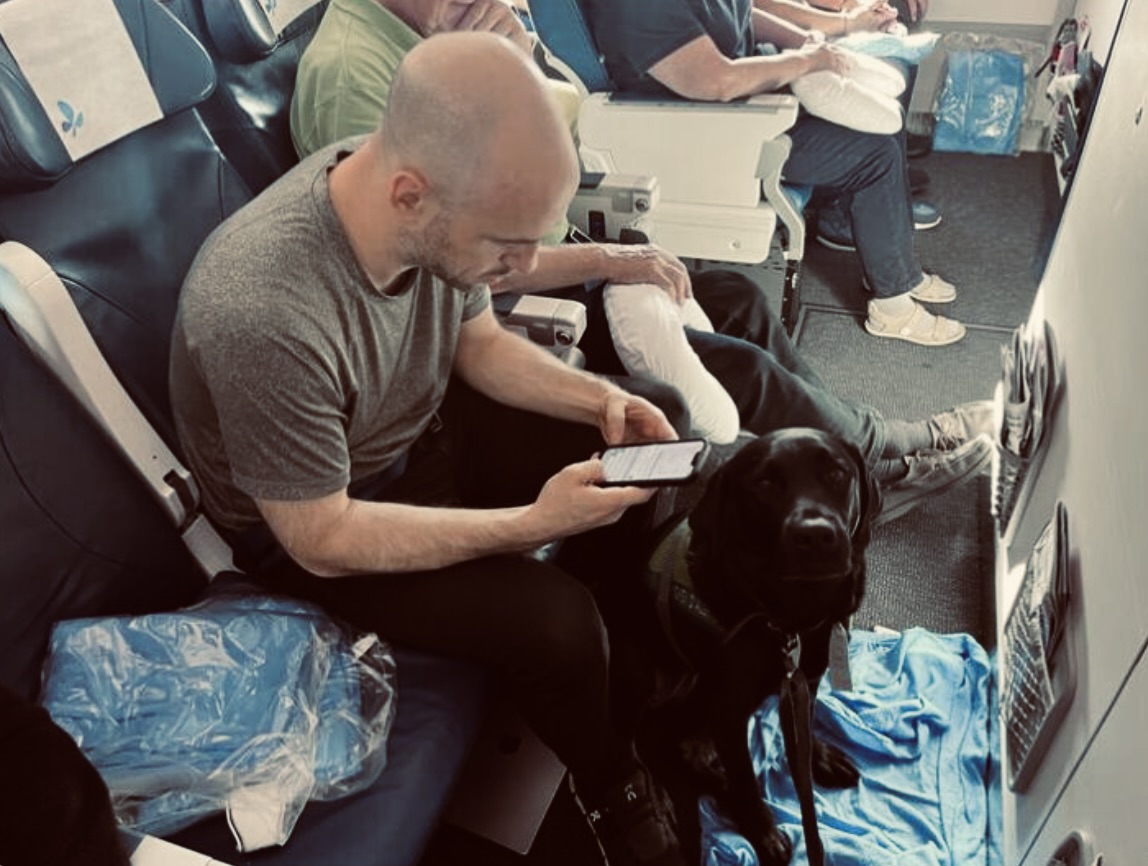
She has published over 100 papers on natural language generation, assistive technology, computer vision, and AI ethics, and holds multiple patents in the areas of AI conversation generation and sentiment classification. She has been recognised for her leadership and ingenuity in public fora such as TIME's Most Influential People in the world, Fortune's Top Innovators, and Lighthouse3's 100 Brilliant Women in AI Ethics. Her work has received awards from Secretary of Defence Ash Carter and the American Foundation for the Blind, and has been implemented by multiple technology companies. She is most known for her work pioneering "Model Cards" for ML model reporting; developing "Seeing AI" to assist blind and low-vision individuals; and developing methods to mitigate unwanted AI biases.
In her keynote, she will examine the promise and the reality of the pursuit of AI, interrogating the assumptions and fact-checking common narratives. Her case is that the way we advance AI today is largely controlled by a small set of actors with concentrated interests, and that this risks prioritising power, influence and market position over measurable human benefit.
It is a session for anyone who wants AI that answers to communities rather than to incumbents.
#DLI2026 #Indaba2026
The countdown to #DLI2026 begins! 🇳🇬 🔥
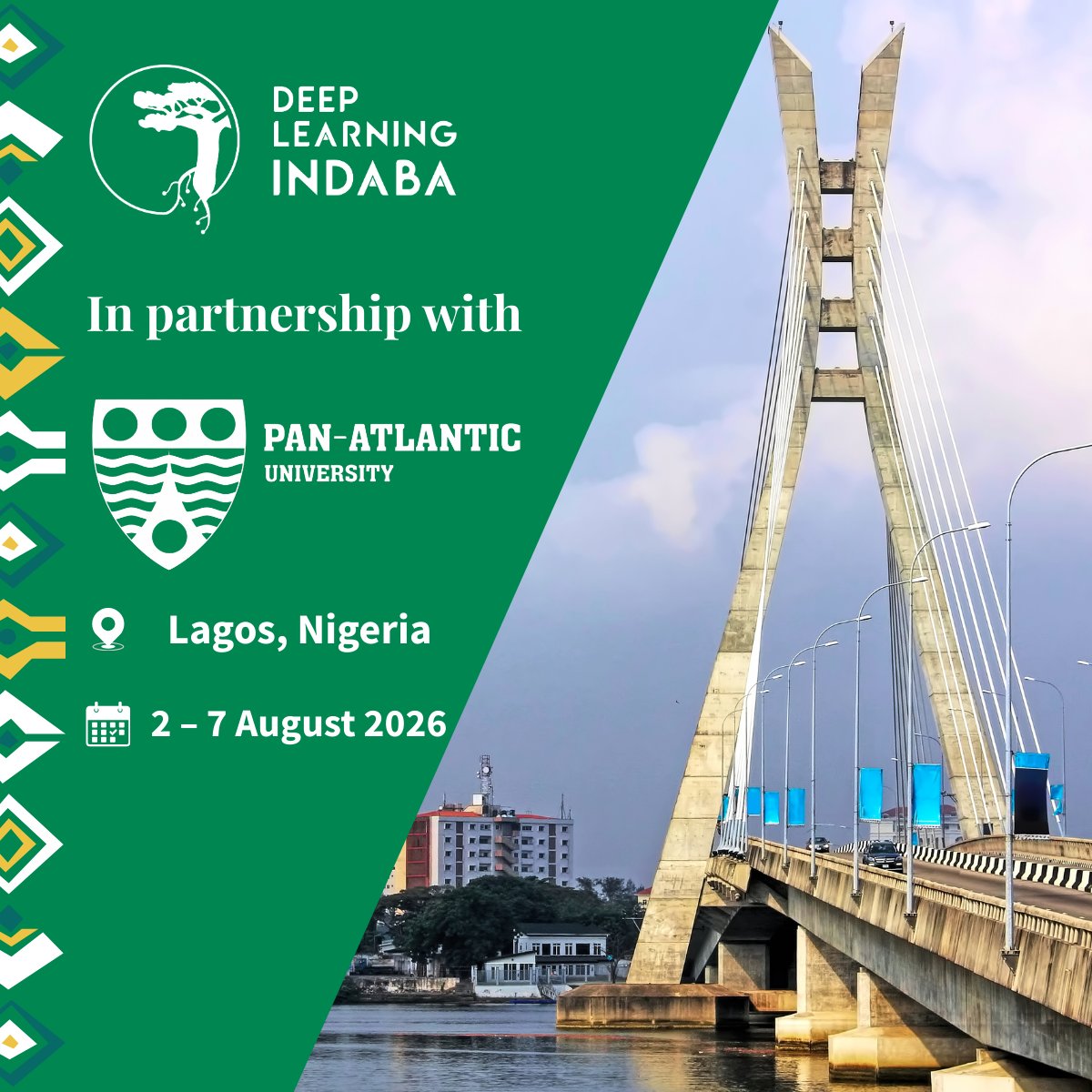
We are so excited to officially announce the venue and dates for Deep Learning Indaba 2026. This year, we are proud to partner with @pau_nigeria to host the Indaba at their beautiful campus in Lagos, Nigeria. Join us in Lagos for a week of world-class learning, collaboration, and research exchange as we convene the African AI community once again alongside friends and peers from around the world.
📍 Venue: Pan-Atlantic University (PAU), Lagos, Nigeria
🗓️ Dates: 2–7 August 2026
Important Update: All open calls have been extended by 10 days!
Check them out here 👉 https://t.co/FnY2AMoRkV
🤝 Partner with us: We are inviting sponsors and partners to help make #DLI2026 accessible and impactful. If your organisation is interested, we’d love to hear from you.
💬 A message from our hosts:
"We are super excited that Pan-Atlantic University (PAU) is hosting Deep Learning Indaba 2026, bringing together the global Machine Learning and Artificial Intelligence community to our campus, to continue the process of owning and shaping this space. We look forward to welcoming you all."
#DLI2026 #Indaba2026
Sourround yourself with people who make you believe in a bigger version of yourself, not force you to adopt a smaller version of yourself to accommodate their smaller version of themselves.
The companies that succeed in the future are going to make very heavy use of AI. People will manage teams of agents to do very complex things.
Today we are launching Frontier, a new platform to enable these companies.
We are officially heading to NIGERIA! 🌟
But why Nigeria?
Our 2026 General Chairs described Nigeria as a place representing "scale, imagination, and a fearless belief in what is possible."
For years, Nigerian builders and researchers have helped shape the Indaba from its earliest days. Now, we are bringing the energy home to channel a new focus: Sovereign Intelligence, the ability for Africa to build, steward, and understand its own systems.
As Wole Soyinka famously said, "A tiger does not proclaim its tigritude; it pounces."This year, we pounce. The journey to 2026 has begun!
Stay tuned for updates on dates, venue details, and application openings coming soon!
#DLI2026 #Indaba2026
This year, we almost said nanana
Brazil, Morocco, London to Ibiza
Straight to LA, New York, Vegas to Africa
So, I ended up in Amapiano country, Cape Town, SA.
Not that bad a one.
We will find out what the mother city will have for us.
#AIForward
This came as a total surprise this morning. Very humbled… 🙏 AI is built by generations of technologists, starting with the daring question of “can machines think?” by Alan Turing. It will be further developed, used and governed by many and all of us! Let’s keep our AI mission human-centered for the benefit of humanity! And I can’t wait to see where AI’s next frontier - spatial intelligence - will be taking us!
There are btw 180 - 220 million young people with disabilities worldwide. Nearly 80% live in developing countries.
#ILO estimates that #PeopleWithDisabilities can contribute 3-7% to GDP if given access to opportunity.
https://t.co/5ixYE7Xxs8
#InclusiveFutures#IDPD2025
We kept flying back and forth between France and San Francisco in 2023.
In just a few days in SF, more would happen than in months back home.
Every trip back to the airport felt heavier because of what we were missing.
One day, sitting in another Uber to SFO, Michael and I looked at each other. No words needed. We both knew we need to stay here. Now.
The biggest surprise was that the most successful entrepreneurs here, ones you'd think have nothing to learn from a small startup, answer DMs.
And meet for coffee. And stay curious about what everyone is building.
Their openness to being challenged by anyone is their superpower.
It honestly feels like there's more conviction about progressing technology and humanity as fast as possible, as best as possible, and everyone is driving.
To those standing at their own SFO moment: The leap is scary. But staying put when you know you belong elsewhere is much scarier.
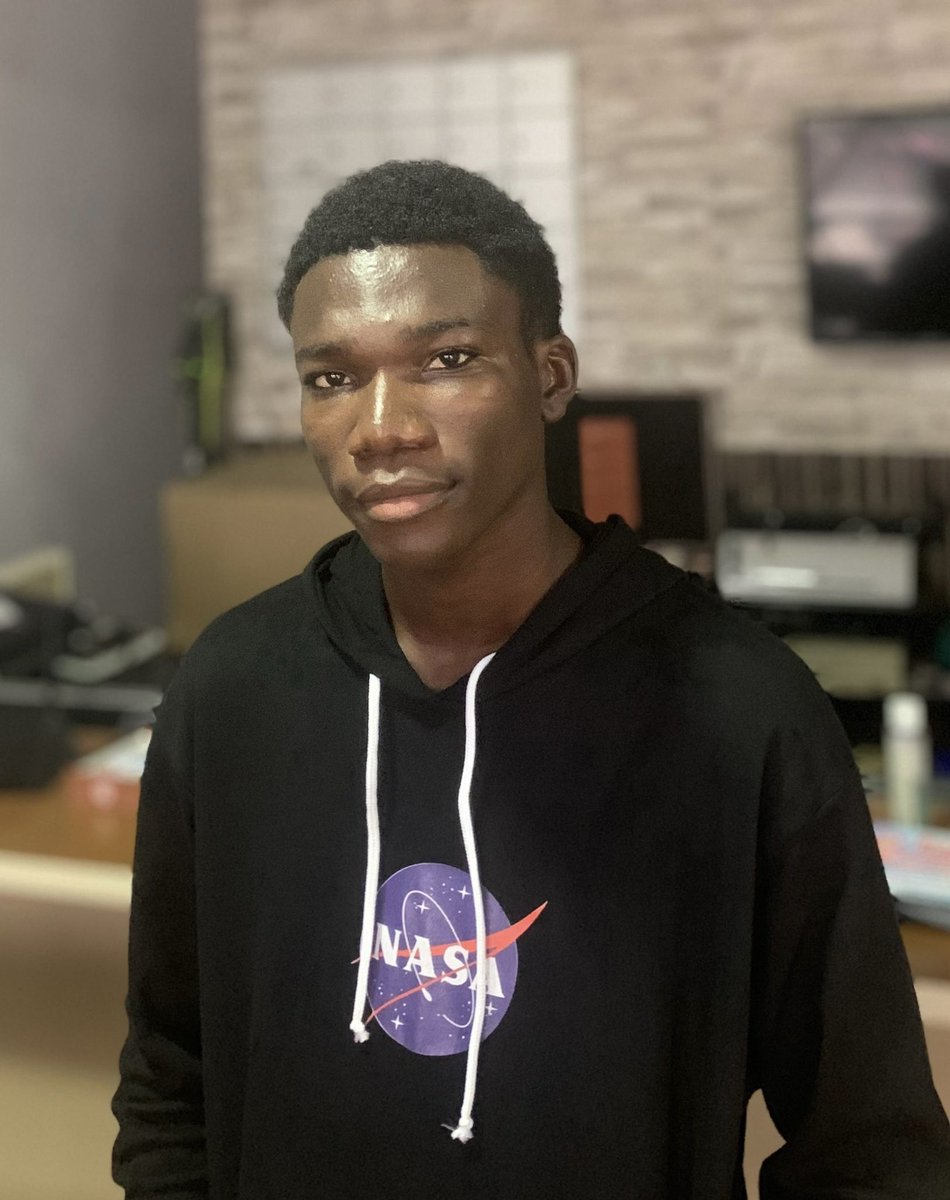
I finally got into NASA!!!!!
(the building for now 😂)
But seriously, standing there hit different. For over 9 years this has been my dream, but it felt impossible. Like something only "other people" got to dream about.
I'm so happy to finally achieve this, but here's the thing: This is also the beginning of something wayyy bigger.
Today, my co-founder @Adebayo__x and I are launching something we've been brewing for a while "@ablehq_ "
Able is not just a product, but an entire ecosystem of software that transforms how Africa learns, earns, and dreams.
I'll be sharing more about @ablehq_ in my next couple of tweets. Join our waitlist at https://t.co/r69UErn7DB to get a front-row seat.
The launch sequence has started.🚀
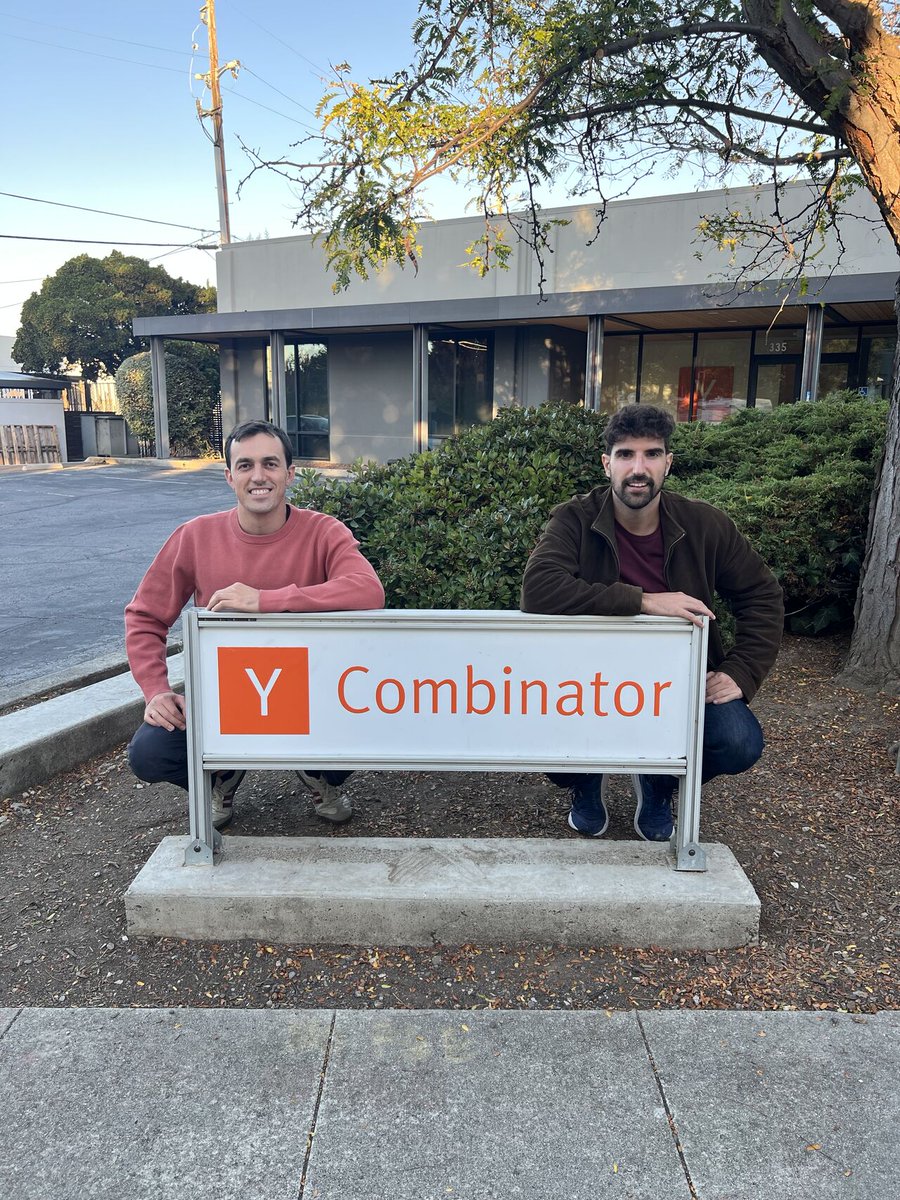
After 3 years building AI agents, I quit my job to launch my own AI company.
We applied to @ycombinator 30 minutes before the deadline.
Two weeks later, on a Friday morning, I got an email inviting us to an interview on Monday... IN PERSON in SF. We were in Spain… We dropped everything, took a train from Madrid to Bcn, and barely caught the last flight out.
We landed monday morning and went straight to YCs office. During that 15 minute interview Nicolas Dessaigne grilled us hard. We walked out convinced it was over. Too early, we’d try again next time.
At 9:30 p.m. that same day, we got an email asking for a Zoom call the next morning. We had one more shot.
We joined the call, and the first thing Nico said will stay with me forever: “We’d like to fund you.”
Fast forward to today, I'm fully settled in SF with my co-founder @tonilopezmr and building something that feels magical.
More to come soon!
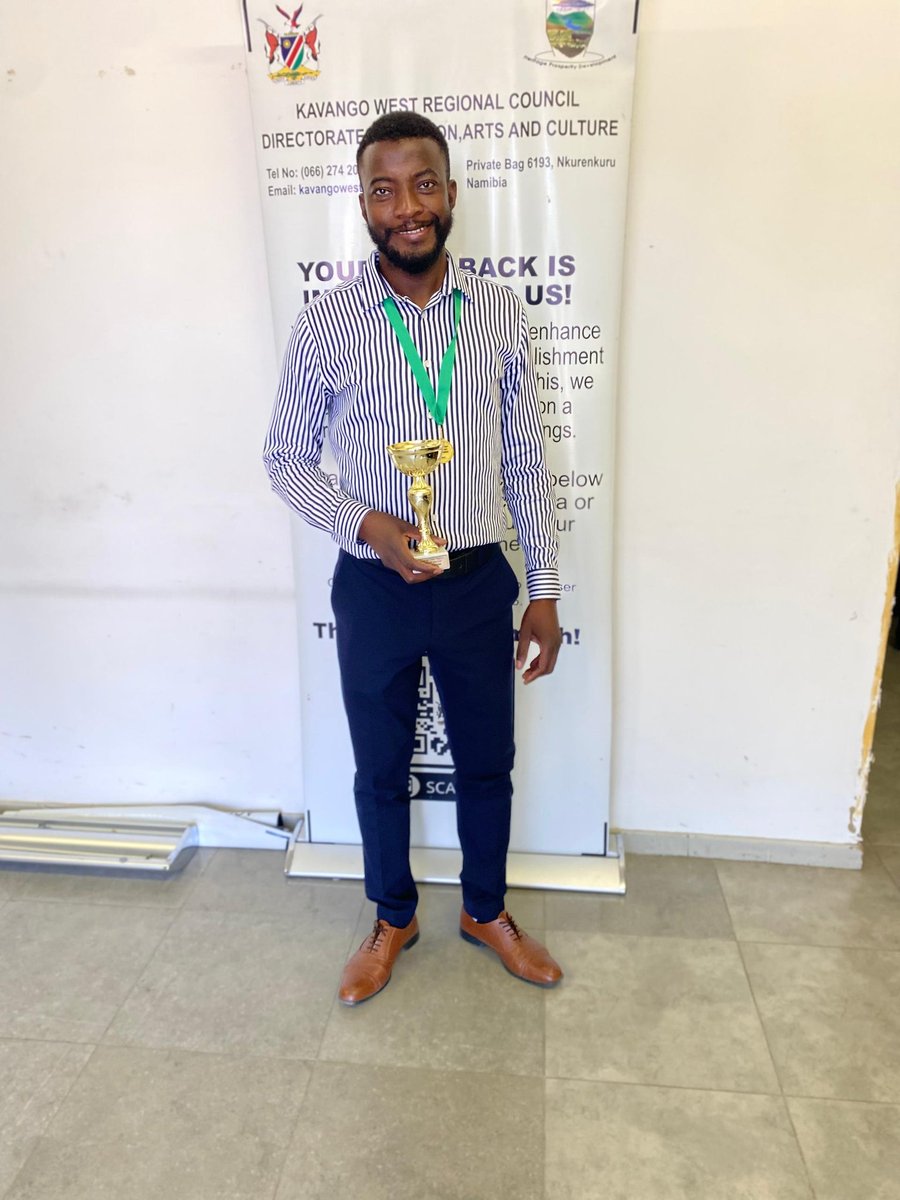
Tomorrow, I begin my journey as an Adjunct Professor at the prestigious New York University. This is very special for me because the world around me has always doubted my potential. To every Namibian dreamer: may your dreams be limitless and may you dream without borders.
There is now a path for China to surpass the U.S. in AI. Even though the U.S. is still ahead, China has tremendous momentum with its vibrant open-weights model ecosystem and aggressive moves in semiconductor design and manufacturing. In the startup world, we know momentum matters: Even if a company is small today, a high rate of growth compounded for a few years quickly becomes an unstoppable force. This is why a small, scrappy team with high growth can threaten even behemoths. While both the U.S. and China are behemoths, China’s hypercompetitive business landscape and rapid diffusion of knowledge give it tremendous momentum. The White House’s AI Action Plan released last week, which explicitly champions open source (among other things), is a very positive step for the U.S., but by itself it won’t be sufficient to sustain the U.S. lead.
Now, AI isn’t a single, monolithic technology, and different countries are ahead in different areas. For example, even before Generative AI, the U.S. had long been ahead in scaled cloud AI implementations, while China has long been ahead in surveillance technology. These translate to different advantages in economic growth as well as both soft and hard power. Even though nontechnical pundits talk about “the race to AGI” as if AGI were a discrete technology to be invented, the reality is that AI technology will progress continuously, and there is no single finish line. If a company or nation declares that it has achieved AGI, I expect that declaration to be less a technology milestone than a marketing milestone. A slight speed advantage in the Olympic 100m dash translates to a dramatic difference between winning a gold medal versus a silver medal. An advantage in AI prowess translates into a proportionate advantage in economic growth and national power; while the impact won’t be a binary one of either winning or losing everything, these advantages nonetheless matter.
Looking at Artificial Analysis and LMArena leaderboards, the top proprietary models were developed in the U.S., but the top open models come from China. Google’s Gemini 2.5 Pro, OpenAI’s o4, Anthropic’s Claude 4 Opus, and Grok 4 are all strong models. But open alternatives from China such as DeepSeek R1-0528, Kimi K2 (designed for agentic reasoning), Qwen3 variations (including Qwen3-Coder, which is strong at coding) and Zhipu’s GLM 4.5 (whose post-training software was released as open source) are close behind, and many are ahead of Meta’s Llama 4 and Google’s Gemma 3 — the U.S.’ best open-weights offerings.
Because many U.S. companies have taken a secretive approach to developing foundation models — a reasonable business strategy — the leading companies spend huge numbers of dollars to recruit key team members from each other who might know the “secret sauce“ that enabled a competitor to develop certain capabilities. So knowledge does circulate, but at high cost and slowly. In contrast, in China’s open AI ecosystem, many advanced foundation model companies undercut each other on pricing, make bold PR announcements, and poach each others’ employees and customers. This Darwinian life-or-death struggle will lead to the demise of many of the existing players, but the intense competition breeds strong companies.
In semiconductors, too, China is making progress. Huawei’s CloudMatrix 384 aims to compete with Nvidia’s GB200 high-performance computing system. While China has struggled to develop GPUs with a similar capability as Nvidia’s top-of-the-line B200, Huawei is trying to build a competitive system by combining a larger number (384 instead of 72) of lower-capability chips. China’s automotive sector once struggled to compete with U.S. and European internal combustion engine vehicles, but leapfrogged ahead by betting on electric vehicles. It remains to be seen how effective Huawei’s alternative architectures prove to be, but the U.S. export restrictions have given Huawei and other Chinese businesses a strong incentive to invest heavily in developing their own technology. Further, if China were to develop its domestic semiconductor manufacturing capabilities while the U.S. remained reliant on TSMC in Taiwan, then the U.S.’ AI roadmap would be much more vulnerable to a disruption of the Taiwan supply chain (perhaps due to a blockade or, worse, a hot war).
With the rise of electricity, the internet, and other general-purpose technologies, there was room for many nations to benefit, and the benefit to one nation hasn’t come at the expense of another. I know of businesses that, many months back, planned for a future in which China dominates open models (indeed, we are there at this moment, although the future depends on our actions). Given the transformative impact of AI, I hope all nations — especially democracies with a strong respect for human rights and the rule of law — will clear roadblocks from AI progress and invest in open science and technology to increase the odds that this technology will support democracy and benefit the greatest possible number of people.
[Full text: https://t.co/jn0KNi3gmA ]