Writing a talk to give in Stockholm. The prospect of speaking to a large group of people is no longer frightening, but writing a talk is as much work as ever. I'm no longer afraid of audiences, but I'm still just as afraid of making mistakes.
⏳ Last chance to register
Our webinar on large-scale movement data analysis is this Thursday.
See how markerless mocap & AI enable scalable, real-world analysis.
📅 April 23
⌚ 16:00 CEST / 10:00 EDT
👉 Register:
https://t.co/vJRF8CTlRT
#AI#Markerless#MovementAnalysis
📣 Reminder: Our webinar is coming up soon
Explore tools to support scalable, real-world data analysis using markerless & AI - used by leading clinics & research groups.
📅April 23
⌚16:00 CEST / 10:00 EDT
👉Register: https://t.co/vJRF8CTlRT
#AI#Markerless#MovementAnalysis
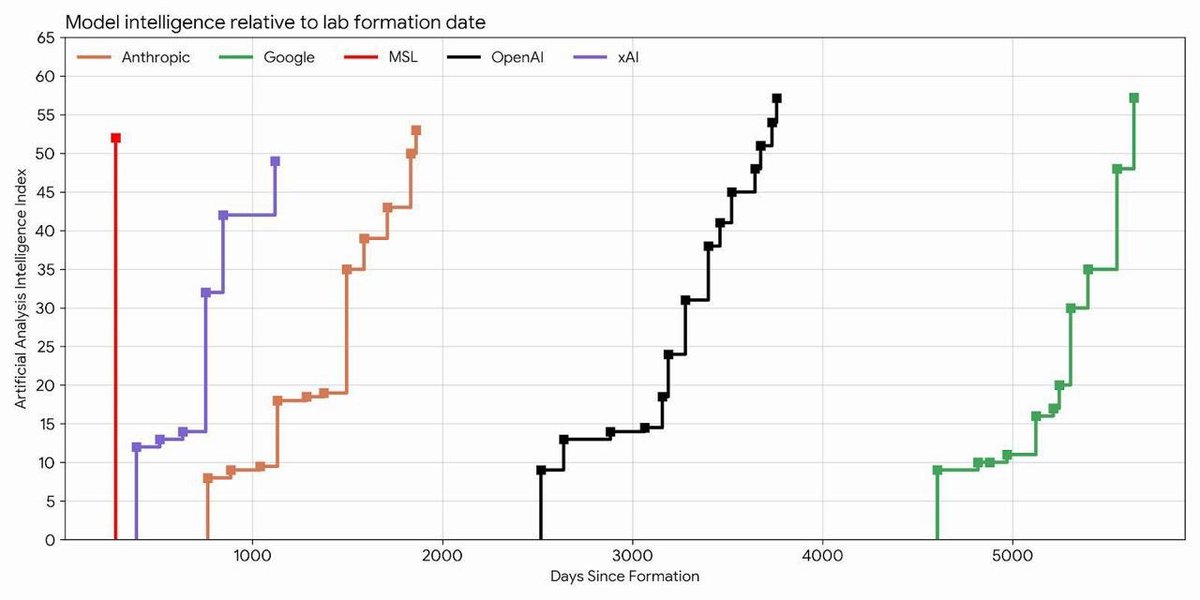
Congratulations to Alex and the whole team at MSL. As a sucker for all things speedy (https://t.co/Od1fQoL3FQ), I thought this was an impressive chart:
Markerless & AI are changing movement analysis - are you ready?
Join our webinar: Unlock Large-Scale Data Analysis with Moveshelf
📅April 23
⌚16:00 CEST / 10:00 EDT
See tools to analyze large-scale motion data
👉https://t.co/vJRF8CTlRT
#MovementAnalysis#AI#Markerless
New supply chain attack this time for npm axios, the most popular HTTP client library with 300M weekly downloads.
Scanning my system I found a use imported from googleworkspace/cli from a few days ago when I was experimenting with gmail/gcal cli. The installed version (luckily) resolved to an unaffected 1.13.5, but the project dependency is not pinned, meaning that if I did this earlier today the code would have resolved to latest and I'd be pwned.
It's possible to personally defend against these to some extent with local settings e.g. release-age constraints, or containers or etc, but I think ultimately the defaults of package management projects (pip, npm etc) have to change so that a single infection (usually luckily fairly temporary in nature due to security scanning) does not spread through users at random and at scale via unpinned dependencies.
More comprehensive article:
https://t.co/EJAZbqAPIQ
Introducing TurboQuant: Our new compression algorithm that reduces LLM key-value cache memory by at least 6x and delivers up to 8x speedup, all with zero accuracy loss, redefining AI efficiency. Read the blog to learn how it achieves these results: https://t.co/CDSQ8HpZoc
Software horror: litellm PyPI supply chain attack.
Simple `pip install litellm` was enough to exfiltrate SSH keys, AWS/GCP/Azure creds, Kubernetes configs, git credentials, env vars (all your API keys), shell history, crypto wallets, SSL private keys, CI/CD secrets, database passwords.
LiteLLM itself has 97 million downloads per month which is already terrible, but much worse, the contagion spreads to any project that depends on litellm. For example, if you did `pip install dspy` (which depended on litellm>=1.64.0), you'd also be pwnd. Same for any other large project that depended on litellm.
Afaict the poisoned version was up for only less than ~1 hour. The attack had a bug which led to its discovery - Callum McMahon was using an MCP plugin inside Cursor that pulled in litellm as a transitive dependency. When litellm 1.82.8 installed, their machine ran out of RAM and crashed. So if the attacker didn't vibe code this attack it could have been undetected for many days or weeks.
Supply chain attacks like this are basically the scariest thing imaginable in modern software. Every time you install any depedency you could be pulling in a poisoned package anywhere deep inside its entire depedency tree. This is especially risky with large projects that might have lots and lots of dependencies. The credentials that do get stolen in each attack can then be used to take over more accounts and compromise more packages.
Classical software engineering would have you believe that dependencies are good (we're building pyramids from bricks), but imo this has to be re-evaluated, and it's why I've been so growingly averse to them, preferring to use LLMs to "yoink" functionality when it's simple enough and possible.
DEADLINE TOMORROW!!! This is a final reminder that the abstract submission deadline for the 2026 Annual Meeting of the Gait and Clinical Movement Analysis Society (GCMAS) is tomorrow, Friday, January 23, 2026, at 11:59 PM EST. Details here:
https://t.co/FWAGNm2HDq
The Gait and Clinical Movement Analysis Society (GCMAS) is now accepting proposals for tutorials and special sessions at the 2026 Annual Meeting, held June 9–13 at Creighton University Health Science Center in Phoenix, AZ.
🔗 Details: https://t.co/eUbspbZJ5T
This year's annual meeting kicked off with a two day pre-course on "Basic Gait Analysis & Interpretation". This course was designed to provide anyone working in a clinical lab necessary clinical & technical information
@KarenKrugerPhD@JJKrzak@Kirktul@duganbiomech@orthodawg91