Check out our most recent publication in @GlobalChangeBio! 🌳🌍🛰️ Sentinel-2 data revealed that forests with greater canopy trait diversity showed higher resistance and resilience to the drought of 2018 in non-experimental forest ecosystems at landscape scales.
Satellite Observations Reveal a Positive Relationship Between Trait‐Based Diversity and Drought Response in Temperate Forests
📄 https://t.co/2tYjcOZesb
@ihelfe@UZH_en
Paper published!! This one took us on a long journey 😉 I remember when Paul Moorcroft and I started discussing this work in 2015, and writing a first draft 6 years ago. Now it is finally published in JGR-Biogeosciences and still up to date: https://t.co/SzmtyFxFhR
See 🧵🛩🌳🌲🖥️
1/6 Today's⭐️#SAR_STAR Friday is @DasserGwen a Scientific Assistant at WSL Institute for Snow 🌨️ and Avalanche 🏔️ Research SLF (@SLFDavos) in Davos Dorf, Switzerland 🇨🇭. 👋Give her a follow & ⬇️ to learn more #WomeninScience#EOChat
#February11 is International Day of Women and Girls in Science: Portraits of some of our women and their passion for science. Collected last year, no less relevant today. https://t.co/zvnteiPan1
#womeninscience#womeninSTEM@UZH_Science
📢New paper!
Wondering how we made The Habitat Map of Switzerland? Check out our paper now published in @RemoteSens_MDPI: https://t.co/Atc871hyKE, describing the product and the methods we used. @WSL_RemoteSens @WSL_research
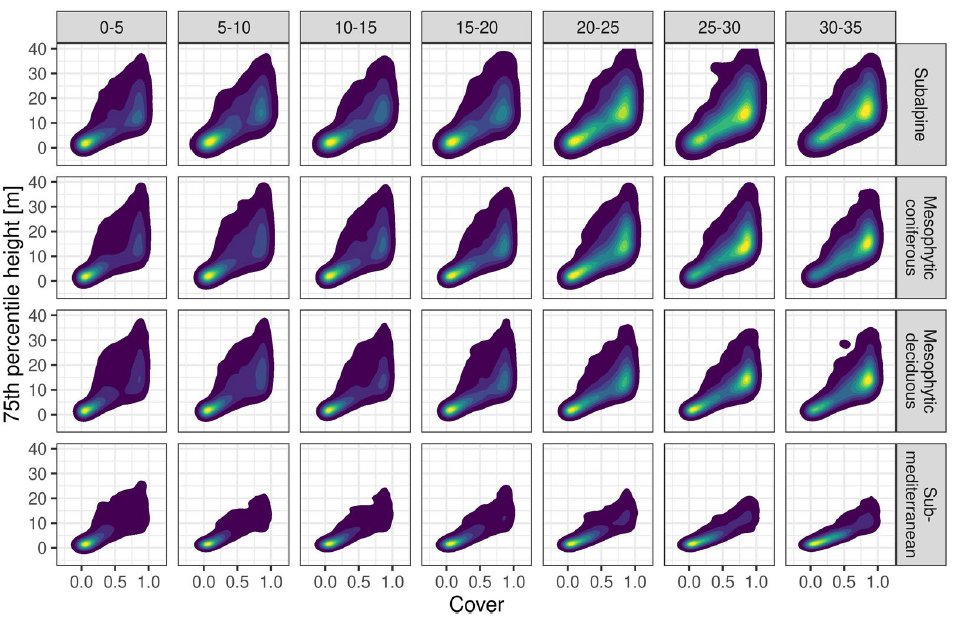
Happy to see our first paper using @GEDI_Knights data finally out! We found that most Alpine forests recover to a closed-canopy state within 35 years after disturbance, but not submediterranean forests at warm sites - which is worrying for the future. https://t.co/XYZbaP6S5N
#slu#research#forest#remotesensing Check out our recent publication "Quantify and account for field reference errors in forest remote sensing studies" where we analyze the impact of errors in the field references and how they affect forest remote sensing predictions!
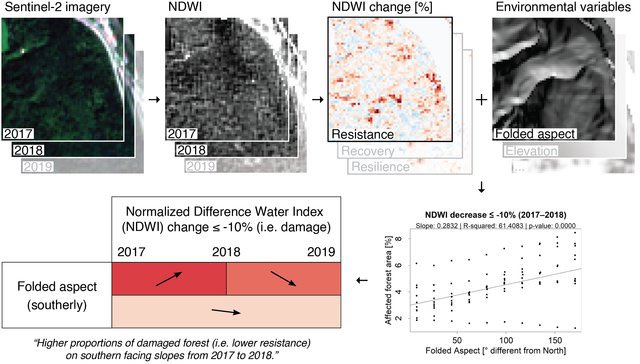
.@JTSturm et al. (2022) analyze relative change in the Normalized Difference Water Index #NDWI from #Sentinel2 to quantify the response of >1 million forest pixels across Switzerland during the 2018 drought. #LoLManuscriptMonday https://t.co/INTFFcP6am
We are taking @WSL_RemoteSens to higher elevations: Starting today we share our Twitter account with the SLF Alpine Remote Sensing (AlpRS) team! AlpRS strives towards cutting edge remote sensing research and technology for alpine regions. @WSL_research
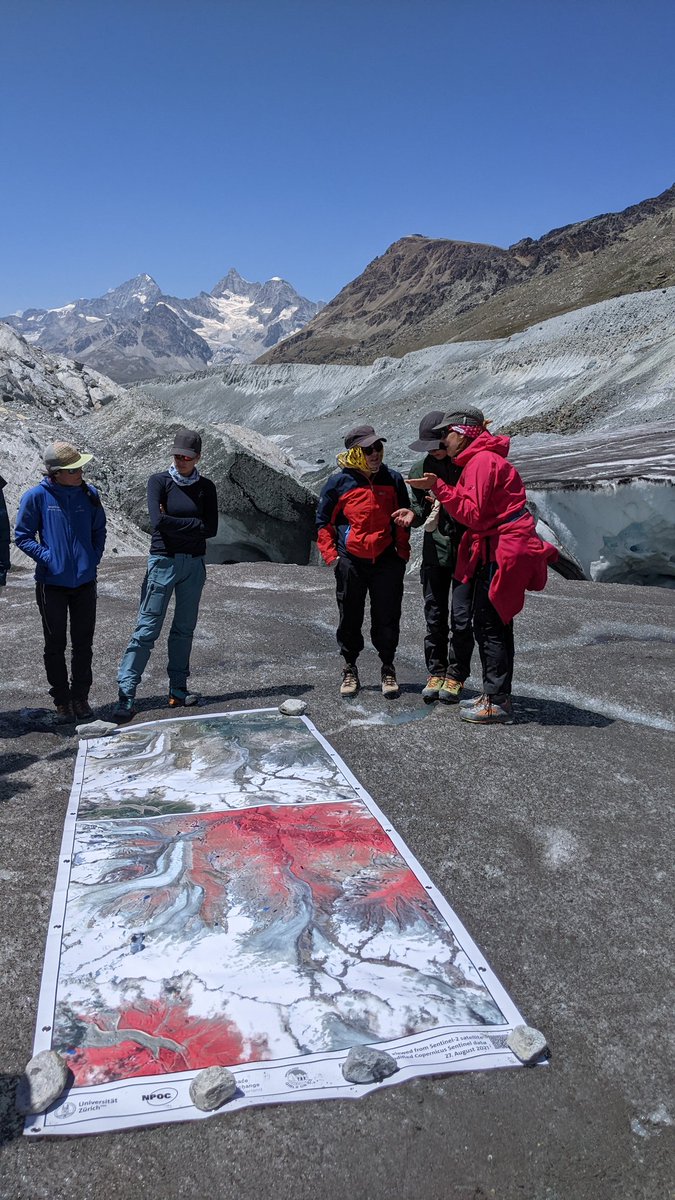
Gestern waren die #Forscherinnen Isabelle Helfenstein und Valentina Tamburello vom NPOC mit verschiedenen Aktivitäten zum Thema #Satelliten und #Erdbeobachtung zu Besuch im Mädchentreff Thun. Dies im Rahmen unseres Pop-up Science Projekts.
#WissKomm#CampDiscovery
New paper out! Towards an operational inclusion of close-range remote sensing in #NFI. We benchmarked multiple #LiDAR devices as well as a @GoPro camera on their potential to be included in the Swiss #NFI. @WSL_research: https://t.co/0qo7OB2bWK
Today, I had the chance to present my view on this years @ForestSAT in Berlin. 😊 Thank you for being back to almost normal. I had an amazing week! #ForestSAT2022
You are at #ForestSat2022 and are interested in treeline dynamics, time series, or deep learning for remote sensing?
I'm excited to present the work I've been doing with @devistuia and @b_kellenb on Friday 02/09 at 2:30pm, in Lecture Hall 2. Let's discuss together! 🌲🌄
Interested in close-range remote sensing and #NFI and wonder what this small time-lapse video is all about? Check out my talk in the @ForestSAT Precision Forestry session this Morning at 9:30 in the Small Room. #ForestSAT2022#SwissNFI @WSL_research
Come visit our poster today at #ForestSAT2022! It's about our study on how to complement urban tree cadastres with tree species mapping from AVIRIS-NG imaging spectroscopy 🌳🌲✈️🏙️ @mikewerfeli@WSL_RemoteSens@uzh_geo
Happy to be a part of today's #Biodiversity session at #ForestSAT2022 in Berlin (and online) from 2:30-4:00pm. Visit my presentation on trait-based functional diversity in temperate forests using Sentinel-2 in JK 28/112 (Small Room). 🛰️🌲🌳