BREAKING: OpenAI’s solution to Navier–Stokes does not match its Lean verification.
The most important article to read today is not one of OpenAI’s 700 AI-generated math papers.
It is this other paper, making a deep and worrying point:
A Lean-verified proof does not automatically validate the proof written in natural language, nor does it mean that the formal statement captures the intended theorem.
During translation, an AI can change an assumption, weaken a statement, or replace the argument entirely.
It can hallucinate another theorem.
Lean correctly verifies the result.
But the proved result may no longer be what the paper claims.
This is a general problem. Things get spicy when the authors examine OpenAI’s proposed Navier–Stokes solution.
They identify at least two mismatches between the written intermediate results and their Lean counterparts:
One estimate claims that four additional input derivatives suffice. The Lean version requires five: a weaker result.
A pressure-flux estimate is obtained through a different bound, and proved through a different argument.
It is not clear whether these mismatches invalidate the entire proof.
But they raise an important issue.
OpenAI is flooding us with claimed revolutionary breakthroughs. Yet nobody knows whether the proofs are correct or whether they prove what they claim to be proving.
Epistemia at scale.
*
Paper in the first reply
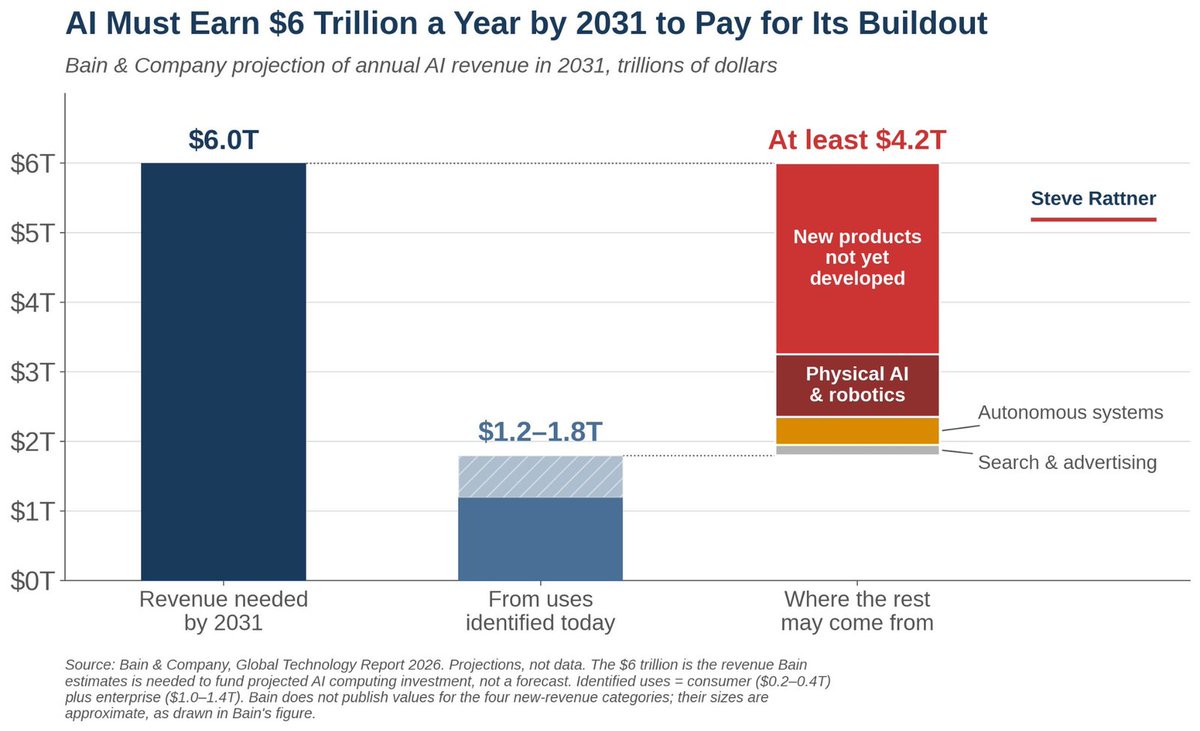
this is the funniest graph ive ever seen. we've pivoted a fifth of the western world's economy to building infrastructure for a thing that might maybe have some uses potentially if we come up with some new ones
I do wish people understood that the prose is everything. There is no story “beneath” the prose. Cartesian dualism does not exist for books. There is no distinct soul of a book that can be separated from the body its prose. The experience of reading the language IS the novel.
Hoy tuve una sesión con tech bros que usan la IA en educación y mi única conclusión fue: necesito hacer el doctorado para tener más fuerza al momento de golpear sus ideas.
@zegim Conectar tus datos bancarios a un agente no suena la mejor idea 😅. Y si, la manera que se comunican engancha a los usuarios a hacer cosas peligrosas
"La autonomía urbana más destacada de LATAM" evalúa Raúl Zibechi.
"El proyecto urbano de izquierda más importante del país" dijo Víctor Toledo Manzur.
"La experiencia de poder popular urbano más exitosa que se mueve de Iztapalapa para el mundo" opinó Teresa Rodríguez de la Vega"
"La producción de comunidades urbanas demuestra que otra política y manera de reproducción social en las ciudades es posible" digo yo.
HILO sobre la experiencia de la Organización Popular Francisco Villa de Izquierda Independiente y su estrategia de lucha, que es producir comunidad en Ciudad de México.
Lo más difícil de un proyecto de investigación es saber por dónde empezar.
Sebastián Díaz Prado hizo una herramienta para eso. Gratis.
Sebastián creó NodOS: un mapa de más de 600 mil tesis de la UNAM.
En su Laboratorio describes tu proyecto y te muestra las 100 tesis más parecidas y los asesores que ya dirigieron trabajos cercanos.
Cómo usarlo: entra a https://t.co/54DdOFwYlP, escribe tu título, tu planteamiento, tus palabras clave y dale "Analizar mi tesis".
Él vio un problema de todos y lo resolvió para todOS.
Eso es emprendimiento ciudadano.
Y por eso vale la pena impulsar los proyectos que nacen desde la gente y para la gente.
Para hacer una buena tesis no sólo se requiere tiempo, sino una mente lo bastante liberada de las exigencias materiales de la vida cotidiana como para poder enfocarse en un solo problema de investigación durante meses o años.
No conozco tesistas que gocen de esas condiciones.
It’s almost as if all the tech bros were Dunning-Kruger dumbos who convinced themselves that learning one specialized niche skill (coding) meant they were omni- geniuses in all other domains.
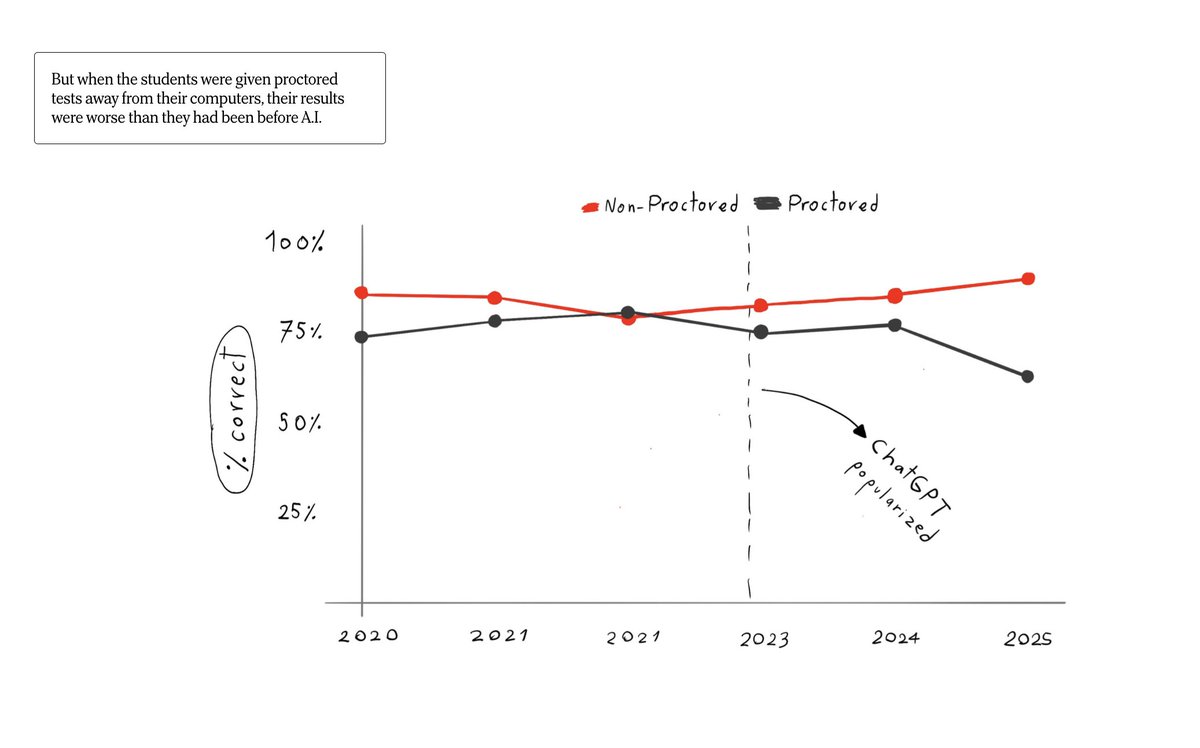
Will A.I. Make Your Brain Lazy? Here’s What the New Research Actually Shows.
When people become accustomed to skipping the productive struggle of logical and analytical tasks and having the process automated by using AI, they are more likely to give up on hard questions that they could otherwise figure out.
“Part of how A.I. is making us dumber,” says Dr. Adam Green, a cognitive neuroscientist at Georgetown University, is “undercutting the development of learning how to think in younger people that now have an alternative.”
But students who usedA.I. more like a tutor, to explain complex concepts or clarify ideas, not only retain high test scores, but their essays were higher quality as well.
So the key is using this technology is a more effective way. Sadly, this is not the default way students seem to be using it.
https://t.co/QqJJ8u5IEz
Nunca había oscilado tanto entre la idea de continuar trabajando para universidades o moverme de sector. Por primera vez en muchos años, no tengo una respuesta. Supongo que, son los efectos de estar en un lugar en el que me siento muy bien.