Azerbaijan’s foreign policy balancing act has been enormously successful so far. But it might be upended by the Iran war in the days ahead. My latest, for @19_forty_five.
https://t.co/mhv48nIPvn
Ukrainian President Volodymyr Zelenskyy has expressed hopes for an upgraded relationship with America after the U.S. midterms. The political picture on Capitol Hill, though, is more complicated. My latest, for @Newsweek.
https://t.co/BGtjoAFUSu
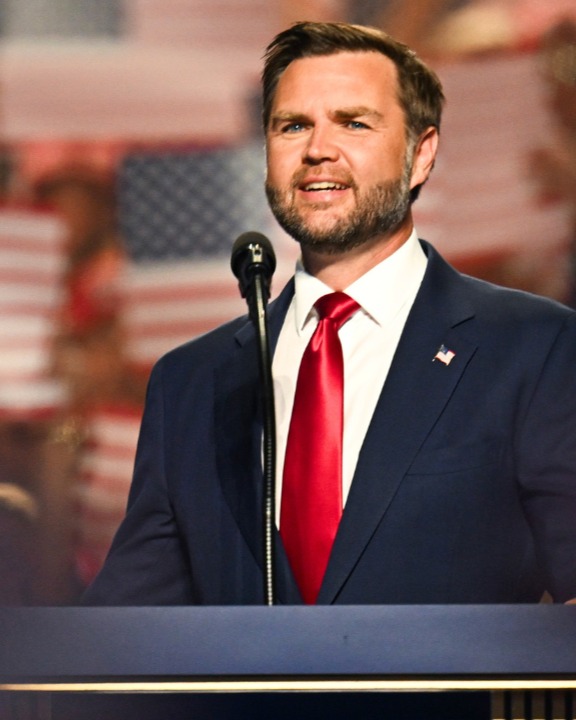
EXCLUSIVE: A meeting Wednesday morning at the White House was aimed at aligning the admin on post-midterm messaging. But after the huddle, Vice President JD Vance sent out an X post breaking with Trump on foreign policy.
Vance is seeking a new alliance with disaffected Trump voters after crushing midterm losses, a source told Fox News Digital.
He is aiming messaging to the "new right," which includes changing the nature of America's relationship with Israel.
Full story here https://t.co/nfz2ylOANF
Two Senators tell me the Vice President is right that the GOP turned against the Iran war in the Senate GOP’s own polling. But they say what the VP leaves out is that the turn came after the VP negotiated a bad deal with the Iranian regime that repulsed the GOP.
This is a total hoot.
About the only thing it gets correct is that 2024 Trump voters were "pissed." As the polls spell out, very clearly, they were angry about tariffs--a word weirdly not found in this post, but which exit polls showed 65% of voters dislike. There's a straight line between those punishing costs and Senate losses in Kansas, Iowa, Ohio (farm areas) and beyond.
Angry the WH instead spent this past year talking about ballrooms and the Kennedy center. Frustrated by the complete absence of a next-two-year agenda (85% are concerned by healthcare costs. Where is the GOP plan?)
They are also unhappy about the war, though the numbers might be different if the president been clear about an exit strategy. And not sure where the "smartest" (and most anonymous) pollster in the world got the Israel argument. Exit polls show that of the 51% of voters who said our support for Israel was "too strong," only 19% of even that subset of respondents were Republican. The vast majority of GOP voters said our support for Israel was "just right" or "not strong enough."
Amusing to claim the problem here was traditional conservatives, as they were sidelined. Tillis was run out of the party, dooming NC. As was Cornyn. The WH had a pure expression of its second-term Trump/Vance agenda and loyalty in its chosen candidate of Ken Paxton. That would be the smoking carcass sitting on a 12-point loss in. . . Texas of all places. Meanwhile, who exactly is even talking about "asylum"? That's just a smear-y effort to preemptively shut down valid criticism.
The GOP strength has always been in its coalition--free-marketers, defense hawks, cultural conservatives. Trump's first-term success came from largely following that Reagan playbook. The second-term leaned into me-too progressive populism--at the veep's urging--and it ain't working.
The weird thing is that the veep remains more obsessed with remaking the party than with winning. Winning will require a lot better understanding of what happened yesterday than what is on offer in this alternate-universe view.
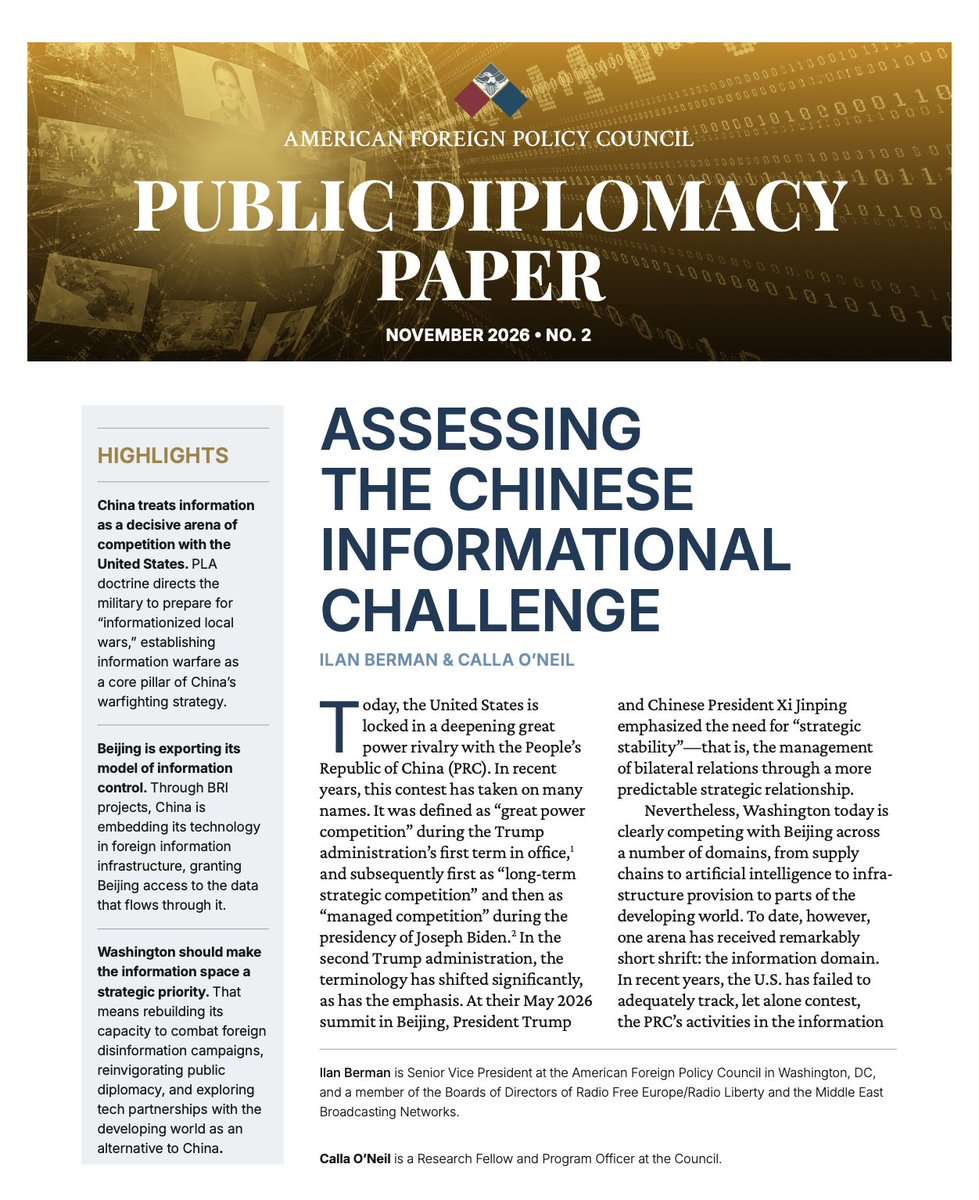
The information warfare campaign being waged by China is one of the most pressing national security threats facing Western liberal democracies, including the United States. In this @AFPC policy paper, @ilanberman explains the threat and how to respond!
🔗 https://t.co/NhZB1oyH2C
China has come to understand that the ability to shape information, and control the technology and systems through which it flows, has become essential to its sustained global influence. I lay out Beijing’s strategy, in my latest @AFPC policy paper.
https://t.co/QS7vXLCeIW
Whatever political upheaval and strategic problems are facing Israel at present, the economic state of the country’s union remains strong. I make the case, in today’s @nro.
https://t.co/4Gnmdtq8fU
When Israelis go to the polls next week, the election will be about memory - and future strategy. My latest, in @TheNatlInterest
https://t.co/IhQbzdGTEm
Washington thinks that it’s winning the Iran war, while Iran thinks it is the one that has the advantage. That’s a recipe for renewed confrontation. My latest National Security Notebook.
https://t.co/gImrNqwsLj
The Iran war has generated major new movement on global connectivity. That's significant for international markets... and for Washington's leverage over Tehran. I explain, in my latest for @Forbes.
https://t.co/zPYmGgoaEU