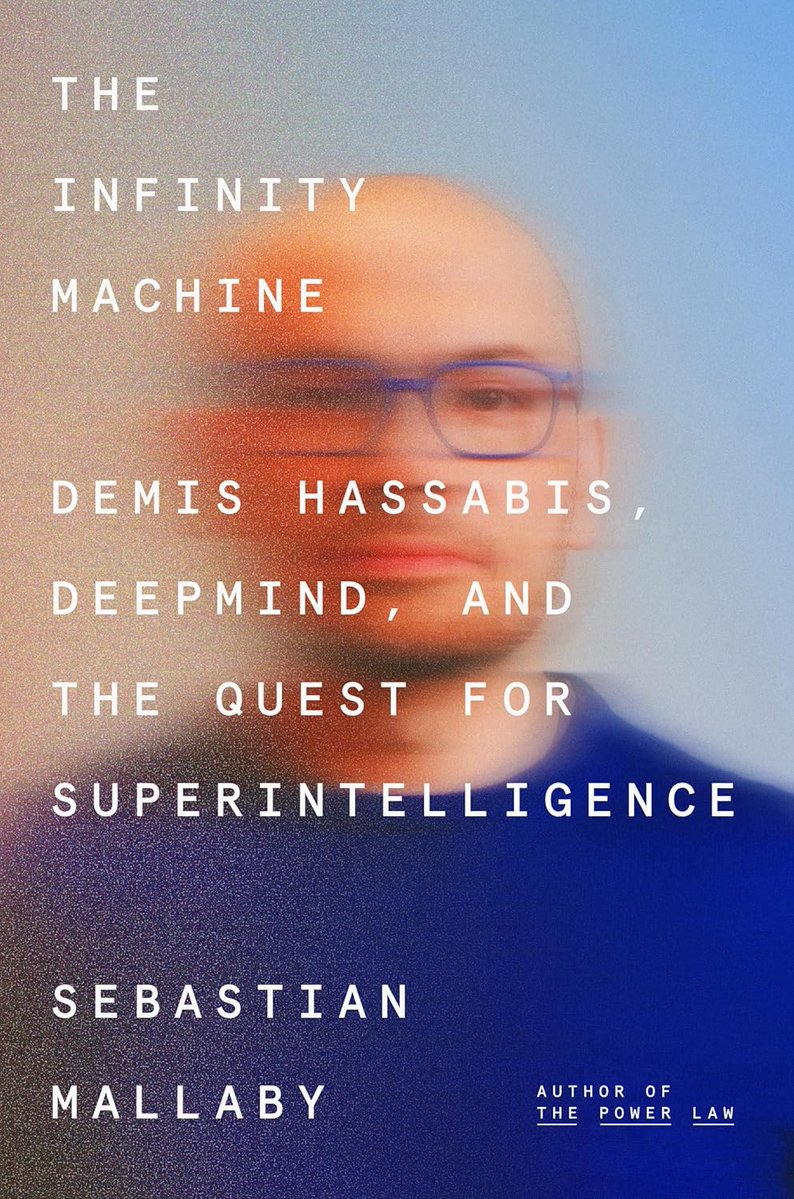
Just finished this riveting, fact-based, storytelling book on how AI rose in the past 15+ years to where it is today, by @scmallaby, featuring @demishassabis and @GoogleDeepMind. Join Sebastian and me for a Ground Truths live podcast tomorrow 12N PT
https://t.co/YllXW9J82k
Introducing Project Glasswing: an urgent initiative to help secure the world’s most critical software.
It’s powered by our newest frontier model, Claude Mythos Preview, which can find software vulnerabilities better than all but the most skilled humans.
https://t.co/NQ7IfEtYk7
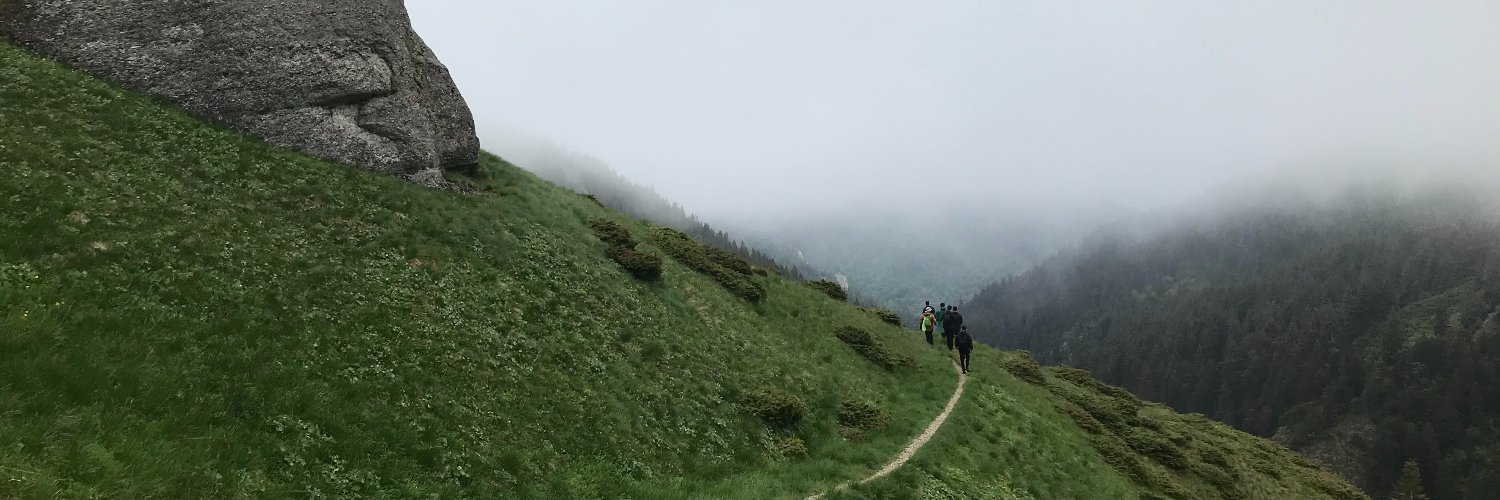
Continual learning is the future of AI and @CoLLAs_Conf is the best venue to publish your state-of-the-art research in designing adaptive machine learning systems! Abstract deadline in 10 days and the conference is in Romania this year!
CoLLAs 2026 is happening in Bucharest, Romania 📍🇷🇴, and the abstract deadline is only 10 days away 📣⏰. Consider submitting if you are working on lifelong learning or adaptive ML 🔥 .
⏰ The CoLLAs abstract deadline is only 10 days away!
We invite researchers to explore all facets of ML adaptation, from incorporating new capabilities during continuous training to efficiently removing outdated or harmful data.
- 𝗔𝗯𝘀𝘁𝗿𝗮𝗰𝘁 𝗗𝗲𝗮𝗱𝗹𝗶𝗻𝗲: April 10, 2026
- 𝗦𝘂𝗯𝗺𝗶𝘀𝘀𝗶𝗼𝗻 𝗗𝗲𝗮𝗱𝗹𝗶𝗻𝗲: April 15, 2026
- 𝗖𝗼𝗻𝗳𝗲𝗿𝗲𝗻𝗰𝗲 𝗗𝗮𝘁𝗲𝘀: Sep 14–17, 2026
📚 Accepted papers will be published in the Proceedings of Machine Learning Research (PMLR).
🔗 𝗙𝗼𝗿 𝗳𝘂𝗹𝗹 𝗱𝗲𝘁𝗮𝗶𝗹𝘀 𝗼𝗻 𝘁𝗵𝗲 𝗖𝗮𝗹𝗹 𝗳𝗼𝗿 𝗣𝗮𝗽𝗲𝗿𝘀: https://t.co/tC3mhTzZqf
Yann LeCun 🤝 Saining Xie
insane crossover of the 2 biggest visual representation researchers in the AI field
“Beyond Language Modeling: An Exploration of Multimodal Pretraining”
Right now, most multimodal models are basically a language model with a vision adapter bolted on, so they can describe images, but they don’t really think in images or video.
This paper shows what happens when you do it the hard way: train one model from scratch on text, images, and video with a unified setup.
They key idea is if you give the model a good visual internal format and it can use vision for both understanding and generating.
Additionally, multimodal data can improve language instead of distracting it, and mixture-of-experts lets you scale vision’s huge data intake without bloating everything else.
This paves the way towards changing the vision paradigm from “captioning add-on” model to native multimodal foundation model.
What Happens After We Solve Continual Learning? - Stephanie Chan
https://t.co/d9ur1ekHFS
As we look ahead to CoLLAs 2026, we’re revisiting last year’s standout keynote sessions.
Call for papers:
🔗 Abstract deadline: 10th April
📅 Conference: Sep 14–17, 2026 in Bucharest, Romania
Preparing for CoLLAs 2026, we’re revisiting last year’s standout keynotes:
Non Stationarity Online Learning and Loss of Plasticity - Andras Gyorgy
https://t.co/ONg8rmpsP7
Join us in Bucharest:
🔗 Abstract deadline: 10th April
📅 Conference: Sep 14–17 2026
Preparing for CoLLAs 2026, we’re revisiting last year’s standout keynotes:
Leveraging Traces for Continual Reinforcement Learning - Martha White
https://t.co/8lSrSMhkyi
Join us in Bucharest:
🔗 Abstract deadline: 10th April
📅 Conference: Sep 14–17, 2026
Preparing for CoLLAs 2026, we’re revisiting last year’s standout keynotes:
Computational Building Blocks for Complex Cognition - Cristina Savin
https://t.co/ni5mnQh371
Join us in Bucharest:
🔗 Abstract deadline: 10th April
📅 Conference: Sep 14–17, 2026 in Bucharest, Romania
I'm Boris and I created Claude Code. Lots of people have asked how I use Claude Code, so I wanted to show off my setup a bit.
My setup might be surprisingly vanilla! Claude Code works great out of the box, so I personally don't customize it much. There is no one correct way to use Claude Code: we intentionally build it in a way that you can use it, customize it, and hack it however you like. Each person on the Claude Code team uses it very differently.
So, here goes.
We've been working on this for a while -- it's impressive (and scary) to see the kinds of security issues it has identified.
Rolling out slowly, starting as a research preview for Team and Enterprise customers.
Are neural nets across modalities really converging to the same representation as they scale, as the Platonic Representation Hypothesis suggests?
We show that common representational similarity metrics are confounded by network width & depth. We propose a permutation-based null calibration that fixes this.
Result❓
• Global convergence largely disappears.
• Local neighborhoods persist.
We propose the alternative Aristotelian Representation Hypothesis: Neural networks, trained with different objectives on different data and modalities, are converging to shared local neighborhood relationships
Very proud of @FabianGroger and @ShuoWen18 for this work!
Paper: https://t.co/GmkhwsiN1N
Webpage: https://t.co/xaI31BU2FS
Code: https://t.co/5qItdzRBZP
Beyond Catastrophic Forgetting - Vineeth Balasubramanian
https://t.co/lJOK8KFqwg
As we look ahead to CoLLAs 2026, we’re revisiting last year’s standout keynote sessions.
Call for papers to explore all facets of ML adaptation
🔗 Abstract deadline: 10th April
📅 Conference: Sep 14–17, 2026 in Bucharest, Romania
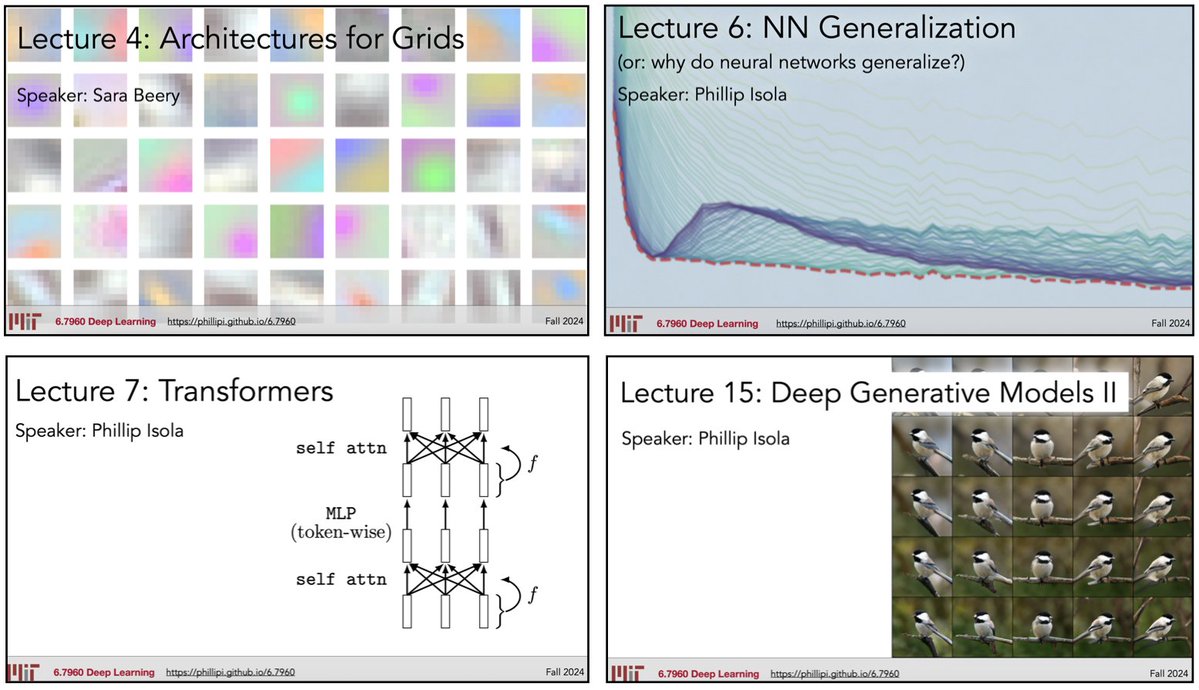
Our grad-level "Deep Learning" course (MIT's 6.7960) is now freely available online through OpenCourseWare: https://t.co/gnGFbzlINf
Lecture videos, psets, and readings are all provided.
Had a lot of fun teaching this with @sarameghanbeery and @jxbz!
@ACMSIGOPS@ai4research_ucb AI isn’t replacing systems researchers; it’s shifting the job. From hand-crafting algorithms to defining problems and verifiers.