Euler's identity combines these five numbers in a simple and elegant equation. Despite each of the constants representing fundamentally different operations or areas in mathematics (algebra, geometry, and complex analysis), they all come together in this identity, showing a deep and surprising connection between different areas of mathematics. To understand why this is often considered the most beautiful equation in mathematics, it helps to know a bit about each of the numbers and symbols involved:
e: This is Euler's number, which is approximately equal to 2.71828. It's an irrational number (meaning that it can't be expressed as a simple fraction), and it's the base of natural logarithms. It has many important properties and arises naturally in various areas of mathematics.
i: This is the imaginary unit, which is defined as the square root of -1. The number i is a fundamental concept in complex numbers—a number system that extends the real numbers with an additional number dimension.
π (pi): This is a mathematical constant that represents the ratio of a circle's circumference to its diameter. It's approximately equal to 3.14159, and it's also an irrational number.
1 and 0: These are the fundamental numbers of arithmetic and algebra. 1 is the multiplicative identity (any number multiplied by 1 remains the same), and 0 is the additive identity (any number plus 0 remains the same).
^ and + and = : These are basic mathematical operations. "^" stands for exponentiation, "+" stands for addition, and "=" is the equality operator.
It is concise, profound and mysterious, combining five fundamental constants of maths into a simple, yet surprising, equality.
Happy 131st Birthday to Satyendra Nath Bose (b.OTD in 1894), Indian physicist who made significant contributions to quantum mechanics, leading to the development of Bose-Einstein statistics and the prediction of a new state of matter called the Bose-Einstein condensate. Despite his groundbreaking work, Bose never received a Nobel Prize.
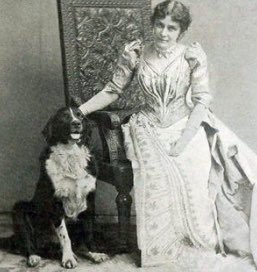
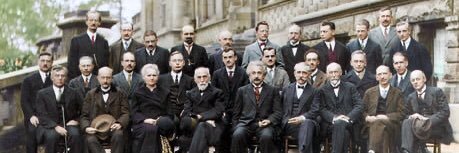
Niels Bohr's 1944 letter to Winston Churchill explaining him the scale of the Manhattan Project✉️
22nd May 1944
The Rt. Hon. Winston S. Churchill, C.H., M.P.
Sir,
In accordance with your kind permission, I have the honour to send you a brief report about my impressions of the great Anglo-American enterprise, in the scientific aspects of which I have been given the opportunity to participate together with my British colleagues.
The principles on which the enormous energy stored in the nuclei of atoms may be released for practical purposes were, as a result of international scientific collaboration, already perceived in outline before the war and are, therefore, common knowledge to physicists all over the world. It was, however, by no means certain whether the task would surpass human resources, and it was therefore a revelation to me, on my arrival in England last October, to learn with what courage and foresight the effort had been undertaken and what an advanced stage the work had already reached.
In fact, what until a few years ago might be considered as a fantastic dream is at present being realized within great laboratories and huge production plants secretly erected in some of the most solitary regions of the United States. There a larger group of physicists than ever before collected for a single purpose, working hand in hand with a whole army of engineers and technicians, are preparing new materials capable of an immense energy release, and are developing ingenious devices for the most effective use of these materials.
To everyone who is given the opportunity to see for himself the refined laboratory equipment and the gigantic production machinery, it is an unforgettable experience, of which words can only give a poor impression. Moreover it was to me a special pleasure to witness the most harmonious and enthusiastic cooperation between the British and American colleagues, and on my departure I was expressly asked by the leaders of the American organization to convey their genuine appreciation of the help they are receiving, on an ever increasing scale, from their British collaborators.
I will not tire you with any technical details, but one cannot help comparing the situation with that of the alchemists of former days, groping in the dark in their vain efforts to make gold. To-day physicists and engineers are, on the basis of firmly established knowledge, controlling and directing violent reactions by which new materials far more precious than gold are built up, atom by atom. These processes are in fact similar to those which took place in the early stages of development of the universe and still go on in the turbulent and flaming interior of the stars.
The whole undertaking constitutes, indeed, a far deeper interference with the natural course of events than anything ever before attempted, and it must be realized that the success of the endeavours has created a quite new situation as regards human resources. The revolution in industrial development which may result in coming years cannot at present be surveyed, but the fact of immediate preponderance is, that a weapon of devastating power far beyond any previous possibilities and imagination will soon become available.
The lead in the efforts to master such mighty forces of nature, hitherto beyond human reach, which by good fortune has been achieved by the two great free nations, entails the greatest promises for the future. The responsibility for handling the situation rests, of course, with the statesmen alone. The scientists who are brought into confidence can only offer the statesmen all such information about technical matters as may be of importance for their decisions.
In this connection it is significant that the enterprise, immense as it is, has still proved to demand a much smaller effort than might have been anticipated, and that the development of the work has continually revealed unsuspected possibilities for facilitating the production of the materials and for intensifying their effects.
These circumstances obviously have an important bearing on the question of an eventual competition about the formidable weapon, and on the problem of establishing an effective control, and might therefore perhaps influence the judgment of the statesmen as to how the present favourable situation can best be turned to lasting advantage for the cause of freedom and world security.
I hope you will permit me to say that I am afraid that, at the personal interview with which you honoured me, I may not have given you the right impression of the confidential conversation in Washington on which I reported. It was, indeed, far from my mind to venture any comment about the way in which the great joint enterprise has been so happily arranged by the statesmen; I wished rather to give expression to the profound conviction I have met everywhere on my journey that the hope for the future lies above all in the most brotherly friendship between the British Commonwealth and the United States.
It was just this spirit of co-operation that the President’s friend [Felix Frankfurter], believing the matter to be of the highest importance for the two countries, and knowing that, at the Chancellor’s request, I was coming to England for technical consultations, entrusted me, in strictest confidence, to convey to you, that the President is deeply occupied in his own mind with the stupendous consequences of the project, in which he sees grave dangers, but also unique opportunities, and that he hopes together with you to find ways of handling the situation to the greatest benefit of all mankind.
Most respectfully, Niels Bohr
[Letter source: Atomic Heritage Foundation,
https://t.co/tuOZKAsxEj…]
[Image courtesy: unknown; source: Wikimedia commons]
In 1856, Eunice Foote was the first to demonstrate the greenhouse effect by showing that carbon dioxide traps more heat than air. She published her findings in the American Journal of Science, but was largely ignored and denied the opportunity to present her work at a scientific conference because she was a woman.
Fantastic to see three Janklow authors chosen by The @guardian as part of their BOOKS OF THE YEAR!
🎊LOVE TRIANGLE by @standupmaths
🎊THE SPOILED HEART by Sunjeev Sahota
🎊EVERYTHING IS PREDICTABLE by @TomChivers
.
@AllenLaneBooks @HarvillSecker @wnbooks@zcosini
Trailer for fascinating new documentary by Carey Born CYBORG: A DOCUMENTARY | IN CINEMAS FRIDAY 20TH SEPTEMBER | UK theatrical... https://t.co/a7zsMdZDuI via @YouTube
CYBORG: A DOCUMENTARY director, Carey Born, was interviewed about the film on the BBC’s Jumoké Fashola show.
You can listen here:
https://t.co/xXCE2k7U0b
The film is released in cinemas this Friday, 20th September by Tull Stories.
Screening info at:
https://t.co/sGtE2qODA4
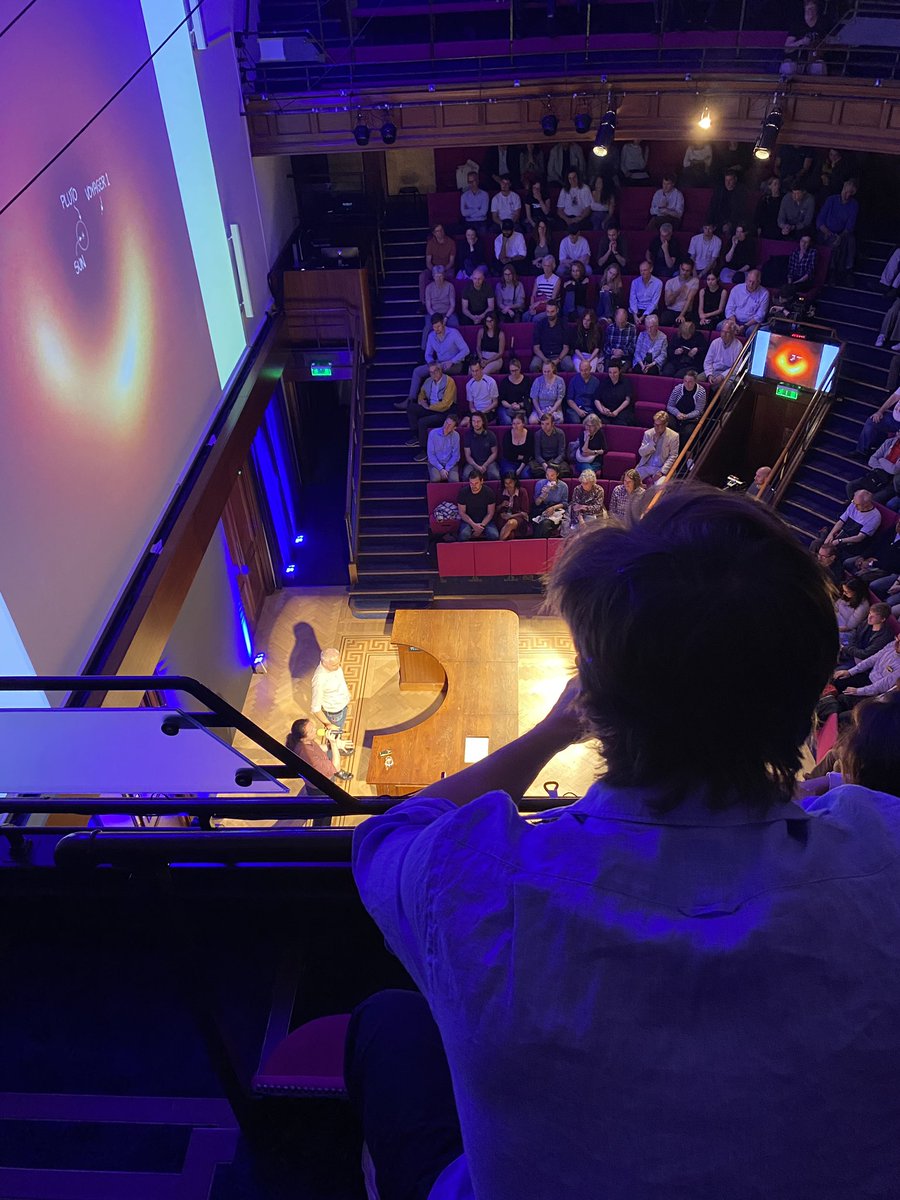
If you couldn’t make my Royal Institution talk, there is always my book, A CRACK IN EVERYTHING, which focuses on the people who have made black hole discoveries, with the science interwoven as painlessly (hopefully) as possible https://t.co/uHtX6Fx7Bj @HoZ_Books@FelicityBryan
Dr. Carl Sagan on books ✍️
What an astonishing thing a book is. It’s a flat object made from a tree with flexible parts on which are imprinted lots of funny dark squiggles. But one glance at it and you’re inside the mind of another person, maybe somebody dead for thousands of years. Across the millennia, an author is speaking clearly and silently inside your head, directly to you. Writing is perhaps the greatest of human inventions, binding together people who never knew each other, citizens of distant epochs. Books break the shackles of time. A book is proof that humans are capable of working magic.
Leonardo da Vinci was a perfectionist and a procrastinator. He often left his works unfinished or delayed them for years. He carried some of his paintings with him wherever he went, such as the Mona Lisa and the Virgin and Child with St. Anne, and kept working on them until his death
🚨 Announcing the Bloomsbury Mentorship Programme 2023 🚨
The programme is a scheme to support unpublished, underrepresented fiction writers as they work to establish careers in the publishing industry.
Find out more on how to apply: https://t.co/zuJDaKQkfv
Saint Catherine Greek Orthodox Monastery at Sinai/Egypt holds a staggering record.
Operating for almost 1,500 years uninterrupted since Emperor Justinian established it, with the oldest continuously operating library, contains some of the earliest Christian icons and texts.








![PhysInHistory's tweet photo. Niels Bohr's 1944 letter to Winston Churchill explaining him the scale of the Manhattan Project✉️
22nd May 1944
The Rt. Hon. Winston S. Churchill, C.H., M.P.
Sir,
In accordance with your kind permission, I have the honour to send you a brief report about my impressions of the great Anglo-American enterprise, in the scientific aspects of which I have been given the opportunity to participate together with my British colleagues.
The principles on which the enormous energy stored in the nuclei of atoms may be released for practical purposes were, as a result of international scientific collaboration, already perceived in outline before the war and are, therefore, common knowledge to physicists all over the world. It was, however, by no means certain whether the task would surpass human resources, and it was therefore a revelation to me, on my arrival in England last October, to learn with what courage and foresight the effort had been undertaken and what an advanced stage the work had already reached.
In fact, what until a few years ago might be considered as a fantastic dream is at present being realized within great laboratories and huge production plants secretly erected in some of the most solitary regions of the United States. There a larger group of physicists than ever before collected for a single purpose, working hand in hand with a whole army of engineers and technicians, are preparing new materials capable of an immense energy release, and are developing ingenious devices for the most effective use of these materials.
To everyone who is given the opportunity to see for himself the refined laboratory equipment and the gigantic production machinery, it is an unforgettable experience, of which words can only give a poor impression. Moreover it was to me a special pleasure to witness the most harmonious and enthusiastic cooperation between the British and American colleagues, and on my departure I was expressly asked by the leaders of the American organization to convey their genuine appreciation of the help they are receiving, on an ever increasing scale, from their British collaborators.
I will not tire you with any technical details, but one cannot help comparing the situation with that of the alchemists of former days, groping in the dark in their vain efforts to make gold. To-day physicists and engineers are, on the basis of firmly established knowledge, controlling and directing violent reactions by which new materials far more precious than gold are built up, atom by atom. These processes are in fact similar to those which took place in the early stages of development of the universe and still go on in the turbulent and flaming interior of the stars.
The whole undertaking constitutes, indeed, a far deeper interference with the natural course of events than anything ever before attempted, and it must be realized that the success of the endeavours has created a quite new situation as regards human resources. The revolution in industrial development which may result in coming years cannot at present be surveyed, but the fact of immediate preponderance is, that a weapon of devastating power far beyond any previous possibilities and imagination will soon become available.
The lead in the efforts to master such mighty forces of nature, hitherto beyond human reach, which by good fortune has been achieved by the two great free nations, entails the greatest promises for the future. The responsibility for handling the situation rests, of course, with the statesmen alone. The scientists who are brought into confidence can only offer the statesmen all such information about technical matters as may be of importance for their decisions.
In this connection it is significant that the enterprise, immense as it is, has still proved to demand a much smaller effort than might have been anticipated, and that the development of the work has continually revealed unsuspected possibilities for facilitating the production of the materials and for intensifying their effects.
These circumstances obviously have an important bearing on the question of an eventual competition about the formidable weapon, and on the problem of establishing an effective control, and might therefore perhaps influence the judgment of the statesmen as to how the present favourable situation can best be turned to lasting advantage for the cause of freedom and world security.
I hope you will permit me to say that I am afraid that, at the personal interview with which you honoured me, I may not have given you the right impression of the confidential conversation in Washington on which I reported. It was, indeed, far from my mind to venture any comment about the way in which the great joint enterprise has been so happily arranged by the statesmen; I wished rather to give expression to the profound conviction I have met everywhere on my journey that the hope for the future lies above all in the most brotherly friendship between the British Commonwealth and the United States.
It was just this spirit of co-operation that the President’s friend [Felix Frankfurter], believing the matter to be of the highest importance for the two countries, and knowing that, at the Chancellor’s request, I was coming to England for technical consultations, entrusted me, in strictest confidence, to convey to you, that the President is deeply occupied in his own mind with the stupendous consequences of the project, in which he sees grave dangers, but also unique opportunities, and that he hopes together with you to find ways of handling the situation to the greatest benefit of all mankind.
Most respectfully, Niels Bohr
[Letter source: Atomic Heritage Foundation,
https://t.co/tuOZKAsxEj…]
[Image courtesy: unknown; source: Wikimedia commons]](https://pbs.twimg.com/media/GeXD6C-a8AAcZ70.jpg)





