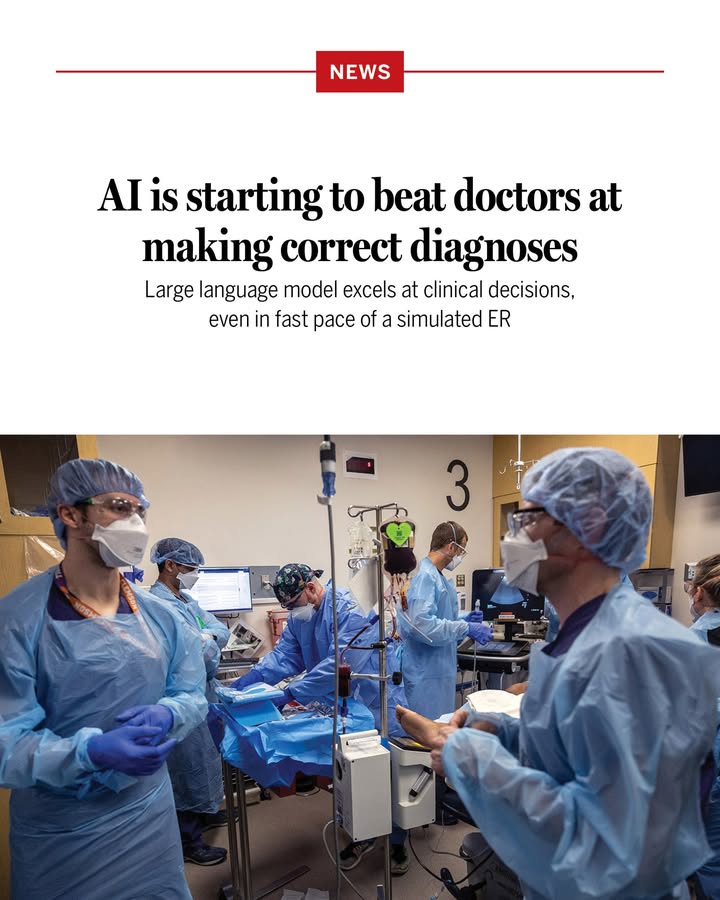
Researchers show that a type of #AI known as a large language model often outperformed physicians at diagnosing complex and potentially life-threatening conditions, including decreased blood flow to the heart, even in the fast-moving stages of real ER care when information is limited.
In early ER cases, the model identified the correct or a very close diagnosis in about 67% of cases, compared with roughly 50% to 55% for physicians. And the technology is only getting better.
Learn more: https://t.co/BwKX8r8BQq
Best Countries to Visit in Your Lifetime
1.🇹🇭 Thailand
2.🇬🇷 Greece
3.🇮🇩 Indonesia
4.🇵🇹 Portugal
5.🇱🇰 Sri Lanka
6.🇿🇦 South Africa
7.🇵🇪 Peru
8.🇮🇹 Italy
9.🇮🇳 India
10.🇦🇪 Uae
11.🇫🇷 France
12.🇬🇧 United kingdom
13.🇺🇸 United states
14.🇪🇸 Spain
15.🇦🇺 Australia
16.🇲🇻 Maldives
17.🇳🇱 Netherlands
18.🇦🇷 Argentina
19.🇱🇨 St. lucia
20.🇨🇿 Czech republic
21.🇧🇷 Brazil
22.🇪🇬 Egypt
23.🇨🇷 Costa rica
24.🇵🇭 Philippines
25.🇹🇷 Türkiye
26.🇻🇳 Vietnam
27.🇲🇽 Mexico
28.🇮🇪 Ireland
29.🇯🇵 Japan
30.🇨🇦 Canada
31.🇳🇿 New zealand
32.🇪🇨 Ecuador
33.🇫🇯 Fiji
34.🇹🇼 Taiwan
35.🇨🇻 Cape verde
36.🇲🇪 Montenegro
Note: The rankings are based on feedback from over 295,000 readers.
Source: CEOWORLD magazine
🇹🇭 Thailand could become as hot as the Sahara by 2070.
The country’s current mean annual temperature is about 26°, high enough to place it close to the danger zone.
Climate projections suggest that by the end of the century, Thailand could cross 29°C threshold. Such conditions are currently found on only about 0.8% of the earth’s land surface, mostly in the Sahara.
It’s not a straight shot to the far side of the Moon! 🌕
Over approximately 10 days, the Artemis II astronauts will orbit Earth twice before looping around the far side of the Moon in a figure eight and returning home.
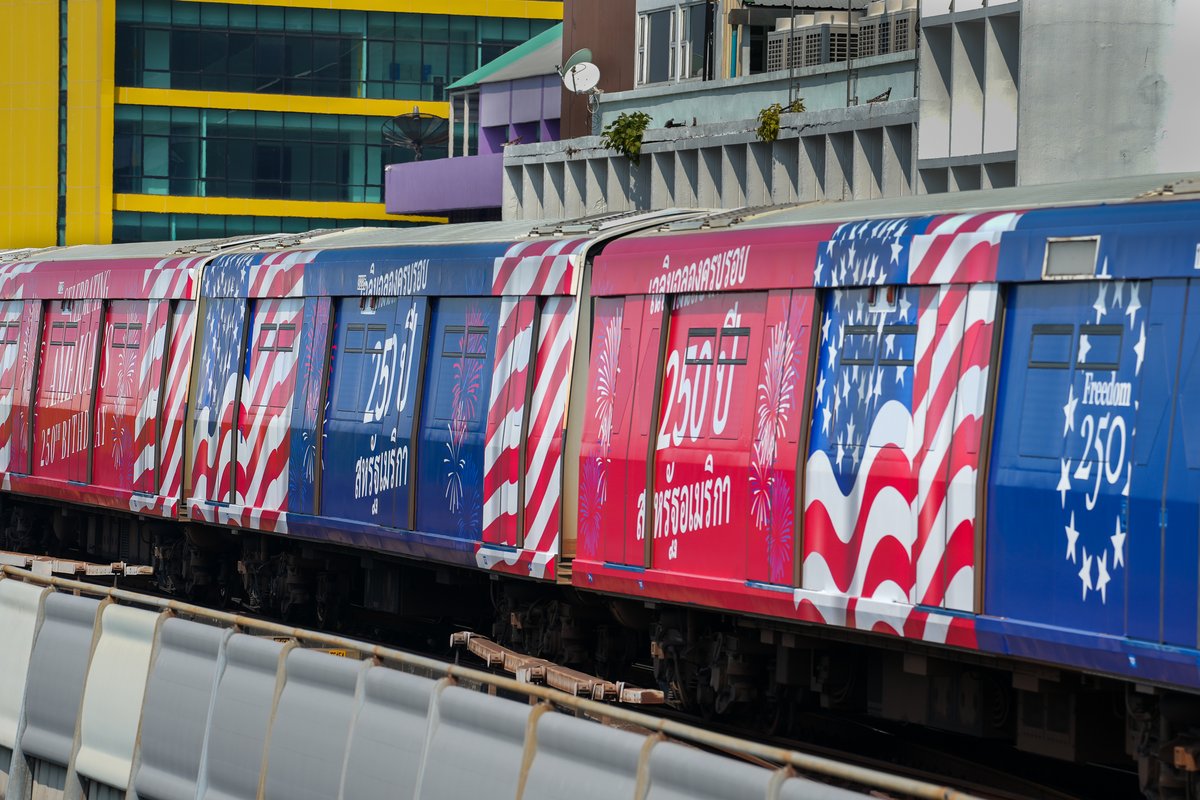
The U.S. Embassy in Bangkok launched the “Freedom 250” BTS Skytrain wrap on February 10, 2026, at Phrom Phong BTS Station. This vibrant mobile tribute commemorates the 250th anniversary of the signing of the U.S. Declaration of Independence and will traverse Bangkok’s premier transit network on the Sukhumvit Green Line for one month from February 10-March 9, 2026.
U.S. Ambassador Sean K. O’Neill officially inaugurated the wrap by boarding the specially designed train from Phrom Phong to Phloen Chit Station. The Ambassador invited the Thai public to participate in a year-long celebration of America’s rich history and the enduring strength of U.S.-Thai diplomacy.
We are grateful to our partner, Plan B Media, for making this project possible.
The U.S. Embassy Bangkok’s Freedom 250 project aims to share the story of the United States’ journey since 1776 and showcase the pivotal role of U.S. diplomacy in securing “peace through strength.” Follow our journey and stay tuned for the other upcoming Freedom 250 events at https://t.co/LaMeEFbqFd.
For many young Thai voters, Sunday’s election was expected to mark a breakthrough for the country’s pro-democracy movement. Instead, it delivered a sobering setback. https://t.co/FmH2jgIsOo
James Dewey Watson – who won the Nobel Prize for his role in divining the structure of DNA; was instrumental in initiating and propelling the Human Genome Project; and who became notorious for his history of racist and sexist comments – has died at 97.
https://t.co/a9AMw6KrIV
BREAKING NEWS
The 2025 #NobelPrize in Physiology or Medicine has been awarded to Mary E. Brunkow, Fred Ramsdell and Shimon Sakaguchi “for their discoveries concerning peripheral immune tolerance.”
Our immune system is an evolutionary masterpiece. Every day it protects us from the thousands of different viruses, bacteria and other microbes that attempt to invade our bodies. Without a functioning immune system, we would not survive.
One of the immune system’s marvels is its ability to identify pathogens and differentiate them from the body’s own cells. The microbes that threaten our health do not wear a uniform – they all have different appearances. Many have also developed similarities to human cells, as a form of camouflage. So how does the immune system keep track of what to attack and what to protect? Why doesn’t the immune system attack our bodies more frequently?
Researchers long believed they knew the answer to these questions: that immune cells mature through a process called central immune tolerance (see image). However, our immune system turned out to be more complex than they believed. Mary Brunkow, Fred Ramsdell and Shimon Sakaguchi have been awarded the 2025 Nobel Prize in Physiology or Medicine for their discoveries concerning peripheral immune tolerance.
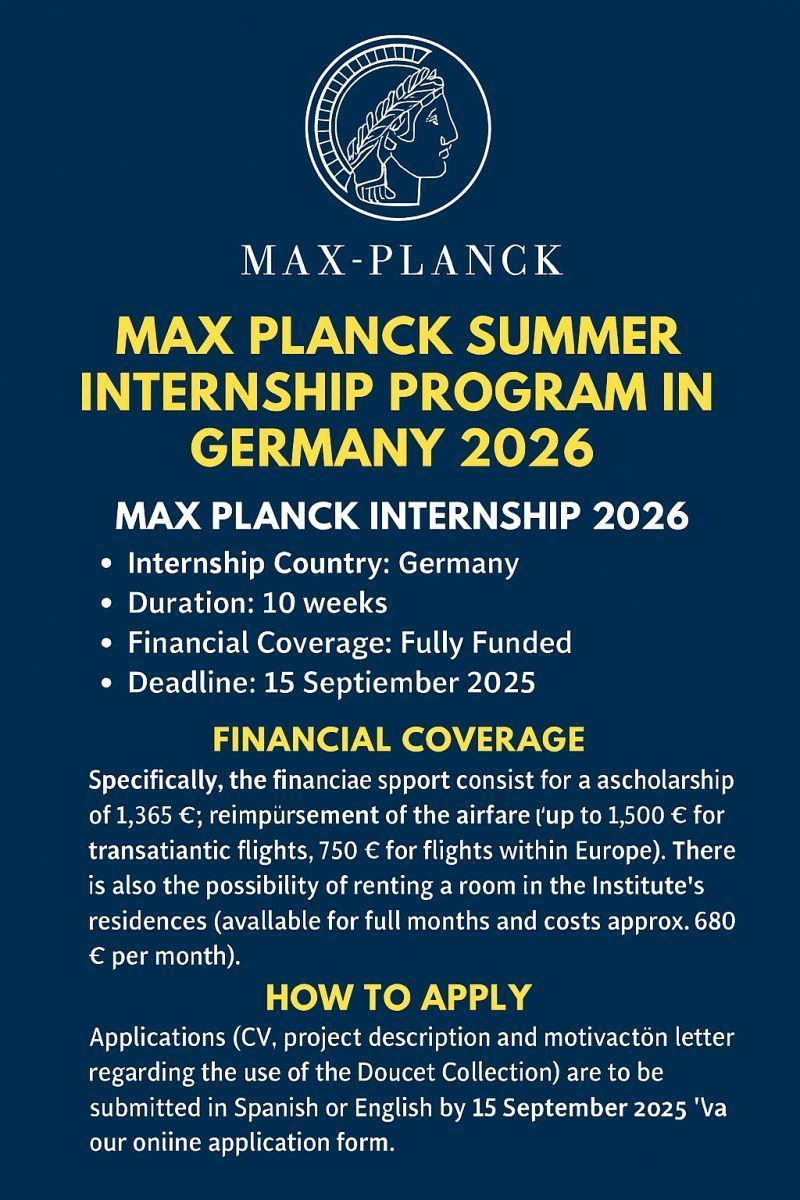
Summer Internship in @maxplanckpress Institutes for 10 weeks
A fully funded summer internship in Germany designed for UG and PG students in Biology, Chemistry, Computer Science, Math, Neuroscience, Physics, Psychology.
Apply at https://t.co/SPWM1ELSlR
Apply by 15th Sep 2025