A lot of the D&A is prob a real expense (but amort on the tuck-ins isn’t). More importantly on an exchange you’re taking in a run-out engine and selling a usable one and monetizing the delta. That’s a strongly positive cash flow event. And the SCI is increasingly the entity with that D&A b/c it’s buying the aircraft with the engines.
@four3_m@justfactstruth Aren’t they repairing parts, acquiring new parts and assembling whole engines to sell/exchange? Feels like a lot more than “reselling parts of used engines”.
There are features that remind me of wireless telecom. Very high fixed costs and very high incremental margins with low switching costs. This could incentivize pushing hard for incremental subs/consumption. So ROIC is perpetually capped at a low rate. Despite delivering exponentially more bits, wireless telcos did not see exponential revenue growth. The tokens the models produce are certainly higher value than commodity telco bits, but it’s a treadmill to maintain relative token value for the labs. The question is what % of frontier lab revenue/consumption requires frontier lab models? If it’s very high, there’s only a few competitors and switching costs could be higher than I expect.
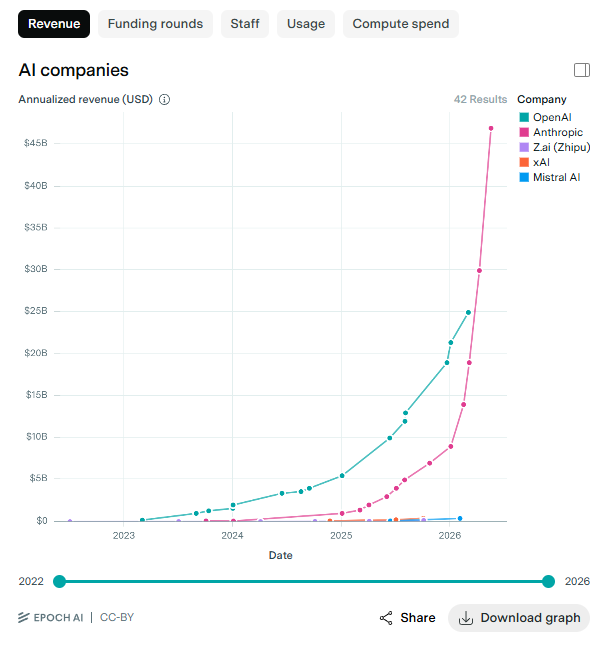
Like usual, whether you believe this or not comes down to the frontier labs ARR and compute. Can OAI and Anthropic keep growing both rapidly?
On ARR? Anthropic implied ARR is at what $50BN+ and did that on <3GW? That number is about to go up a lot even with the constraints. >> I think conceptually this one is difficult for folks given the scale of the business now and how quickly they've grown. But, when you start to compare against the TAM of labor forces, knowledge work, etc. you can start to believe higher figures.
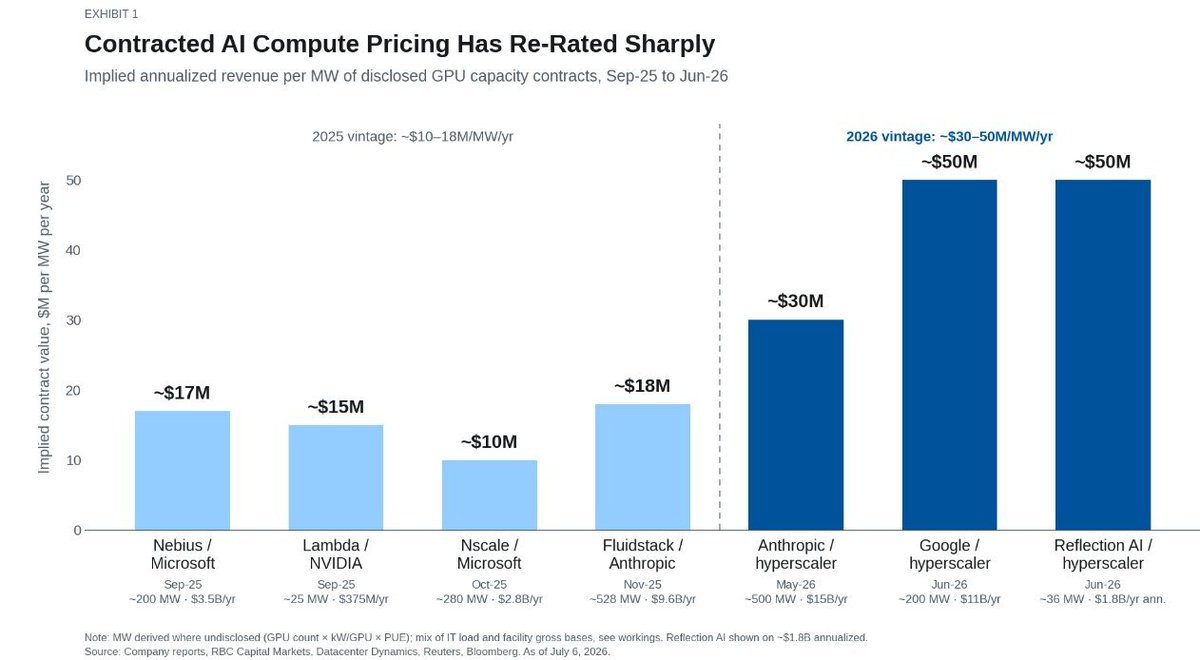
On margins? Estimates of blended gross margin mid-60s% today and Dylan said API gross margin 80%+ on the Sequoia pod. >> I don't have financials so this is all rumored + hearsay from more 'in the loop' folks if you trust them at their word. Caveat is compute scarcity works both ways - compute deals happening in the $10-$50BN/GW territory at implied run-rate which actually would work against margins because the input costs go up but given how large OAI/Ant are are buyers, assume that give them considerable negotiating leverage + they can drive token pricing up higher on frontier models.
On compute? Dylan said 100GW+ combined Anthropic/OpenAI demand by 2030 versus ~6GW today, implying 90GW of net additions needed through 2030 against 2.5GW added in 2025 and 5GW in 2026. >> This is the hardest intellectual leap for me (surprise - energy guy!), power is a bottleneck and we continue to run into more. I've said I think mid-teens is a reasonable run-rate for annual adds. I think BTM is going to be smaller than people think but if the economic opportunity is large and these #s real, doesn't really matter what I think because it can and would get done if revenue kept growing at these levels and at these margins, assuming financing fills in the gap and continues to be attractive.
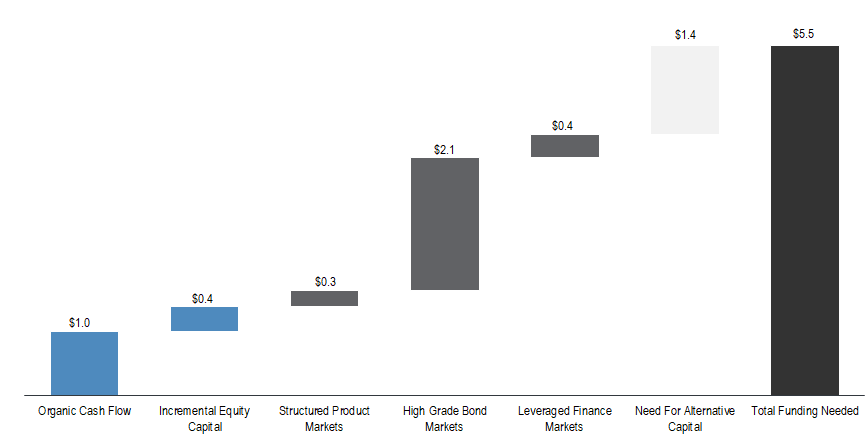
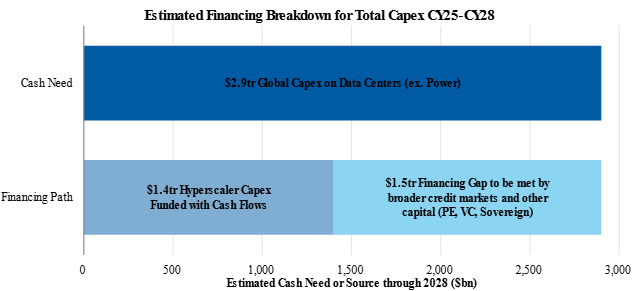
On financing? JPM and MS out with numbers in the mid $Ts thru 28-30 (lower than these forecasts but in the realm) between incremental equity, IG bonds, leveraged finance markets, etc.
The question that underpins all of this - do you believe the ARR and Compute ramp figures? If not, none of this comes in at this magnitude. Otherwise, if you did believe it, the ROIC and math at parts of this value chain can be attractive and keep the momo going...
@dantor001@justfactstruth@LDiscernment Those same bears must be really short GE then, at 2x the multiple benefiting from the same time-limited CFM-56 cycle. FTAI did do a poor job explaining the margin miss and impact of large airline contracts.
@SouthernValue95 Really good crack at something that's really the lynchpin of everything; thanks for posting. How do you thinking about the returns for the hyperscalers' customers (and the customers' customers)? Some of the customers' customers are increasingly focused ontoken efficiency.
@BearForce_Won@PythiaR My pt was simply that I think you need to include the training GWs in the denominator of revenue/GW, as implied in OP. You said: "significant portion of that 3GW is devoted to training and not generating revenue". They wouldn't have the inference revs w/out the training GW imo.
@BearForce_Won@PythiaR Why should one exclude the GWs for training? At least for OAI, they wouldn’t have the inference usage revenue without the training, right?