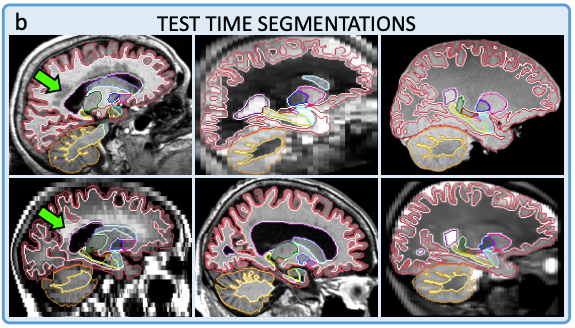
Ten years (!) after submitting the grant, NextBrain is published in @Nature . NextBrain is a brain atlas built from 3D histology that enables segmentation of 3D brain scans (MRI, Hip-CT, even photos!) into hundreds of regions.
Article, data, code, videos, & more in this 🧵 (1/3)
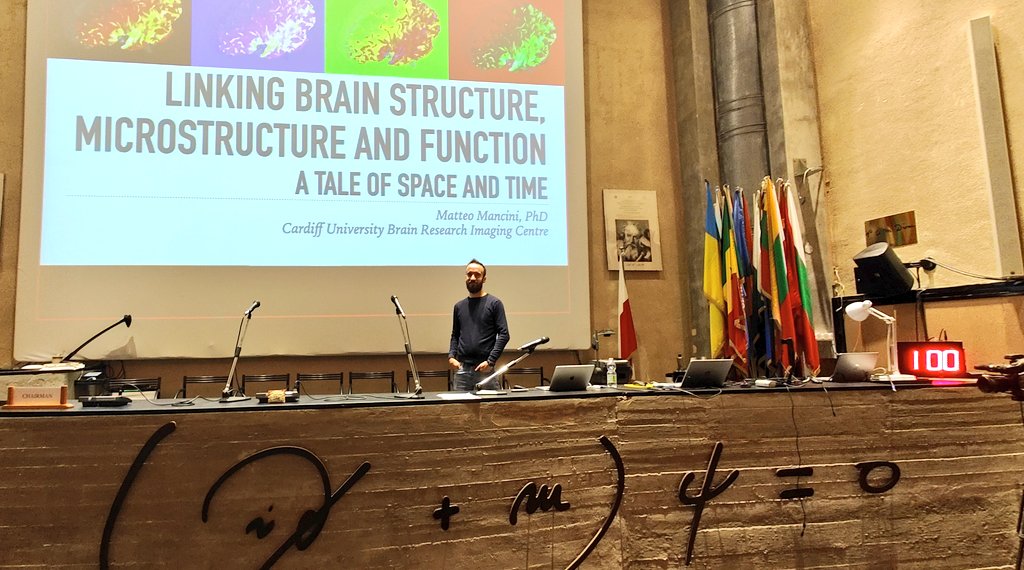
Join us for BrainHack Rome 2025 😃
Where neuroscience meets open science, collaboration, and innovation. Let’s connect the dots between brain structure and function!
📅Save the date: 8-11 April 2025
📍Rome, Italy🇮🇹
🔗Further info: https://t.co/zTNrYkXJsP
@ingmatman@MaryDrive
After two years full of changes, I am happy to share that I have secured a permanent position at the Enrico Fermi Research Centre in Rome, with start date next week! Looking forward to even more MRI than ever 🧠 @cref_official#milestones
After seven (7!) years of work with >20 researchers at 10 different institutions, we are super excited to release NextBrain, a next-gen probabilistic atlas of the human brain with 333 regions:
https://t.co/7FACegumZ1
Preprint, data, code, videos, and much more in this 🧵(1/5)
Struggling storing/sharing large MRI datasets?🧠Check out our latest work on data compression with periodic activation networks: https://t.co/btclNd8lmm We found that this lossy compression can provide up to 10x extra compression, with (arguably) acceptable information loss (1/2)
@rrodriguespaulo Hey Paulo I will be giving a talk today at the educationals but I am not planning to stay for the main conference. Are you already here in London? :)
📢CONNECThon updates! Website & preliminary program updated; FREE registration now open at https://t.co/Bw7BPy2Fls
Registrations will tell us how many participants to expect, so please register asap if you plan to join us 😊
👀on the website for future updates on the projects!
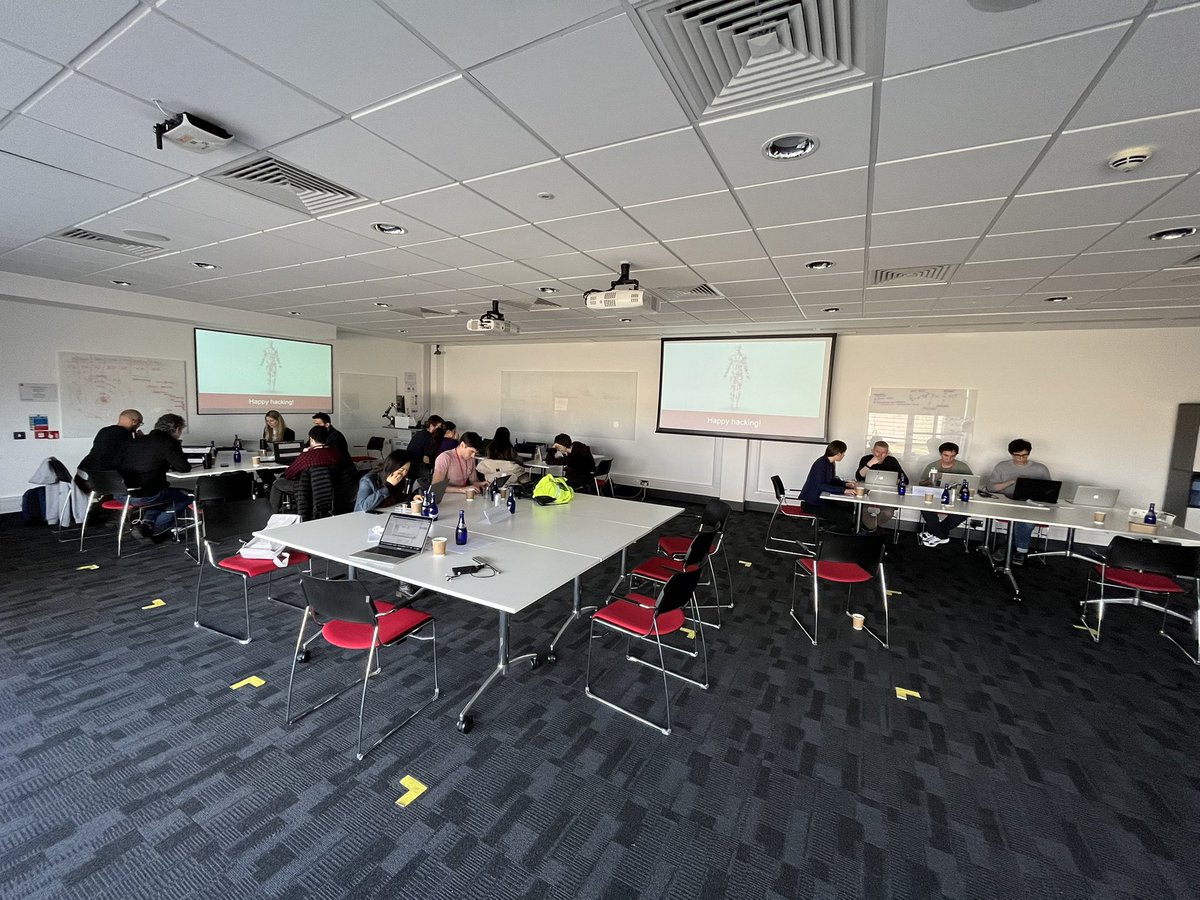
Do you want to push the boundaries of what you can do with MRI scanners?🚀 Join us for the CONNECThon🧠🫀🫁 a hackathon event taking place in Cardiff right before ISMRM (4th-6th May)! Projects and info coming soon on https://t.co/EXx7Ae63YU @CUBRICcardiff@MarcoPalombo3
1\ Preprint from the IronTract Challenge!💉🧠 A 2-year effort in the tractography community to find optimal data analysis strategies for HCP-style, multi-shell dMRI & beyond: https://t.co/IbXtT9qH75
Major undertaking by @chiaramff@Haber_Lab@QMENTA_Inc & all-⭐️ challenge teams:
SynthSeg is now available in the development version of @FreeSurferMRI at https://t.co/DRFJnDwOw9. You can simply run "synthseg --i in.nii --o out.nii" to segment brain MR of any resolution & contrast.
Paper at https://t.co/nNQxcXKO57
With @LeemputKoen, @AdrianDalca, @BruceFischl
Excited to have won the best paper award of @SashimiWorkshop 2021!
We presented Synth-by-Reg, a contastive learning approach to image synthesis and registration (https://t.co/J3sppTf0H2)
Thanks to all the organizers and participants for such a great workshop!
Do you want to dig into it beyond the paper? You are more than welcome to: both the connectivity matrices (https://t.co/hueb3s92CE) and the code (https://t.co/RKJSohvF2T) to replicate the results are publicly available! (3/3)
Happy to share our latest: Dissecting whole-brain conduction delays through MRI microstructural measures https://t.co/UBdjreQADk a huge thanks to co-authors @QiyuanTian Qiuyun Fan Mara Cercignani @SusieHuangMDPhD! A good read if you are into #brain#connectivity and #delays (1/3)
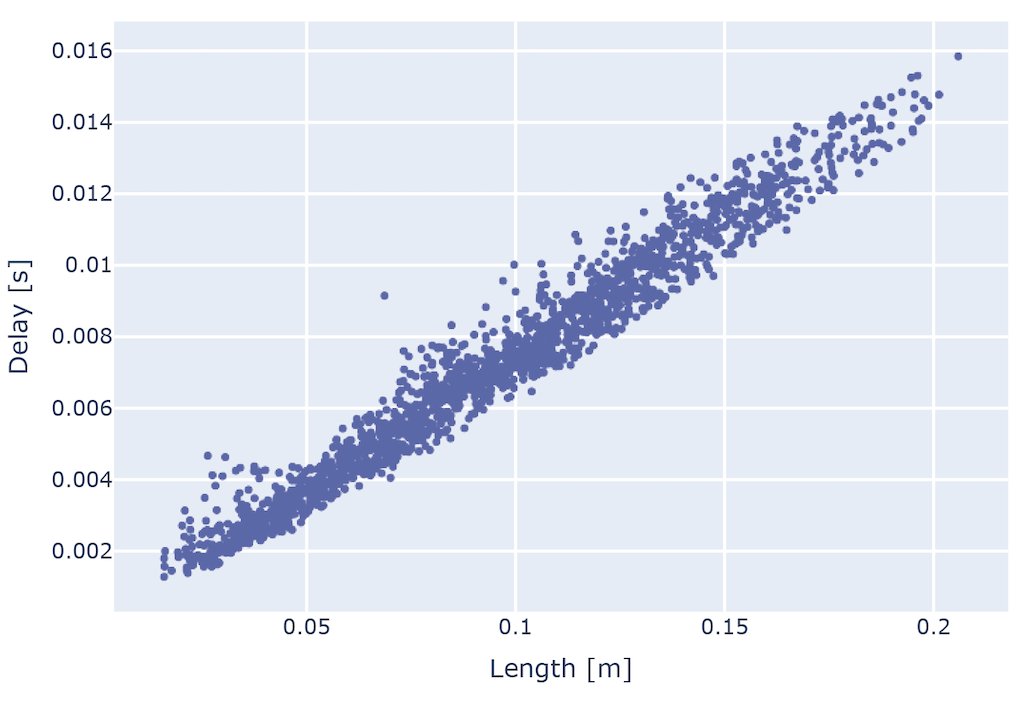
Using high-gradient diffusion MRI, we looked at whole-brain conduction velocity/delay distributions and how they change w/ microstructure (axonal diameter & myelin) and connection lengths. Long story short: delays linearly scale with length, in line with direct stim studies (2/3)