Instead of watching an hour of Netflix, watch this 2 hour hour Stanford lecture will teach you more about how LLMs like ChatGPT and Claude are built than most people working at top AI companies learn in their entire careers.
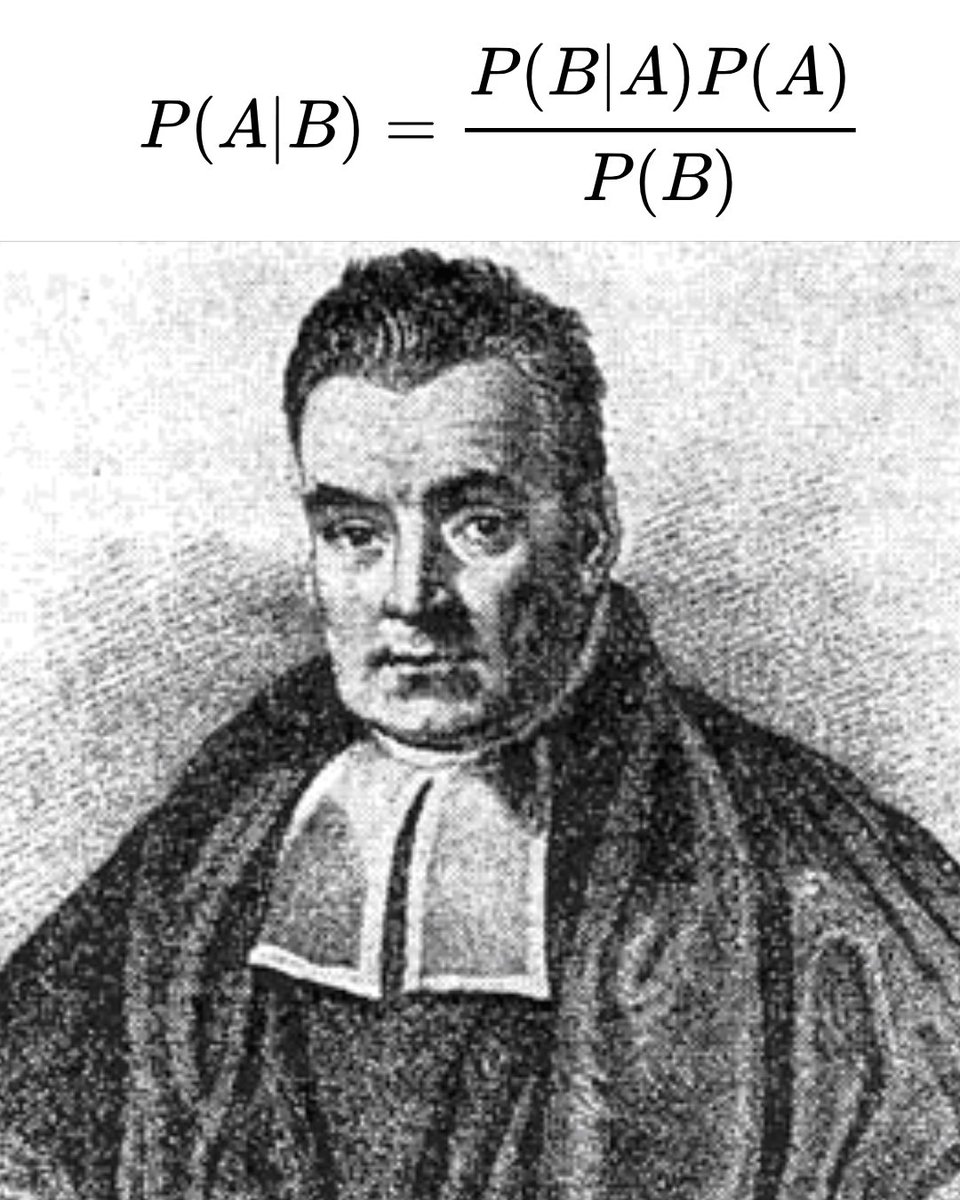
Bayes’ theorem is probably the single most important thing any rational person can learn.
So many of our debates and disagreements that we shout about are because we don’t understand Bayes’ theorem or how human rationality often works.
Bayes’ theorem is named after the 18th-century Thomas Bayes, and essentially it’s a formula that asks: when you are presented with all of the evidence for something, how much should you believe it?
Bayes’ theorem teaches us that our beliefs are not fixed; they are probabilities. Our beliefs change as we weigh new evidence against our assumptions, or our priors. In other words, we all carry certain ideas about how the world works, and new evidence can challenge them.
For example, somebody might believe that smoking is safe, that stress causes mouth ulcers, or that human activity is unrelated to climate change. These are their priors, their starting points. They can be formed by our culture, our biases, or even incomplete information.
Now imagine a new study comes along that challenges one of your priors. A single study might not carry enough weight to overturn your existing beliefs. But as studies accumulate, eventually the scales may tip. At some point, your prior will become less and less plausible.
Bayes’ theorem argues that being rational is not about black and white. It’s not even about true or false. It’s about what is most reasonable based on the best available evidence. But for this to work, we need to be presented with as much high-quality data as possible. Without evidence—without belief-forming data—we are left only with our priors and biases. And those aren’t all that rational.
🎶🎼🎧Dai Verse-Your Body. What A Song, What A Talent 🙌🏾😄😅…it’s just because you love to listen to mainstream artists…that’s how you all miss some pure gems like this song 🔥
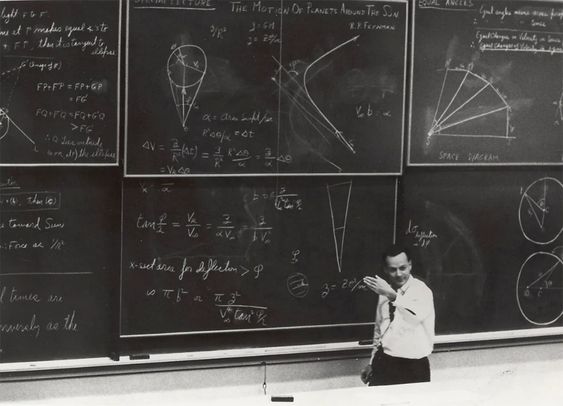
Mathematics is not just a language. Mathematics is a language plus reasoning. It's like a language plus logic. Mathematics is a tool for reasoning. It's, in fact, a big collection of the results of some person's careful thought and reasoning. By mathematics, it is possible to connect one statement to another.
- Richard Feynman, Caltech Archives Image
Don't see it as an investment, but as a means for leverage, an assest and a store of value.
Leverage to take credit/loans
Store of value: to convert it to an asset instead of lying as cash in the bank.
Assest: to preserve the money against inflation and depreciation.
Where people get it wrong is when they think of it as an investment to recoup over X number of years which takes forever to happen.
The only time this could be an investment is when you plan to build, hold for a little while, then sell.
If for any reason you intend to still build a residential property, use it as Airbnb or for shortlets. This is better than the usual renting, and can give you cash quickly.
Your other best option is to build the property and run a business with it. It could be an office space or a factory.