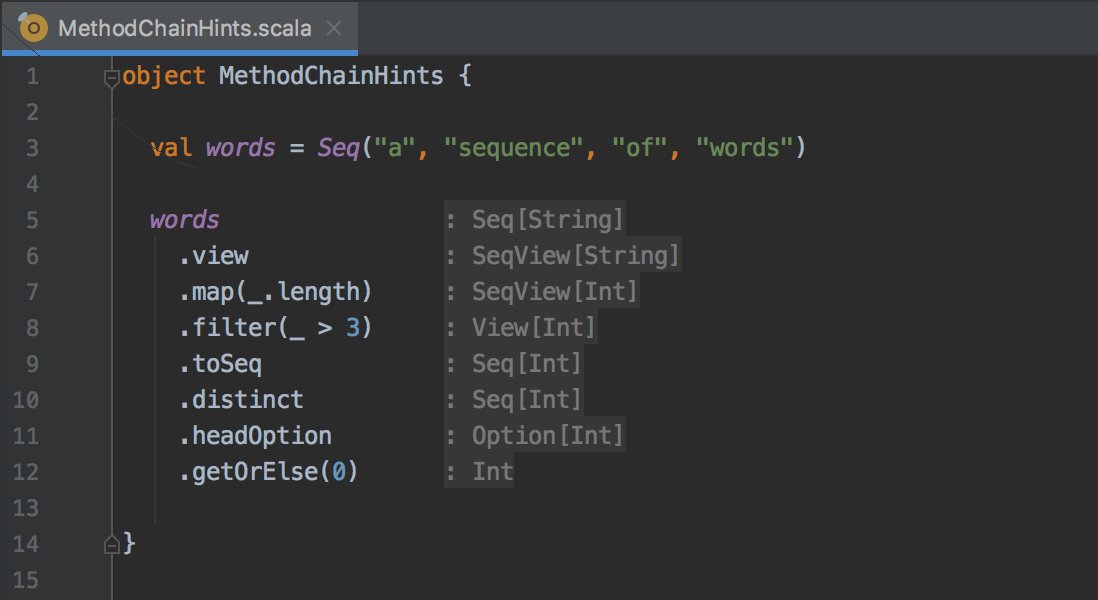
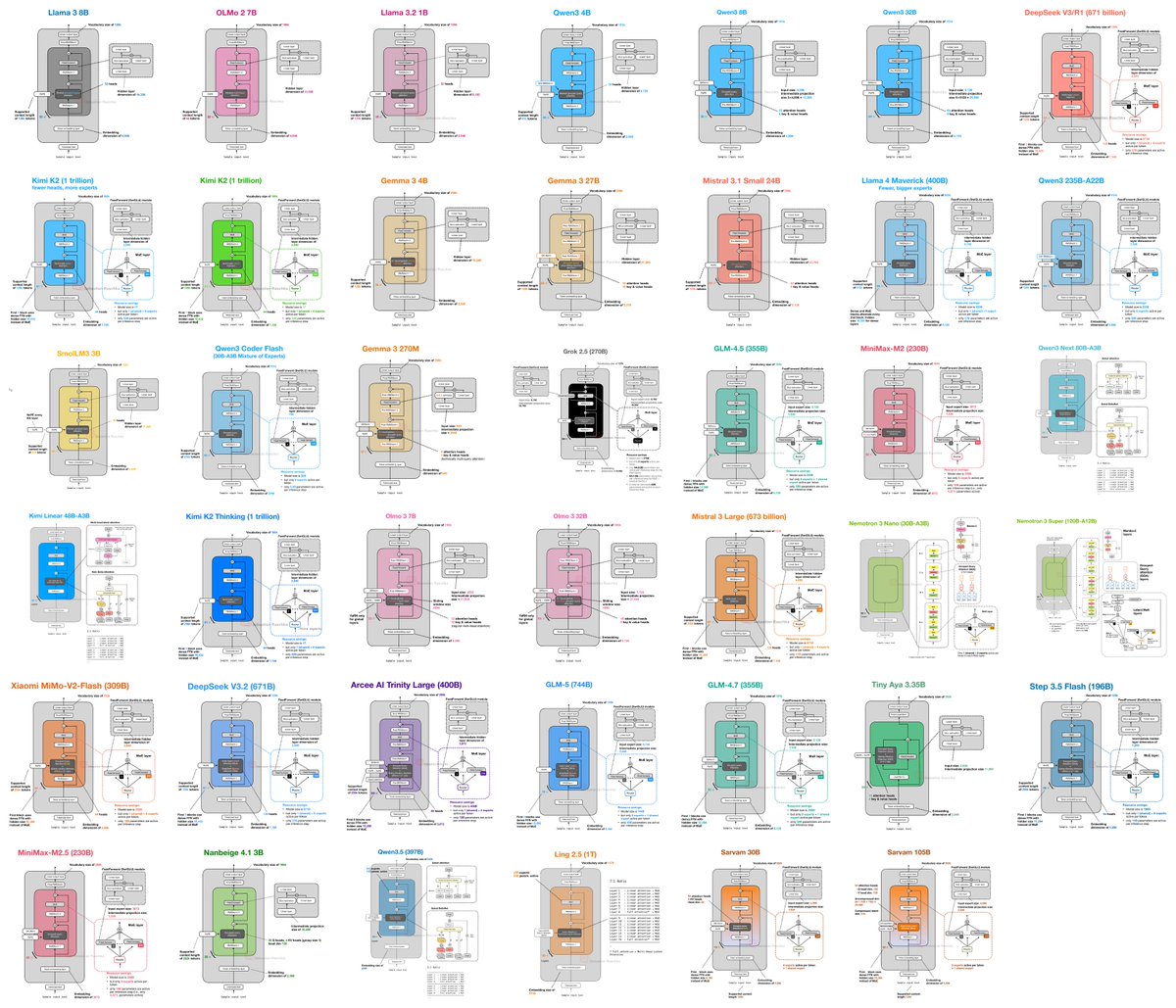
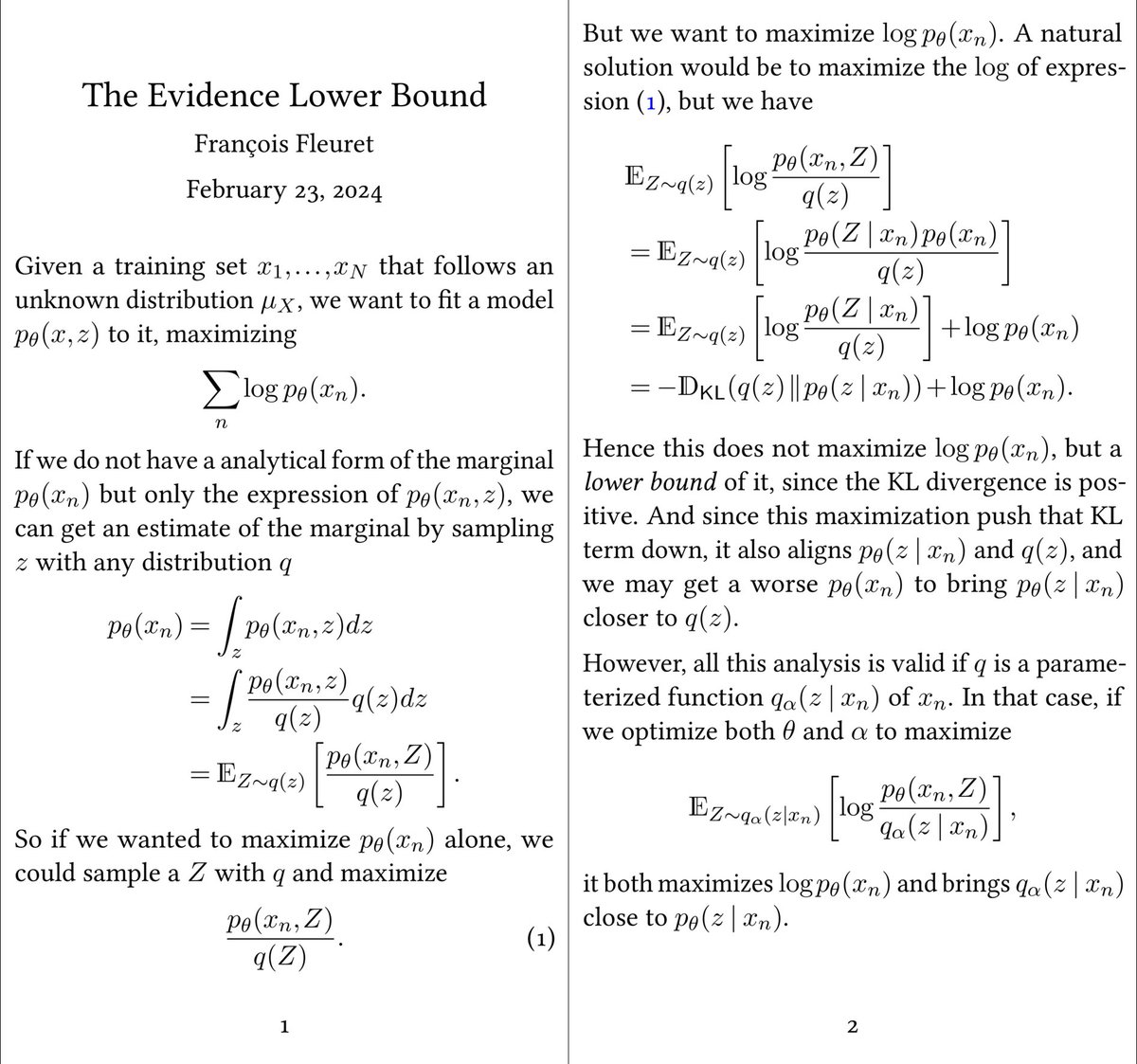
New art project.
Train and inference GPT in 243 lines of pure, dependency-free Python. This is the *full* algorithmic content of what is needed. Everything else is just for efficiency. I cannot simplify this any further.
https://t.co/HmiRrQugnP
On a recent trip to the UK, @standupmaths shared this delightful little probability fact with me and asked if I might animate an explanation for a video of his. It's a fun one!
See his full video with shenanigans relating this to dice and more. https://t.co/DpxkVyYVFY
Free Dolly! Introducing the first *commercially viable*, open source, instruction-following LLM. We are open-sourcing the entirety of Dolly 2.0, including the training code, the dataset, and the model weights, all suitable for commercial use.
https://t.co/EHu4TbFl6M
PhD students, don't worry. Technologies, trends, and even whole fields come and go. A PhD makes you an expert in a field but, more importantly, teaches you how to become an expert. Once you know that you can learn anything, you can adapt to major disruptions in your field.
Given a trained #ML model, can we estimate how well it works on new data w/o seeing any labels?
Can we still do it even if both covariates and labels shift in data?
Our #NeurIPS2022 paper shows how to est model perf on new data in this hard case! https://t.co/VCmlNvWLjc 1/2
If Anderson acceleration didn't speed up your algorithm, you should try Richardson extrapolation, as described in this new blog post.
https://t.co/jXwrRIp4QU
Introducing SimCLR: a Simple framework for Contrastive Learning of Representations. SimCLR advances previous SOTA in self-supervised and semi-supervised learning on ImageNet by 7-10% (see next).
https://t.co/X5CXud0VwL
Joint work with @skornblith@mo_norouzi@geoffreyhinton.
Start with 82 and go backwards to 1
8281807978777675747372717069686 7666564636261605958575655545352 5150494847464544434241403938373 6353433323130292827262524232221 2019181716151413121110987654321
...this number is prime!
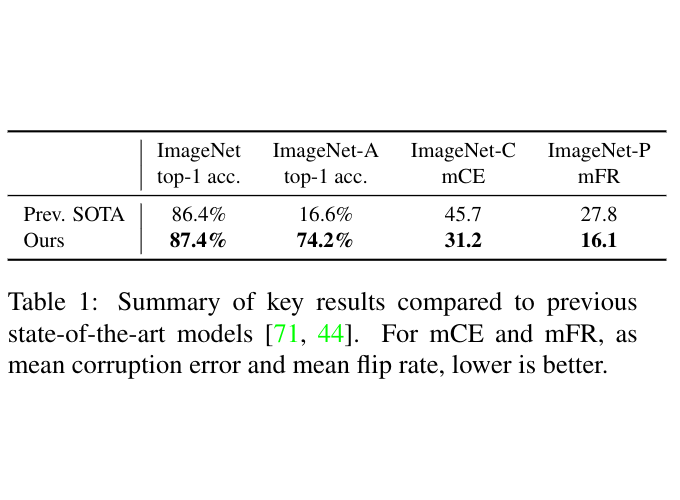
Want to improve accuracy and robustness of your model? Use unlabeled data!
Our new work uses self-training on unlabeled data to achieve 87.4% top-1 on ImageNet, 1% better than SOTA. Huge gains are seen on harder benchmarks (ImageNet-A, C and P).
Link: https://t.co/ZYDaef6sdp
😊Self-supervised learning opens up a huge opportunity for better utilizing unlabelled data while learning in a supervised learning manner. My latest post covers many interesting ideas of self-supervised learning tasks on images, videos & control problems: https://t.co/SdUrQQDzzy
While many neural networks perform quite well at their tasks, they are fundamentally complex systems, and their training and operation is still poorly understood. https://t.co/sXIQBU6kP2
Microsoft Researchers with collaborators at @CarnegieMellon and @Stanford created PipeDream, a new way to parallelize deep neural network training. See how PipeDream gets 5.3x faster training time by combining intra- and inter-batch parallelism: https://t.co/8ieraUBKVr #SOSP19