🚨 NEVER FORGET.
The SMARTEST kids in the room are the fixed income guys.
They just started charging the hyperscalers for the AI buildout. Goldman's hyperscaler bond basket spread: 151 basis points, a record wide, and the move is vertical since June.
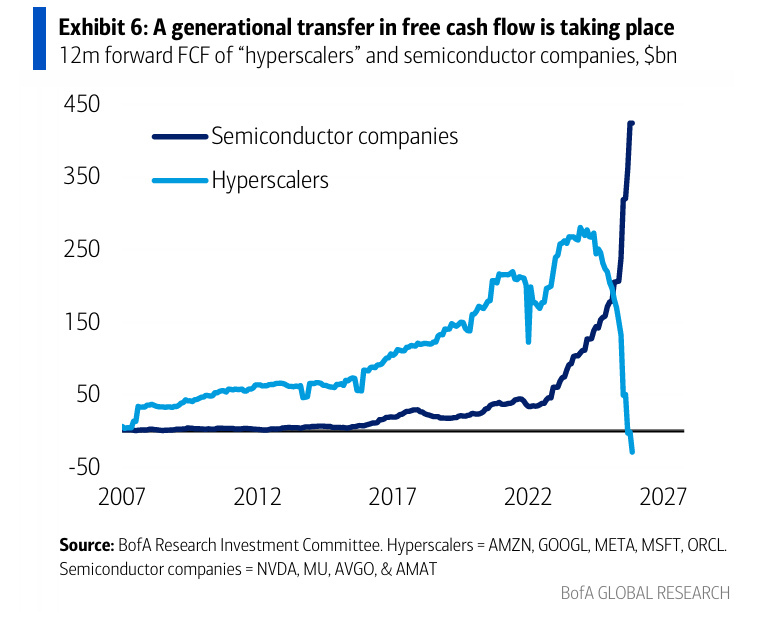
Remember the chart of hyperscaler free cash flow going negative? This is its sequel. First the cash ran out. Now the creditors want more for the next round.
Equity investors are still pricing the buildout as unlimited. The debt market just repriced it as borrowed.
Credit always turns first. Equity always finds out later.
🚨 Never forget…
Your whole idea of buying every dip through ETF and chill is a 13-year illusion.
100 years of S&P 500 real returns, split into regimes:
– 1928-1948: 0.6% a year
– 1949-1968: 12.7%
– 1969-1984: 0.5%
– 1985-1999: 15.1%
– 2000-2012: -0.8%
– 2013-2025: 11.8%
Notice the rhythm. A golden era, then a dead one.
Feast, famine, feast, famine.
Not one regime in a century simply continued.
The long-term average of 7% real that everyone plans with? Almost no generation actually experienced it. You got 12%, or you got zero.
The average is a fiction made of two extremes.
Everyone who started investing after 2009 has only known the feast. Buy the dip worked every single time. Not because it's a law. Because you happened to live inside the blue bar.
But the current run is already as long and as rich as the two golden eras before it. And every one of them ended the same way: not with a warning, with a decade.
Mean reversion doesn't announce itself. It just stops paying.
The next 0.5% decade will feel impossible right up until it starts. It always has.
This is all you need to do to make millions in the stock market. Save this. Screenshot it. You will need it.
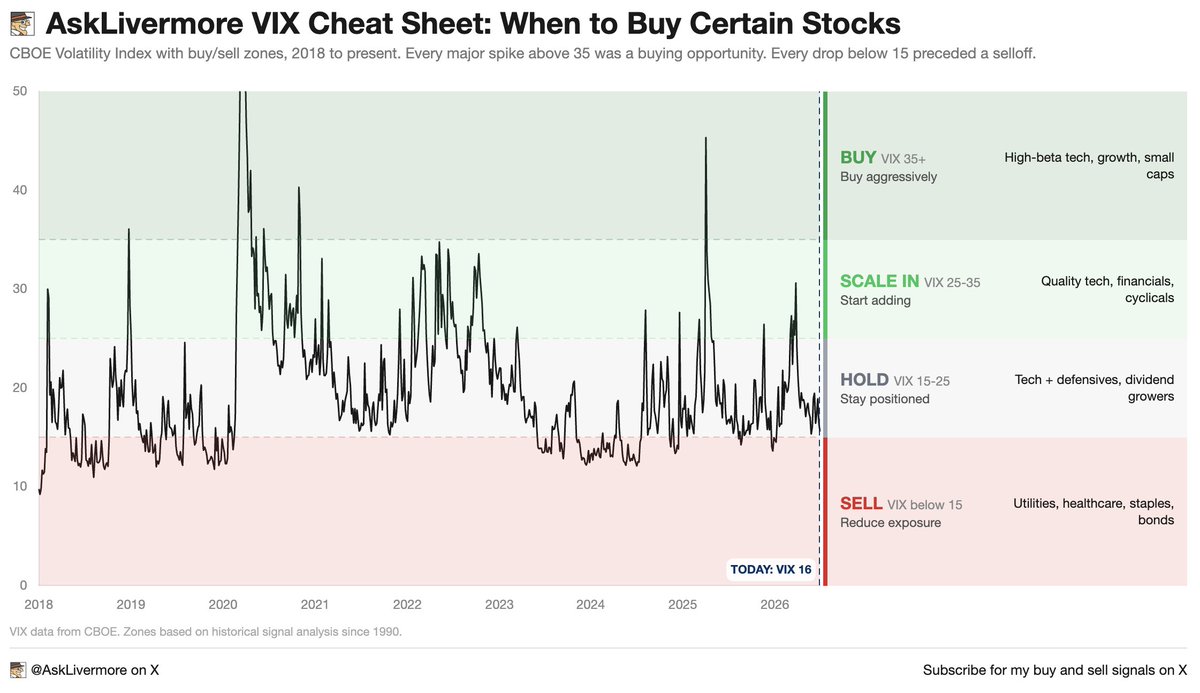
1. VIX above 35: buy aggressively
- High-beta tech, growth, small caps
- Every single time the VIX spiked above 35 since 2018 was a generational buying opportunity. COVID bottom. Oct 2022 bottom. Tariff crash. If you bought when everyone else was panicking, you made a fortune.
2. VIX 25 to 35: start scaling in
- Quality tech, financials, industrials, cyclicals
- This is where smart money starts building positions. Not all at once. Gradually. The fear is real but the opportunity is bigger.
3. VIX 15 to 25: hold
- Balanced: tech + defensives, dividend growers
- This is normal. Stay positioned. Don't chase, don't panic. Let your winners run.
4. VIX below 15: reduce exposure
- Rotate to: utilities, healthcare, staples, bonds
- This is when everyone is comfortable. Nobody is hedging. Nobody is worried. That's exactly when you should be.
- Every major crash in market history was preceded by the VIX sitting below 15 for weeks.
Right now the VIX is at 16. We're in the hold zone. Stay positioned but stay alert.
Bookmark this. The next time the VIX spikes above 35, don't freeze. Buy.
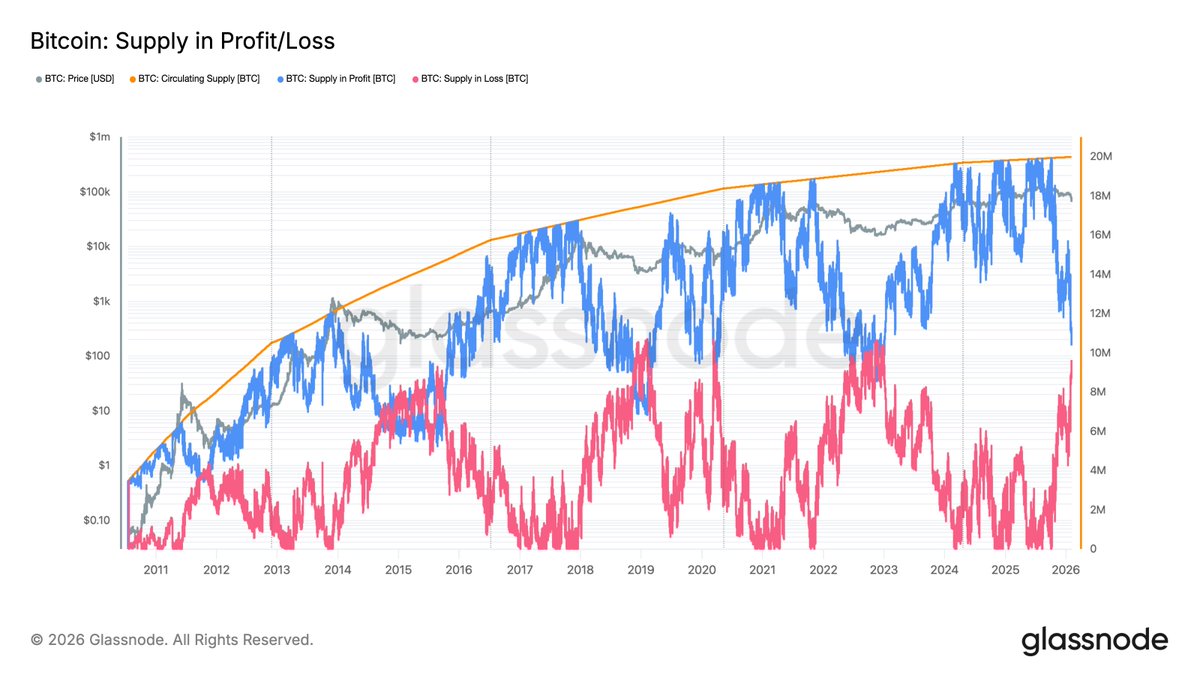
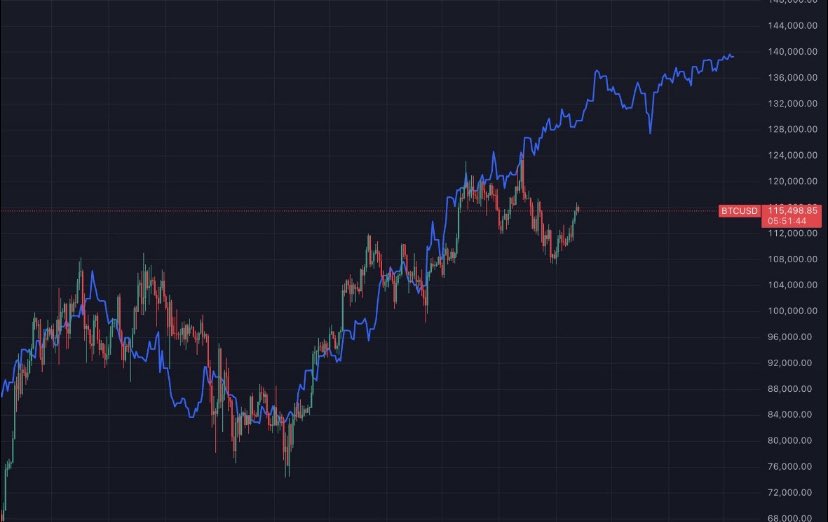
While this bear market feels different, Bitcoin is still tracking the average of prior midterm-year bear markets.
Structurally, the market typically gets one final countertrend rally sometime in the summer before the final low occurs later in the year.
Bitcoin is trading at a new yearly low..
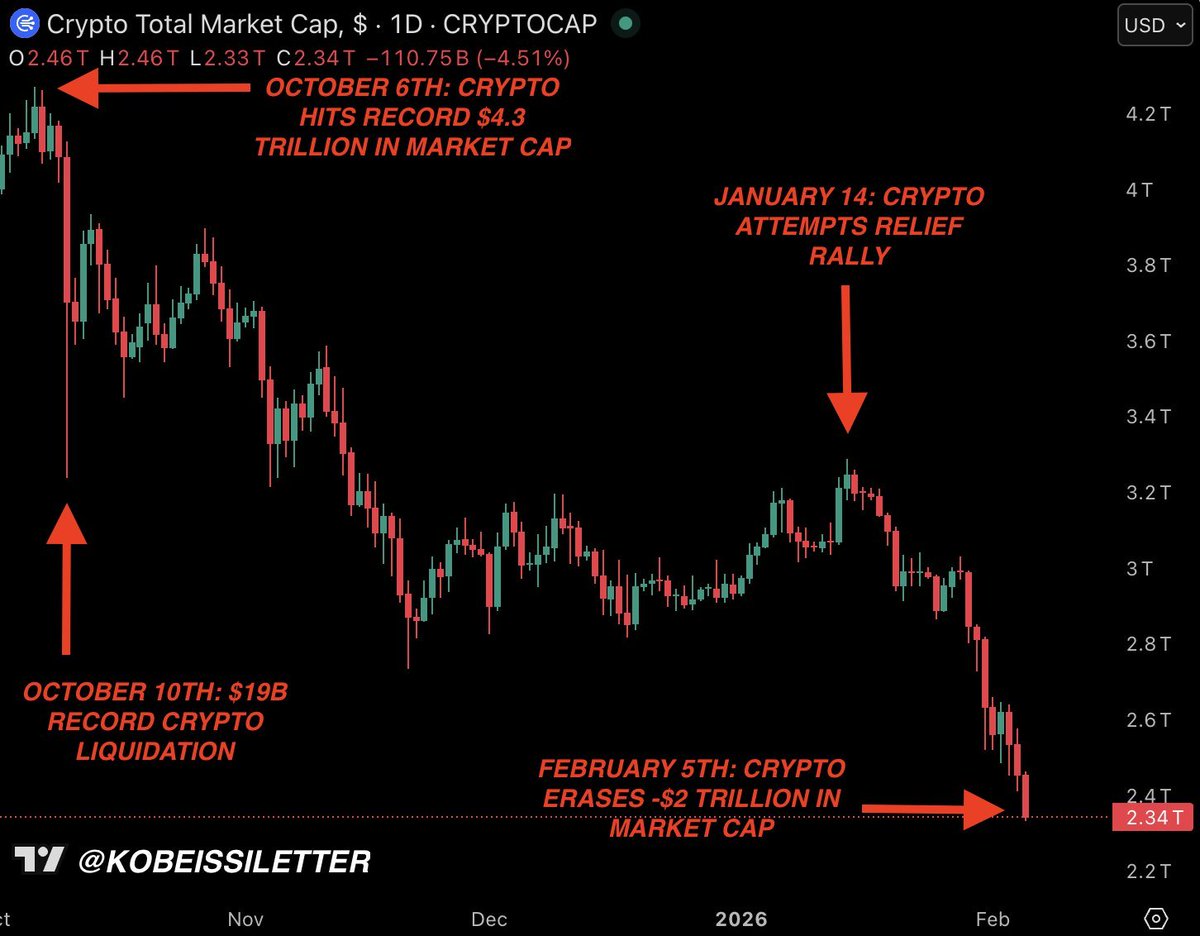
Almost $3T wiped from crypto since the peak
I went back through every bottom since 2011, on-chain and technical… to find where could be the bottom.
Full breakdown below:🧵👇
Sum this all up and we believe volatility is here to stay.
We have record leverage, rising inflation, tons of uncertainty, and one of the biggest technological revolutions of all time.
This presents tons of opportunity to capitalize on the broadening swings in the market.
🇿🇦 South Africa v Canada 🇨🇦 is the first confirmed pair in R32!
Group A replaced Group C in projected bracket, which created a shift in the pairings.
🇰🇷 South Korea now to face G1 (proj. 🇪🇬 Egypt), which made I3 (proj. 🇸🇳 Senegal) switch to the other side to face 🇲🇽 Mexico!
👉 Full probabilities and scenarios for all 48 teams in our 🕹️ Simulator
This is Wild.
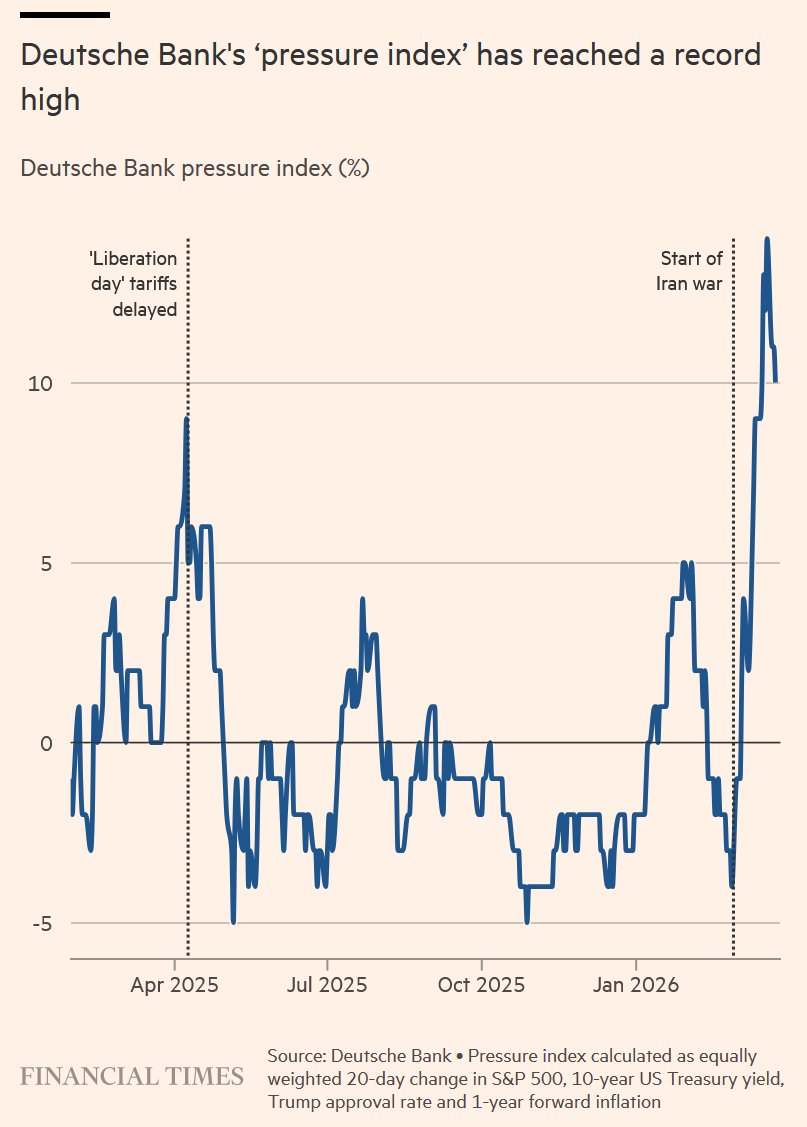
Deutsche Bank has developed an index that helps to predict the next TACO by Trump.
It has proven effective in previous big Trump pivots.
The "Pressure index" combines one-month change in approval ratings, one-year inflation expectations and performance of the S&P 500 & t-bill yields.
The higher it goes, the greater the chances of 🌮
1/ The BTC crash will prompt deep self-reflection. Here's mine as I review the last 4 months from the peak.
Price action was clear from the $90K breakdown in January. But it was back in September when I first saw the potential for turbulence:
https://t.co/qTS0DqqJvG
At the time I wrote:
I expected a Fed pivot. We got one (end of QT → "Reserves Management").
I expected the business cycle to inflect higher. It has (ISM 48 → 52.6).
I expected a "normal" 25-30% pullback. We are now in a -50% pullback.
BTC is a core position but in Sept and October I derisked some peripheral positions. I could have done alot more. My liquidity model was actually inflecting higher so I held ground. But the technicals were decisively bearish. I saw it and didn't act. That's on me.
2/ Why didn't I act more aggressively? Because I failed to respect how wide the gap between thesis and price can get. If your time horizon is short, the only thing that matters is price.
I also underestimated how finite marginal liquidity really is. October 10 rugged the broader market, AI scarcity repriced where capital flows, and the deleveraging event hit simultaneously. Crypto got cut from the marginal liquidity equation in real time.
This isn't a blame game. But everything in markets is relative, and I didn't adjust fast enough.
3/ The deeper failure is one I think many share.
The psychology of this market reflects collective belief. And the collective treats BTC and crypto as an ATM, not a utility. When the primary use case is "number go up" and price detaches from the utility function, markets distort. Previous cycle gains created a withdrawal reflex, not a conviction base.
I knew this intellectually. I didn't price it into my risk framework. There's a gap between understanding market psychology and actually respecting it with your positions. Thats why TA is powerful.
4/ None of this changes my long-term view. BTC remains a core position. Blockchains are becoming integral global infrastructure, and that trajectory is accelerating.
AI agents will need permissionless, programmable rails to transact. They won't wait for legacy banks to negotiate deals that preserve their margins at the consumer's expense. By the time incumbents finish lobbying for regulatory moats, the early agentic economy should be visible for all to see.
The cycle pain is real. But my thesis remains intact. Today's move is approaching capitulation levels on many metrics. However, credit needs to go to folks @benjamincowen and @cburniske, who applied a different framework and were early/right. Disagreement between analysts who do the work isn't failure. It's what tests robustness. That's how the craft improves.
5/ One more thing. Every analyst needs a framework that suits their own psychology and time horizon. No framework works 100% of the time.
What matters is that you do the work, build a thesis, test it, and evolve it. People like @RaoulGMI and @JulienBittel have done that consistently. Their track records speak for themselves.
Let the poo flinging commence.
As of 8:00 AM ET today, Bitcoin has officially erased its post-election rally.
Yet, over the last 60 days, the fundamental picture for crypto is actually vastly unchanged.
This is why many investors are confused.
Why is crypto crashing if the fundamental picture is unchanged?
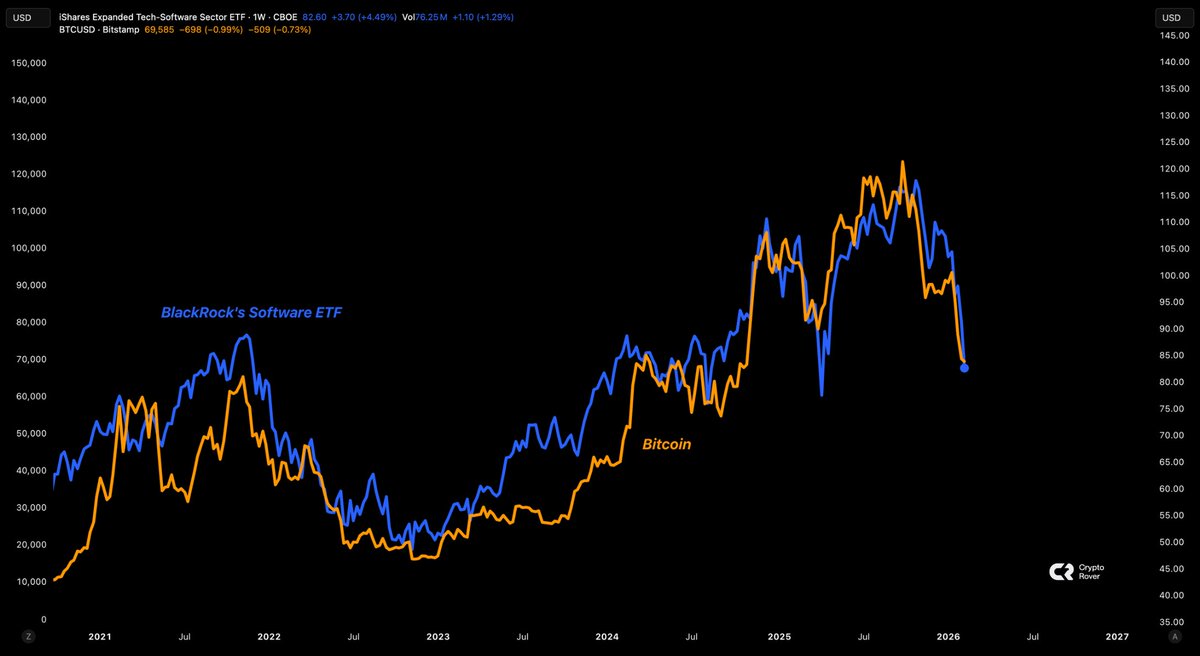
The Edge AI Bear Case is Playing Out in Real-Time
1/
If you're not on X and listening to podcasts, you're behind on the AI speed.
Mainstream financial media is 6-12 months behind what's actually happening.
Case in point: @GavinSBaker warned us about the "scariest bear case" for AI infrastructure less than 2 months ago.
It's happening right now.
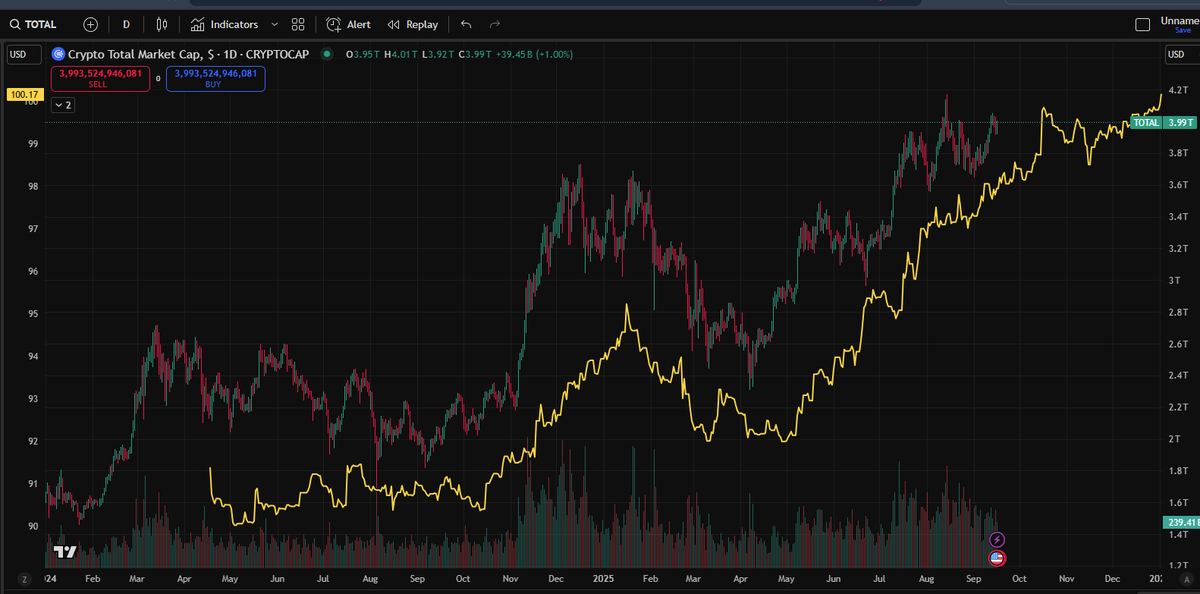
@ColinTCrypto Hey Colin. Shouldn't you be comparing Crypto Total market cap to the Global M2?
(I'm not 100% positive if I charted this correctly but it looks very coorelated)