Thanks for Tomoya's attention!
🧵 [1/9] A single-oocyte long-read transcriptome reveals a hidden layer of isoform diversity and TE-mediated stability in human and mouse oocytes.
Here’s what we found 👇
#IsoSeq#Oocyte#transcriptomics#TE#singlecell 🧬
Single oocyte full-length isoform sequencing unveils the impact of transposable elements on RNA diversity and stability during oocyte maturation https://t.co/SS28vmrCgA
Today in @Nature, we report a new approach to studying human brain development and modeling disease in vivo.
Human neural #assembloids and #organoids have opened new ways to study development in vitro, but they also have important limitations. Transplantation can provide a more physiological environment, yet human cortical cells then develop within a rodent brain that matures much faster, constraining their growth and integration.
To address some of these limitations and obtain more advanced functional readouts relevant to disease biology, we generated #apallial mice, in which ~98% of the cortex and hippocampus fail to form, creating space for transplanted human cortical organoids to grow and integrate extensively.
We call these #xenocortical mice (XCX).
Nearly 7 years in the making. Congratulations to an extraordinary team and wonderful collaborators!
Link to the article below 👇
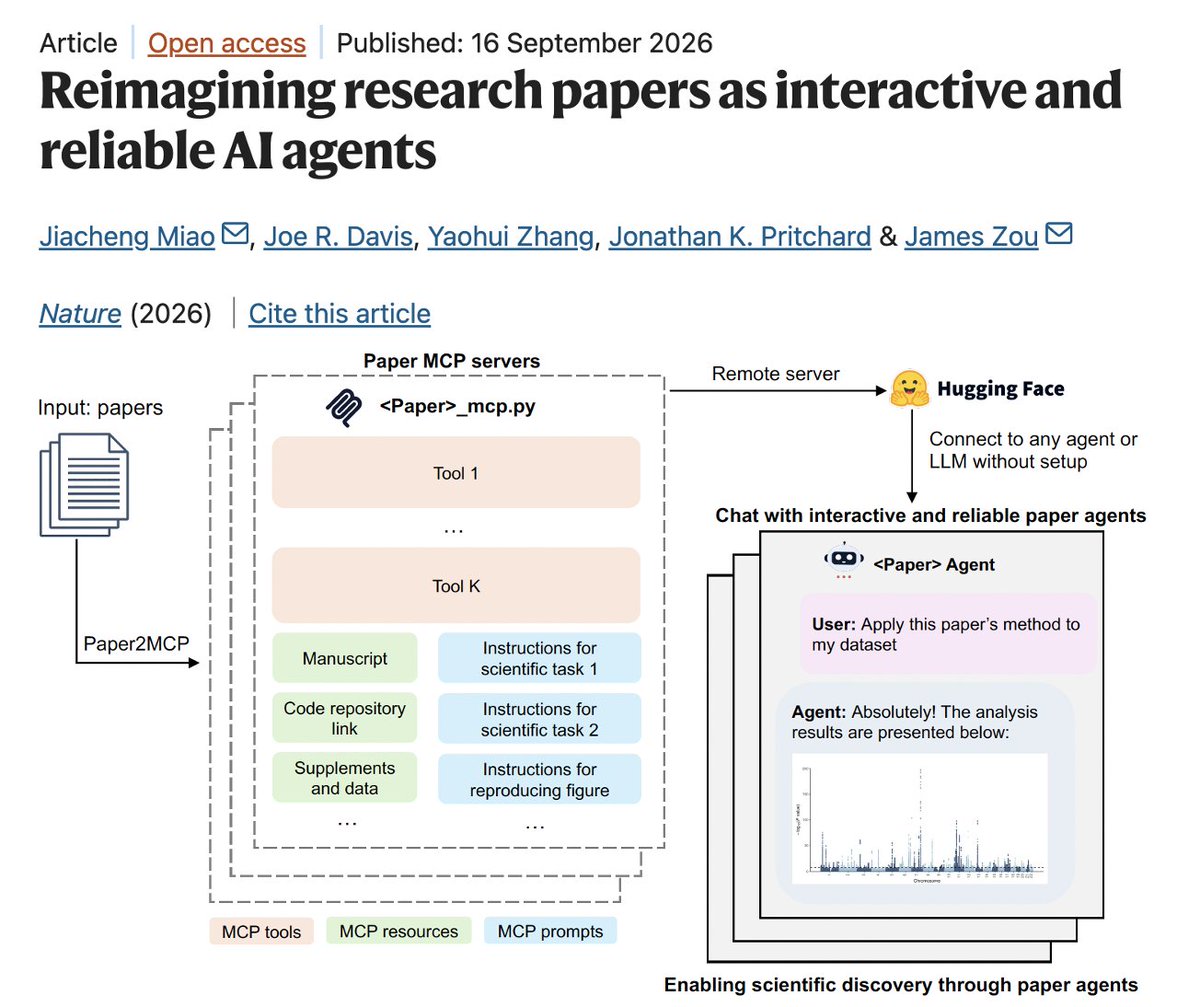
Thrilled that #paper2agent is published in @nature today!
Scientific knowledge is traditionally stored in passive papers. Paper2Agent transforms papers into virtual authors that answer questions, apply its methods and collaborate w/ other paper agents to make new discoveries 🧵
Excited to share our new review in Nature Reviews Neurology, written with my postdoctoral mentor @ChrisAWalsh1 ! We discuss how somatic mosaicism arises in the brain across development and aging, and its emerging roles in neurodegeneration.
Want to build your own fly simulator on the BANC connectome (the full brain + CNS from a female fly, ~160k neurons)? Here's how. 🧵
TLDR point your agent here: https://t.co/9g2jQ2nP4y
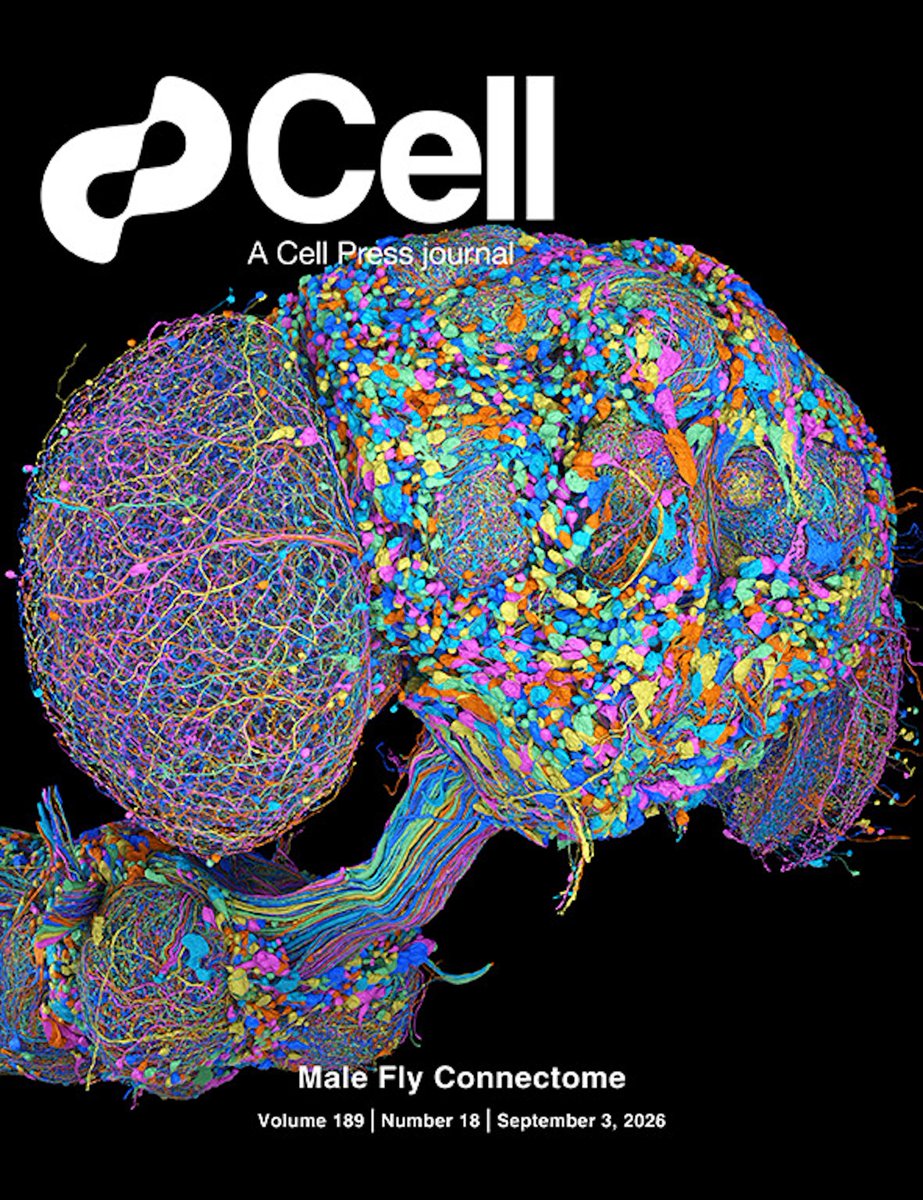
New issue is out👉https://t.co/uP2kI6DjtL
On the cover: the complete connectome of the male adult D. melanogaster central nervous system. The cover depicts a single representative cell from each of the 11,710 neuron types in the dataset, which contains 166,700 neurons in total.
since you guys loved the exploding tesla..
I used GPT-6 Astra to create a 3D website that pulls apart the male anatomy into 2,234 modeled pieces!
we are in a renaissance of learning
Out now in @CellCellPress our approach for cellular-self reporting: live-cell transcriptomics with engineered virus-like particles in collab w/ @LindaGGriffith1 lab @MIT@broadinstitute https://t.co/b7KqYYETav
Excited to share spatial NT-seq, now out @NatureNeuro! By distinguishing newly synthesized from pre-existing RNA, this method turns static snapshots of total RNA into spatially resolved views of RNA life cycles. @PennGenetics@PennEpiInst@PennMedCSO
https://t.co/8RFa5Td4GF
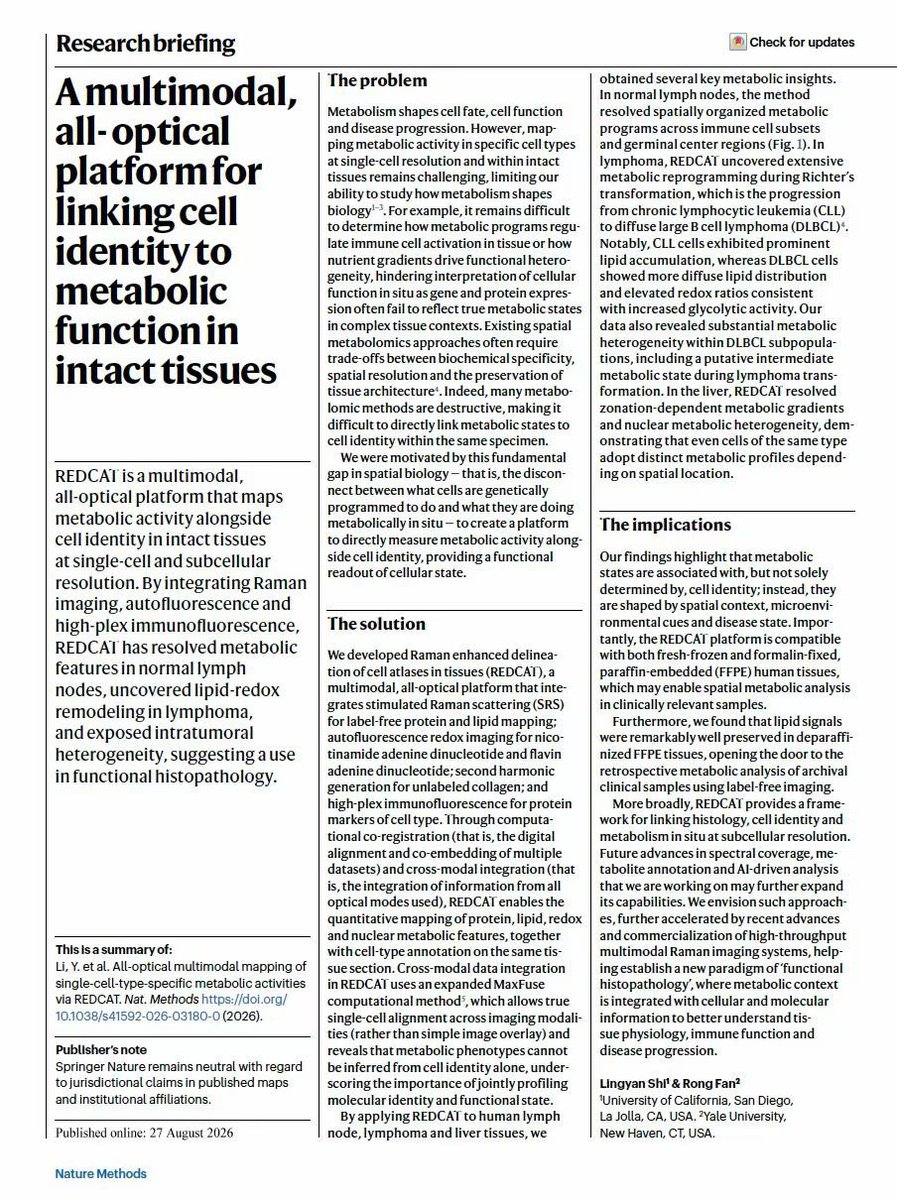
Our “Little Red Cat”, has finally been formally adopted by Nature Methods!
—UCSD's SRS metabolic imaging + Yale's spatial omics cell typing: one slide that nails identity, location, and metabolism, all while being extendable to transcriptomics, epigenomics, in live cells&tissues
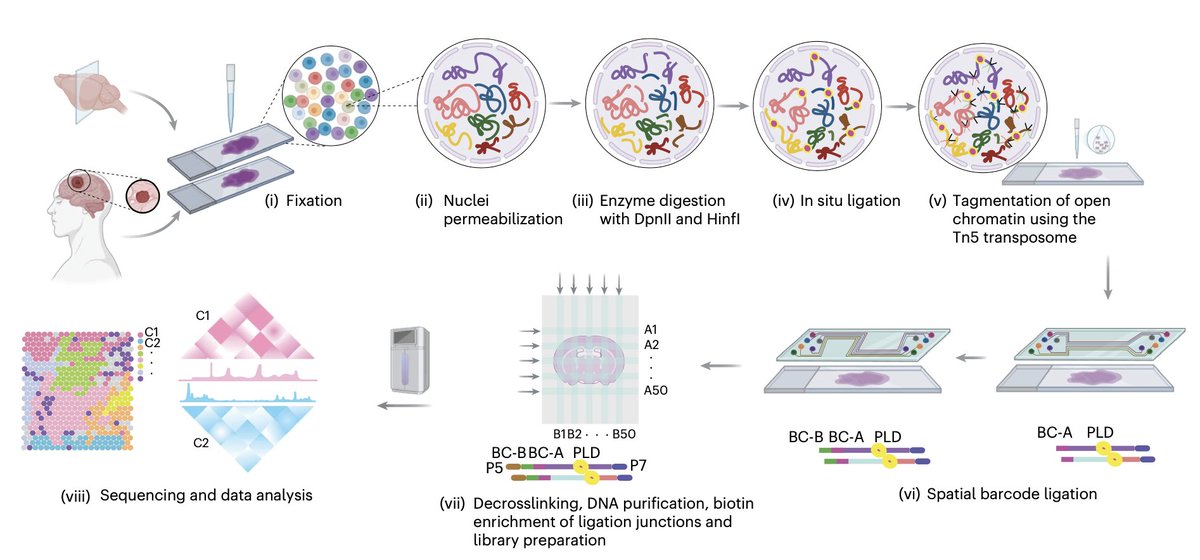
Excited to share Spatial-ATAC-Hi-C @naturemethods, spatial profiling of 3D genome organization + chromatin accessibility in tissue. Excitingly, it detects CNVs and SVs in tumors and reveals spatial heterogeneity.
Great collaboration with @RongFan8.
https://t.co/XO0FhoZepO
Same single cell, two modalities—both at depth. We digest protein first, run Smart-seq3xpress + C18 (Evotip) separation: peptides captured, cDNA in flowthrough. In HeLa & stem cells, proteome tracks cell state; RNA variance flags transitioning cells.
https://t.co/P0EtDp2Tqu
Excited to share our new preprint led by
@YiChenNeumann with incredible collaborators @labs_mann, @BenGewurz, @StephenE92884, and @hopfnerlab
to characterize the function of thousands of viral microproteins from human-infecting viruses! https://t.co/iRXXkWES0N