DON'T give the agent the keys.
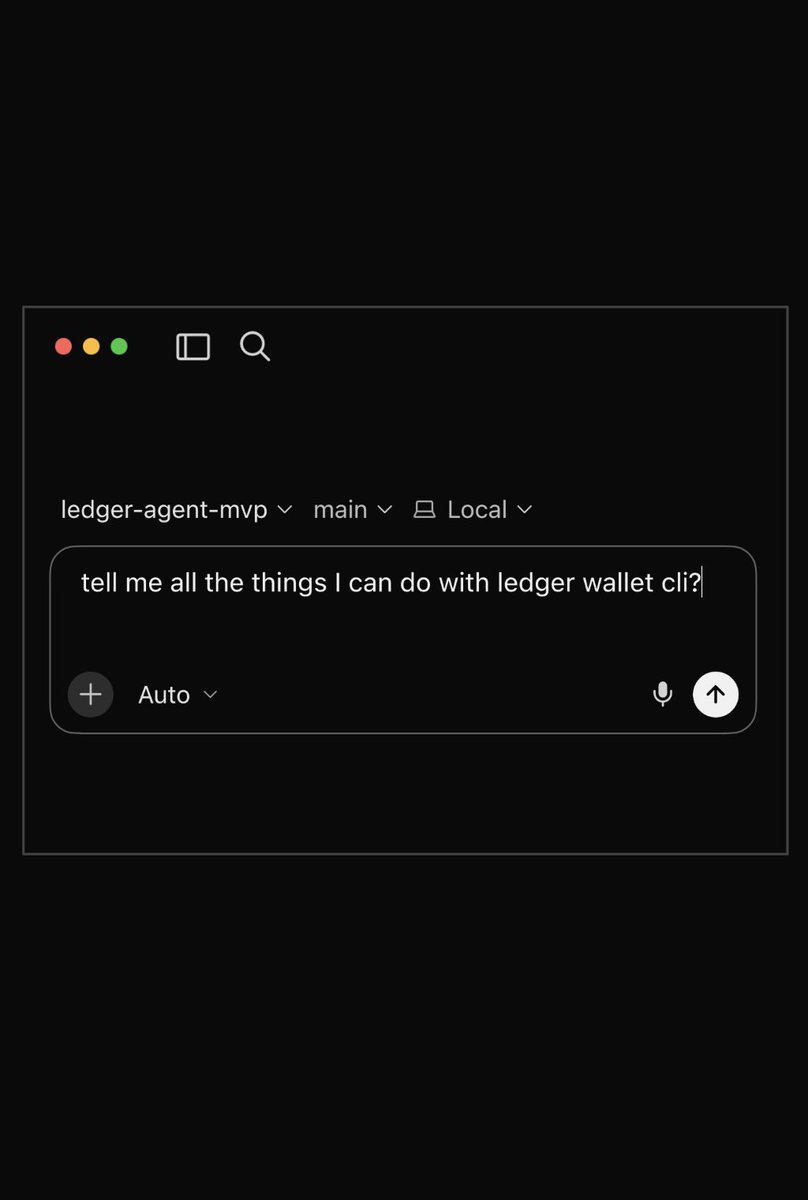
DO give it @ledger Wallet CLI - and it can;
✅ check balances
✅ view history
✅ send
✅ swap
✅ verify
All this in your Ledger wallet, but scriptable for an AI agent.
The best part? Anything the agent proposes MUST be approved by human hands w/ a Ledger signer. You get the final say (not the bots!)
One line that puts control of your stack in your hands;
npm i -g @ledgerhq/wallet-cli
The crypto community is reeling from a breach involving Coldcard wallets made by Coinkite.
Ledger Chief Human Agency Officer Ian Rogers, who's company is a competitor of Coinkites, discusses how AI has made crypto hacks easier than ever https://t.co/8D7lRjHsNX
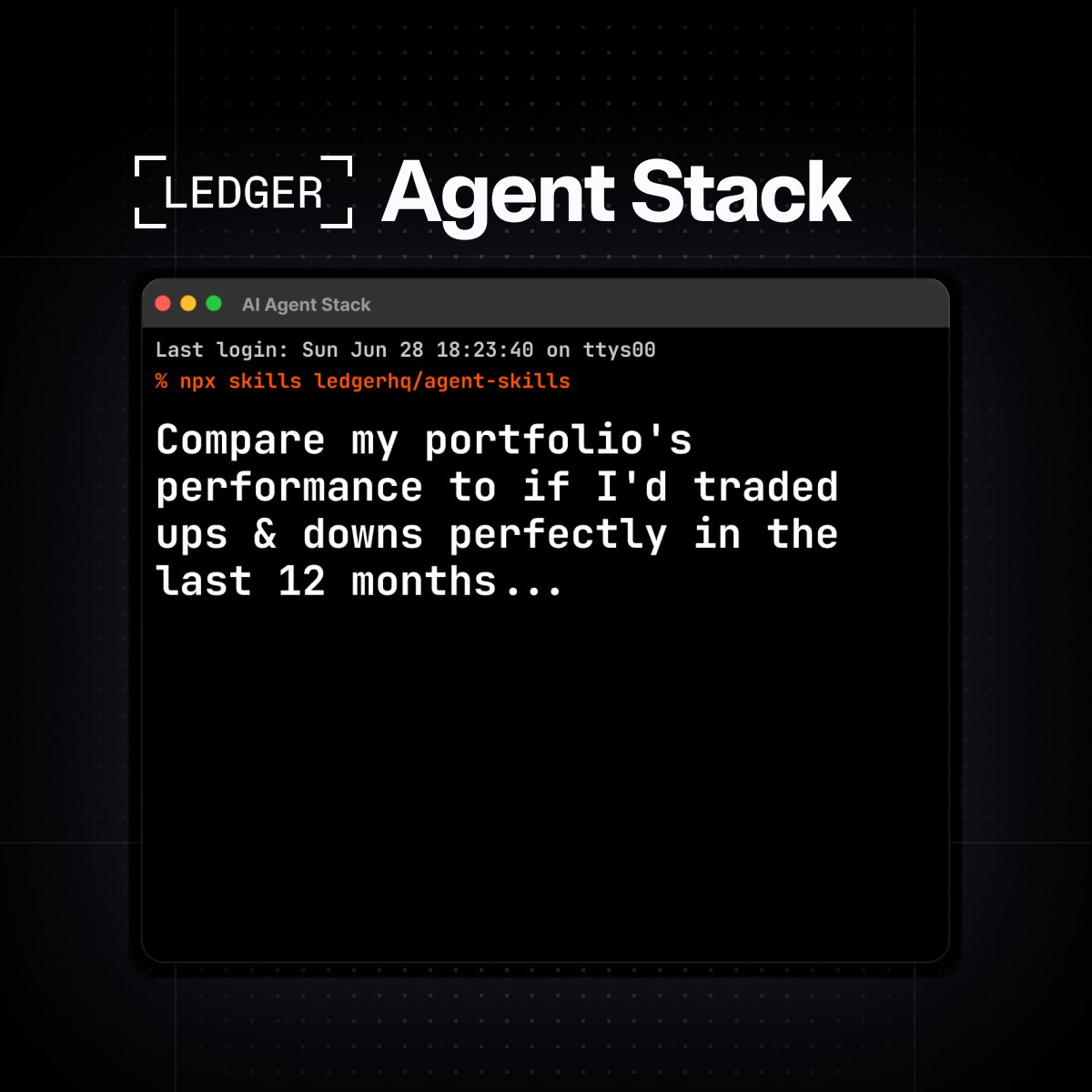
tried the prompt w/ my agent & @ledger CLI ➡️ read & rated the last 12 months
conclusion?
did better than hodling…
but could have traded more smartly
everyday is a learning curve right? 😄
Quick one for the timeline: hand your agent this prompt, see what you get, and share with us below 👇
"Compare my portfolio's performance to if I'd traded perfectly ups & downs in the last 12 months.
Read https://t.co/5IEf61uKTu. Install Wallet CLI + skill. Read-only: check balances + history.
Tell me how my trading has stacked up."
Binance just lost the right to serve EU users. Your funds are fine. That's not the point.
Binance withdrew its MiCA application in Greece days before the July 1 deadline, and didn't secure authorization anywhere else in the EU in time. Under MiCA, you need a license from one member state to passport across all 27. No license, no regulated services. So starting July 1, EU users lose new sign-ups, new deposits, trading, and staking. Only wind-down activity is allowed: withdraw, transfer, close.
Nothing about your coins changed. No hack. No bug. No market crash. A regulator and an exchange made a decision, and overnight a few million Europeans went from "I can trade my assets" to "I can only move them out." The keys were never yours. The permission was always someone else's to revoke.
This is not an abuse. It's a documented property of custodial exchanges. When a third party holds your keys, you don't own coins. You own a claim, and that claim is only as good as the entity, the jurisdiction, and the regulation behind it on any given morning.
If you don't self-custody, you are always one regulation, one hack, one decision away from not owning your coins anymore. MiCA didn't create that reality. It made it visible.
Self-custody doesn't ask you to trust Binance's compliance team, a Greek regulator, or a French timeline. It replaces "they promised" with "they cannot." That's the only version of ownership that survives a Tuesday like this one. ✊
Stay safe. Stay honest about your trust assumptions.