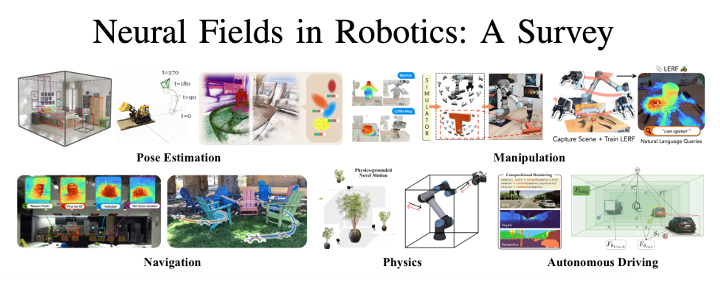
How do we represent 3D world knowledge for spatial intelligence in next-generation robots? We recently wrote an extensive survey paper on this emerging topic, covering recent state-of-the-art! 🦾 🚀
Check it out below. Feedback/Suggestions welcome!
📖arXiv: https://t.co/SbrPYKJRwk
🖥️github list: https://t.co/VecNOsxyM3
@GTrobotics@ICatGT@mlatgt@ToyotaResearch@neural_fields
Very cool blog showing MapAnything for robotics!
PS: The title and narrative is a bit spicy though 🌶️
Stayed tuned for some exciting updates coming this week!! 😉
https://t.co/rwmIxtO6KF
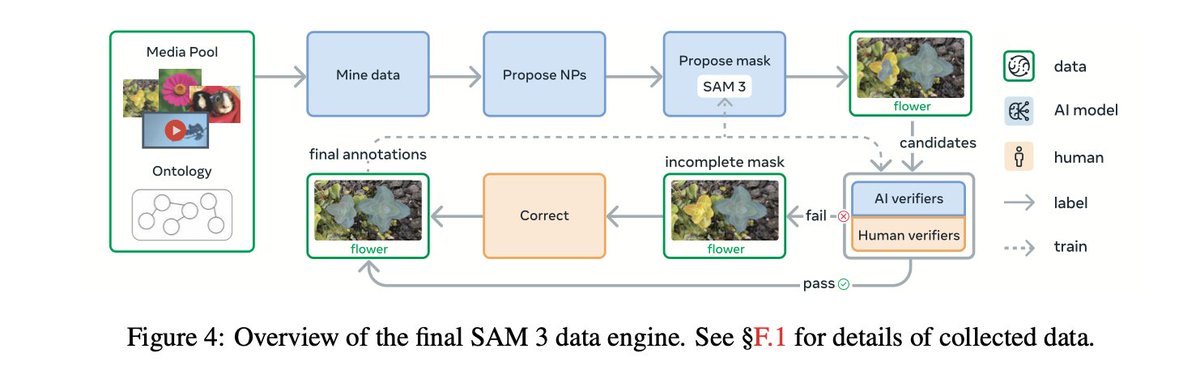
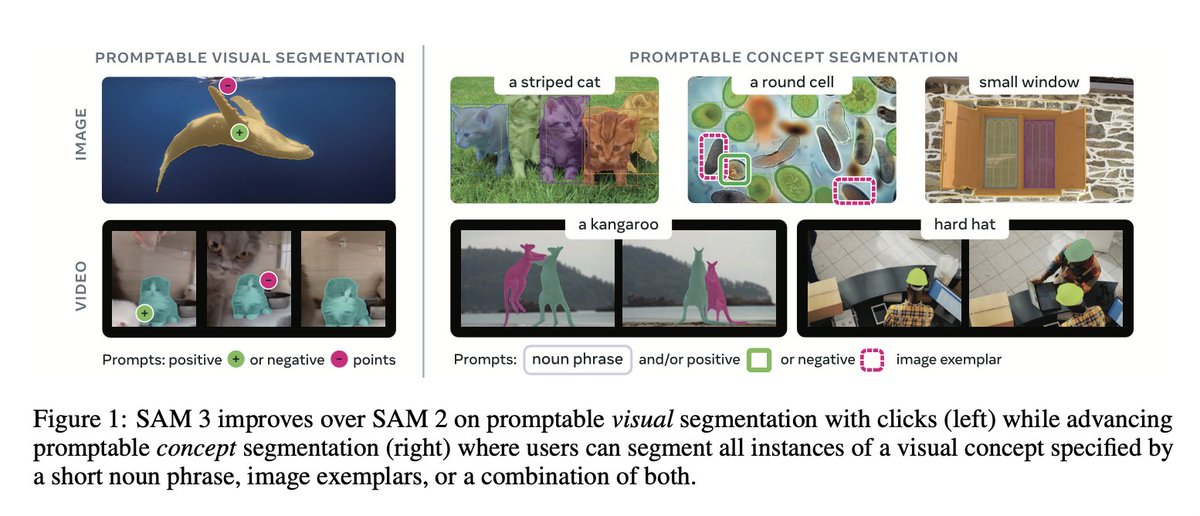
Segment Anything 3 just silently dropped on ICLR 🤯
The first SAM let you click on an object to segment it.
SAM 2 added video and memory.
Now SAM 3 says: just describe what you want — “yellow school bus”, “striped cat”, “red apple” — and it will find and segment every instance of it across images or videos.
It’s like segmentation finally learned language, but in a grounded, minimal way, by just saying concepts.
Short noun phrases, image exemplars, or both.
You say the concept, it understands what you mean, and draws the boundary everywhere it appears.
Behind it is a massive data engine: 4 million unique concepts, 52 million verified masks, built through humans and LLMs checking each other’s work.
It’s both old-school annotation and self-improving AI loops.
The result: roughly 2× better than SAM 2, near-human recognition on open-vocab benchmarks, and real-time speed.
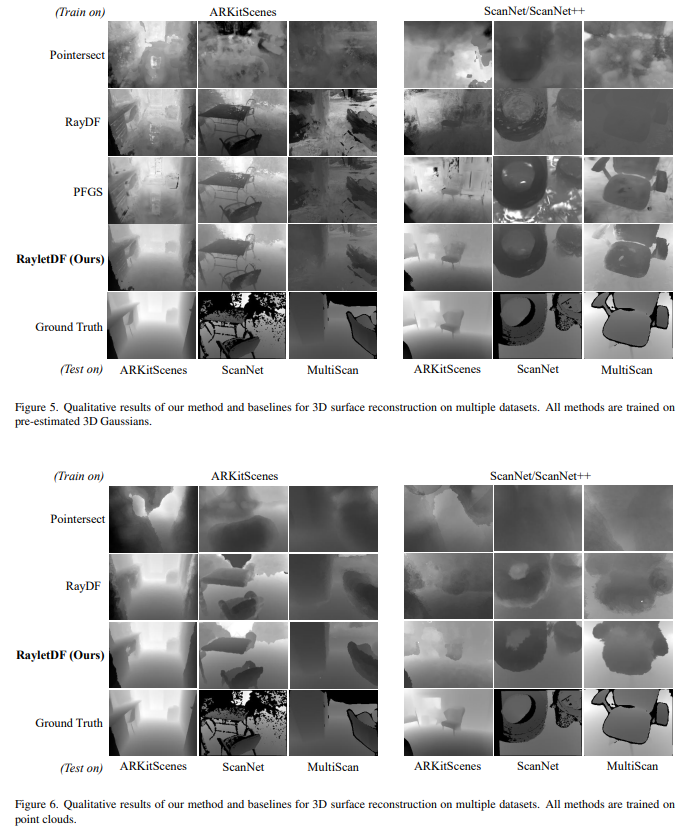
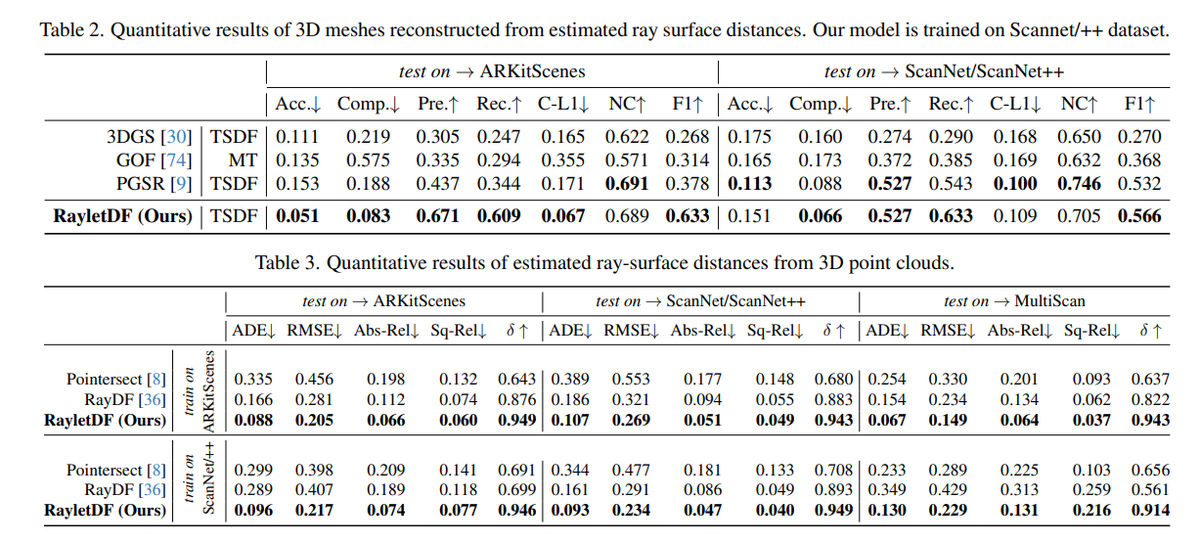
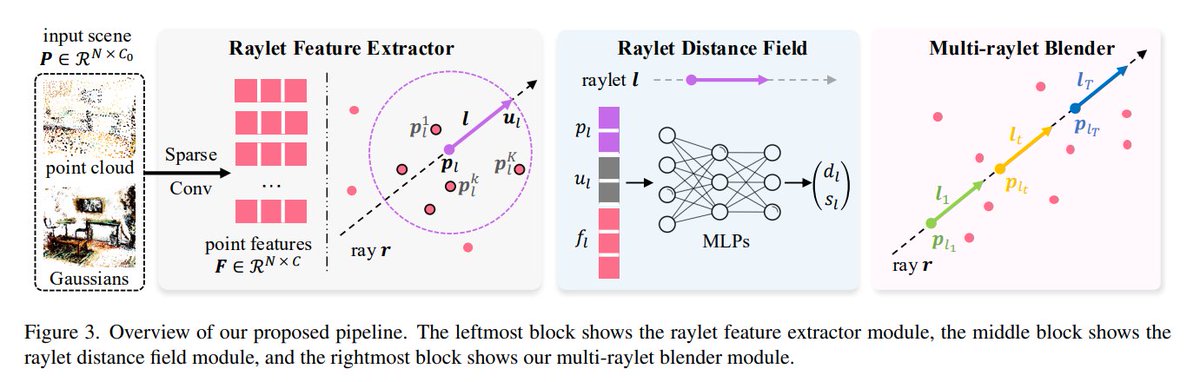
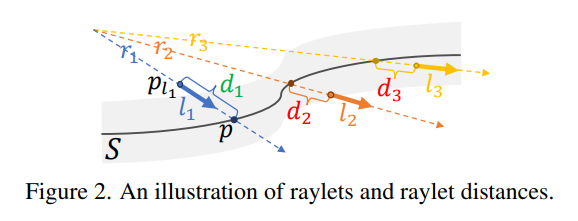
RayletDF: Raylet Distance Fields for Generalizable 3D Surface Reconstruction from Point Clouds or Gaussians
Shenxing Wei, Jinxi Li, Yafei Yang, Siyuan Zhou, @boyang_vLAR
tl;dr: raylet distance field->signed distance between the surface hit point and the raylet starting point
https://t.co/WgLzcgCOK3
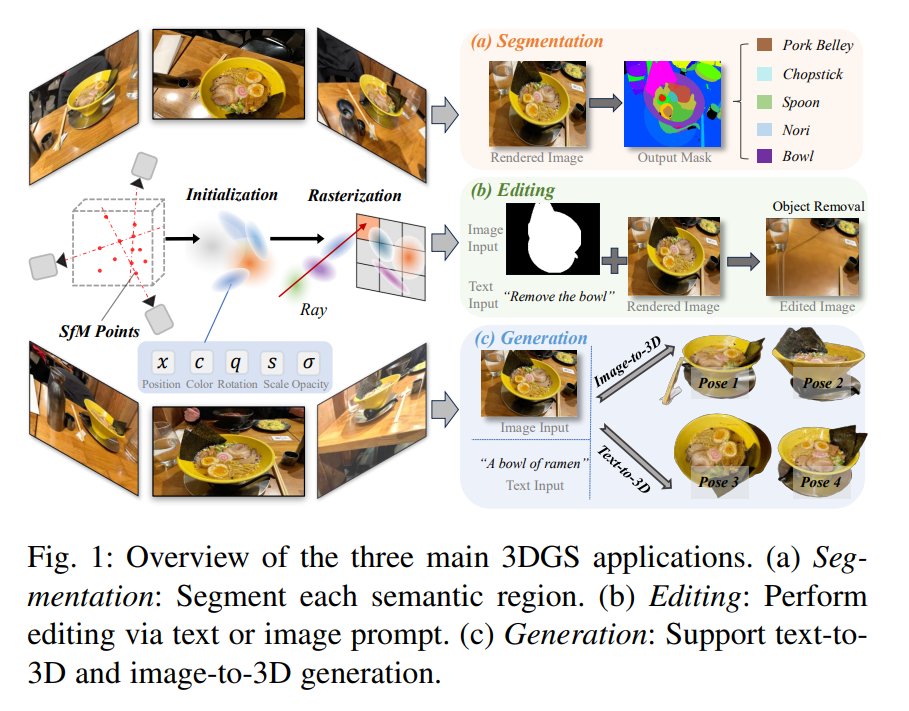
A Survey on 3D Gaussian Splatting Applications: Segmentation, Editing, and Generation
Shuting He, Peilin Ji, Yitong Yang, Changshuo Wang, Jiayi Ji, Yinglin Wang, Henghui Ding
tl;dr: in title
https://t.co/1WlSjF0Coh
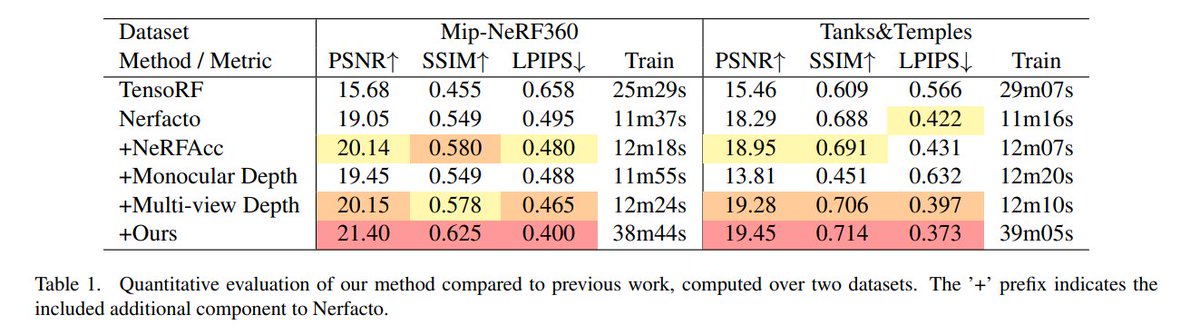
A View-consistent Sampling Method for Regularized Training of Neural Radiance Fields
@AoxiangFan, @CorentinDumery, @NicolasTalabot, @FuaPv
tl;dr: view-consistency distributions per-ray instead of fixed depth predictions->regularize NeRF training
https://t.co/MYhgEolor8
CL-Splats: Continual Learning of Gaussian Splatting with Local Optimization
TL;DR: "CL-Splats efficiently updates existing scene reconstruction from an incremental set of images while enabling new applications."
Contributions:
• We introduce a general framework for continual and localized updates in Gaussian Splatting representations, enabling flexible and efficient scene reconstruction.
• We propose a lightweight yet effective change-detection module and present the first dynamic local Gaussian optimization with a custom kernel implementation, improving speed and adaptability to evolving scenes.
• We empirically validate our approach on diverse real and synthetic scenes, demonstrating its effectiveness. Additionally, we show its ability to perform tasks such as batched updates and scene history recovery.
• We contribute novel synthetic and real-world datasets designed explicitly for benchmarking dynamic scene reconstruction, which we plan to release publicly to support further research.
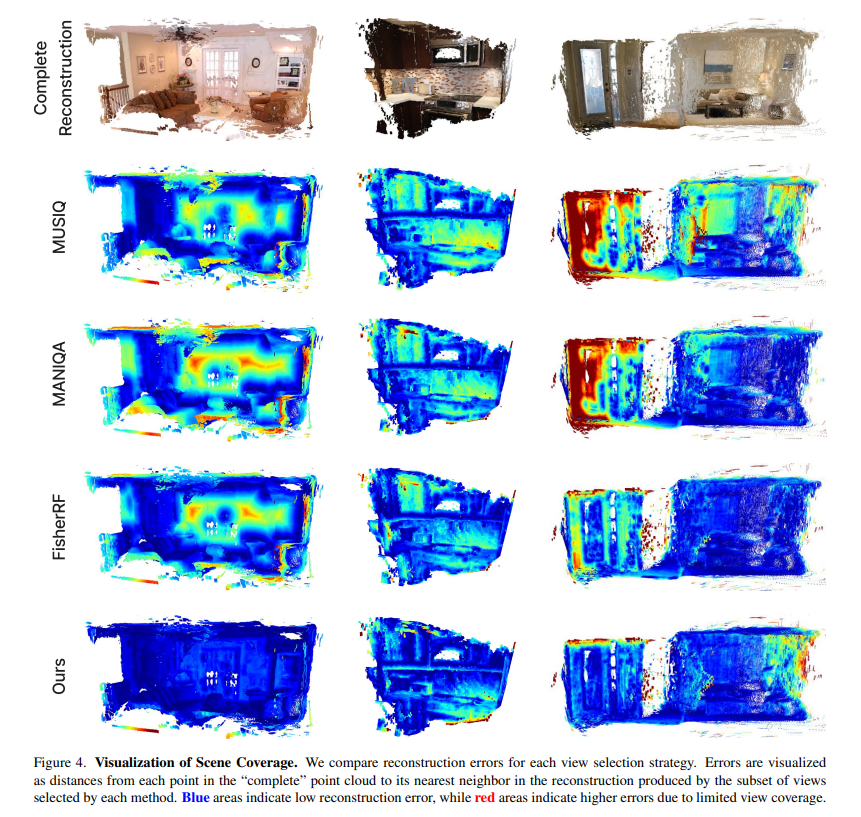
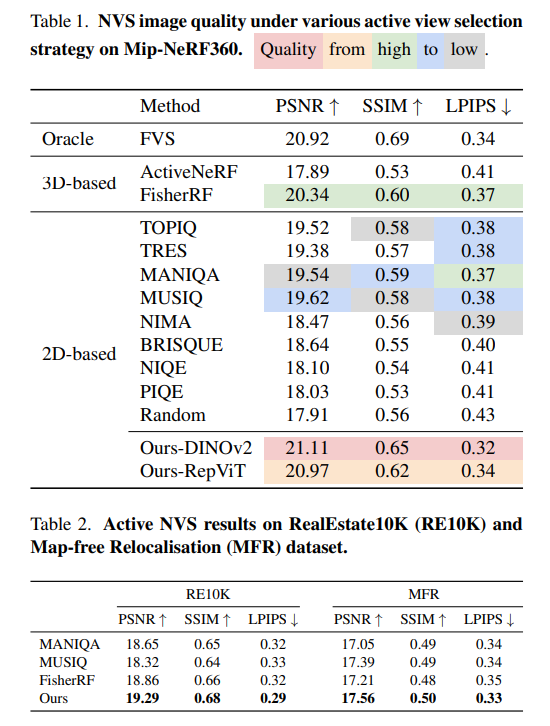
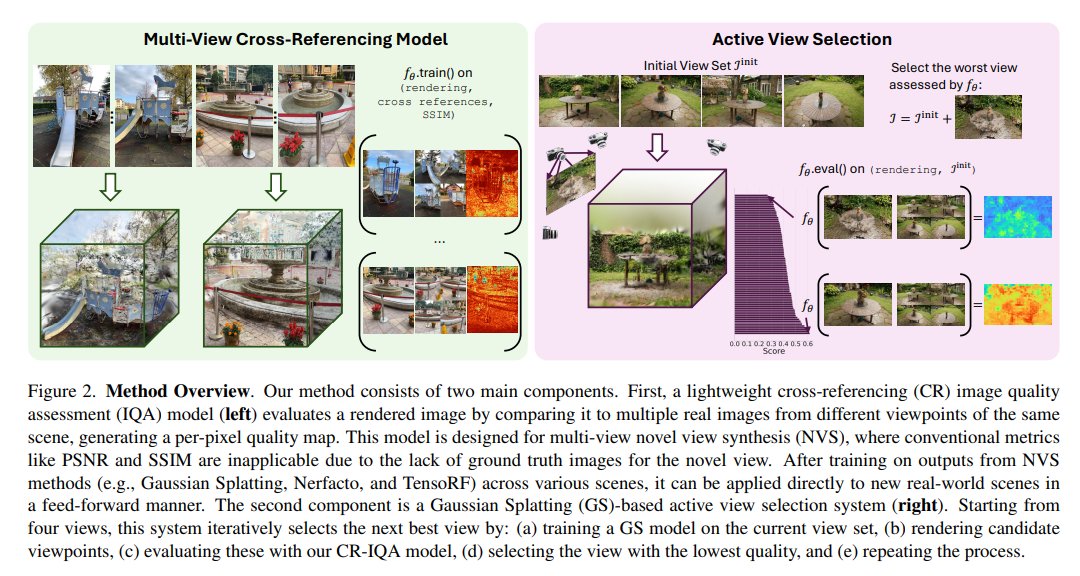
Active View Selector: Fast and Accurate Active View Selection with Cross Reference Image Quality Assessment
@ziruiwang_, @ysbhalgat, @RayLi234, @viprad
tl;dr: CrossScore helps active NVS
https://t.co/HXSZHVYtWd












![kosuke_agos's tweet photo. AIと機械学習の世界トップの国際学会「NeurIPS 2025」で、2025年の最優秀賞を得た論文がついに発表されました。
受賞したのは、大規模言語モデル(LLM)の基盤技術であるTransformerモデルの根幹「Attention」メカニズムに、大幅な改善をもたらす研究です。
従来のAttentionが抱える「初期トークンへの過度な集中」という課題を、シンプルなGatingメカニズムで解決し、LLMの性能を劇的に向上させることが証明されました。
その驚くべき詳細を5つのポイントにまとめました。
1. TransformerのAttention問題への挑戦
従来のTransformerモデルにおけるAttentionメカニズムは、トークン間の関連性を計算する強力な手法ですが、学習の初期段階で導入される特定のバイアスや、不必要な初期トークン(特に $[CLS]$ や $[BOS]$ のような特殊トークン)が不当に大きな注意を引いてしまう「Attention Sinks」という現象を引き起こし、モデルの性能限界の一因となっていました。
2. シンプルな「Gating」の追加
研究では30以上のバリエーションを検証した結果、各Attentionヘッドの出力に、現在のトークンから計算された「学習済みゲート」を掛け合わせるという手法が最も効果的であることが判明しました。これにより、文脈に応じて各ヘッドが情報の流れを柔軟に制御できるようになります。
3. 学習の安定性と「Attention Sinks」の解消
この変更により、従来では発散してしまうような高い学習率でも安定して学習が可能になります。さらに、初期のトークンが不必要に注目を集めてしまう「Attention Sinks」現象が大幅に減少します。
4. 長文コンテキスト性能の劇的向上
このGatingを加えたTransformerモデルは、標準的な手法でコンテキストウィンドウを拡張した際、長文処理のベンチマークにおいて性能が大幅に向上することが確認されています。特に長い依存関係を持つタスクにおいて、その効果が顕著に現れました。
5. LLMアーキテクチャの標準となる可能性
複雑なTransformerの構造変更ではなく、Attention出力を的確に制御するGatingの追加だけでこれだけの成果が出るのは非常に興味深いです。このシンプルで効果的なアプローチは、今後のLLMアーキテクチャの新しい標準となる可能性があります。](https://pbs.twimg.com/media/G7eVbs7bkAAe5Ct.png)