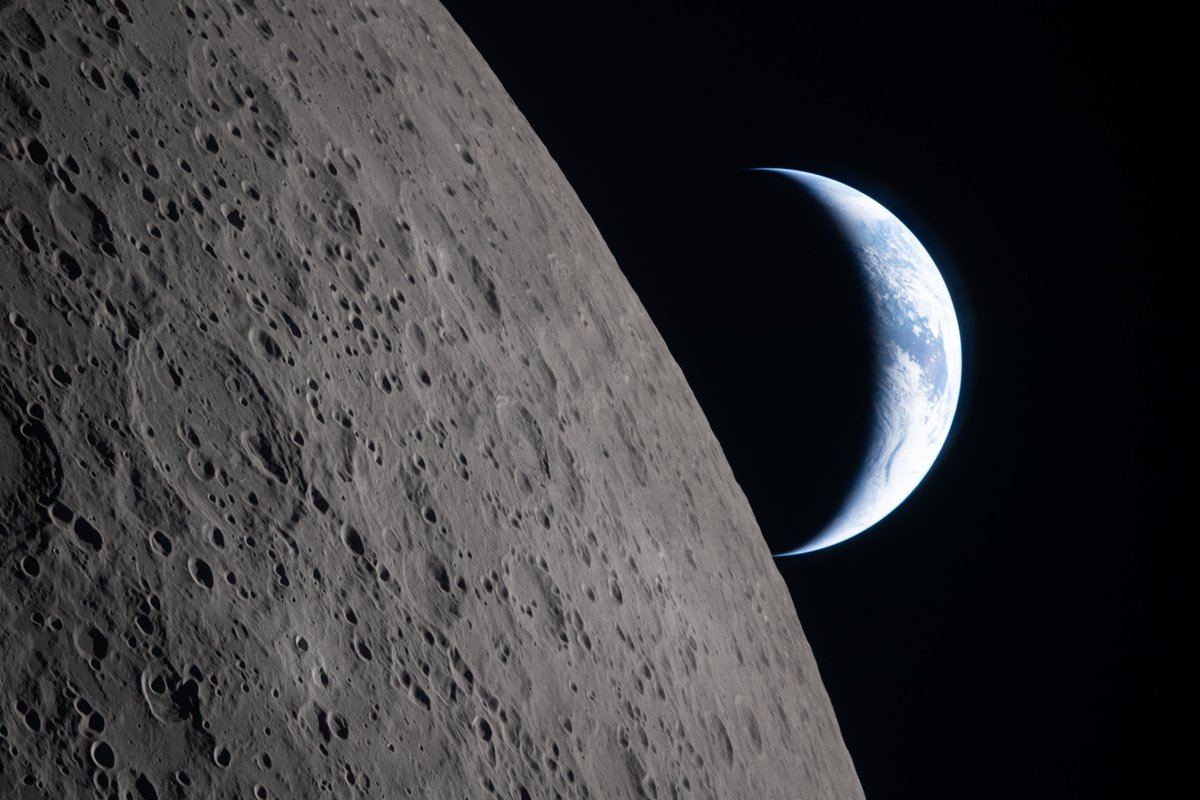
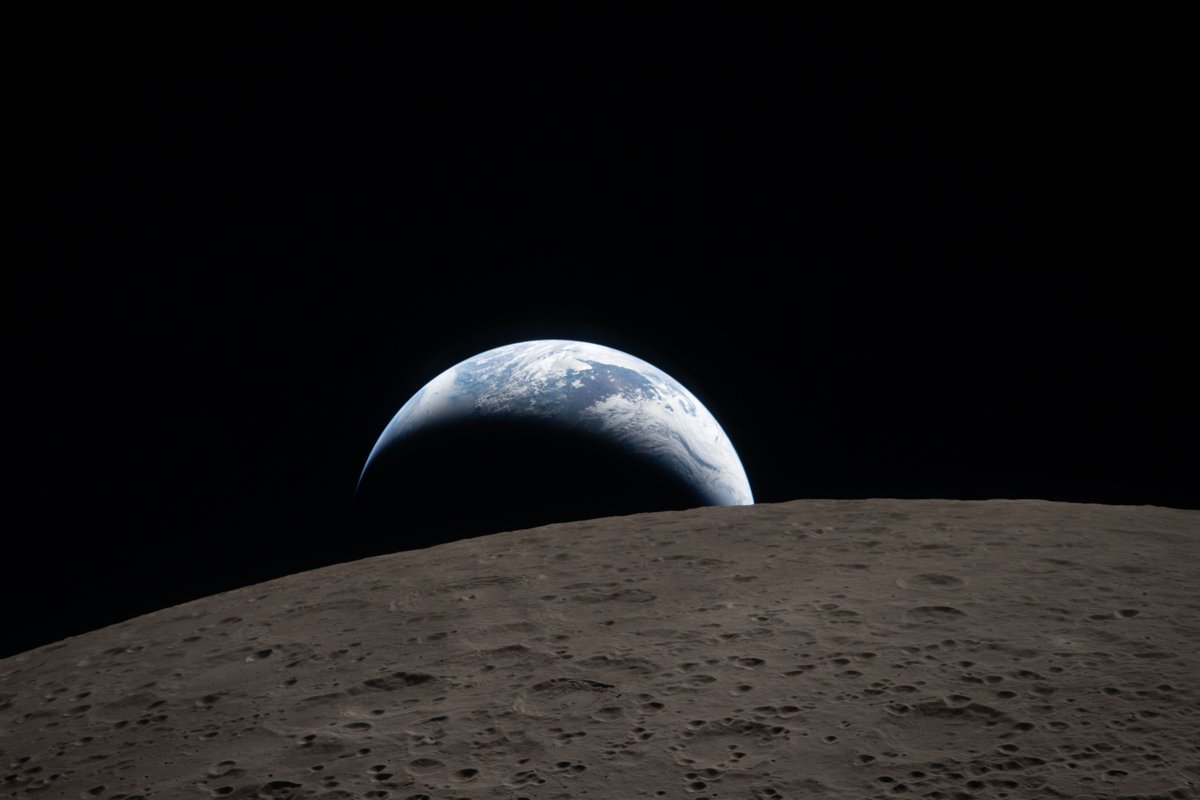
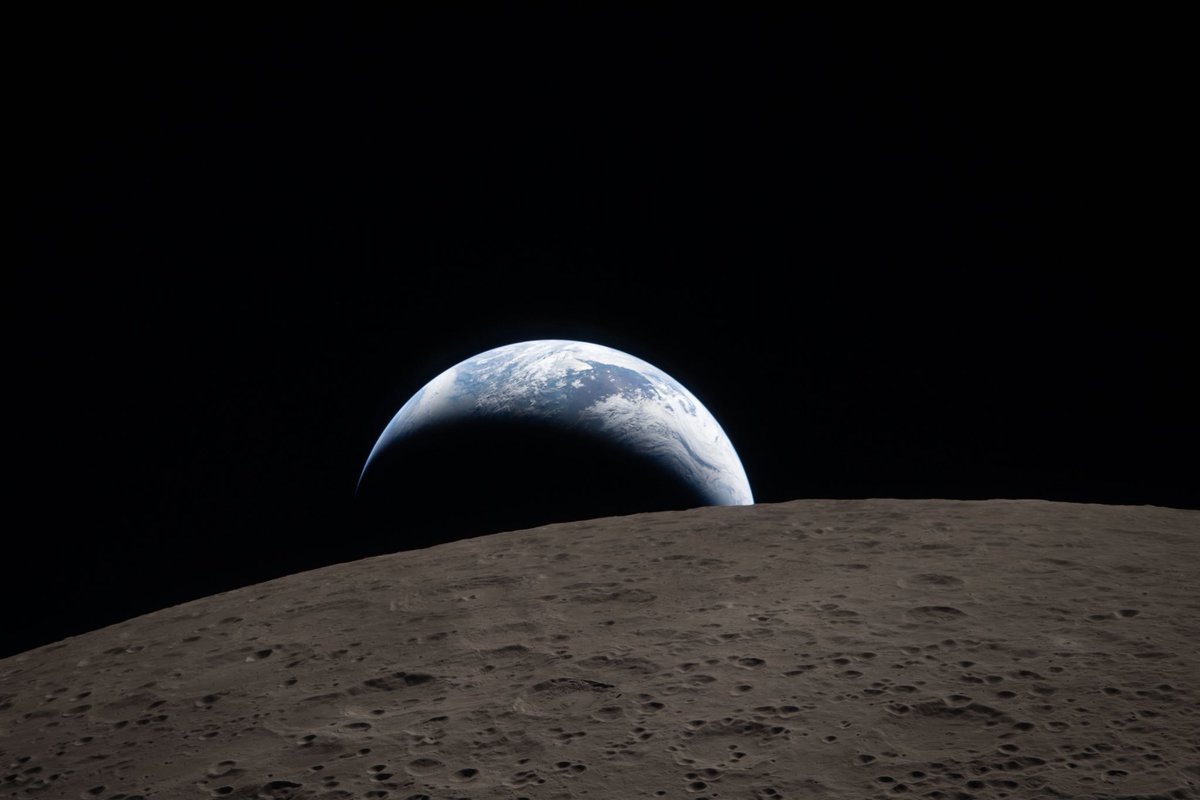
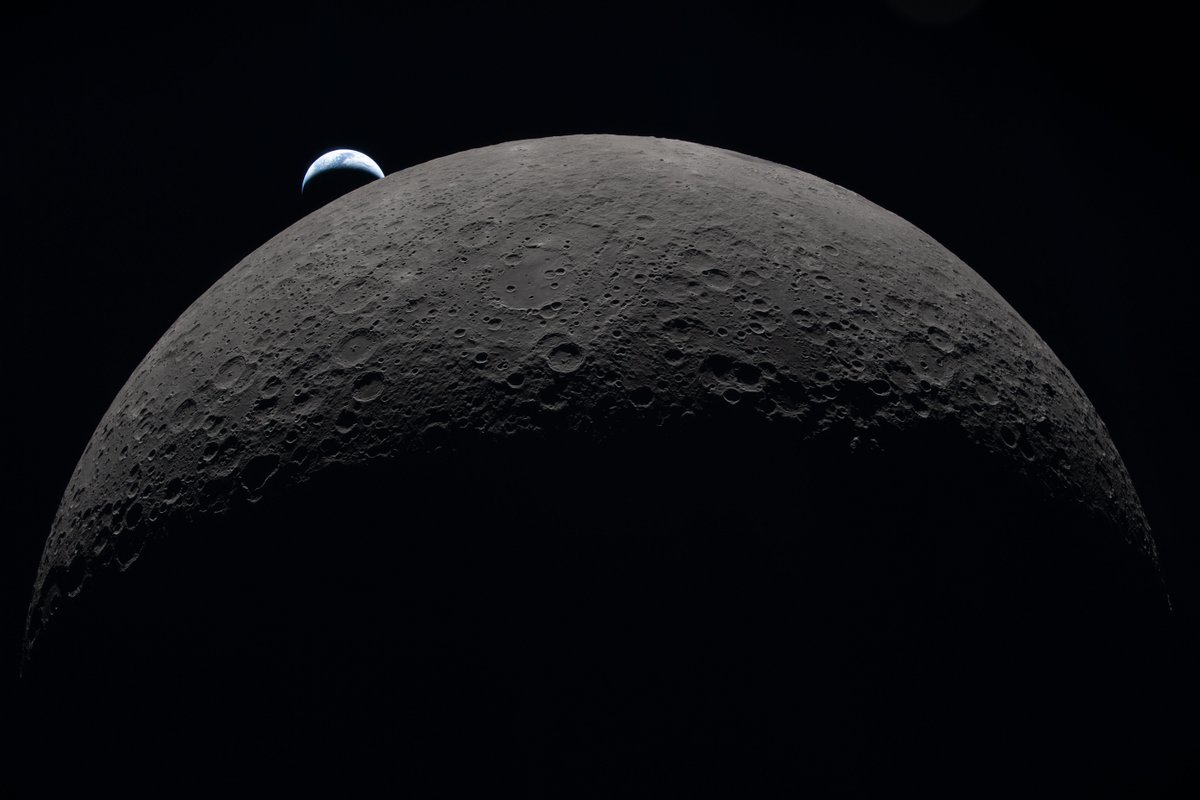
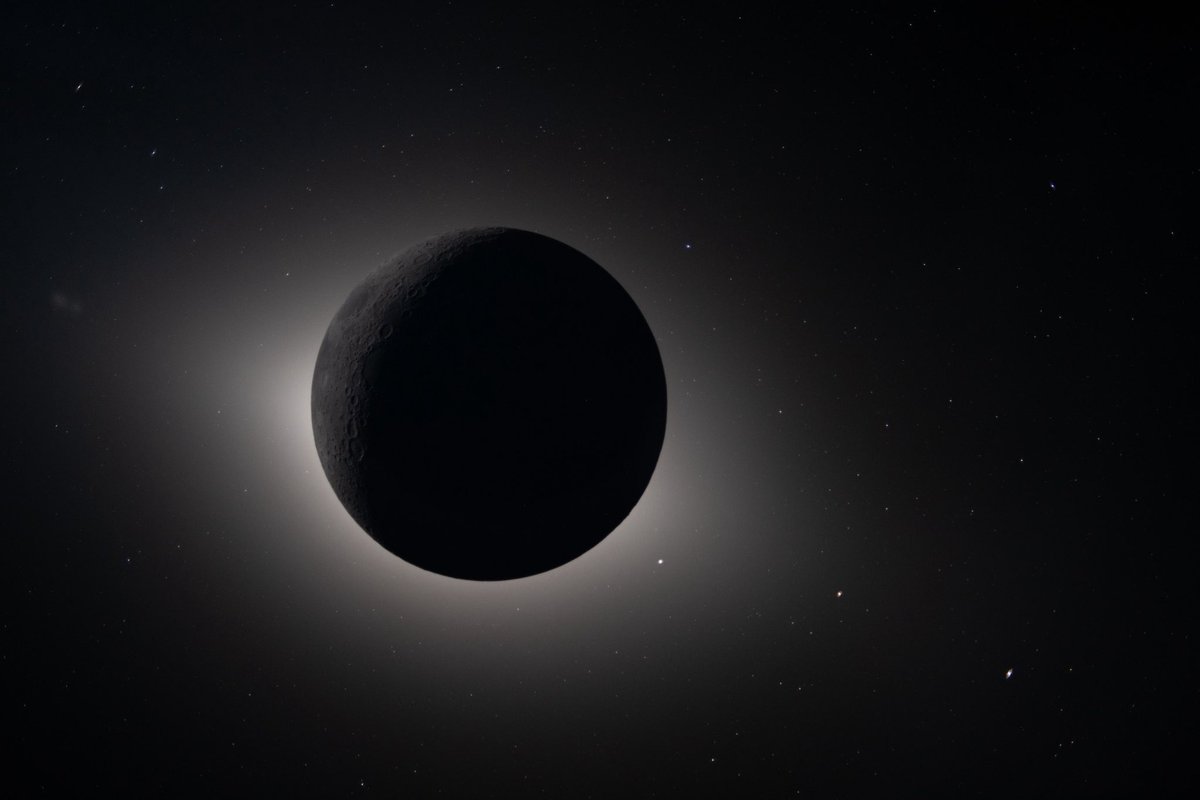
Hello, Moon. It’s great to be back.
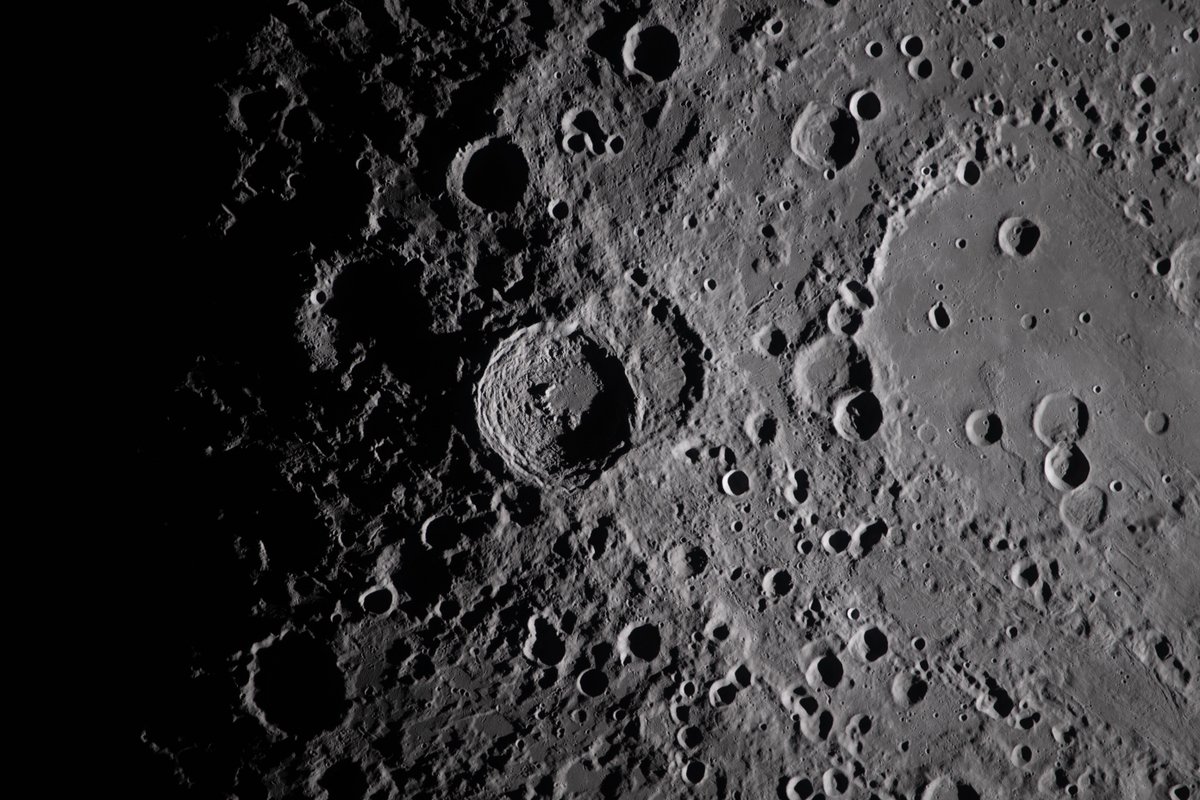
Here’s a taste of what the Artemis II astronauts photographed during their flight around the Moon. Check out more photos from the mission: https://t.co/rzM1P0QbOl
📸 BREATHTAKING! Stunning images from NASA’s Artemis mission capture the far side of the Moon from Orion as Earth slips beyond the lunar horizon and the Moon eclipses the Sun.
LIFTOFF OF ARTEMIS II
Carrying the hopes and dreams of millions as four of humanity’s bravest ride a great pillar of fire destined for the Moon, carrying the pride of nations.
📸 - @NASASpaceflight
Tomorrow, we launch.
At sunset tonight, Artemis II waits on the pad, ready to carry astronauts potentially farther than any humans have traveled in more than half a century.
The next era of exploration begins.
Those wheels you’re looking at are 0.75 millimeters thick. That’s half the thickness of a US dime. Each one was carved from a single block of aluminum, and NASA sent six of them to Mars knowing they’d eventually shred.
Curiosity was built for a 2-year mission. It landed in August 2012, and by December that year NASA had already extended the mission indefinitely. Thirteen years and 35.5 kilometers later, the rover is still going, but the wheels started cracking just 14 months in. The damage came faster than anyone at JPL predicted. Sharp embedded rocks were punching straight through the skin between the treads.
So NASA assembled a Wheel Wear Tiger Team (a crisis problem-solving tradition that goes back to Apollo 13) and got to work. In 2017, they uploaded a traction control algorithm from Earth that adjusts each wheel’s speed in real time based on the terrain, reducing force on the front wheels by 20%. They rerouted the rover to softer ground and started driving backward when possible, because pulling wheels over rocks produces less force than pushing them into rocks.
The wildest part: if enough treads snap off, Curiosity is designed to find a sharp rock on Mars and use it to deliberately rip out the damaged inner section of its own wheel. JPL tested this on a replica rover and found Curiosity can keep driving on just the outer third. They predict this won’t be needed until around 2034.
Every 1,000 meters, the rover pulls over and uses the camera on its robotic arm to photograph its own wheels so engineers on Earth can count every crack. Each wheel also has tiny holes that spell “JPL” in Morse code, which Curiosity uses to measure distance by photographing its own tracks in the dirt.
These photos directly changed the next rover. When NASA built Perseverance, engineers 3D-printed about 70 different tread designs before landing on 48 curved treads instead of Curiosity’s 24, with thicker skin. They tested the new wheels over 60 kilometers and got zero damage by Curiosity’s original failure definition. “A boring graph with no data on it,” as one JPL engineer put it.
A $2.5 billion machine doing self-surgery with rocks on another planet because the mission outlasted its design by 6x.
Genuine tears in my eyes, I can’t believe it.
Artemis was a complete unsustainable shit show but has been revamped into a really damn good program, we’ve known SLS can achieve higher flight rate and they’re finally going for it 🥲
It never made sense to me that A III was a straight up landing anyways, ironically SLS has proved that it could fly again before then and having only the second manned mission of the program be manned lunar landing seemed risky for no reason.
EUS is dead, like completely dead Thank god 🙏
This is just all so surreal, I knew NASA would see change with Jared but I didn’t think it would be this quick and severe, it’s genuinely amazing