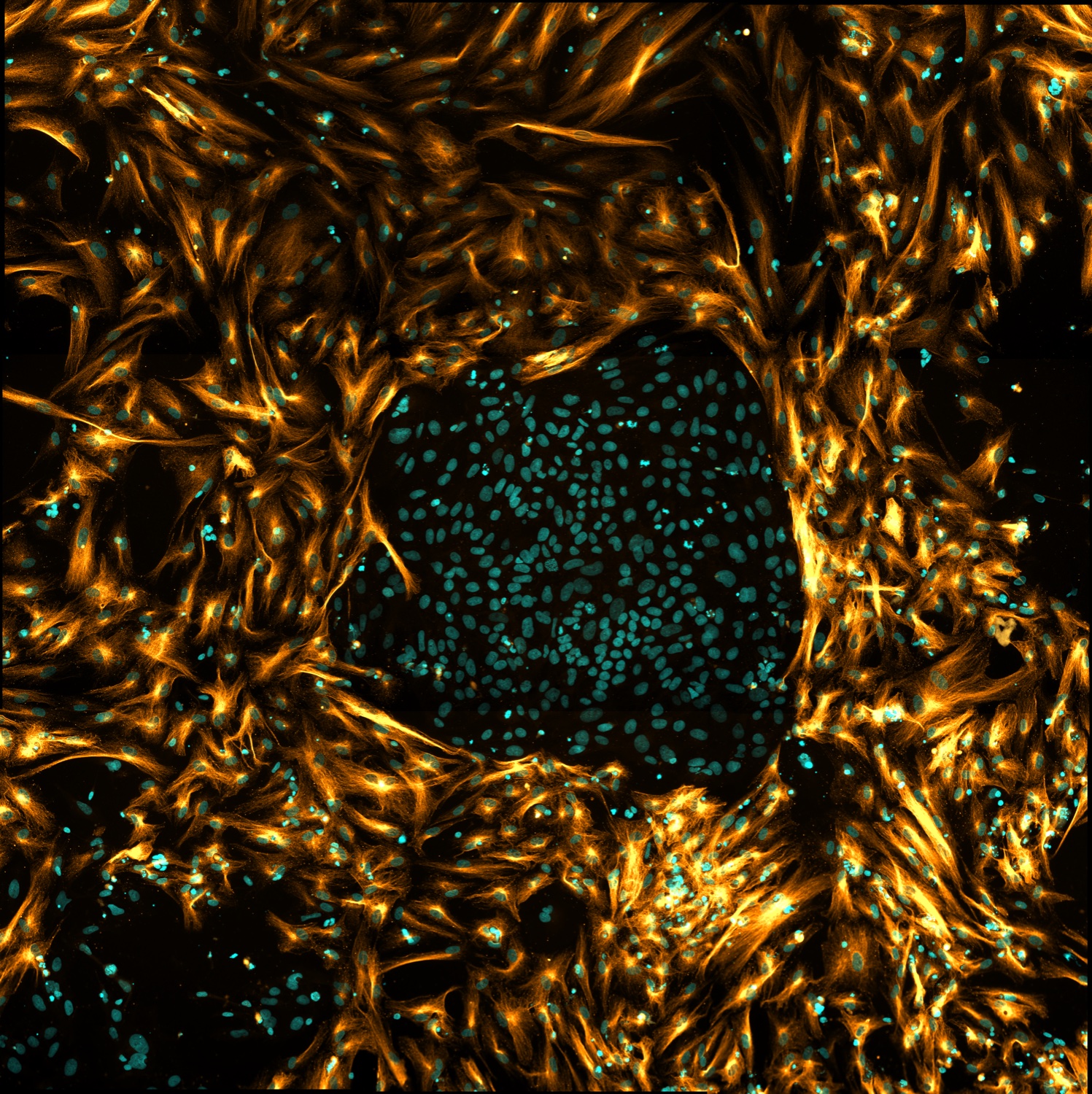
Mechanosensitive Enhancer
Fibroblasts in response to Matrix Stiffness 50 vs 1 kPa
👉Bulk RNAseq
👉On-plate Omni ATACseq (NO detachment required🤠) + TOBIAS transcription factor footprinting analysis▶️Intronic mechanoenhancer for BMF (Anoikis-related) on soft matrix
👉HiCAR
👉CRSIPRi dCAS9-KRAB epigenomic editing for enhancer locus screening
👉Single-cell CRISPRi
21.8% putative mechanoenhancers "skipped 5 or more genes"😎
@itsbcos@cgersbach@ScienceMagazine 2025
https://t.co/mQRBTWff2E
My postdoc work is now published in #Science! In this work we found that the non-coding genome can harbor mechanically-sensitive genomic enhancers (“mechanoenhancers”) that governing the transcriptional and functional responses to ECM stiffness. https://t.co/SETG9b4fef
𝐓𝐮𝐧𝐞 𝐓𝐡𝐞𝐫𝐚𝐩𝐞𝐮𝐭𝐢𝐜𝐬: 𝐂𝐚𝐧 𝐄𝐩𝐢𝐠𝐞𝐧𝐨𝐦𝐞 𝐄𝐝𝐢𝐭𝐢𝐧𝐠 𝐂𝐮𝐫𝐞 𝐇𝐞𝐩𝐚𝐭𝐢𝐭𝐢𝐬 𝐁?
🦠 By targeting a highly conserved master controller gene, Tune Therapeutics' lead candidate TUNE-401 can epigenetically silence all forms of the hepatitis B virus, providing hope for a functional cure.
📰 Read more in our latest interview with Brian Cosgrove: https://t.co/Re5qjxiDHW
🖋 Interview by: Rebecca Roberts
Glad to get the chance to talk w/ @GrinsteinJ & @GENbio about our work at Tune to develop epi-silencing tools to treat patients with chronic Hepatitis B infection -Jonathan does a great job capturing how we take advantage of HBV’s unique Franken-chromatin! https://t.co/gTCNyRw1JS
The excitement is building for #HepDART2023 next week.
Brian Cosgrove, Principal Scientist at #TuneTx will be sharing exciting, new data from our #HBV program in his presentation, "Epigenetic editing for the treatment of HBV" on Dec 5 at 11:10 AM MST.
https://t.co/5IPPFgsxiP
The Tune HBV program was unveiled by Dr. Ed Gane, Professor of Medicine at the University of Auckland and world-renowned authority on Hepatitis B Virus (HBV) at the @AASLDtweets conference in Boston on November 11th.
Read the full press release: https://t.co/70HqDJXvCu
#TLM23
@lara_silverman Im so sorry to hear about these awful experiences Lara-- glad that you had the strength to bring these issues to light & hope that this helps contribute to biotech organizations doing more to police these toxic behaviors and keep this from happening to others :(.
More fun with lattice light sheet microscopy, courtesy of the AIC @HHMIJanelia. Imaging tumor cells with fluorescently labeled histones and actin dividing in a dense collagen matrix.
@DrKlapperich Aren’t these tests answering two slightly different questions though? This is something that @michaelmina_lab has been talking about - A rapid test is answering the question of “am I infectious now?” whereas PCR can stay positive for a long time after you’ve been infectious.