We keep asking whether AI can be creative.
Wrong question.
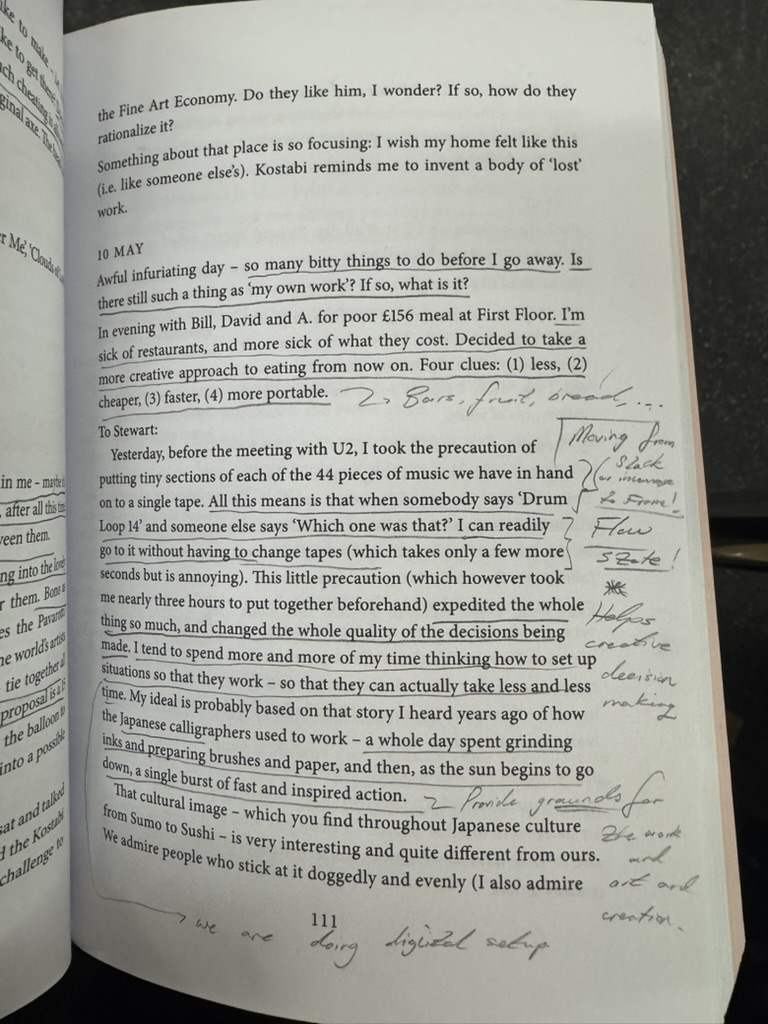
We should be asking whether it can remove the stuff that gets in the way of creativity. Brian Eno figured this out with a cassette tape in 1995.
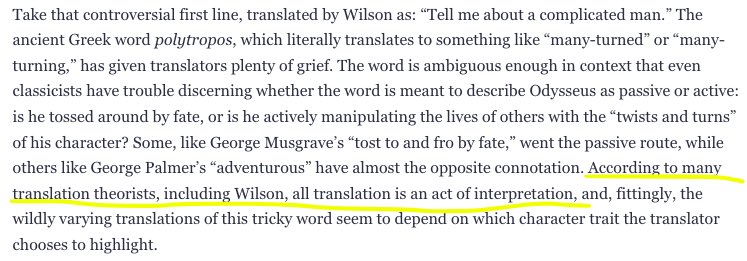
AI could never evolve or interpret a text in a productive way. It will just infuse it with its training data’s biases, giving us a worse, uninspired possibility of what a translated text could ever be.
This is ridiculous. Translation is just as important if not more than the composition of the original text.
Emily Wilson’s translation of The Odyssey was heavily criticized for pushing back against previous interpretations of the text that glorified Homer’s patriarchal fantasy.
Ivanka @IvankaTrump and @eladgil are
working on a project that uses Al to translate the world's great public-domain books into every major language, making them accessible for free to anyone:
“What are some of the positive use cases for AI? And we started talking about how so much of history's great works of information and literature are not accessible to so many people due to lack of access.
AI has gotten so good that we could create high-fidelity translations of these incredible literary works.
So you think about Dostoevsky, you think about Bronte, you think about Marcus Aurelius, or Epictetus.
All of these works are available in the public domain.
We can use AI to translate them into all the world's commonly spoken languages and make them accessible and available for free if you have internet access.
So we're democratizing access to this incredible knowledge. We're calling it Alexandria Library”
To be clear: a huge part of the reason so many products have converged on the “empty chat box” is not just because it’s easy to use (or try using), but fundamentally *easy to implement*. You can get very far with very little design work because you are offloading the burden of designing a specialized UI to the intelligence of the model + good tools.
So a few things can be true at the same time: blank slate chat interfaces are easy to try, they handle a LOT of use cases very well, but their popularity can also be partially attributed to the fact that they solve many problems “well enough” but not necessarily optimally. It’s shortsighted to say all products will converge to this due to some fundamental design law - it’s more of a path of least resistance for imagination and engineering.
@orenmeetsworld they don’t know what good creative looks like. the mediums have changed overnight. audience habits have changed, too.
if they hired people internally who understood the new platforms intuitively, agencies wouldn’t exist. but, it’s always easier to pay someone else to do it
@downloadlos the truth is more start ups need to be on IG if they want to hire the best storytelling talent (and if you’re a consumer product)
Twitter is B2B, IG is CPG
So guys I started an Instagram 😁
experimenting with the team on bringing the vlogs vertical
Doing a lot of split screen stuff
But sorta want to experiment with more uncut horizontal stuff with strong hooks
We’re hiring a NY–based senior video producer at @every.
Help build our video presence across YouTube, X, and LinkedIn, working closely with @danshipper, our product GMs, and the rest of the team to turn day-to-day work into editorial video. Apply here: https://t.co/E6g3vCZceI
moving forward, irl activations and experiences are going to be a key moat for brands.
the thesis is simple: as AI rapidly takes over, people will naturally incline to engage with 'made by human' things.
staying in the spotlight now means building worlds that allow consumers to step inside, engage, and perhaps alter it.
the craving for deeper engagement, belonging, and authenticity cannot alone be solved with just content.