For decades, peer review has been treated as the gold standard of scientific validation.
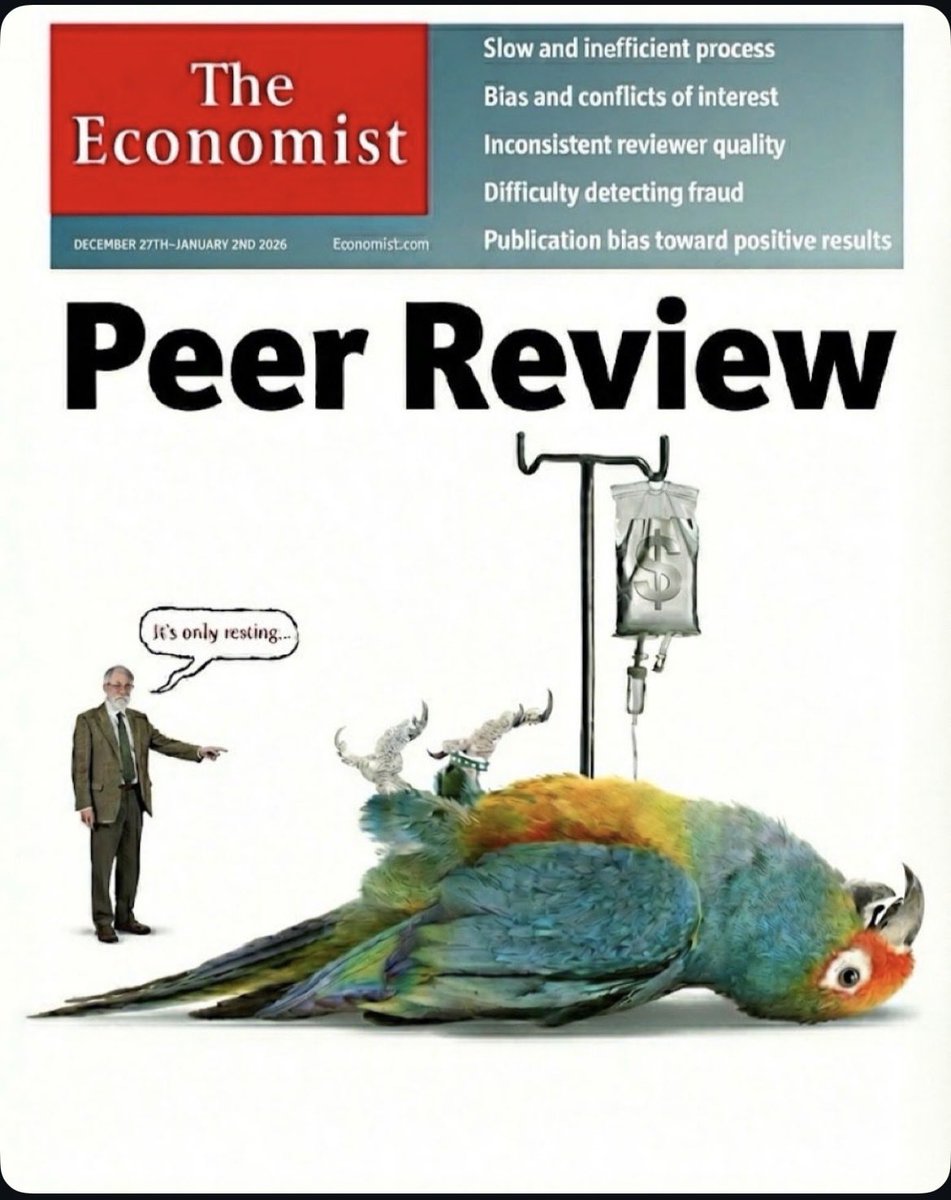
Yet many scientists know the reality: the system is far from perfect. Peer review is broken and sometimes even corrupted.
The process can be slow, inconsistent, and vulnerable to bias. Reviewers are sometimes asked to judge work outside their true expertise. In other cases, they may be evaluating ideas that challenge the very paradigm in which they were trained. And occasionally, reviewers are simply competitors.
Ironically, the most prestigious journals can also be the most conservative. Truly new ideas are often met with skepticism, while safer work that fits the current narrative moves more easily through the system.
Increasingly, papers are judged less by the originality of the idea and more by the volume of data, the sophistication of statistics, and the beauty of the figures. Science risks becoming data-rich but idea-poor.
But there is an important reality to remember: journals do not ultimately decide the impact of scientific work. Impact is decided later, by the community. By the scientists who read it, test it, debate it, and cite it.
In the end, citations and ideas determine the legacy of a paper, not the impact factor of the journal that first published it.
Science has always advanced by questioning assumptions. Perhaps it is time we also question the system that filters scientific ideas.
BREAKING NEWS
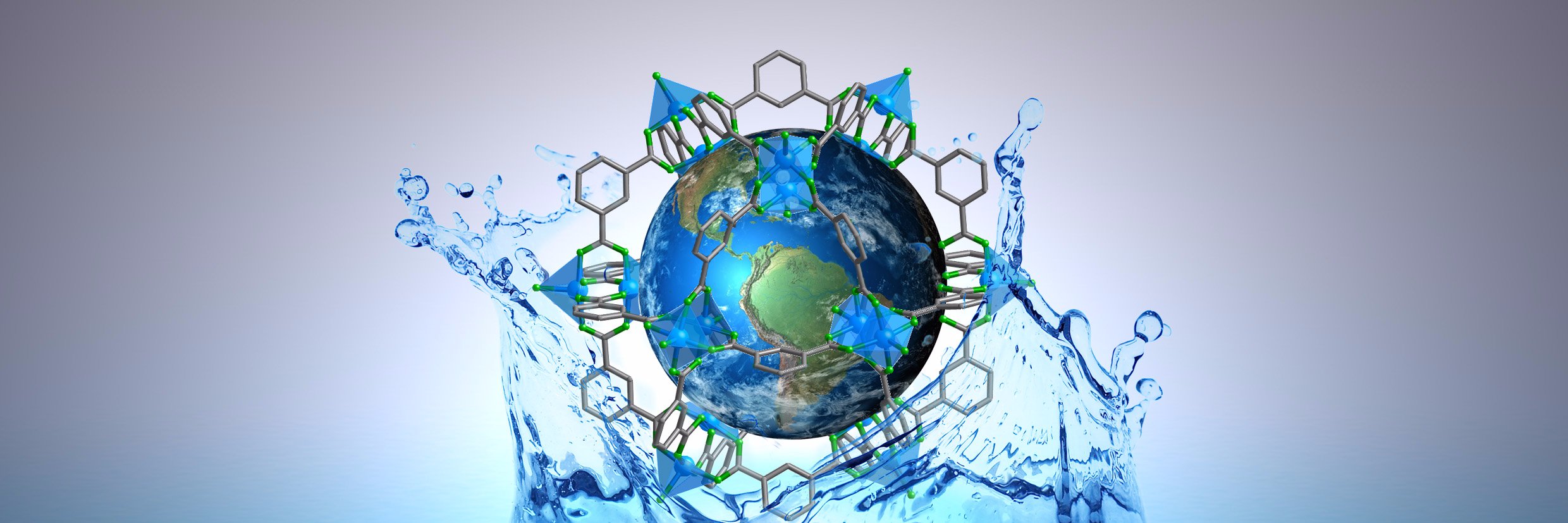
The Royal Swedish Academy of Sciences has decided to award the 2025 #NobelPrize in Chemistry to Susumu Kitagawa, Richard Robson and Omar M. Yaghi “for the development of metal–organic frameworks.”
Excited to share our latest article just published in Nano Energy!
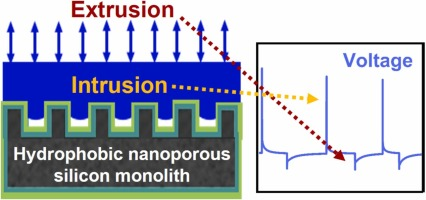
"Triboelectrification during non-wetting liquids intrusion–extrusion in hydrophobic nanoporous silicon monoliths"
https://t.co/ErGKyUWCHK
🚨 Big event coming to Birmingham on Dec 10!
Join us at the Electro-intrusion Workshop, where science meets innovation in vibration & impact mitigation.
🔬 Live demos, smart materials & dynamic solutions await.
🎟️ Info & Registration on our website: https://t.co/gaHYB7BI6G
Otra de las invitadas a la sesión de charlas "Ciencia y sociedad" de #ZientziazBlaiserá Montse Casas, profesora Ikerbasque y directora científica del área de Almacenamiento Electroquímico de Energía en CIC energiGUNE (@energigune_brta).
La actividad "Ciencia y Sociedad" de #ZientziazBlai contará también con la participación de Jorge Hernández Bernal, compañero de LOGOS elkartea y doctor en física especializado en el estudio de la atmósfera del planeta Marte.
"La crisis energética en mi barrio" será la primera actividad de este #ZientziazBlai 2025.
En ella contaremos con Antonio Turiel (@amturiel) (físico y matemático del CSIC), que abordará el tema de la crisis energética y de recursos que vivimos, el cambio climático y su impacto.
La segunda actividad de #ZientziazBlai 2025 será un cine fórum en el que proyectaremos "Una terapia de mierda" (@terapiademierda), cortometraje dirigido por Javier Polo nominado a mejor cortometraje documental en los Premios Goya 2024. Te contamos de qué va:
#ZientziazBlai, el evento de divulgación científica que busca llevar la ciencia a los barrios, regresa a Bilbao por sexta vez. Será del 8 al 10 de mayo en San Francisco, Bilbao La Vieja y Zabala.
Unlocking new potential for clean energy! Discover how water in hydrophobic nanopores generates electricity. A breakthrough in triboelectric nanogenerators by our team.
Read more: https://t.co/v2f5YtHDgU
MOFs, Fluorinated ZIF-8 nanoparticles, enhancing water stability and performance in high-pressure applications. Could this be the key to more efficient energy systems?
https://t.co/Sy4OF6DBSF
🚨📚 New scientific publication in @Nature!🌟
Our colleagues @iufala, @BartolomeLuisAn, and @YaroslavGrosu co-authored a study on “Bubbles enable volumetric negative compressibility in metastable elastocapillary systems”. 🔍🧪
Read more:🌐https://t.co/D7AVBuYsKE
En esta edición de #ZientziazBlai también disfrutaremos de la compañía de Luis Cortés Briñol @luiscbrinol, experto en historia y filosofía de la ciencia. Luis viene expresamente a Bilbao para acompañarnos durante un cine-fórum en el que la película "No mires arriba"