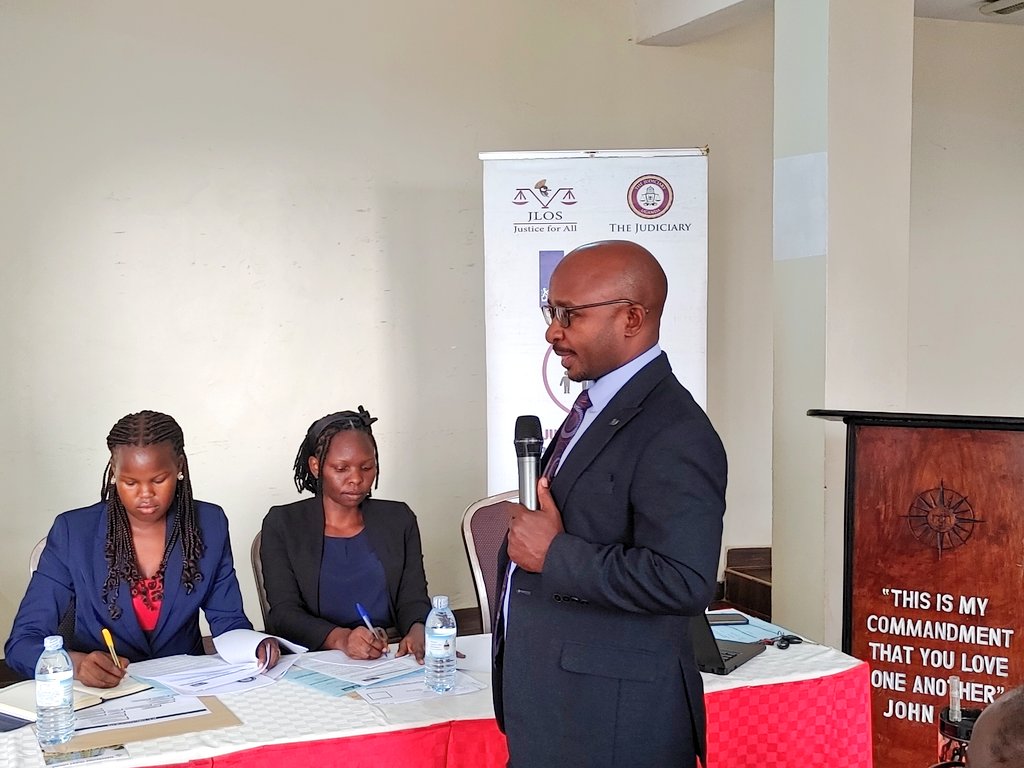
The Alternative Dispute Resolution (ADR) Registry has successfully concluded a two-day regional activation across Eastern Uganda, engaging more than 70 court-accredited mediators, judicial officers and justice sector stakeholders in a renewed drive to strengthen court-annexed mediation and expand access to justice.
The exercise, coordinated by the Registrar of the ADR Registry, HW Justine Atukwasa, with support from HW Godfrey Kaweesa, Deputy Registrar; Dr Daniel Lubowa, Assistant Registrar; and HW Daniel Bwambale, Senior Principal Magistrate. They covered the High Court Circuits of Mbale, Tororo, Iganga and Jinja. Conducted at the beginning of the 2026/27 Financial Year, the activation forms part of the Judiciary’s nationwide efforts to strengthen Alternative Dispute Resolution (ADR), improve mediation services and enhance the efficiency of justice delivery.
The engagements provided an opportunity for direct interaction between the ADR Registry and mediation practitioners, enabling participants to assess progress, identify operational challenges and agree on practical interventions for improving mediation across the country. The exercise also supported the ongoing verification and digitisation of the National Roll of Court-Accredited Mediators while sensitising participants on recent policy and procedural reforms.
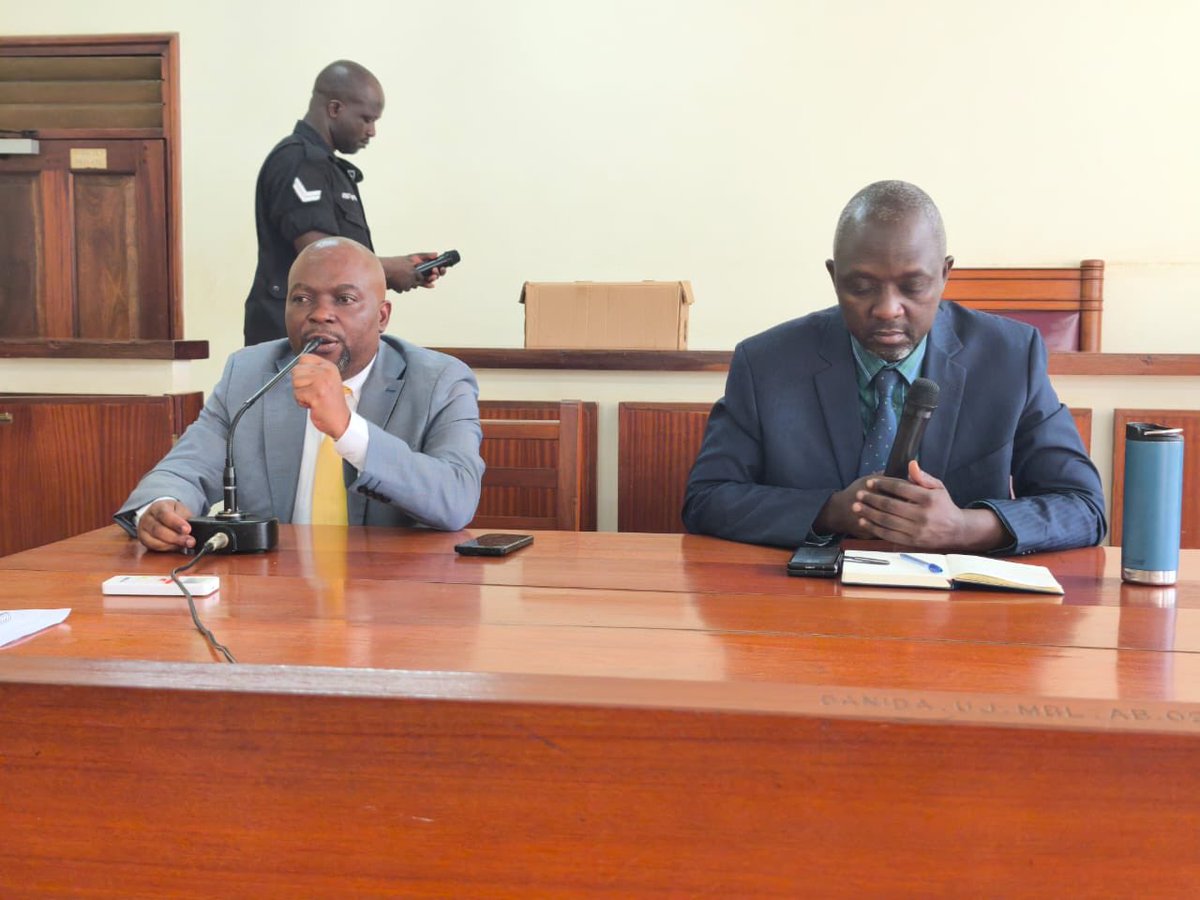
The regional activation commenced at the Mbale High Court, where the ADR Registry met with 20 court-accredited mediators under the leadership of the Focal Judge for the ADR Registry, Justice Prof. Andrew Khaukha. Discussions focused on strengthening mediation practice, enhancing institutional support and increasing public confidence in court-annexed mediation.
During the meeting, Deputy Chief Justice Emeritus Richard Buteera called for greater clarity on the allocation of mediators, particularly regarding the extent to which litigants should choose their preferred mediator. He observed that unrestricted choice could limit opportunities for newly accredited mediators to gain practical experience.
Responding to the concerns, Justice Prof. Khaukha reaffirmed that mediation should remain voluntary, explaining that compelling parties to mediate would undermine the fundamental principles upon which the process is founded. He emphasised that judicial officers should instead ensure litigants understand the mediation process and its benefits before making informed decisions. Drawing on the experience of the Commercial Division, he noted that active judicial encouragement of mediation had enabled the disposal of more than 120 cases within one and a half months, unlocking over UGX 4 billion back into the economy.
Participants also highlighted operational challenges affecting mediation, including inadequate office space, limited ICT and printing facilities and difficulties in capturing mediation data. They appealed for improved logistical support and recommended that mediators’ efforts be documented even where mediation does not culminate in a settlement to facilitate performance tracking and accountability.
Justice Prof. Khaukha described mediators as “doctors of conflict management” and encouraged continuous professional development, particularly in emotional intelligence and psychological conflict management.
The activation proceeded to Tororo High Court, where the ADR Registry engaged 14 court-accredited mediators in discussions that reinforced the importance of voluntary mediation, enhanced operational support and closer collaboration between judicial officers and mediators to expand the use of court-annexed mediation.
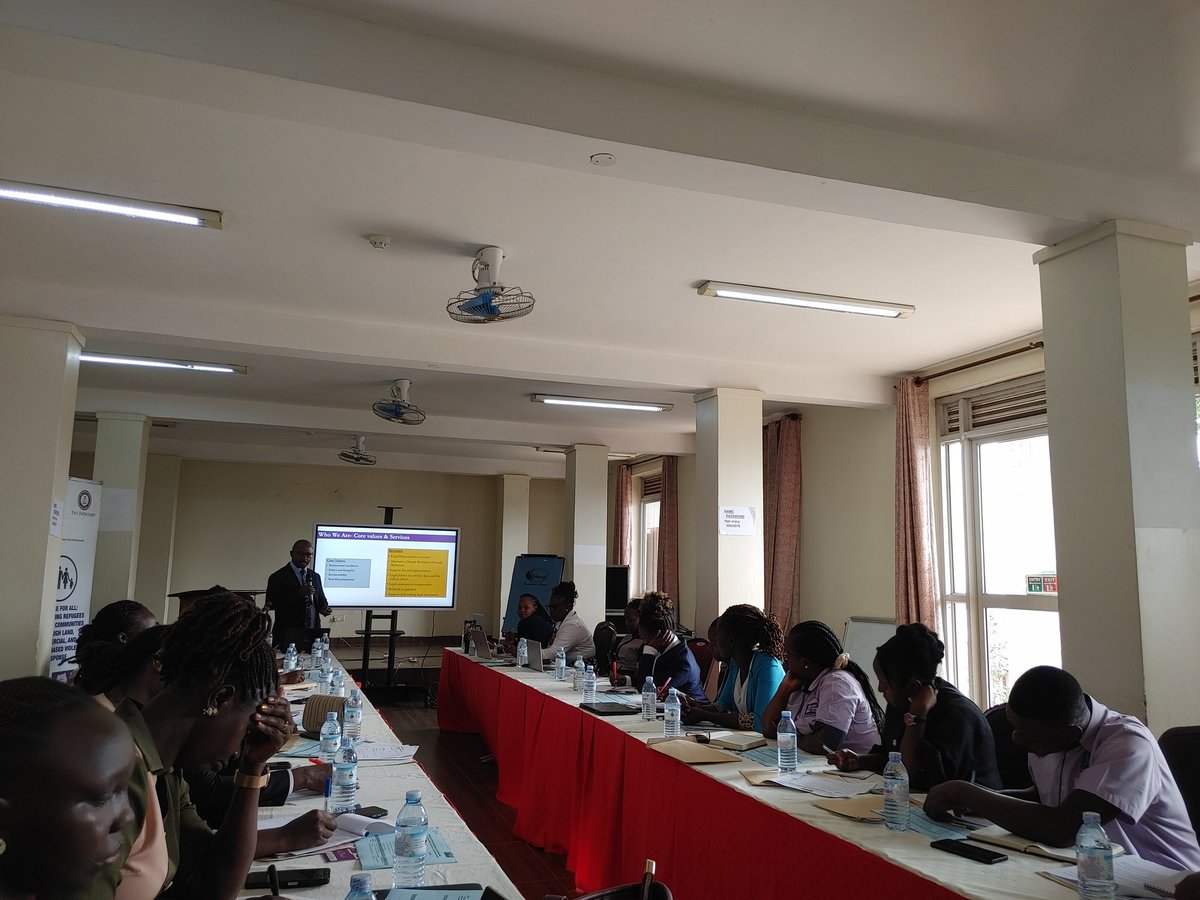
The largest engagement was held at the Iganga High Court, bringing together judicial officers, court-accredited mediators, advocates and other justice sector stakeholders. Participants observed that mediation continues to gain acceptance in civil matters but identified inadequate office accommodation, limited logistical support and the need to increase the number of active accredited mediators
Building informed communities, one outreach at a time. JCU Tororo reached 35 participants in Nabuyoga Town Council with legal awareness on women's land rights and access to legal aid.
#AccessToJustice#WomensRights#LandRights
We are honored to kick off the orientation for new staff under the Community Justice Program II (CJP2), a project aimed at deepening access to justice through community-based legal aid and Alternative Dispute Resolution (ADR) services.
Conservative parties in developed countries tend to elect more female leaders than their liberal counterparts. I find that very interesting, yet liberal parties are supposedly the party of female empowerment. Tories in the UK have fielded 3 female Prime Ministers and Labour ZERO.
The chief magistrate informed the community that justice isn’t for sale in courts and further urged the LC 1 chairpersons to be impartial in solving disputes.
@JudiciaryUG
During a community Baraza organized by Justice center in Rubongi Subcounty Tororo District, attended by the chief magistrate Tororo, Regional DPP, local leaders & community, I urged them to embrace gov’t economic transformation programs so as to reduce on domestic violence.
Innocent Ngobi Ndiko and Others v Attorney General and Others (Constitutional Petition No. 23 of 2020) [2025] UGCC 11 (18 August 2025)
Constitutional law—interpretation of outdated statutes—Divorce proceedings—free consent in marriage—right to equality—gender discrimination—right to privacy—procedural fairness—family protection—distinction between fault and no-fault divorce—judicial regulation of marriage dissolution—gender equality in divorce remedies—protection of property and legal rights upon judicial separation—equal application to husbands and wives
👉:https://t.co/0VvHflHX01 @nickopiyo@bkabumba@FERDINANDIUS@Jbyam1@kiizaeron@drstellanyanzi












![Uganda_LII's tweet photo. Innocent Ngobi Ndiko and Others v Attorney General and Others (Constitutional Petition No. 23 of 2020) [2025] UGCC 11 (18 August 2025)
Constitutional law—interpretation of outdated statutes—Divorce proceedings—free consent in marriage—right to equality—gender discrimination—right to privacy—procedural fairness—family protection—distinction between fault and no-fault divorce—judicial regulation of marriage dissolution—gender equality in divorce remedies—protection of property and legal rights upon judicial separation—equal application to husbands and wives
👉:https://t.co/0VvHflHX01 @nickopiyo @bkabumba @FERDINANDIUS @Jbyam1 @kiizaeron @drstellanyanzi](https://pbs.twimg.com/media/Gyoj_9nWAAAPnS7.jpg)