at a job interview
"whats your biggest weakness?"
"understanding the semantics of a question but ignoring the pragmatics"
"could you give an me an example?"
"yes i could"
@VedicWisdom1@authorsushrut Can you explain how this claim you are making regarding Karma is verifiable? Let's start small, how can you prove the statement regarding soul and mind being different things?
A guy calls his broker and asks about egg futures.
Broker says they’re at 25 cents.
Guy says, “Alright, buy me 100 contracts.”
A week later he calls again.
Broker says, “Good call. They’re at 35 cents now.”
Guy gets excited and buys 1,000 more.
Few days later, he calls again. Eggs are at 50 cents.
Now he thinks he’s a genius, so he buys 100,000 contracts.
Next day they’re at 65 cents. He buys a million.
Then they’re at 95 cents. He buys another million.
Then $1.25. He buys another million.
Next day, eggs are trading at $1.75.
He finally thinks, alright, this is probably enough. Time to take profit.
So he tells his broker, “Sell 2 million contracts.”
After a long silence, broker finally says:
“Sell to who? You’re the egg guy.”
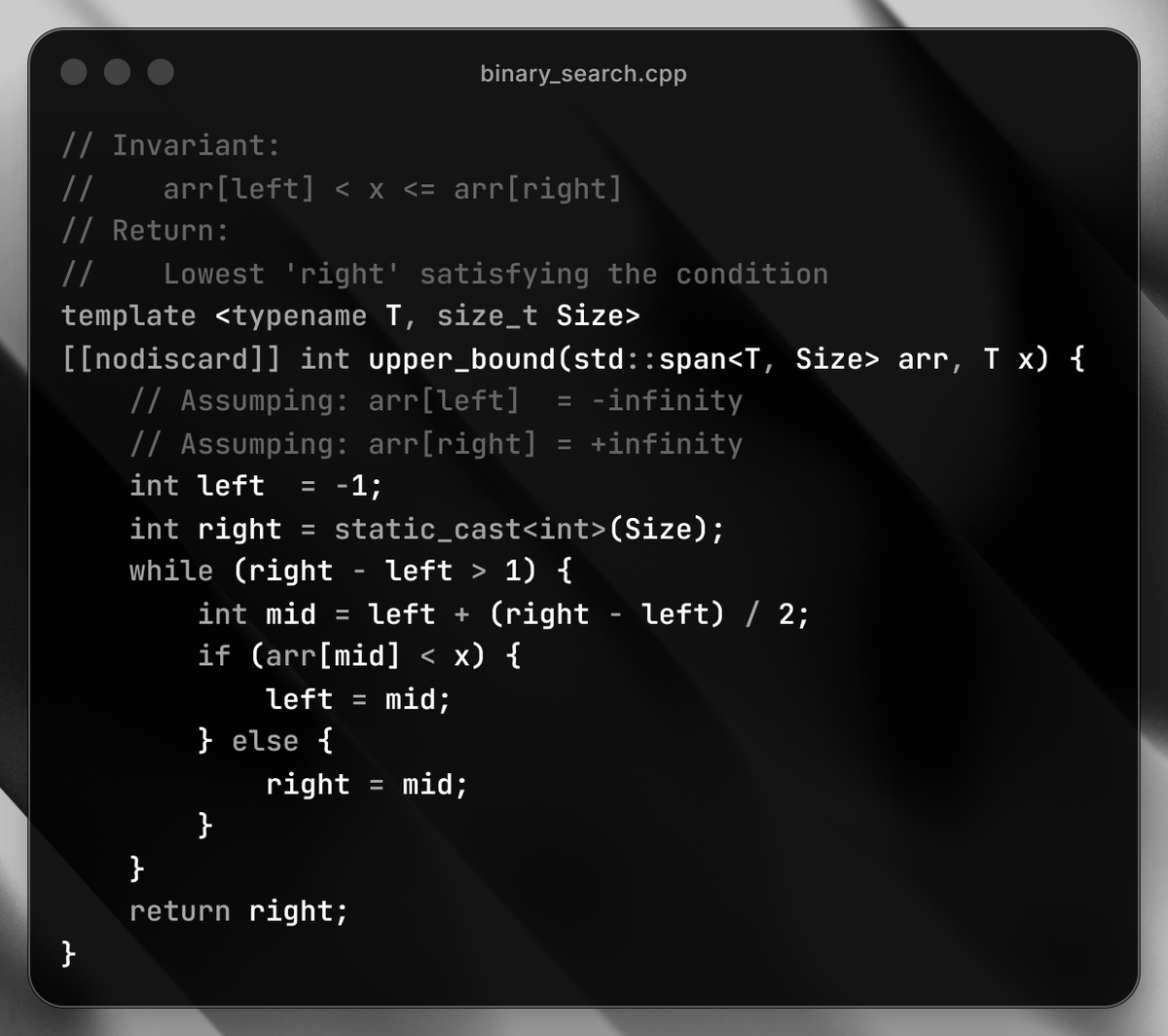
Okay, as promised, here's a better Binary Search.
If this post gets 500 likes, I'll write a complete tutorial on binary search and why this implementation is better.
My view on Dr B.R. Ambedkar will probably frustrate both his admirers and his critics.
I disagree with most of his political and religious conclusions. Like Savarkar, I believe the long-term dissolution of caste lies not in civilizational separation but in the modernisation of Hindu society itself through cultural integration, social mobility, and the gradual Sanskritization of all communities within a common national culture. For that reason, I reject Ambedkar's Buddhist solution and much of the ideological framework that emerged from it.
Yet there is one aspect of Ambedkar's thought that I believe was extraordinarily perceptive: his understanding of urbanisation.
What many people miss is that Ambedkar did not seem to envision a future where historically disadvantaged communities would permanently exist as state-recognised categories defined by discrimination. His project was ultimately one of transformation. He looked at the traditional Indian village and saw not a romantic civilizational ideal but a social structure that continually reproduced hierarchy, exclusion, dependency, and caste consciousness. The village was not merely an economic unit. It was a psychological environment.
His answer was to break that environment.
Urbanisation was central to this vision. He expected the Indian state to create a serious public education system capable of producing a modern citizenry with the skills, confidence, and economic independence necessary to transcend inherited social identities. The objective was not the perpetual management of caste but its gradual irrelevance through mobility, education, and participation in a modern economy.
Even many of his more controversial positions begin to make sense when viewed through this lens. His support for Sanskrit as a national language, his reconstruction of Dalit historical identity, and his attempt to formulate a new Buddhist social ethic can all be read as efforts to provide communities with access to the cultural prestige, confidence, and civilizational self-respect that had long been concentrated within particular social strata. Whether one agrees with these projects or not, they were attempts at psychological elevation rather than mere political negotiation.
My disagreement with Ambedkar is therefore not that he identified the problem incorrectly. In many ways, I think he understood it with exceptional clarity. My disagreement is with the remedies he ultimately chose. But on urbanisation, I think he grasped something that much of modern India still fails to understand: communities do not rise simply because the state acknowledges their suffering. They rise when they acquire education, economic power, cultural confidence, and the ability to participate in a larger modern civilisation beyond the confines of inherited social structures
Just started reading up the horrible RSF press freedom report and instantly the bias and shit tier logic is manifest. Had chatgpt run a search on the below data.
Mexico sees 5 x the number of journos killed in absolute terms as does Pakistan. Pakistan arrests 3-10x the number of journos and yet somehow are higher on the press freedom index?
Adjust this for the number of journos and the story becomes worse.
Per 10,000 journos
killed India 0.1 / Pk 2.2 / Mexico 1.5
Arrested is similar numbers.
The cognitive dissonance in this report is alarming even for a biased report
The report on the media landscape starts thusly
It does say that there's 100's of thousands of media outlets.
But then in the very next bit is like something only a Randian or CJP follower would blabber
@PadmajaJoshi Madam why is it always a mosque built over a temple and not a temple over a mosque. Genuine questun - not able to understand. Here's a video of the site - i can see a Ganesha too.
4. Even married Hindu women were picked up in places like Diamond Harbour and their husbands were asked to cough up INR 25000 to secure the release of their wives, failing which they would continue to be "used" by TMC cadre. I personally spoke with some of the affected families.
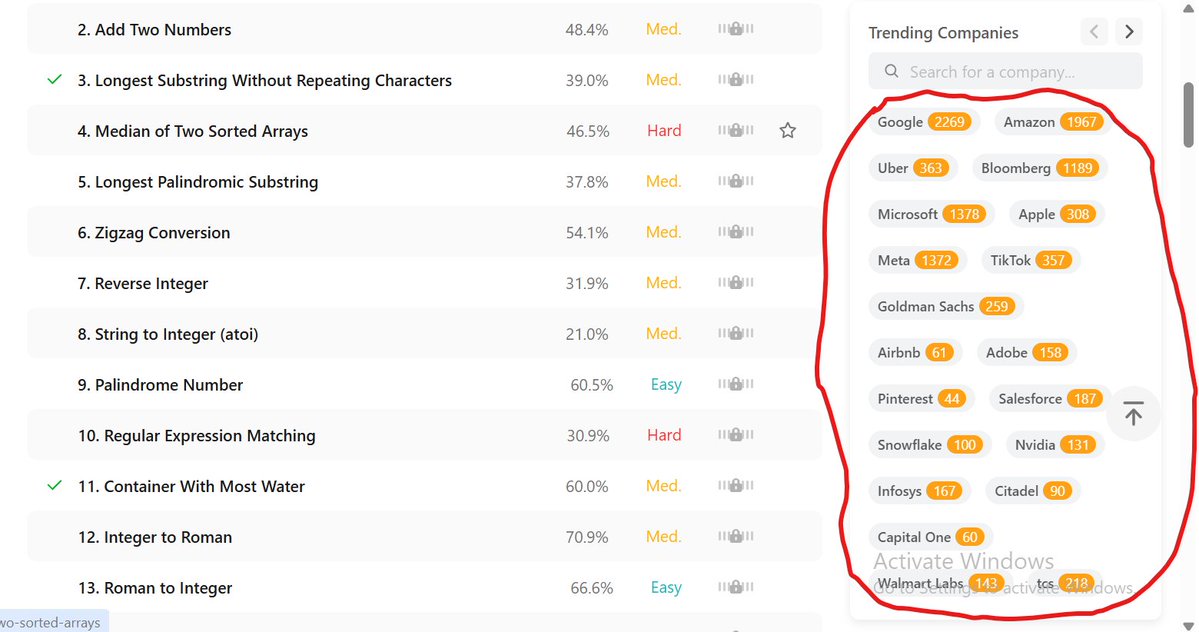
These Scamming Indians have made a secret website where they have shared these "confidential interview questions" just for their brown friends. I found it when I secretly overheard two Indians talking in Sanskrit. The website is called Leetcode. Share this.
Composite Video showing Fires in NW India/Pak vs. AQI metrics in Noida. Oct 1 - Nov 8. (unmute)
- Fire Data from Nasa - one capture every 3 days
- AQI data: PM 2.5 (red), PM10 (orange)
ffmpeg++++