The Official Opening Ceremony of #NEISA2026 is happening now in Kigali, Rwanda.
Leaders, policymakers, investors, regulators, and global industry experts have gathered for one of Africa’s most important conversations on the future of nuclear energy, investment, and sustainable development.
Watch the Opening Ceremony live and follow the conversations shaping Africa’s energy future.
https://t.co/sADfnTl9vh
Learn more: https://t.co/OJOkERXWLu
Stay connected: #NEISA2026
There's a lot to process on Day 8 of the @NASAArtemis II mission. With Earth in view from Orion's windows, the astronauts are packing up and reflecting on their lunar journey.
The Mastercard Foundation Scholars Program at @Uni_Rwanda stands in solidarity with all Rwandans and the world as we begin the commemoration period of the 1994 Genocide against the Tutsi in #Rwanda.
Remember, unite, renew. #Kwibuka32
MIT Professor Andrew Lo argues that finance is harder than physics because financial markets are driven by human behavior rather than fixed physical laws.
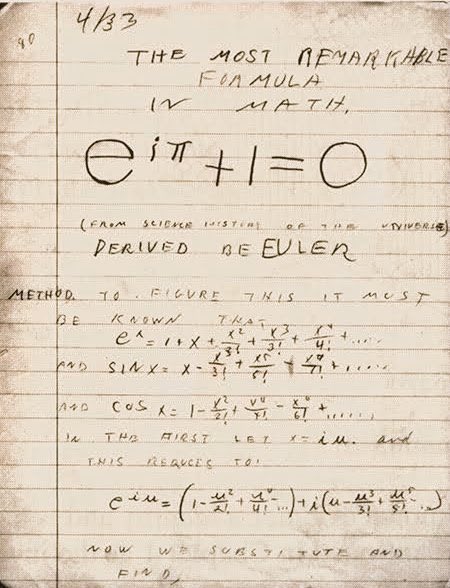
Life is too short to worry about stupid things. Have fun. Fall in love.
Regret nothing and do not let people bring you down.
Study, think, create and grow. Teach yourself and teach others.
—Professor Richard Feynman (listen to his brilliant talk)
Steve was an incredible leader, innovator, and friend whose world-changing ideas moved all of us forward.
Celebrating his remarkable life and legacy today, on his birthday.
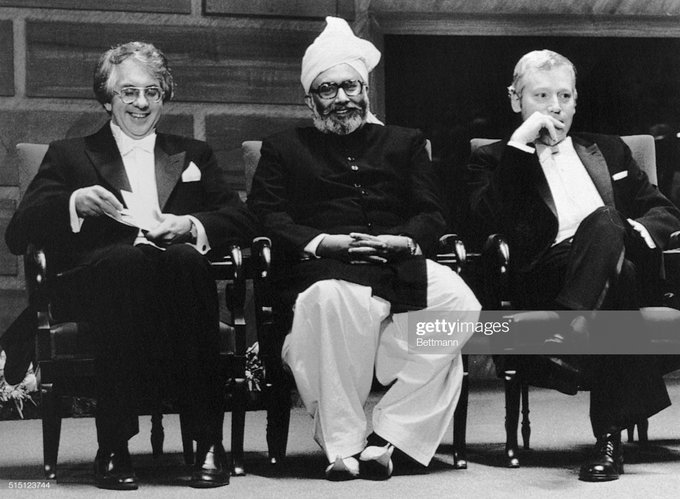
Brilliant co-creators of the electroweak unification theory, a critical component of the Standard Model of particle physics:
Left to right: Sheldon Lee Glashow, USA, Abdus Salam, Pakistan, and Steven Weinberg, USA, before receiving the 1979 Nobel Prize for Physics in Stockholm.
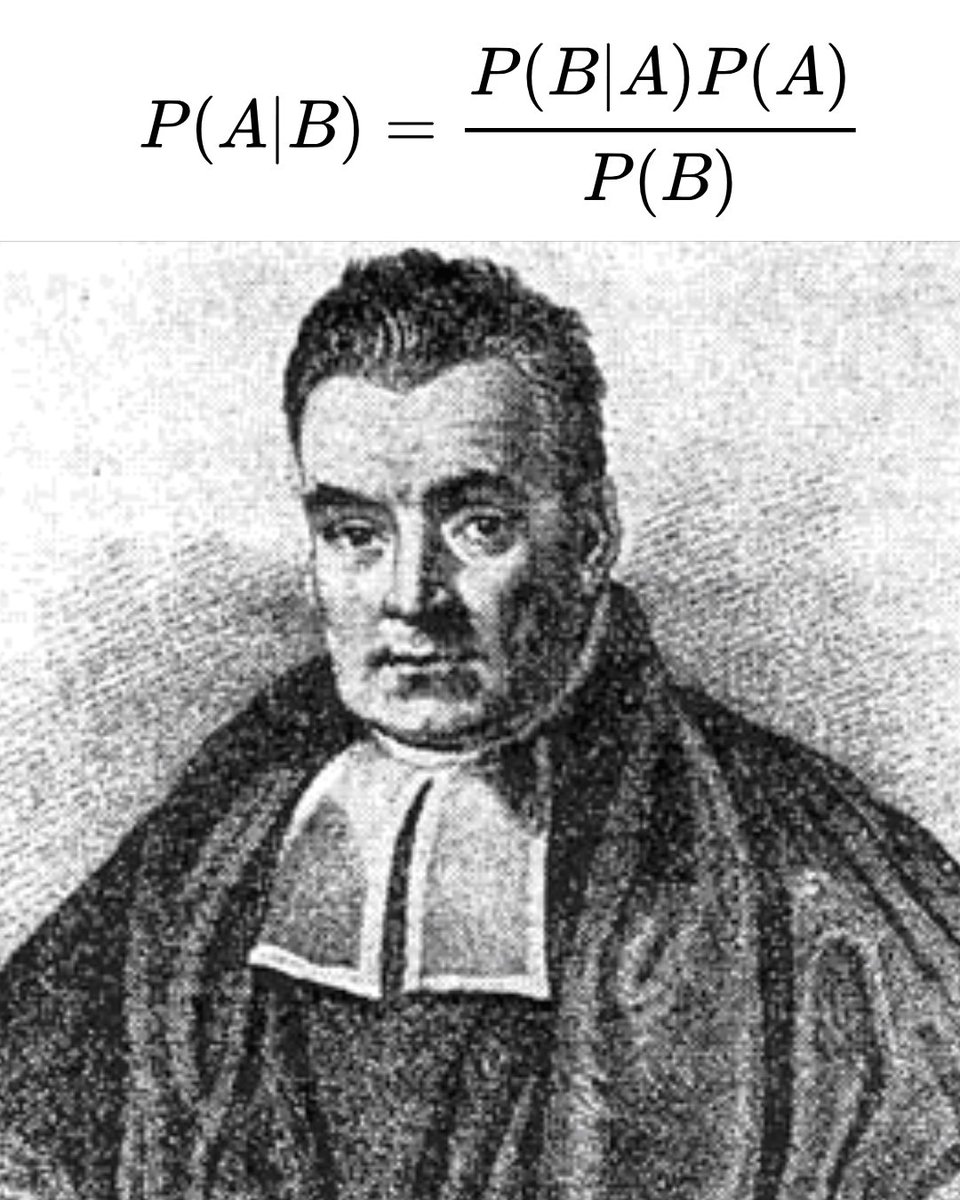
Bayes’ theorem is probably the single most important thing any rational person can learn.
So many of our debates and disagreements that we shout about are because we don’t understand Bayes’ theorem or how human rationality often works.
Bayes’ theorem is named after the 18th-century Thomas Bayes, and essentially it’s a formula that asks: when you are presented with all of the evidence for something, how much should you believe it?
Bayes’ theorem teaches us that our beliefs are not fixed; they are probabilities. Our beliefs change as we weigh new evidence against our assumptions, or our priors. In other words, we all carry certain ideas about how the world works, and new evidence can challenge them.
For example, somebody might believe that smoking is safe, that stress causes mouth ulcers, or that human activity is unrelated to climate change. These are their priors, their starting points. They can be formed by our culture, our biases, or even incomplete information.
Now imagine a new study comes along that challenges one of your priors. A single study might not carry enough weight to overturn your existing beliefs. But as studies accumulate, eventually the scales may tip. At some point, your prior will become less and less plausible.
Bayes’ theorem argues that being rational is not about black and white. It’s not even about true or false. It’s about what is most reasonable based on the best available evidence. But for this to work, we need to be presented with as much high-quality data as possible. Without evidence—without belief-forming data—we are left only with our priors and biases. And those aren’t all that rational.