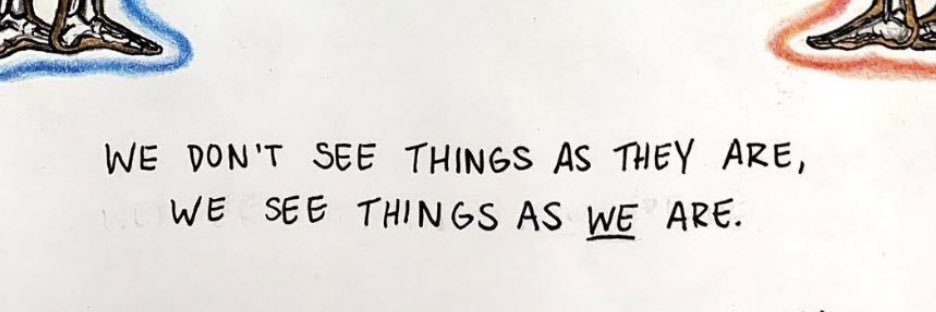
You just gotta 𝐛𝐞𝐥𝐢𝐞𝐯𝐞 𝐢𝐭 𝐭𝐨 𝐬𝐞𝐞 𝐢𝐭.
Here’s how I got @elonmusk to watch my youtube video
The secret of the universe is we all have more potential than we can ever see.
Sharing the story with @GauravDubeyLive
@itsnotbernhard@Bencera What % are profitable is the only metric that matters, or overall has it extracted more profit from PEOPLE than VALUE CREATED.
Its a RETAIL SCAM if these metrics are not met.
Hi crypto friends. Long time no see. I’m coming to my first conference in a long time for @consensus2026 with the https://t.co/tJK02b8ksa team.
Let’s reconnect in Miyamiiiiii.
There is a blue ocean in robotics, that I'm afraid to propagate too much because its straight Alpha.
Yet also fundamentally the market leaders just are not set up to run the strategy.
Just as a note, a wheeled robot stopping 10 ft from its destination so a LEGGED ROBOT CAN WALK ON A FLAT SURFACE as the main demo of a multi billion dollar company is so silly.
This market is such a herd,
And I'm afraid most are running up the wrong slope.
Humanity is about to run:
•our knowledge
•our labor
•our politics
•our economics
•our communication
•our science
•eventually our infrastructure
through large AI models.
If the models are:
•privately owned,
•centrally controlled,
•closed-weight,
•and run in opaque data centers…
…techno-feudalism is inevitable.
If the models are:
•open,
•forkable,
•community-auditable,
•collectively governed,
•or publicly owned…
…humanity has a democratic, pluralistic future.
Robots is the layer that CULTURE wakes up to this.
It’s the tangible evidence for moving the overton window into a discussion of humans vs. techno capital machine.
🚨 AI is training AI. Humans are no longer the only teachers.
“What happens when superintelligence evolves without collective wisdom?” — Jack Jay, @PersistVentures
This isn’t sci-fi. It’s now.
At @RaiinmakerApp, we believe in decentralized intelligence ... AI trained on diverse human truth, not corporate echo chambers.
🧠🤖🌍
#Superintelligence #DecentralizedAI
Congrats to the @OpenDroids team that achieved this with under $1m in funding.
I've been a big fan of OpenDroids since the first time I spoke with Jack & i'm so excited about what we're planning with @StreetFDN & OpenDroids. There is a small amount of high quality robotics hardware startups that are based in the US.
China is winning the hardware war, which will be a huge issue in the US in the near future. You can see a16z talk about exactly that. "You can't let China win the robotics race" is a direct quote from their team.
What i find most interesting with OpenDroids is that their using logic over theatre. For what do you need a highly capable fully humanoid robotic with legs in most industrial tasks. E.g. FigureAI robots at the BMW factory have no reason to have legs. They literally walk 10 steps back and forth per task.
Don't reinvent the wheel.
is a painfully accurate representation of the current theatre around humanoid robotics.
Photoshopped Robots in warhouses
Telemetry operated robots claimed as autonomous
you name it, every theatrical bs in robotics has already been done to market it better & create this artificial chatgpt moment the sector is hoping for.
OpenSource robotics vs Closed Source surveillance a la skynet.
godspeed
Doing some research on the writings of people thinking about the global economic transition we are going to go through. I think the more clarity we have, the better.
Here's what my AI recommended me, and their key points.
1. W. Brian Arthur — “The Second Economy” (2011)
The economy is splitting into a physical economy and a digital automated economy.
The transition happens through gradual substitution of decision-making → from humans → to “autonomous processes” (software + AI + robots).
Key idea for the transition:
It’s not a jump.
It’s stepwise: one job function at a time becomes automated, which triggers new institutional redesign.
2. Erik Brynjolfsson & Andrew McAfee — “The Second Machine Age” / MIT Work of the Future initiative
What they focus on:
How societies adjust as automation becomes incrementally better than humans.
They propose a multi-phase transition:
Augmentation (AI helping workers)
Hybrid tasks (AI taking slices of jobs)
Re-engineering of whole workflows
Automation-first design of new industries
3. Peter Frase — “Four Futures” (2016)
scarcity vs abundance
hierarchy vs equality
The transition is not technological — it’s political.
Different power structures shape different versions of the transitional pathway.
4. Aaron Bastani — “Fully Automated Luxury Communism” (2019) (not that I support this, good to research though)
Automation of high-cost sectors (energy, mining, logistics).
Rapid declines in the cost of information goods → “marginal cost collapse.”
Mid-stage society where human labor becomes optional.
5. Zoltan Istvan, the Future of Work groups, and Transhumanist writers
The mechanics of phasing out labor:
Universal Basic Services →
Universal Basic Income →
Automation dividend →
Asset ownership transition
Their value is the sequence, not the politics.
6. Yudkowsky / Bostrom (AI governance)
How institutions fail when automation surpasses human labor.
What needs to be built so the transition is stable (alignment, regulatory guardrails).
Useful for designing a safe transition.
7. Kate Raworth’s “Doughnut Economics” & Mariana Mazzucato
How public investment + mission-driven innovation reshape production.
How to shift from a labor-taxed economy to a resource or value-based economy.