Well said @0xmaxg - a few thoughts...
The best valuation framework and mental model I've come across boils value down across 3 axes - Financial, Social, and Utility value.
Financial
/\
/ \
/ \
Social -------- Utility
Financial Value = the present value of future cash flows (Wall Street’s default lens).
Utility Value = what the asset actually does (oil makes car go, house provides shelter, token gives access)
Social Value = the narrative, culture, and collective belief sustaining it (monetary premium & greater fools)
Assets are priced as a combination of these, but the weight on each axis depends on the asset’s fundamental purpose.
------------------------
For example, I think the claim that “tokens aren’t products” oversimplifies things. It depends.
In Bitcoin’s case, the token is the product - and it’s the most widely adopted product our industry has ever created (for now).
Bitcoin has utility value as a resilient store of value against fiat devaluation, and social value as the digital gold narrative, but no inherent financial value because there are no cash flows to discount. Focusing primarily on financial value here would essentially miss the forest for the trees.
Bitcoin also shouldn’t try to play the same game. It doesn’t need revenue multiples. Its value is in being decentralized, credibly neutral, and scarce. If Bitcoin tried to chase fees and volume, it would cannibalize its role as a store of value by centralizing itself in pursuit of performance.
Revenue / multiples valuation make no sense for this type of asset as majority of value is derived from the monetary premium, utility, and social value..
However, unless you are trying to be the worlds resistant-credibly neutral-decentralized store of value (BTC) or settlement layer (ETH), than financial value absolutely should be important to investors and the value prop. For high performant, execution specialized, semi-centralized by design applications and protocols, revenue generation is likely the most important driver of token value as it can be used for buybacks or recycled for grants/investment in the ecosystem.
----------------------------
This also isn’t the first time “the revenue meta” has surfaced. Back in 2021, everyone obsessed over gas fees, NFT royalties, protocol revenues. Ironically, in that political environment, financial value was almost a liability: if you looked too much like a real business, you were a regulatory target. This set us back a few years at least as far as providing valuable products with sustainable business models.
Now, with a pro innovation regulatory environment, we're starting to see financial value entering the equation again - and the first principles of valuation are being baked into token design.
It’s healthy. Nature's healing.
The most valuable assets of the next decade will come from the crypto space - taking on properties of social, utility, and financial value - a feat impossible for traditional equities.
Since the Merge, Ethereum has issued ~ $11.4B in rewards with just 0.15% annual inflation...
That's what sustainable security looks like for a global settlement layer.
Mass adoption doesn’t happen all at once - it builds, layer by layer, until suddenly, it’s everywhere.
The story of the future is written by the echoes of past revolutions.
Mass Adoption Event 1: Digital Gold
After the 2008 financial crisis, confidence in traditional currencies and banks tanked. Concerns over corrupt institutions, money printing, government spending, and inflation grew substantially.
(& for good reason as M2 money supply has basically tripled since 2008!)
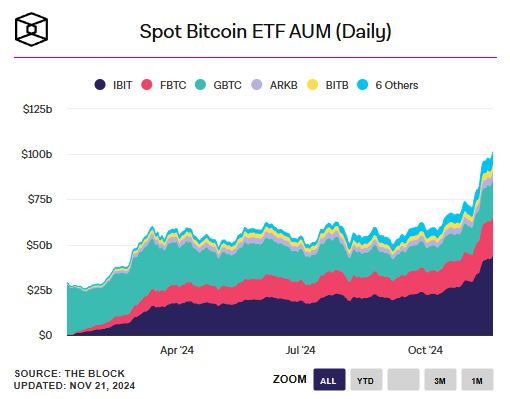
Bitcoin emerged as a solution - a “digital gold” that offered a decentralized, self-sovereign store of value outside the reach of central banks. Since 2020, global money supply has absolutely surged, while purchasing power was destroyed. This fueled Bitcoin’s appeal, leading to a record interest in digital assets and the successful launch of spot Bitcoin ETFs in 2024.
Source: @TheBlock__
Mass Adoption Event 2: Digital Money (Stablecoins)
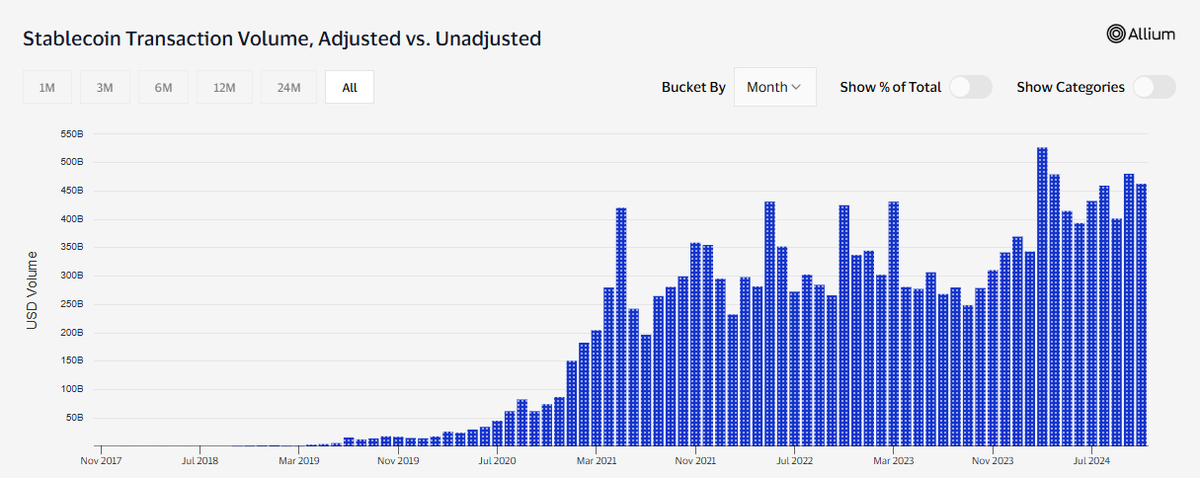
With Bitcoin proving the power of decentralized value, the next evolution was the rise of stablecoins—digitally native money pegged to traditional currencies but offering the efficiency and transparency of blockchain. Stablecoins have exploded in usage, reaching record transaction levels as individuals and businesses recognize the benefits of fast, borderless transactions without reliance on traditional banks.
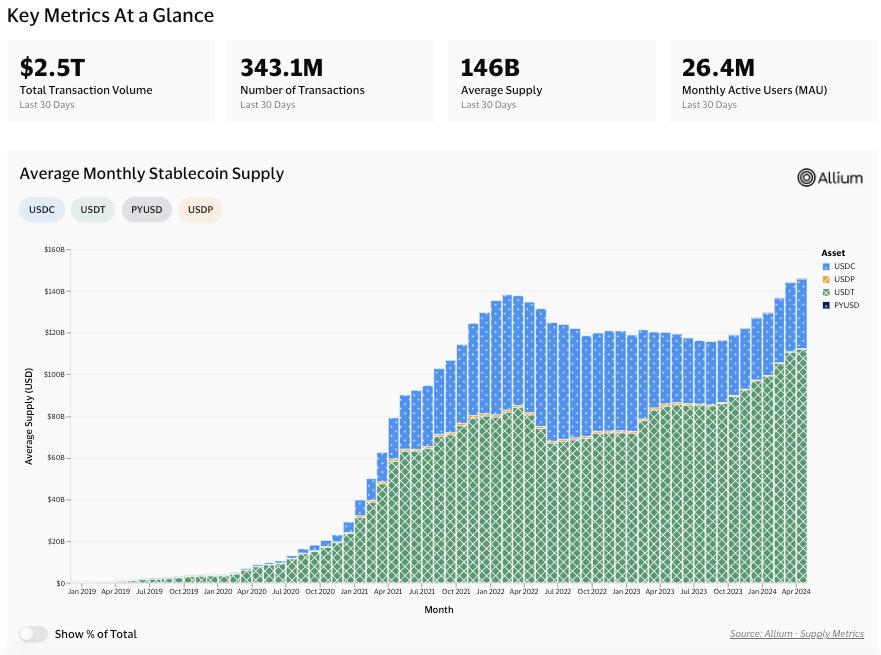
(There has been $2.5 TRILLION of stablecoin transaction volume just in the past 30 days)
Source: @Visa
getting into the near future...
Mass Adoption Event 3: Digitally Native Assets (NFTs & Tokenized Real-World Assets)
Now that we see how money can become more efficient and secure on-chain, the next logical step is extending these benefits to assets. This narrative drives mass adoption for NFTs in gaming and collectibles, as well as the tokenization of previously illiquid or inefficient real-world assets like real estate and art. This is happening TODAY at scale with the tokenization of US Treasuries.
(@BlackRock's onchain treasury fund BUIDL reached $500M AUM in less than 4 months)
Source: @TheTieIO
Mass Adoption Event 4: Smart Contract Platforms & Web3
With substantial amounts of money and assets now living on the blockchain, we’ve arrived at a world where blockchain is familiar enough to become the new layer of the internet. Ethereum, Solana, and other platforms become home to smart contracts and decentralized applications, facilitating transactions, agreements, and services in a trustless, automated way. This is where blockchain truly becomes “Web3,” the infrastructure powering the internet of value.
Leading network economies include @ethereum, @solana, @avax, & @base
Mass Adoption Event 5: The New Onchain Economy
Much like how mobile transformed the internet, the rise of decentralized applications (dApps) brings a new economy built on blockchain’s network effects, efficiency, and global accessibility. Just as mobile apps became essential to daily life, the onchain app economy will reshape industries worldwide, establishing web3 applications as the global standard for digital interaction and commerce.
Mass Adoption Event 6: Digitally Native Organizations (DAOs)
In the final wave of this progression, DAOs revolutionize how we think about community, governance, and collaboration on a global scale. These digitally native organizations allow people (or AI agents!) to come together, pool resources, and govern collectively in open-source structures. DAOs will be the backbone of the metaverse and digital communities, enabling unprecedented scale and accessibility for mission-driven organizations and communities.
Mass adoption unfolds with each wave, where each new narrative builds upon the last, creating a clear trajectory toward a decentralized, efficient, and inclusive digital economy.
Mass adoption doesn’t happen all at once - it builds, layer by layer, until suddenly, it’s everywhere.
The story of the future is written by the echoes of past revolutions.
Mass Adoption Event 1: Digital Gold
After the 2008 financial crisis, confidence in traditional currencies and banks tanked. Concerns over corrupt institutions, money printing, government spending, and inflation grew substantially.
(& for good reason as M2 money supply has basically tripled since 2008!)
Bitcoin emerged as a solution - a “digital gold” that offered a decentralized, self-sovereign store of value outside the reach of central banks. Since 2020, global money supply has absolutely surged, while purchasing power was destroyed. This fueled Bitcoin’s appeal, leading to a record interest in digital assets and the successful launch of spot Bitcoin ETFs in 2024.
Source: @TheBlock__
Mass Adoption Event 2: Digital Money (Stablecoins)
With Bitcoin proving the power of decentralized value, the next evolution was the rise of stablecoins—digitally native money pegged to traditional currencies but offering the efficiency and transparency of blockchain. Stablecoins have exploded in usage, reaching record transaction levels as individuals and businesses recognize the benefits of fast, borderless transactions without reliance on traditional banks.
(There has been $2.5 TRILLION of stablecoin transaction volume just in the past 30 days)
Source: @Visa
getting into the near future...
Mass Adoption Event 3: Digitally Native Assets (NFTs & Tokenized Real-World Assets)
Now that we see how money can become more efficient and secure on-chain, the next logical step is extending these benefits to assets. This narrative drives mass adoption for NFTs in gaming and collectibles, as well as the tokenization of previously illiquid or inefficient real-world assets like real estate and art. This is happening TODAY at scale with the tokenization of US Treasuries.
(@BlackRock's onchain treasury fund BUIDL reached $500M AUM in less than 4 months)
Source: @TheTieIO
Mass Adoption Event 4: Smart Contract Platforms & Web3
With substantial amounts of money and assets now living on the blockchain, we’ve arrived at a world where blockchain is familiar enough to become the new layer of the internet. Ethereum, Solana, and other platforms become home to smart contracts and decentralized applications, facilitating transactions, agreements, and services in a trustless, automated way. This is where blockchain truly becomes “Web3,” the infrastructure powering the internet of value.
Leading network economies include @ethereum, @solana, @avax, & @base
Mass Adoption Event 5: The New Onchain Economy
Much like how mobile transformed the internet, the rise of decentralized applications (dApps) brings a new economy built on blockchain’s network effects, efficiency, and global accessibility. Just as mobile apps became essential to daily life, the onchain app economy will reshape industries worldwide, establishing web3 applications as the global standard for digital interaction and commerce.
Mass Adoption Event 6: Digitally Native Organizations (DAOs)
In the final wave of this progression, DAOs revolutionize how we think about community, governance, and collaboration on a global scale. These digitally native organizations allow people (or AI agents!) to come together, pool resources, and govern collectively in open-source structures. DAOs will be the backbone of the metaverse and digital communities, enabling unprecedented scale and accessibility for mission-driven organizations and communities.
Mass adoption unfolds with each wave, where each new narrative builds upon the last, creating a clear trajectory toward a decentralized, efficient, and inclusive digital economy.
Incredible report from @vaneck_us on #Ethereum
Learn more on why #ETH is:
1. "Digital Oil"
2. "Programmable Money"
3. "Yield Bearing Commodity"
4. "Internet Reserve Currency"
And most of all, a revolutionary assets that will completely disrupt finance & big tech
We've raised our 2030 ETH price target to $22K, influenced by ether ETF news, scaling progress, and our read of onchain data. Additionally, we've analyzed how ETH and BTC perform in both traditional and crypto-only portfolios for optimal returns. @Matthew_Sigel@Patrick_Bush_VE
🔗 https://t.co/PUlnat5Agz
I had an awesome conversation about DeFi yesterday with @KyleSonlin, CEO of Paxum, exploring the challenges of traditional finance and new opportunities presented by DeFi technologies.
Check out the full episode here: https://t.co/bVrF7SgaL3
The Total-Value-Locked in DeFi has climbed back above $200 Billion.
Join @KyleSonlin and I for a deep dive into DeFi from its mechanics to the regulatory landscape and future outlook: https://t.co/zEpbBMjdsV
Stablecoins are going to change everything! If you know a charity looking to cut out middlemen and access this untapped market please reach out. We’ll get you all set up on @npayme_network for free! #USDC#Polygon#zkSync
As @Visa’s new stablecoin dashboard shows, monthly transaction volume is consistently over half a trillion dollars.
Key stats for past 30 days:
• $2.5T total transaction volume
• 343.1M transactions
• 146B average supply
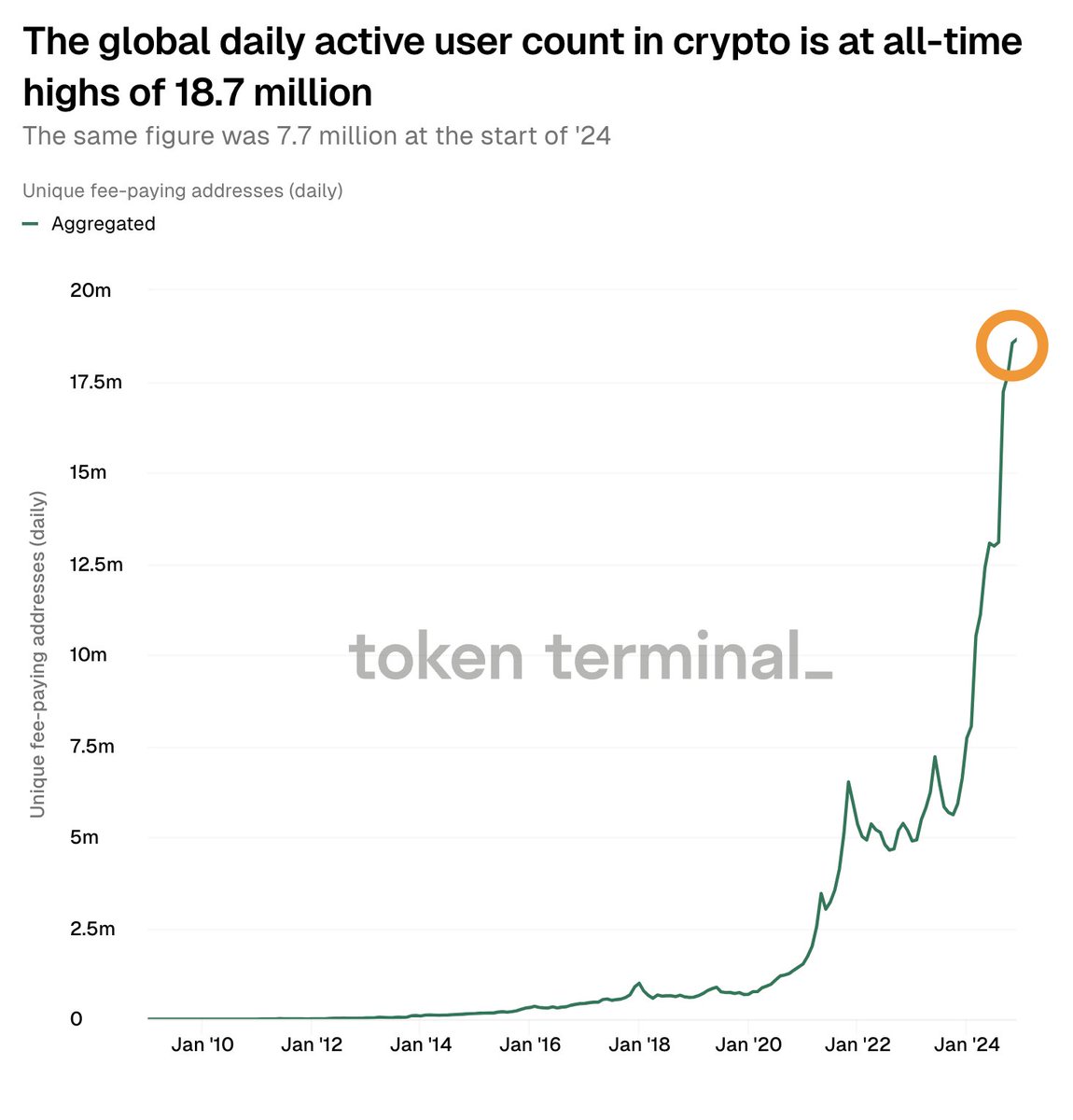
• 26.4M monthly active users
https://t.co/rYXBbJBwvQ