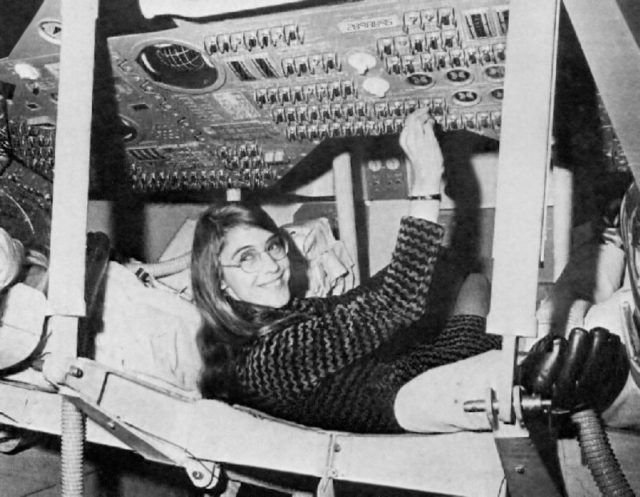
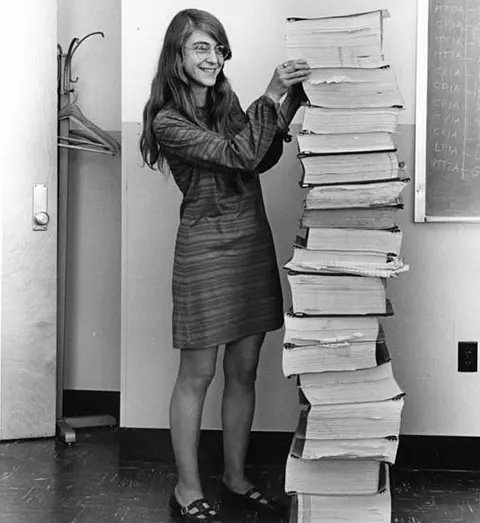
Margaret Hamilton is the pioneering computer scientist who led the development of NASA’s Apollo mission software. Her code helped land Apollo 11 safely on the Moon, even handling critical errors during descent. She coined the term "software engineering" and was awarded the Presidential Medal of Freedom in 2016 for her groundbreaking work.
[Aviation] 29 juin 1900 / 2026 • Naissance d'Antoine de Saint-Exupéry, écrivain 🪶 pilote aux Lignes Aériennes #Latécoère ✈️ disparu en vol le 31 juillet 1944. Hommage philatélique [1948] ✉️
« Si tu diffères de moi, mon frère, loin de me léser, tu m'enrichis. » #SaintExupery
Il y a 126 ans naissait Antoine de Saint-Exupéry.
Aviateur intrépide et courageux, pilote-écrivain accompli et visionnaire, Antoine de Saint-Exupéry incarne incontestablement l’esprit du risque et de l’audace, tout en explorant les profondeurs de l’âme humaine à travers ses œuvres emblématiques.
Le PDG d'Airbus, Guillaume Faury, a officiellement confirmé lors de ses dernières interventions médiatiques que l'entreprise s'engageait pleinement à lancer officiellement, en 2030, le programme de son avion monocouloir de nouvelle génération.
Baptisé en interne « eAction », cet appareil monocouloir très attendu est conçu pour succéder, en partant d'une feuille blanche, à l'emblématique famille Airbus A320.
La nouvelle plateforme serait basée sur l'utilisation des moteurs Open Fan CFM RISE. Cette technologie permet de réduire considérablement la consommation de carburant par rapport aux turboréacteurs actuels. Ce moteur est actuellement en phase de test, et son efficacité pourrait déterminer le succès du nouvel avion.
La production de l'A320neo ne s'arrêtera pas dès la sortie du nouveau modèle — les deux générations seront assemblées en parallèle pendant un certain temps.
#CFM #Airbus #A320
@stockotrader Un bel avion c'est encore plus beau lorsqu'il est bien posé
On voit souvent des atterrissages sur le train principal c'est très risqué la meilleure technique c'est quand même le poser trois points
@stockotrader Un bel avion c'est encore plus beau lorsqu'il est bien posé
On voit souvent des atterrissages sur le train principal c'est très risqué la meilleure technique c'est quand même le poser trois points
(The start of the first flight of Flyer III, June 23, 1905, Orville at the controls. Lib of Cong, PD)
The Wright Flyer III makes it first flight at Huffman Prairie near Dayton, Ohio. The 1905 Wright Flyer III, built by Wilbur (1867-1912) and Orville (1871-1948) Wright, was the world's first airplane capable of sustained, maneuverable flight. Similar in design to their celebrated first airplane, this machine featured a stronger structure, a larger engine turning new "bent-end" propellers, and greater control-surface area for improved safety and maneuverability.
The Wrights made several modifications to this flyer and learned how to perform aerial maneuvers safely during a series of flights at Huffman Prairie during 1905. The plane was dismantled after these flights, but rebuilt and flown in 1908 at Kitty Hawk, and ultimately restored for display in 1950 for Carillon Historical Park.
As initially built, the Flyer III looked almost the same as its predecessors and offered equally marginal performance. Orville suffered minor injuries in a serious nose-dive crash in the machine on July 14, 1905. The Wrights made important design changes that solved the stability problems of the earlier models. They almost doubled the size of the elevator and rudder, and moved them about twice the distance from the wings. They added two fixed half-moon shaped vertical vanes (called "blinkers") between the elevators (but later removed them) and widened the skid-undercarriage which helped give the wings a very slight dihedral. They disconnected the rear rudder of the rebuilt Flyer III from the wing-warping control, and as in most future aircraft, placed it on a separate control handle. They also installed a larger fuel tank and mounted two radiators on front and back struts for extra coolant to the engine for the anticipated lengthy duration flights.
When testing of Flyer III resumed in September, improvement was obvious. The pitch instability that had hampered Flyers I and II was brought under control. Crashes, some of which had been severe, no longer occurred. Flights with the redesigned aircraft started lasting over 20 minutes. The Flyer III became practical and dependable, flying reliably for significant durations, and bringing its pilot back to the starting point safely, and landing without damage. (Wright Flight, PD)
(for more details see https://t.co/kudlhYeWcE & https://t.co/EUsq8CpxMl )
20 juin 1930 – Recueilli la veille par un jeune paysan argentin, Henri Guillaumet, ʺl’Ange de la Cordillèreʺ, rejoint Saint-Exupéry, son ami et son frère, à San Carlos. L’écrivain relate l’aventure du pilote de l’Aéropostale dans son livre, "Terre des hommes", paru en 1939.
https://t.co/DHQ0fTcKl2
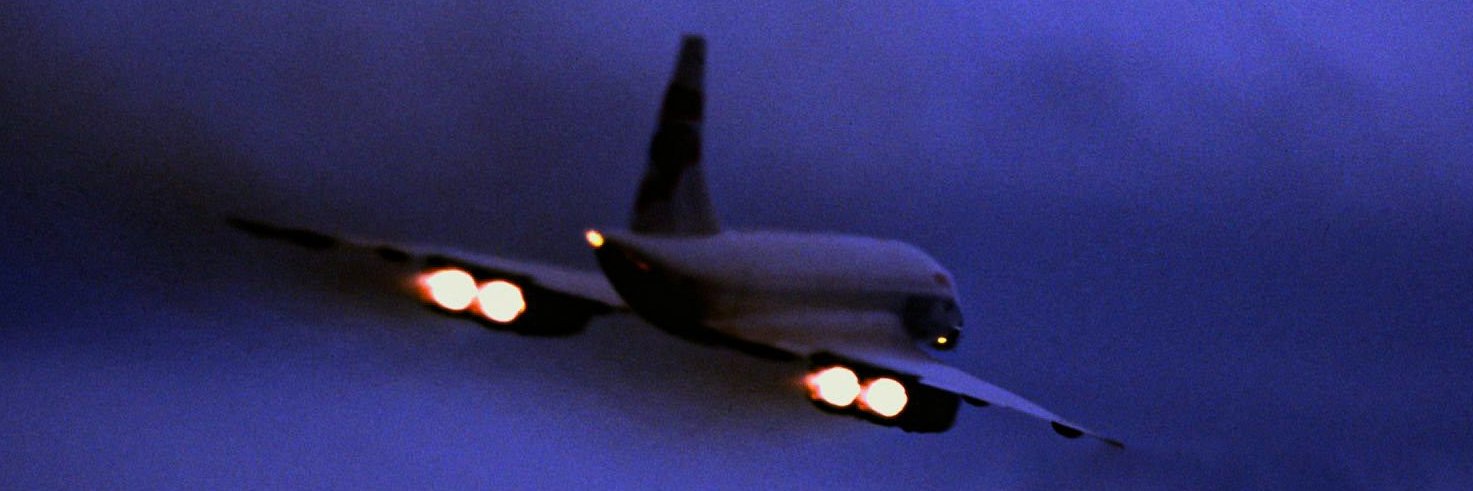
🇫🇷🇬🇧 Le 22 novembre 1977, Air France réalisa le premier vol commercial régulier du Concorde sur la ligne Paris-New York.
🚀 Le supersonique franco-britannique relia les deux villes en seulement 3 heures 30 minutes à la vitesse de Mach 2.
🇺🇸 Grâce à sa vitesse exceptionnelle et au décalage horaire, les passagers arrivaient à New York avant l’heure de départ de Paris.
😢 Ce service prestigieux a fonctionné pendant 26 ans jusqu’au retrait du Concorde en 2003.
13 juin 1930 – Henri Guillaumet, pilote de l’Aéropostale, s’élance pour sa 92e traversée des Andes et, à cause de la tempête, doit se poser aux abords de la Laguna del Diamante. Commence alors une incroyable histoire, rapportée par Antoine de Saint-Exupéry dans "Terre des hommes".
https://t.co/CwJJTW2nTY
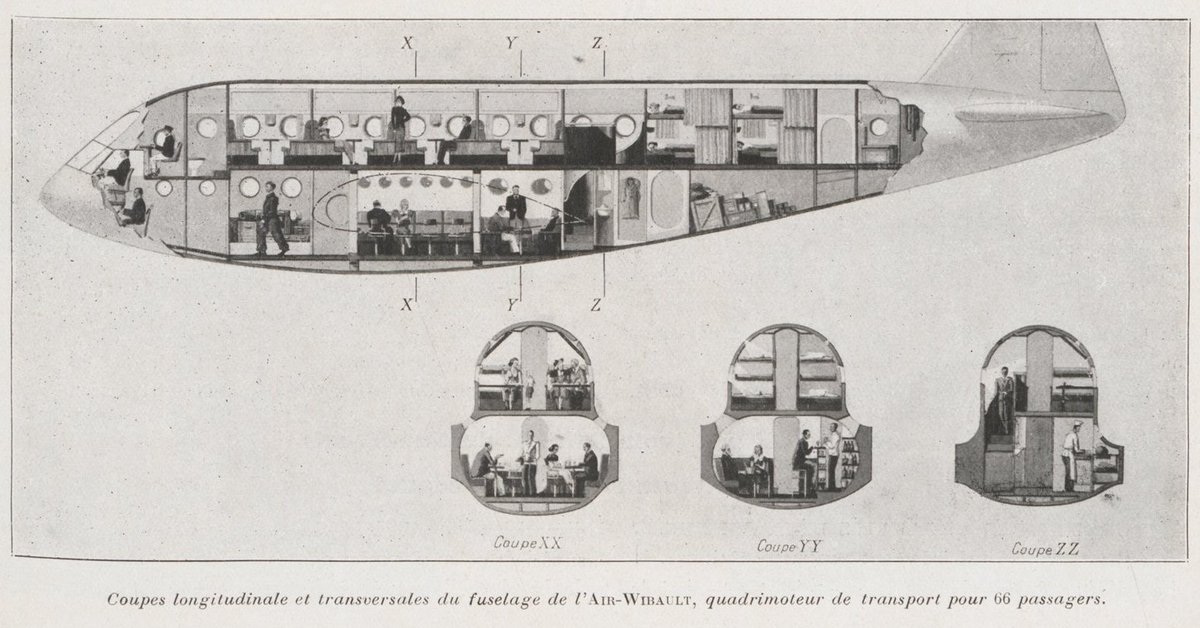
Air-Wibault 1-00 was a four-engined, double deck, design from Michel Wibault to be built by the Arsenal de l'Aéronautique under a contract by the French Air Ministry.
📷https://t.co/C2KZjoXoKk from @GallicaBnF collections







![laurentalbaret's tweet photo. [Aviation] 29 juin 1900 / 2026 • Naissance d'Antoine de Saint-Exupéry, écrivain 🪶 pilote aux Lignes Aériennes #Latécoère ✈️ disparu en vol le 31 juillet 1944. Hommage philatélique [1948] ✉️
« Si tu diffères de moi, mon frère, loin de me léser, tu m'enrichis. » #SaintExupery https://t.co/Zpyukk50OD](https://pbs.twimg.com/media/HL9sIFGW4AA0DOX.jpg)