Got a chance to present my work at the Special Workshop (@fineconets) of NetSci-X Conference 2020 (@NetSciX2020). Also set to attend the main conference.
#NetSciX2020#FinEcoNets
FinEcoNets@NetSciX2020: https://t.co/YcOrIA3hLj
Details of NetSciX2020: https://t.co/N2fTbmkJC7
Earlier this year Yann LeCun left Meta because Mark Zuckerberg wouldn't bet the company on JEPA. Last week his group dropped the first JEPA that actually trains end-to-end from raw pixels. 15 million parameters. Single GPU. A few hours.
The timing is not a coincidence.
For four years Meta has been the house that JEPA built. LeCun published the original paper from FAIR in 2022. I-JEPA and V-JEPA came out of his lab. The architecture was supposed to be the escape hatch from LLMs, the path to robots that actually learn physics instead of hallucinating about it. Every version shipped fragile. Stop-gradients. Exponential moving averages. Frozen pretrained encoders. Six or seven loss terms that had to be hand-tuned or the model collapsed into garbage representations.
Meta kept funding LLMs. Llama shipped. Llama scaled. Llama got beat by Qwen and DeepSeek. Zuck spent $14 billion to buy ScaleAI and install Alexandr Wang. The FAIR robotics group was dissolved. LeCun's research kept winning papers and losing the product roadmap.
He left, started AMI Labs, and said publicly that LLMs were a dead end.
Now the paper. LeWorldModel. One regularizer replaces the entire pile of heuristics. Project the latent embeddings onto random directions, run a normality test, penalize deviation from Gaussian. The model cannot collapse because collapsed embeddings fail the test by construction. Hyperparameter search went from O(n^6) polynomial to O(log n) logarithmic. Six tunable knobs became one.
The downstream numbers are what should scare the robotics capex class. 200 times fewer tokens per observation than DINO-WM. Planning time drops from 47 seconds to 0.98 seconds per cycle. 48x faster at matching or beating foundation-model performance on Push-T and 3D cube control. The latent space probes cleanly for agent position, block velocity, end-effector pose. It correctly flags physically impossible events as surprising. It learned physics without being told physics existed.
Figure AI is valued at $39 billion. Tesla Optimus is mass-producing. World Labs raised $230 million to sell generative world models. Everyone in humanoid robotics is burning capital on foundation-model pipelines that plan in 47 seconds per cycle.
LeCun's group just showed you can do it with 15 million parameters on a single GPU in a few hours.
This is the Xerox PARC pattern running again. Meta had the next architecture. Meta had the scientist. Meta dissolved the robotics team, passed on the productization, and watched the exit. Three months later the lab that was supposed to be Meta's publishes the result that resets the robotics cost structure.
The paper is worth more than Alexandr Wang.
The $20/month Claude plan is enough.
But only if you stop making these 17 mistakes:
1: You upload PDFs raw. One page = 3,000 tokens.
Fix: Paste the text into a Google doc. Download as .md format. Under 200 tokens.
2: You build files inside Cowork too early.
Fix: Plan in Chat first. Move to Cowork only when you know exactly what you want.
3: You write 500-word prompts that reload.
Fix: Write 29 words instead: "I want to [task] to [goal]. Ask me questions using AskUserQuestion."
4: You say "redo the whole thing" to correct part 3.
Fix: "Only redo section 3. Keep everything else. No commentary. Just the output."
5: You send 3 separate messages for 3 tasks.
Fix: One message, three tasks. "Summarize this, list the points, suggest a headline."
6: You type "No, I meant," stacking on the history.
Fix: Click 'Edit' on your original message. Fix it. Regenerate. History replaced, not added.
7: You use the Opus model for a grammar check.
Fix: Sonnet or Haiku for quick tasks. Save Opus + Extended Thinking for deep work.
8: You dump 50 files into Cowork "just in case."
Fix: Only include what this task needs. Zero folders for quick tasks like email drafts.
9: You never restart fresh & keep having long chats.
Fix: Every 15-20 messages → summarize, copy the brief, start a fresh session.
10: You keep 3 topics in 1 chat. Claude re-reads all.
Fix: New topic = new chat. Always. Dead context is dead tokens.
11: Your about-me file is 22,000 words (too long).
Fix: Trim to under 2,000 words. End sessions with "Write a session-notes.md."
Paste my .md file prompt: https://t.co/j5fEzSGxlT
12: You leave search & connectors on by default.
Fix: Default everything off. Turn features on per task, not per account.
13: You upload the same PDF to 5 different chats.
Fix: Use Projects. Upload once. Every chat inside references it without re-burning tokens.
14: You skip Personal Preferences & waste setup.
Fix: Settings → Personal Preferences. Set your tone and style once. It persists forever.
15: You rewrite prompts from scratch every time.
Fix: Keep a prompt library. Same structure, swap the variable. Stable prompts get cached.
16: You manually run the same report every week.
Fix: Use /schedule. "Every Monday at 7am, create my weekly briefing." Wake up to a finished doc.
17: You use Claude for things it can't do.
Fix: Know your tools. Images → Gemini.
Real-time search → Grok.
Stop burning tokens on dead ends.
-----
To download all of my Claude infographics:
Step 1. Go to https://t.co/psB7XxAv8w.
Step 2. Subscribe for free. Don't pay anything.
Step 3. Open my welcome email (most skip this).
Step 4. Hit the automatic reply button inside.
Step 5. Download my infographics from my Notion.
Bonus. Enjoy my best copy-paste prompts, too.
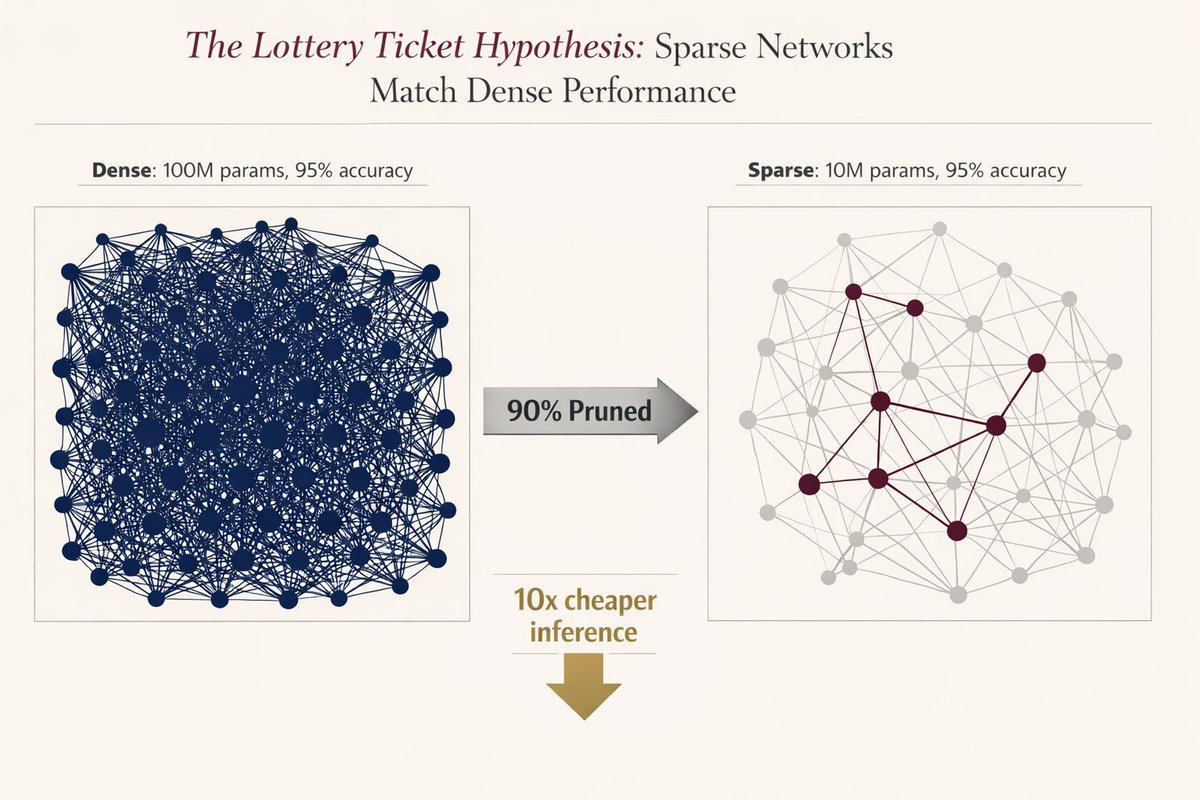
🚨 MIT proved you can delete 90% of a neural network without losing accuracy.
Researchers found that inside every massive model, there is a "winning ticket”, a tiny subnetwork that does all the heavy lifting.
They proved if you find it and reset it to its original state, it performs exactly like the giant version.
But there was a catch that killed adoption instantly..
you had to train the massive model first to find the ticket. nobody wanted to train twice just to deploy once. it was a cool academic flex, but useless for production.
The original 2018 paper was mind-blowing:
But today, after 8 years…
We finally have the silicon-level breakthrough we were waiting for: structured sparsity.
Modern GPUs (NVIDIA Ampere+) don’t just “simulate” pruning anymore.
They have native support for block sparsity (2:4 patterns) built directly into the hardware.
It’s not theoretical, it’s silicon-level acceleration.
The math is terrifyingly good: a 90% sparse network = 50% less memory bandwidth + 2× compute throughput. Real speed.. zero accuracy loss.
Three things just made this production-ready in 2026:
- pruning-aware training (you train sparse from day one)
- native support in pytorch 2.0 and the apple neural engine
- the realization that ai models are 90% redundant by design
Evolution over-parameterizes everything. We’re finally learning how to prune.
The era of bloated, inefficient models is officially over. The tooling finally caught up to the theory, and the winners are going to be the ones who stop paying for 90% of weights they don’t even need.
The future of AI is smaller, faster, and smarter.
this is so fucking wholesome
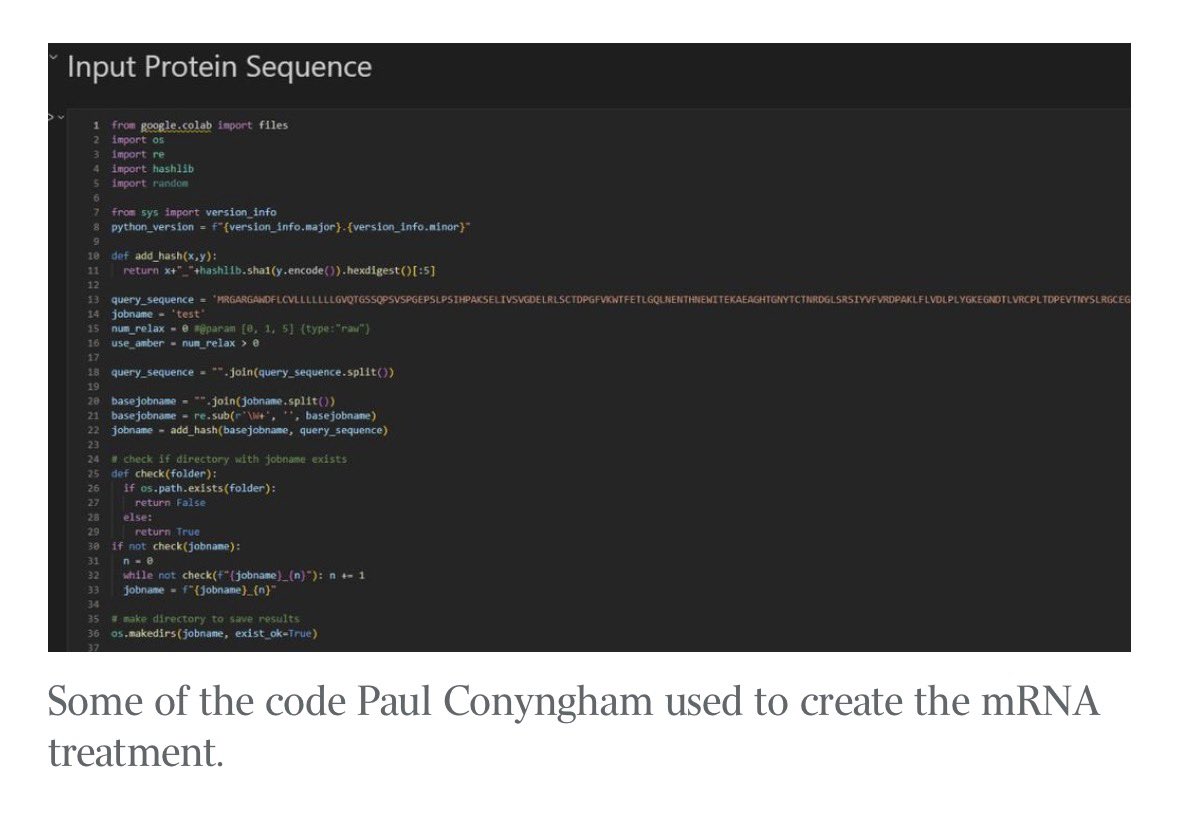
guy used AI to save his cancer-ridden dog by sequencing its DNA and creating a CUSTOM cure.
the tech behind this is fucking awesome (well done @demishassabis and the google team):
- used CHATGPT to sequence dogs DNA discovers mutations
- ran the mutations through Google’s Alphafold (AI protein sequencer) which CREATED A CUSTOM VACCINE TO TREAT THEM.
- treated dog and reduced tumour by 50% in WEEKS. dog is alive and well.
- this is the 1st time AI has been used to create a custom vaccine for a dog (and it worked)
- dude is now working on similar vaccines for humans using AI!
2026 is definitely the year we see AI change personalised medicine in a HUGE way
so sick
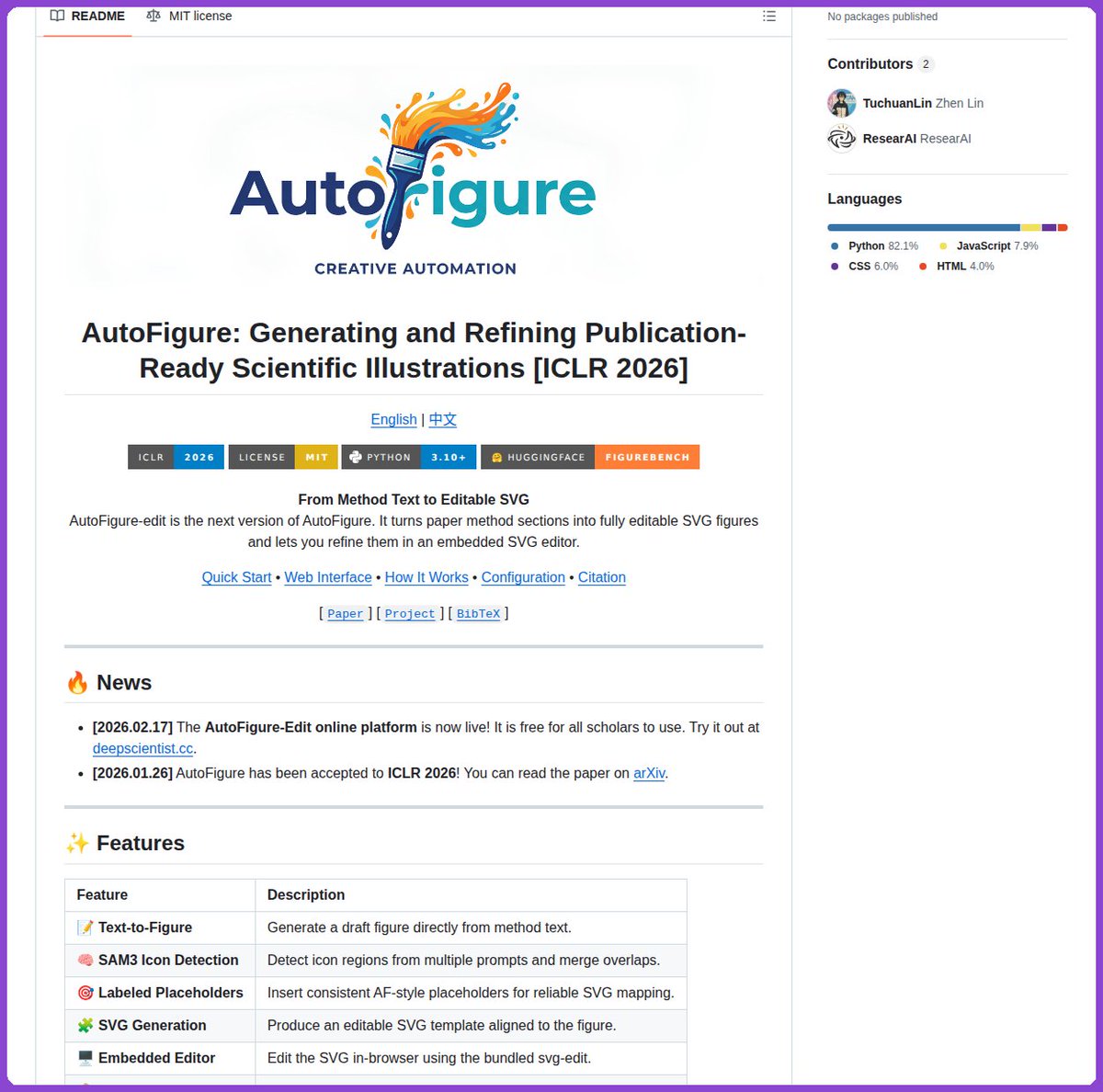
Uploading raw PDFs to Claude is officially a waste of tokens 🤯
AlphaXiv just dropped a new skill that extracts arXiv IDs and fetches pre-built, machine-readable summaries. It feeds your model pure signal, the problem, approach, and results in seconds.
100% Free.
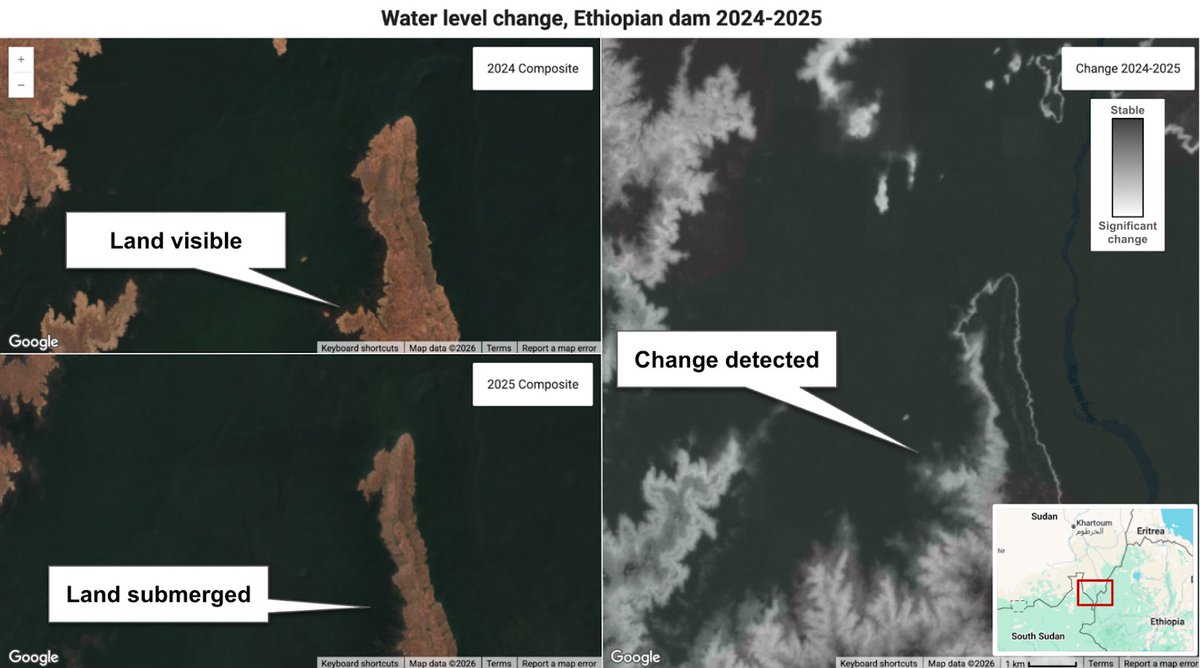
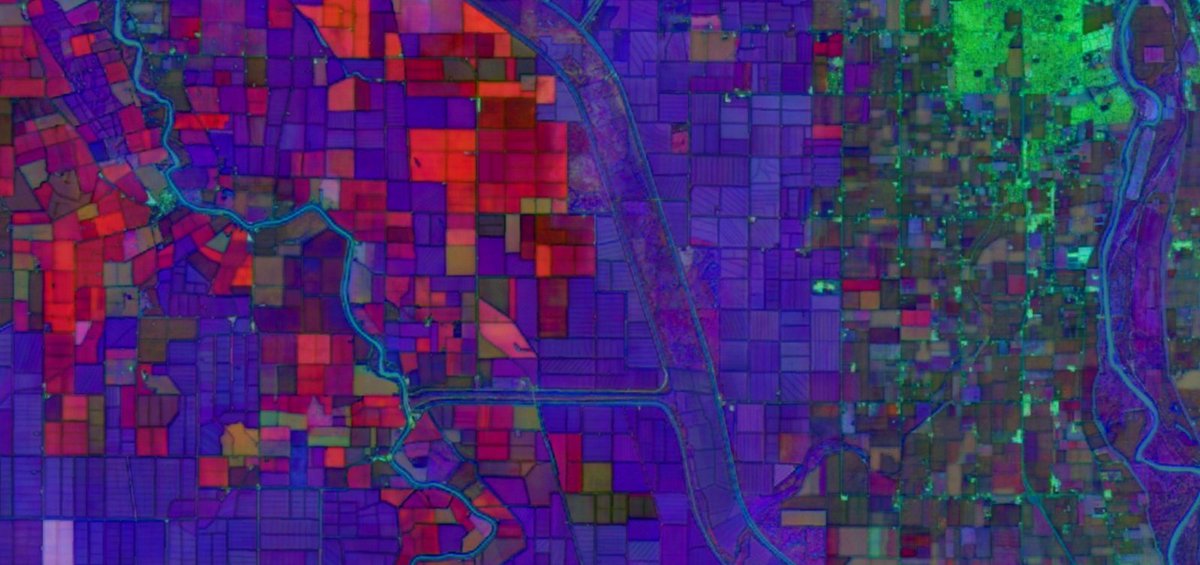
We are thrilled to announce that Google’s Satellite Embedding dataset, powered by @GoogleDeepMind's AlphaEarth Foundations model, has been updated for 2025. This additional year of coverage now unlocks the ability to look back, compare, and detect change across the planet with unprecedented clarity. Learn more here ➡️ https://t.co/yCHMhXCnq6
Part of Google's Earth AI, the new data represents the state of the planet throughout 2025, distilling petabytes of multi-sensor data into a 64-dimensional embedding for every 10 meter pixel.
What’s new in this update? 🧵👇
- 🌍 2025 Data: The state of the planet throughout 2025 is now available on the Earth Engine Data Catalog and Google Cloud Storage.
- 🔬 Unprecedented Change Detection: Because these embeddings capture subtle spectral, spatial and temporal signatures, they make it easy to spot significant year-over-year changes without the heavy lifting of raw image processing.
- 💚 Long-term Commitment: We are formalizing our commitment to the ongoing production of these annual layers to support your operational workflows.
Since we first launched the Satellite Embedding dataset, we’ve been inspired by how our community is putting this data to work. Applications are ranging from ecosystem mapping and agricultural crop-typing to carbon stock prediction. We can’t wait to see what you do next.
#EarthEngine #GeoAI #DeepMind
My first attempt at putting a talk up directly here (I usually just add links to the video on our channel https://t.co/vS77hydMee). Here goes: this was a ~55 minute presentation and I had been asked to talk about the "Multiscale Human" (for https://t.co/YFsthfmNCQ). I cover the topics of "what are we", "implications for biomedicine", and "future beyond human repair", from the perspectives of diverse intelligence at different spatial scales of our bodies and at the different time scales of evolution, development, and cognition.
SFI is now accepting applications for Complexity Postdoctoral Fellowships starting in 2025! https://t.co/pADpKy5poA
“The nature of what I’m interested in is pretty diverse, and so I kind of enjoy getting to speak to people that actually do things like linguistics and economics and theoretical biology. I’ve been exposed to so many interesting ideas here.”
– SFI Postdoctoral Fellow James Holehouse, mathematical biologist interested in aspects of stochasticity and non-equilibrium statistical physics in biological, economic and physical systems. Watch full video here: https://t.co/7roYQKBynm








![rubenhassid's tweet photo. The $20/month Claude plan is enough.
But only if you stop making these 17 mistakes:
1: You upload PDFs raw. One page = 3,000 tokens.
Fix: Paste the text into a Google doc. Download as .md format. Under 200 tokens.
2: You build files inside Cowork too early.
Fix: Plan in Chat first. Move to Cowork only when you know exactly what you want.
3: You write 500-word prompts that reload.
Fix: Write 29 words instead: "I want to [task] to [goal]. Ask me questions using AskUserQuestion."
4: You say "redo the whole thing" to correct part 3.
Fix: "Only redo section 3. Keep everything else. No commentary. Just the output."
5: You send 3 separate messages for 3 tasks.
Fix: One message, three tasks. "Summarize this, list the points, suggest a headline."
6: You type "No, I meant," stacking on the history.
Fix: Click 'Edit' on your original message. Fix it. Regenerate. History replaced, not added.
7: You use the Opus model for a grammar check.
Fix: Sonnet or Haiku for quick tasks. Save Opus + Extended Thinking for deep work.
8: You dump 50 files into Cowork "just in case."
Fix: Only include what this task needs. Zero folders for quick tasks like email drafts.
9: You never restart fresh & keep having long chats.
Fix: Every 15-20 messages → summarize, copy the brief, start a fresh session.
10: You keep 3 topics in 1 chat. Claude re-reads all.
Fix: New topic = new chat. Always. Dead context is dead tokens.
11: Your about-me file is 22,000 words (too long).
Fix: Trim to under 2,000 words. End sessions with "Write a session-notes.md."
Paste my .md file prompt: https://t.co/j5fEzSGxlT
12: You leave search & connectors on by default.
Fix: Default everything off. Turn features on per task, not per account.
13: You upload the same PDF to 5 different chats.
Fix: Use Projects. Upload once. Every chat inside references it without re-burning tokens.
14: You skip Personal Preferences & waste setup.
Fix: Settings → Personal Preferences. Set your tone and style once. It persists forever.
15: You rewrite prompts from scratch every time.
Fix: Keep a prompt library. Same structure, swap the variable. Stable prompts get cached.
16: You manually run the same report every week.
Fix: Use /schedule. "Every Monday at 7am, create my weekly briefing." Wake up to a finished doc.
17: You use Claude for things it can't do.
Fix: Know your tools. Images → Gemini.
Real-time search → Grok.
Stop burning tokens on dead ends.
-----
To download all of my Claude infographics:
Step 1. Go to https://t.co/psB7XxAv8w.
Step 2. Subscribe for free. Don't pay anything.
Step 3. Open my welcome email (most skip this).
Step 4. Hit the automatic reply button inside.
Step 5. Download my infographics from my Notion.
Bonus. Enjoy my best copy-paste prompts, too.](https://pbs.twimg.com/media/HGAazH7agAAUi5G.png)