if you've been on X in the past few weeks you've been bombarded with the hype around Claude and Claude code.
Ai is accelerating at an astonishing rate and it feels like every day there is a new life changing AI tool you have to use.
The hard part is figuring out which tools work best for you, here's how:
- Ask what problem you want to solve
- Pick ONE AI tool and stick with it
- If you don't like it after a while, switch
Don't:
- Hop from one tool to the next
- Try and use every new tool you hear about
Resurrecting extinct animals is now possible
- Colossal Biosciences put dire wolf DNA into a modern gray wolf.
- Georgia State brought back a human enzyme from millions of years ago.
- Scientists cloned ferrets from frozen cells to save a dying species.
Massive databases of extinct genomes from mammoths, dodos, and ancient humans can now be sifted through and engineered into living organisms.
Instead of focusing on preserving what we have, we can resurrect what we lost.
We can now use extinct DNA to solve modern problems.
Research labs use ~1 ton of plastic per person per year.
From pipette tips to cell culture plates, these are all single-use for sterility.
You can't eliminate it completely, but you can reduce it.
Integrate reusable glassware when possible and try to reduce pipette tip usage.
Small choices compound over a career.
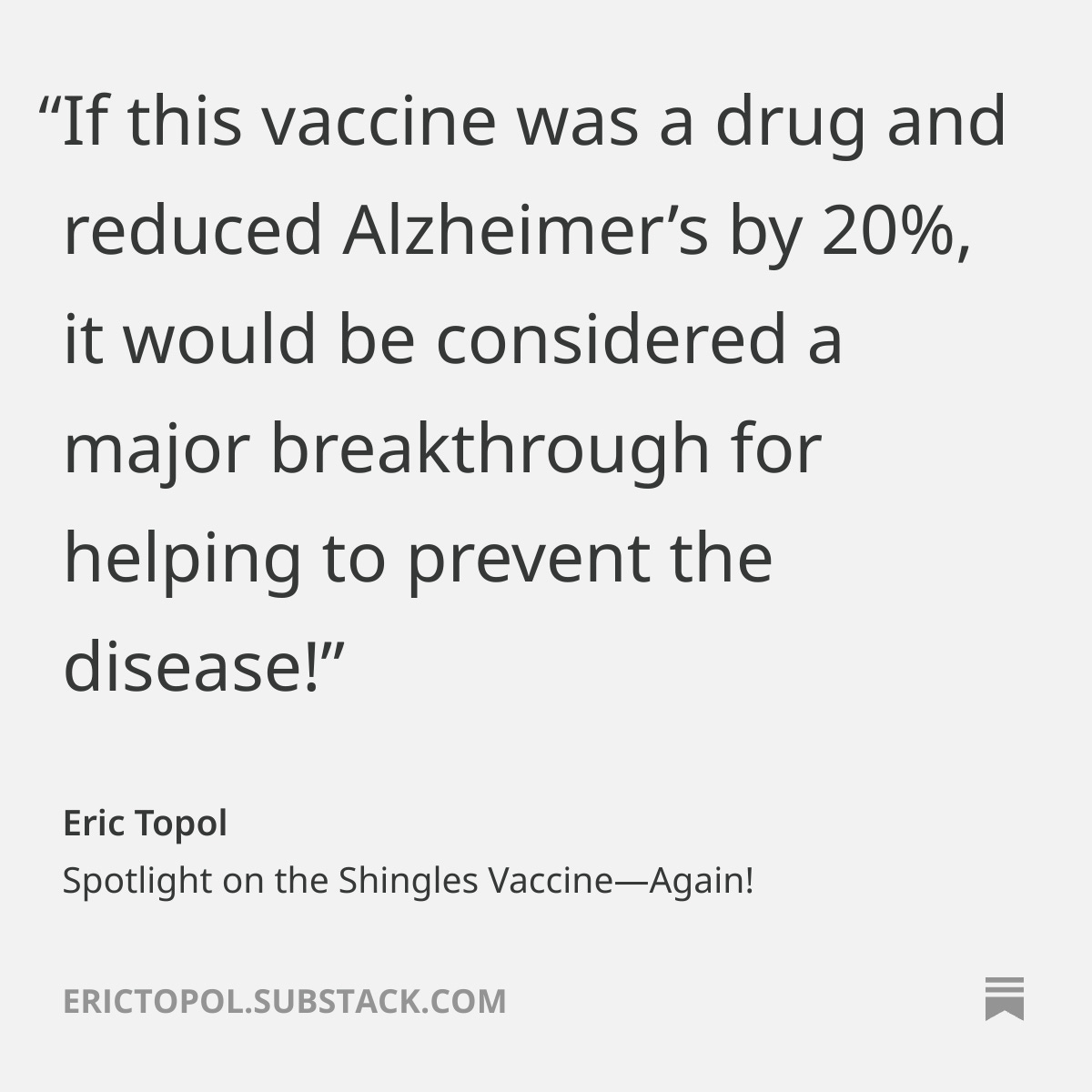
I’ve seen a few posts about the shingles vaccine showing promising effects of reducing Alzheimer’s
this is still developing and something to look out for, this would be very cool if this is actually working!
A baby got a personalized gene therapy designed in 6 months.
From diagnosis to FDA approval to treatment.
Baby KJ had a 1-in-1-million genetic disorder, toxic ammonia, and would've needed a liver transplant.
His team used base editing to fix the exact genetic error instead and it worked
it didn't take years of development, just 6 months
The FDA recently published a pathway for these therapies and trials could start this year with as few as 5 patients.
When your lab can go from gene sequence to treatment in under a year that changes everything
the real challenge will be scaling while decreasing cost.
@josiezayner Integrating AI into experimental workflows could be extremely useful, but this is hard to make a reality as many scientists don't like change.
paywalls on papers are super frustrating, especially when you find one you are really interested in.
Here's how to find it for free:
copy & paste the title into google scholar
Google scholar has helped me bypass this paywall more times than I can count.
if you want to pursue a career in science I would highly recommend getting a degree in computer science and minoring in biology while volunteering in a research lab on your campus and you will be set
this will give you better skills to do data analysis and lots of laboratory skills are best learned through experience
One simple way to improve reproducibility in science is to write better methods sections.
You'd be surprised at how vague some methods sections can be, especially in major journals like Nature.
The ZOE Microbiome Health Ranking was created to help linked specific gut-microbes to human health.
Using this ranking system, scientists can identify species most favorably and unfavorably linked to human health markers, such as BMI, blood sugar, and inflammation.
This will make it easier to track gut health in humans and paint a clearer picture how the gut-microbiome impacts human health.
https://t.co/bm6xDPjxw8
Horizontalization is occurring in biotech.
The drug discovery process is shifting from vertically integrated companies, where one firm owns every stage, to a horizontally integrated ecosystem of multiple specialized smaller companies.
Why is this happening?
1. Increased market size
2. Increasing complexity of production
What is the benefit?
- Increased efficiency
Here is a link to read more:
https://t.co/onZLtOtcGQ