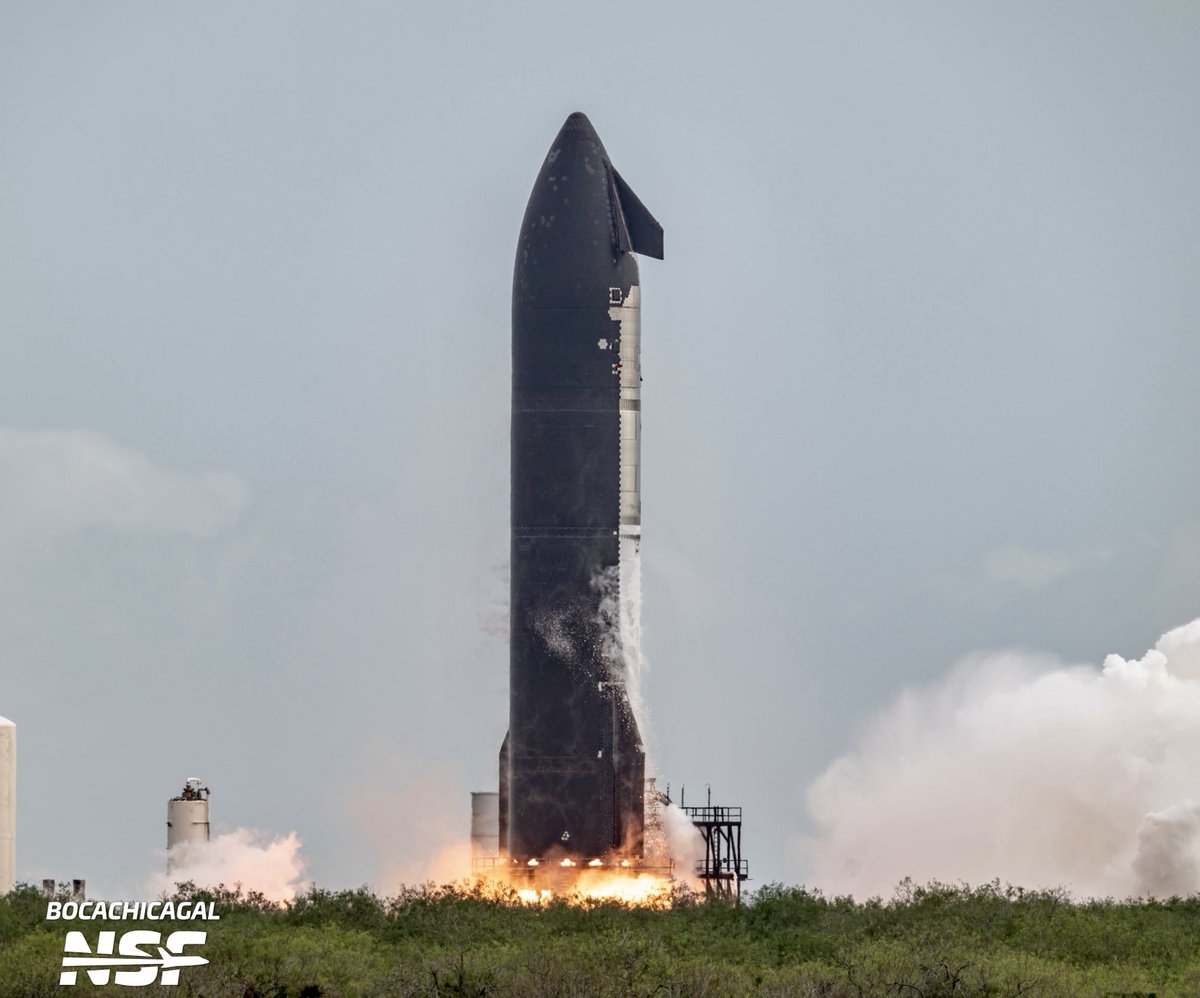
Holy $#*! Well my friends, I've managed to get in touch with brilliant international wildlife photographer Chris Bray on Christmas Island and he just grabbed some shots of Ship 40 for us! Take a look at this!🤯
Lot's more to come so follow him from the link. 👇
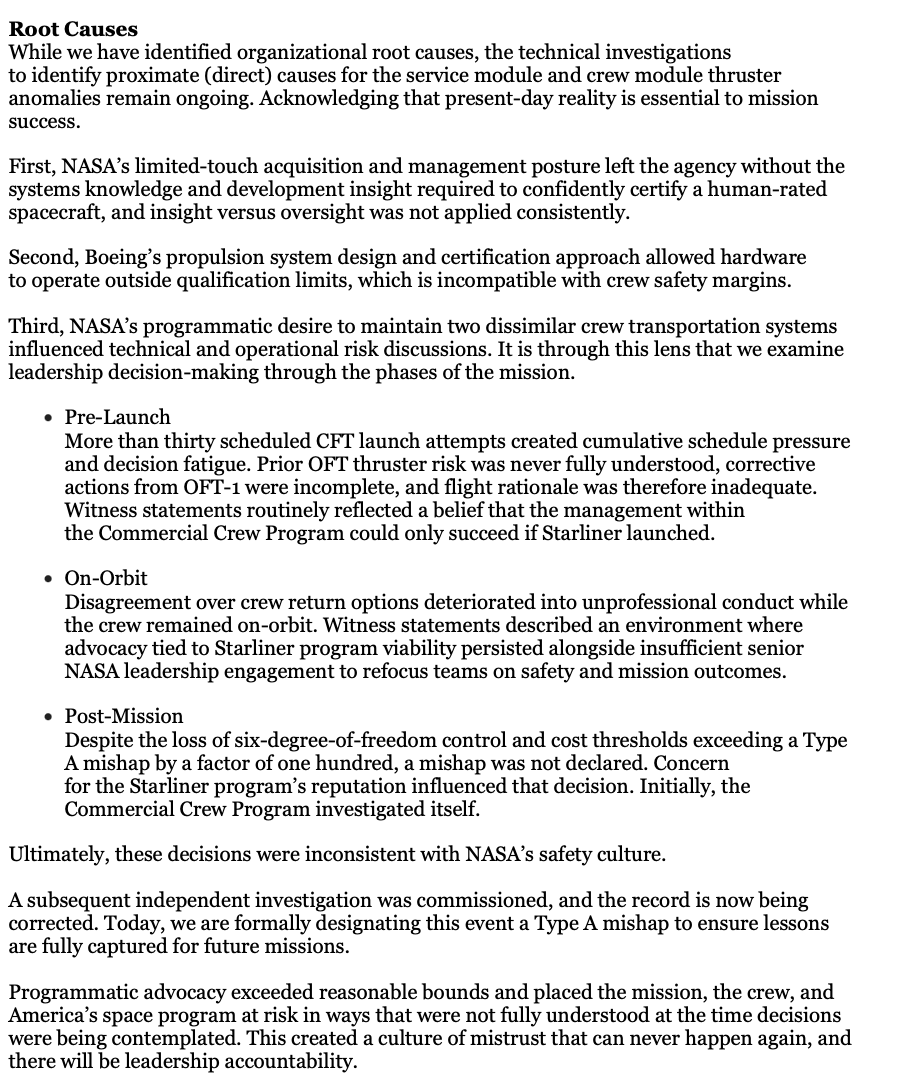
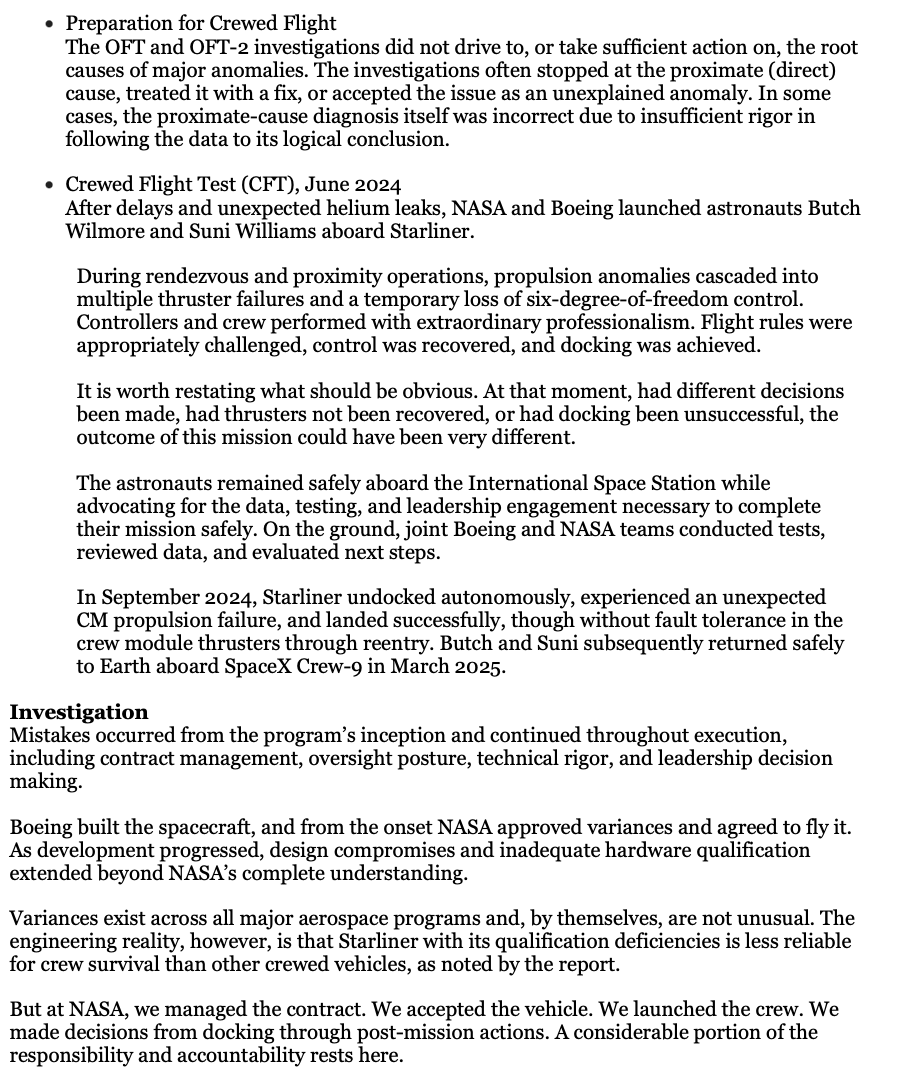
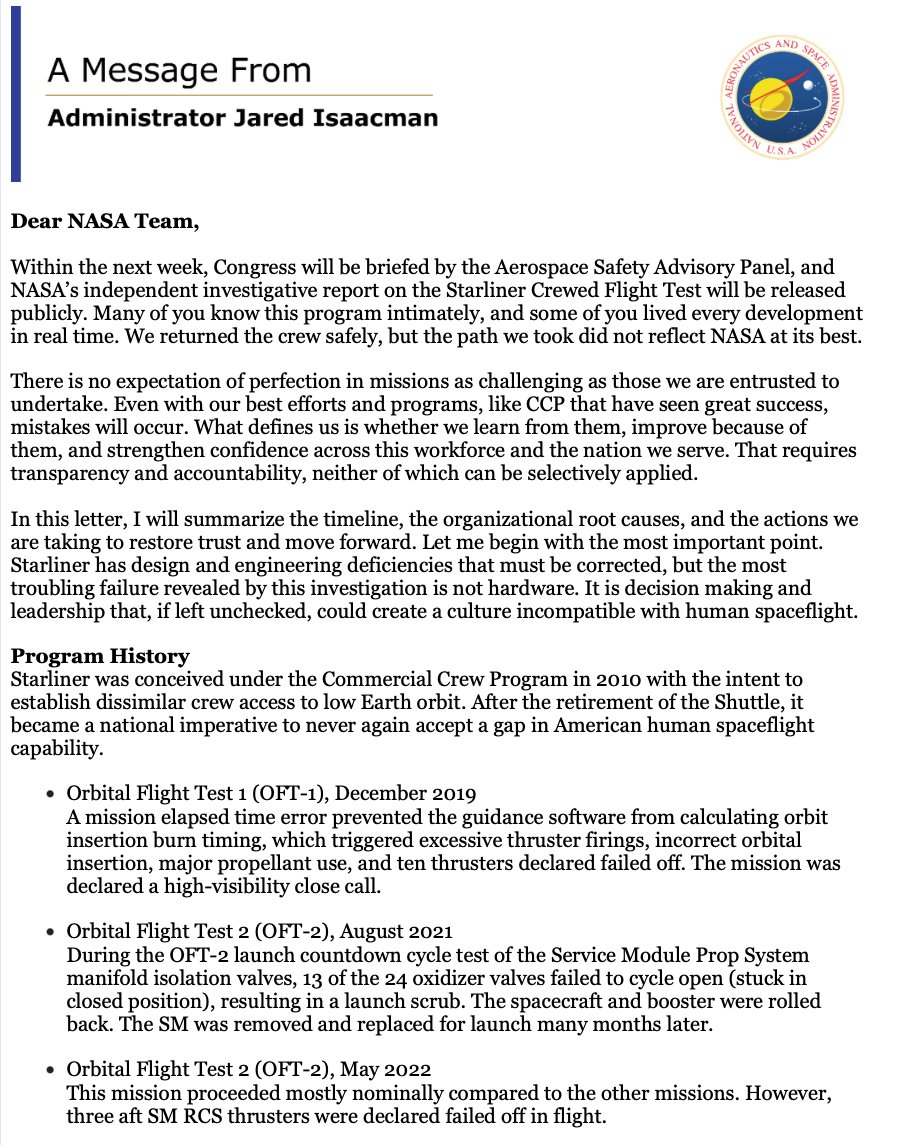
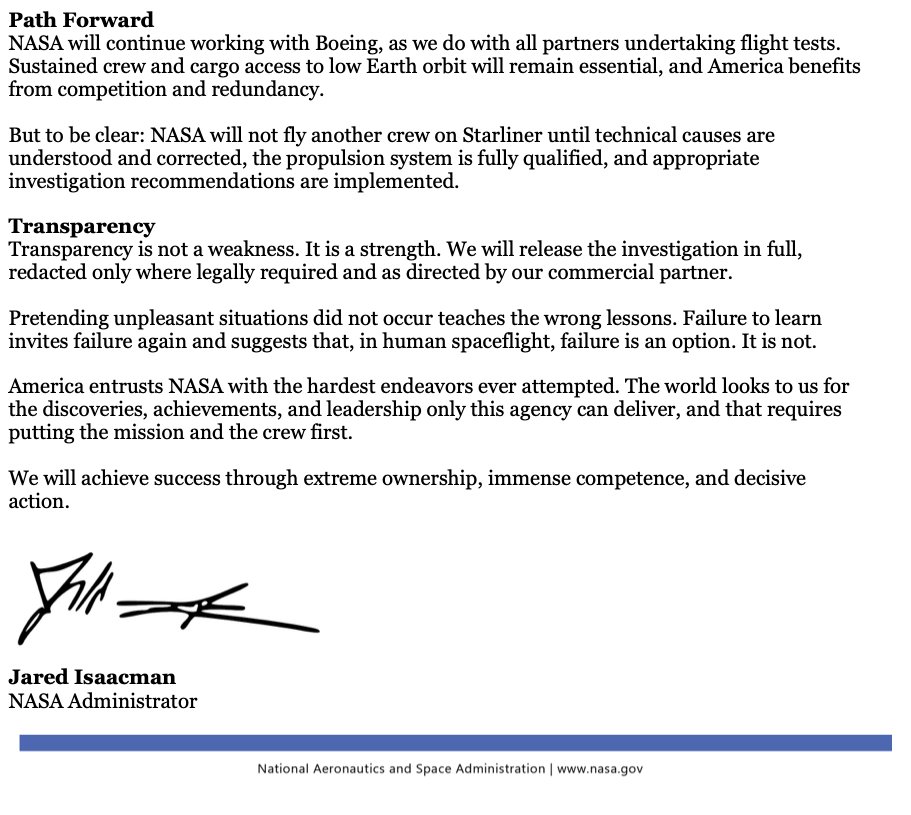
Below is the note that I sent to the NASA workforce today as we release the report on the Starliner Crew Flight Test Investigation.
We will achieve success through extreme ownership, immense competence, and decisive action.
In response to a FOIA request from NSF, Customs & Border Protection has released the footage from the aerostat stationed at South Padre Island of launch and booster catch from *Starship Flight 5*.
Footage courtesy of @CBPRGV@NASASpaceflight
SpaceX is aiming for >150 Falcon flights in 2025, but can their production rate keep up? By looking at the testing data from McGregor Live we can get an idea of what their production rate was through 2024, and what it might be for 2025!
@NASASpaceflight
https://t.co/3z6XltTTzh
@xdNiBoR Jared’s appointment is good news for ULA’s CisLunar ambitions. They have a healthy order backlog too. The problem is whether their owners will let them develop as they need to and invest or sell to someone who will
@DLaneBreckenri1@13ericralph31 I think Elon’s critical on-going contribution is maintaining the culture. Engineers tend to be cautious. Elon’s ‘best part is no part’ mantra is one example that cuts across that. Take Elon out & I fear a decline to be like other orgs
Visualised: Starship sits close to the Saturn V and the Space Shuttle in the amount of time it took to achieve 5 flights, and beats its cousin, Falcon 9, by nearly 500 days.
@NASASpaceflight
The strong gravity of Earth makes the physics of a fully reusable rocket with positive payload margin extremely difficult to solve, which is why it has never been done before.
Removing the mass of landing legs from the booster and ship by making the tower do the work of final velocity attenuation greatly improves payload margin.
This architecture also simultaneously substantially increases launch cadence, because the same arms that lift the booster and ship onto the launch stand also catch them, allowing immediate placement of the booster back on the launch stand and the ship back on top of the booster.
Starship’s fifth flight test lifted off with our most ambitious test objectives yet as we work to demonstrate techniques fundamental to Starship and Super Heavy’s fully and rapidly reusable design.
And on our first try, Mechazilla caught the booster → https://t.co/hibmw2lVv1
@brickmack@StephenClark1 My understanding is that the original contract doesn’t guarantee 6 flights, it is *up to* 6 flights. NASA guaranteed only 2, although it has already ordered 3 from Boeing.
@torybruno@AtomicAgent007 Even after removing from SpaceX’s price the cost of vertical integration infrastructure that the USG paid for ULA before current launch contracts?
@Space_Pete @MarcusHouse If it’s 10%, absolutely Dragon, but I think it’s much lower than that (o/w the decision would already be made). The issue appears to be lack of agreed root cause. New test data is good but with no root how to assess ‘unknown unknowns’?
@grantbonin@DrPhiltill I guess the question is: what will it cost to keep the ISS functioning/safe after 2030? (assuming it lasts that long, especially the Russian segment)