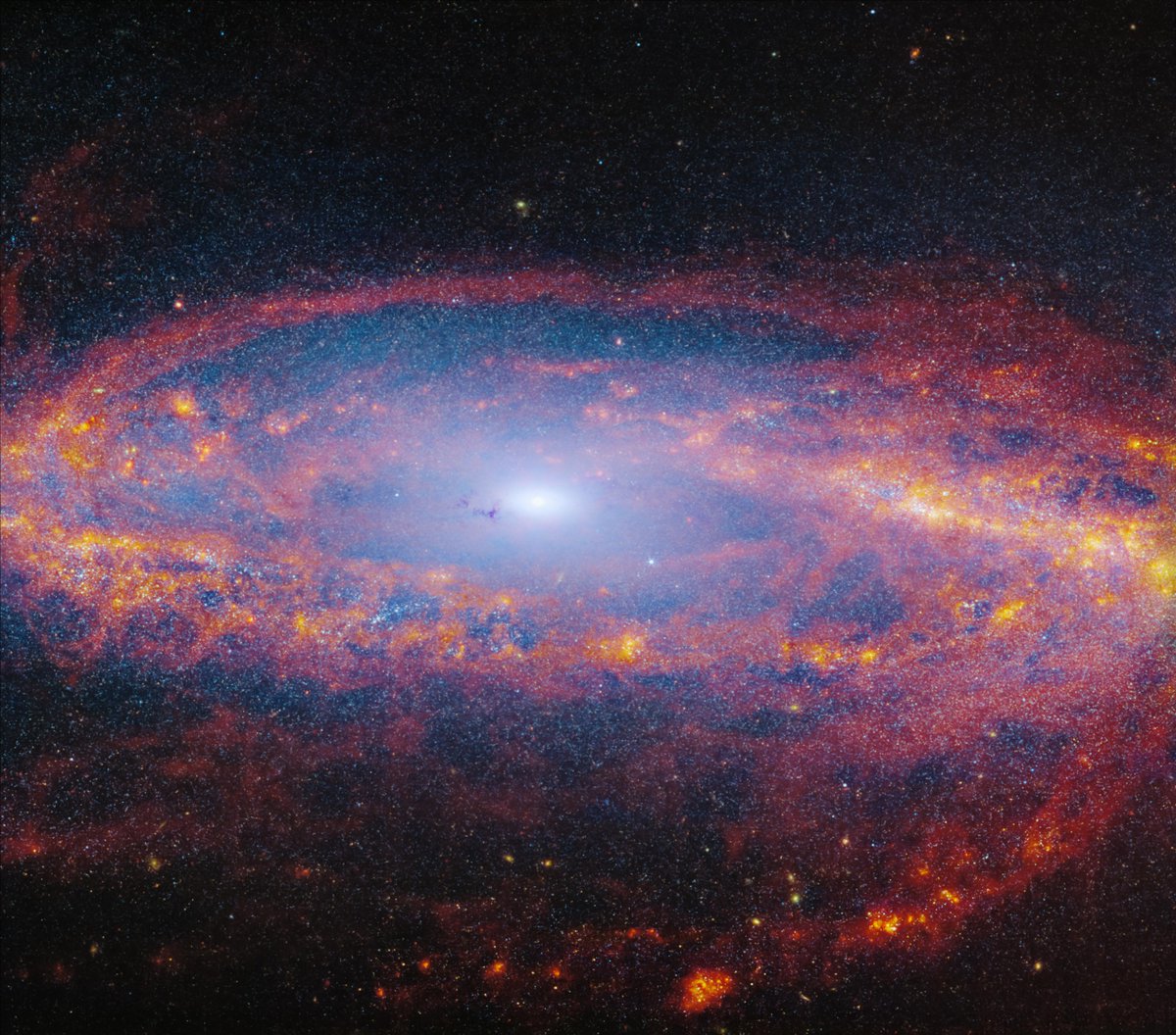
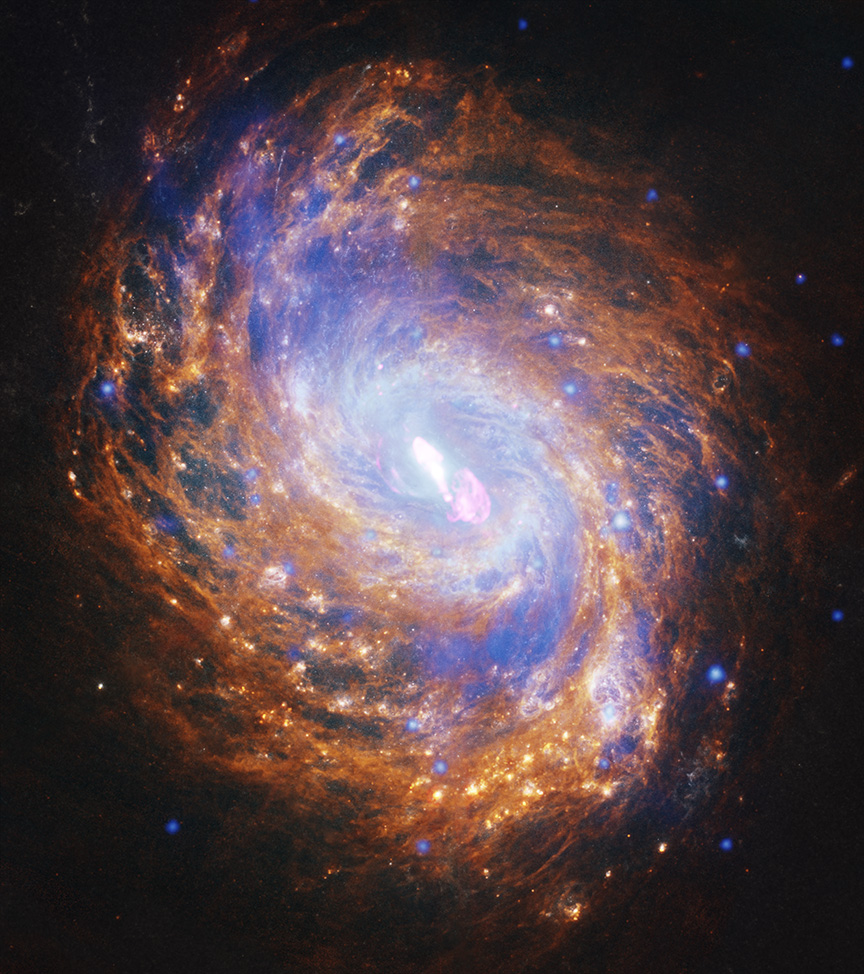
Is it just me or is that galaxy getting closer? 👀
M90 (NGC 4569), shown here in this new Webb image, is indeed getting closer! Its orbit through the Virgo cluster has accelerated so much that M90 is in the process of escaping the cluster entirely and is moving in our direction.
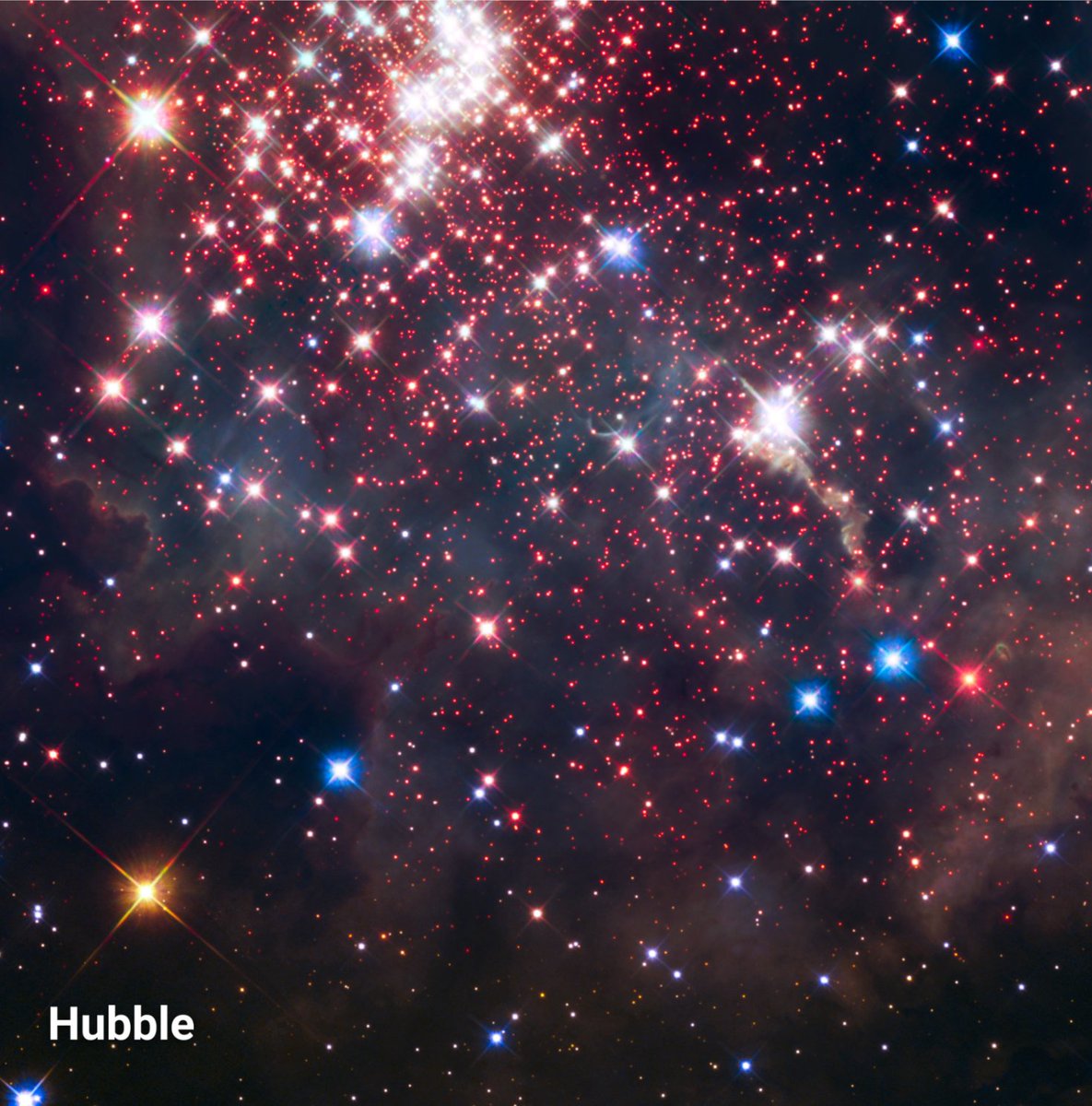
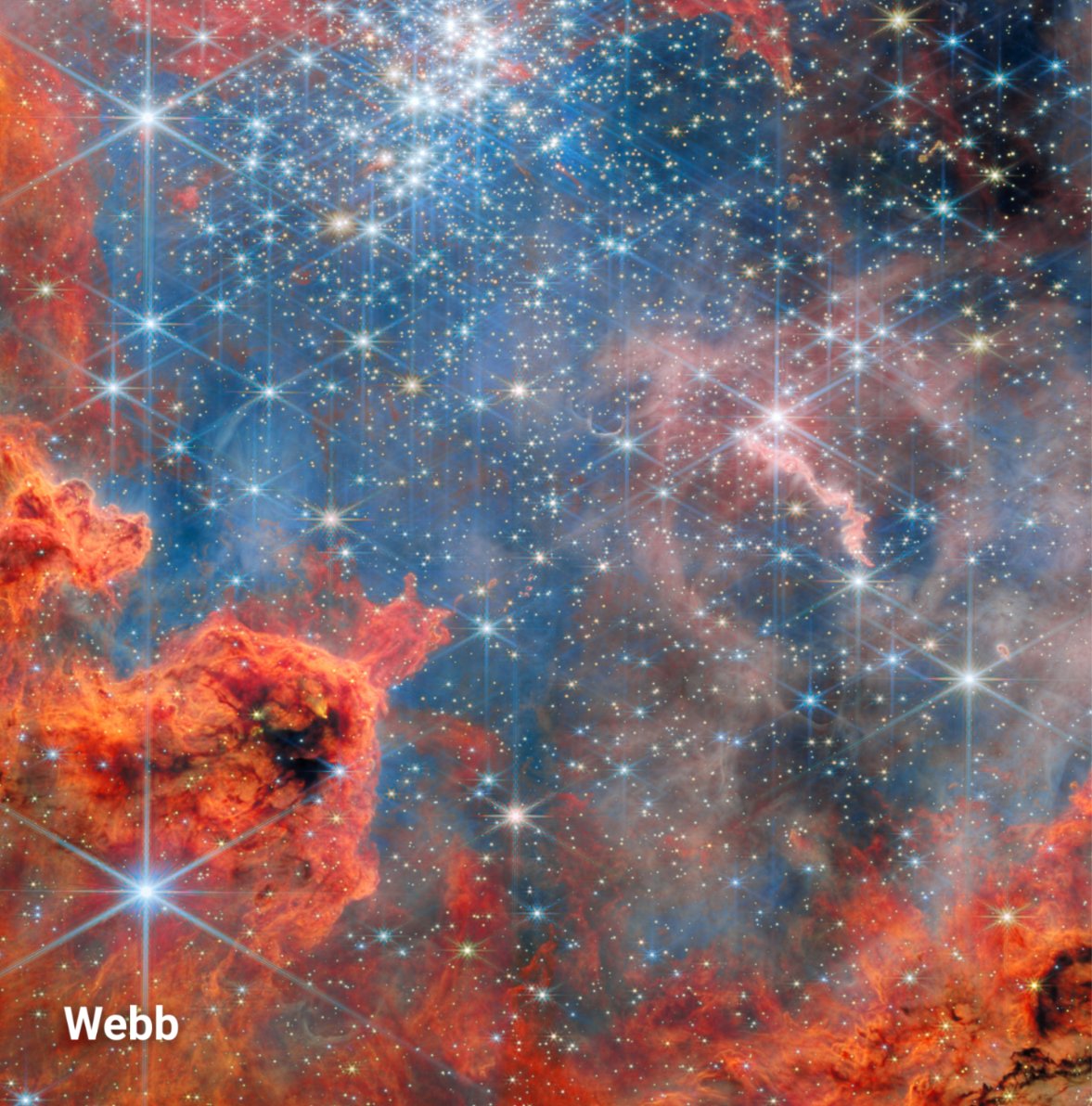
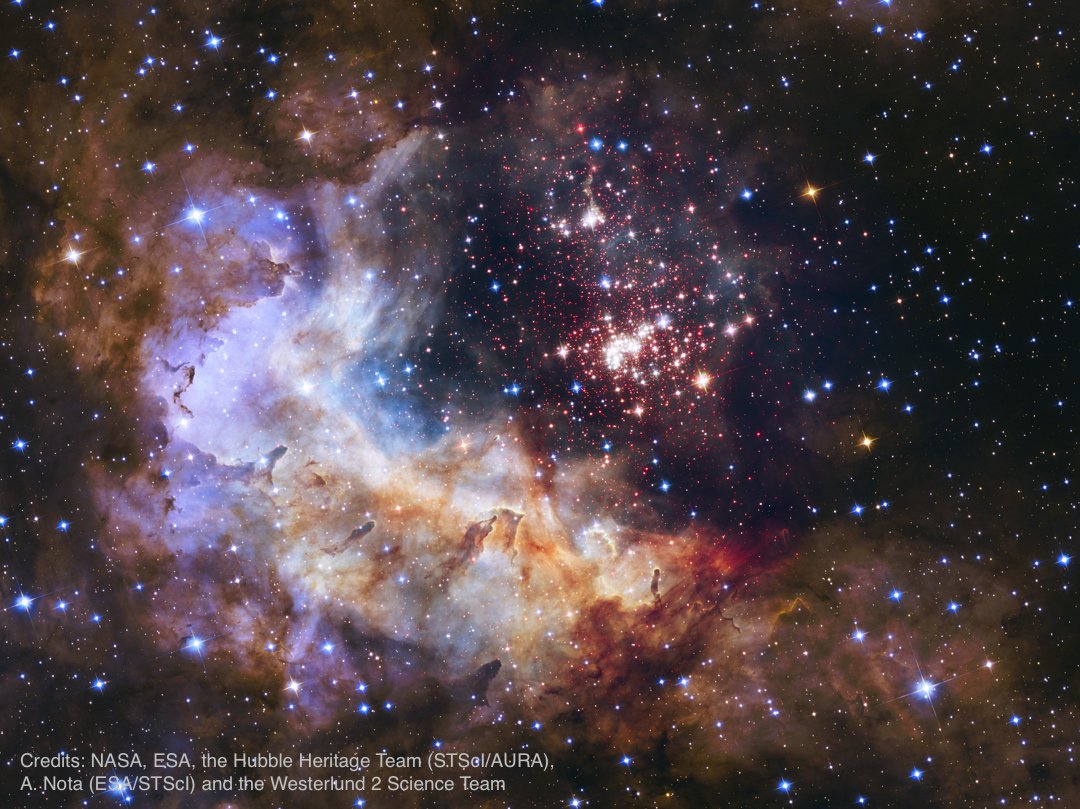
New year, new stars 🌟
These stars belong to the cluster Westerlund 2, which lives inside a stellar breeding ground known as Gum 29, about 20,000 light-years away.
New stars are forming all the time in our universe. In fact, on average, about two Sun’s worth of stuff is turned into new stars each year in our own Milky Way galaxy. #MondayMotivation
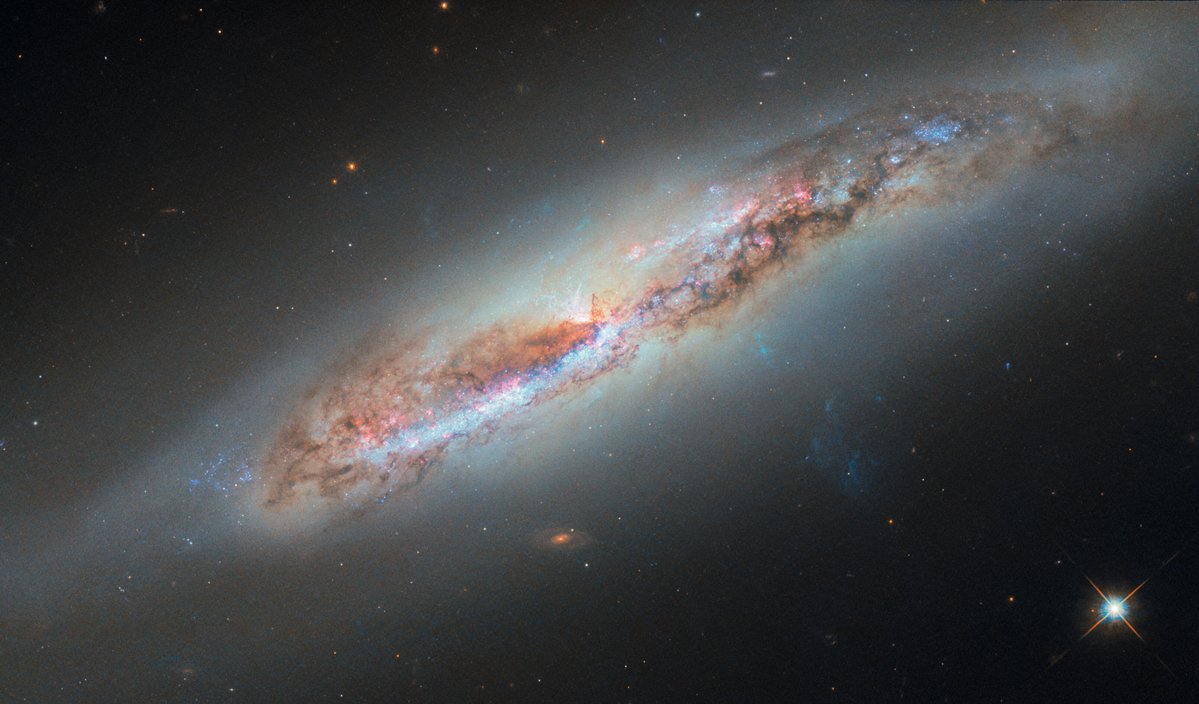
The light from galaxy NGC 4388 took 60 million years to reach Hubble.
Shining in this new image, NGC 4388 is just one of 1000+ galaxies that are part of the Virgo cluster – the nearest large galaxy cluster to the Milky Way, our home galaxy: https://t.co/cKSfdntK5L
Teamwork makes the telescope work! 🌌
The Hubble mission's vast and growing archive of observations allows researchers to develop collaborative projects with citizen scientists.
Learn more here: https://t.co/1rODyVLEBV
Looking for UV observation data?
A new and improved @NASAHubble Spectroscopic Legacy Archive has launched, making it easier for researchers to access Hubble UV data.
Learn more and access the new HSLA archive here: https://t.co/wEUqU1xlXw
Take a spin around a spiral galaxy!
@ChandraXray, @NASAHubble, and @NASAWebb studied this galaxy with a black hole at its center that is twice as massive as the Milky Way’s.
Notably, a million-mile-per-hour wind being driven from the black hole lights up the galaxy's center.
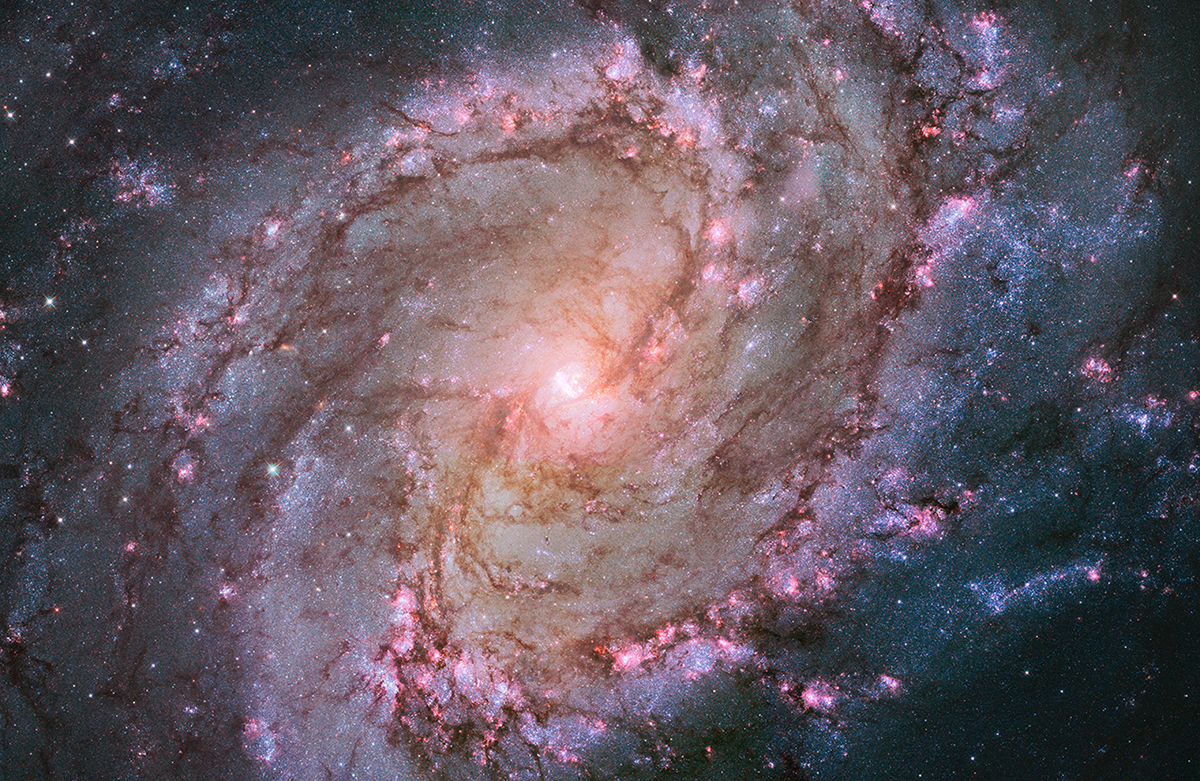
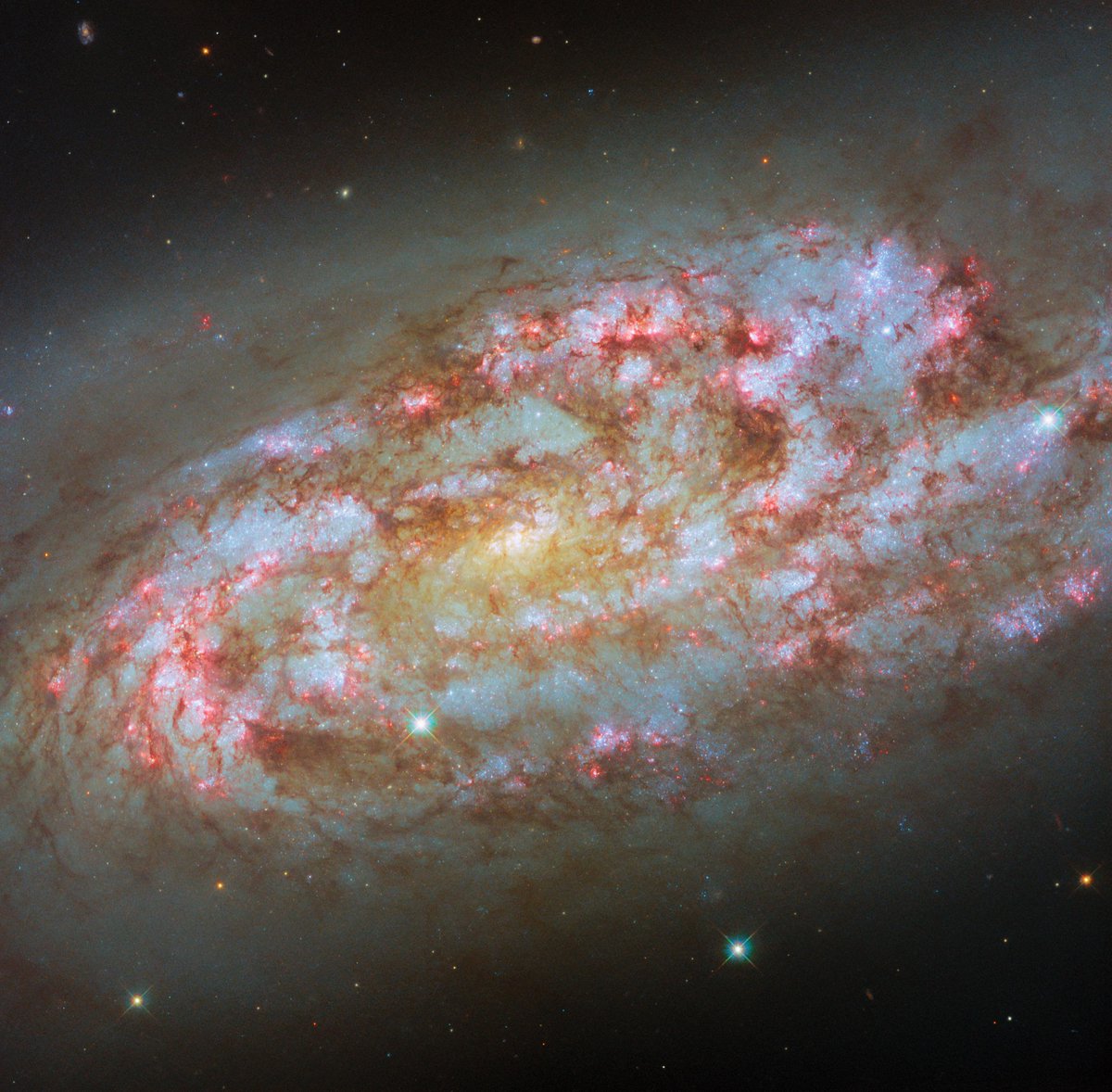
A storm of new stars 🌟
This new Hubble image shows the spiral galaxy NGC 1792. Classified as a starburst galaxy, it's a maelstrom of star formation, with spiral arms rich in star-forming regions: https://t.co/hi3SHtOamL
Bursting at the seams!
Located about 50 million light-years away, NGC 3125 is classified as a starburst galaxy – meaning that an unusually high number of stars form here, springing to life within intensely hot clouds of gas.
Read more: https://t.co/XZZy6LNLon
M82 has a star-powered heart! 🌟
Forming stars 10 times faster than our Milky Way, M82 contains "super" star clusters that each hold hundreds of thousands of stars.
Find out more on this #HubbleFriday view: https://t.co/yo9cslhuv9
This cosmic scene puzzled astronomers at first.
They recorded the two lobes (lower left and upper right) as two objects, but this #HubbleClassic view shows a single nebula that formed when a star reached the end of its life and cast off its outer layers: https://t.co/sti4ogh28f