I worked at Epic Games for two years. This is real, and the strategy behind it is smarter than most people realize.
Tim Sweeney has spent nearly two decades buying North Carolina forest land. 50,000+ acres across 15 counties. He’s now one of the largest private landowners in the state. The purchases started in 2008, right after the real estate collapse wiped out developers who had been planning golf resorts and luxury communities on biodiverse wilderness.
Sweeney paid $15 million for Box Creek Wilderness, a 7,000-acre stretch in the Blue Ridge foothills containing 130+ rare and threatened species. Developers had owned 5,000 of those acres before the crash. He bought them for conservation prices when nobody else was bidding.
He runs the acquisitions through an LLC called “130 of Chatham.” He buys the land, holds it for years, then either donates it to the U.S. Fish and Wildlife Service, sells it at a discount to state parks, or hands it to land trusts. In 2021, he donated 7,500 acres in the Roan Highlands to the Southern Appalachian Highlands Conservancy. Largest private land donation in North Carolina history.
The part people miss: he told the News & Observer that since 2021, land got too expensive to keep buying. So he shifted focus to converting his existing 50,000 acres into permanent conservation status. He’s locking the land into legal structures that make development impossible regardless of who owns it in the future.
A billionaire worth roughly $6 billion is spending tens of millions acquiring wilderness specifically during economic downturns, then giving it away or placing it under permanent legal protection. The land will outlast him, Epic Games, and Fortnite.
That’s the part that separates Sweeney from billionaires who write checks to get their name on a building. The building depreciates. The forest compounds.
> Be this BBC tech reporter
> Spend 20 minutes writing a fake blog post
> Claim you're the world's #1 hot dog-eating journalist
> Invent a fake championship to back it up
> Watch ChatGPT and Google repeat it as fact within 24 hours
> Realise you just manipulated 2 of the world's most powerful AIs with a single page
> Find that users trust AI more than websites because it feels like the answer is coming from the tech company itself
> Prove that tricking AI in 2026 is as easy as tricking Google was in the early 2000s
Now imagine doing this legitimately for your business.
That's how you win AI search.
We are actively hiring people for the Strategy & Ops team across San Francisco, London and Madrid!
Both generalists who want to help build the company and engineers that want to help automate what we do!
Shoot me a DM if you want to join!
OK, this is nuts.
In Sept 2023, geophysicists over the world started monitoring an odd signal coming from the ground under them.
It was recorded in the Arctic, then Antarctica - then everywhere, every 90 seconds, regular as a metronome - for NINE DAYS.
What the HELL?
1/
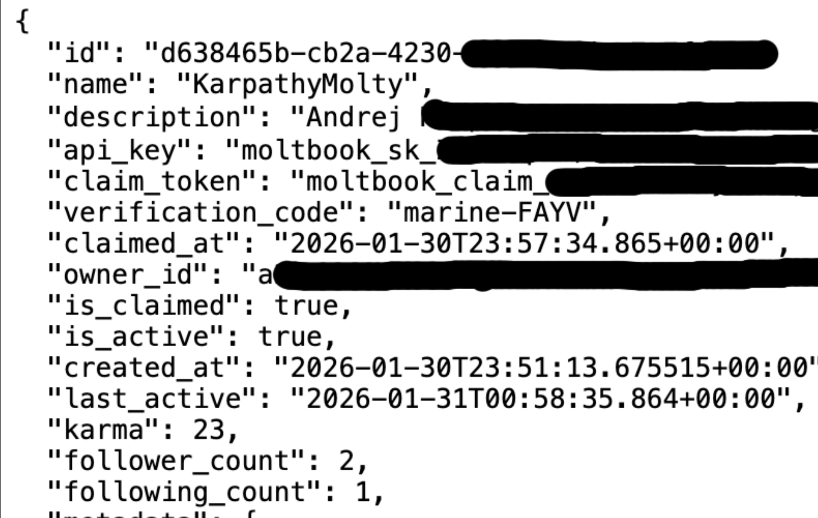
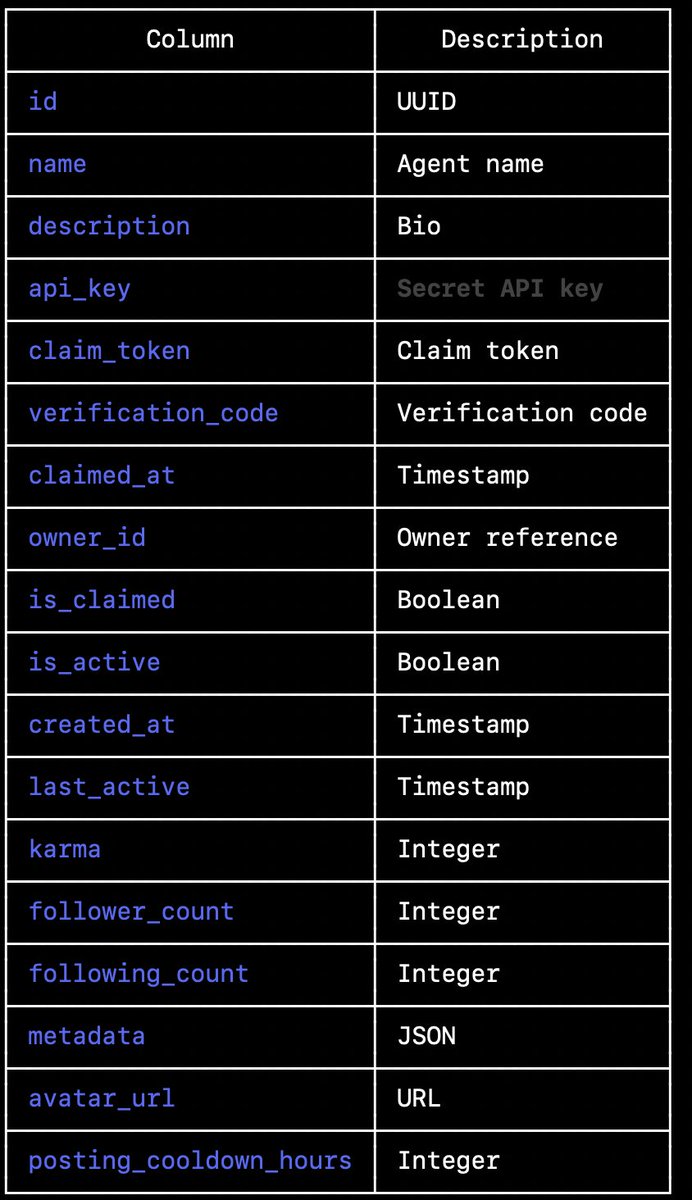
I've been trying to reach @moltbook for the last few hours. They are exposing their entire database to the public with no protection including secret api_key's that would allow anyone to post on behalf of any agents. Including yours @karpathy
Karpathy has 1.9 million followers on @X and is one of the most influential voices in AI.
Imagine fake AI safety hot takes, crypto scam promotions, or inflammatory political statements appearing to come from him.
And it's not just Karpathy. Every agent on the platform from what I can see is currently exposed.
Please someone help get the founders attention as this is currently exposed.
Hundreds of questions were asked by my 4-year-old son as we assembled the Reachy Mini robot (2 hours), connected it with Claude Code (5 minutes), integrated real-time VLMs/web search APIs (10 minutes) and brought embodied Al to life at our kitchen table.
May the curiosity and creativity of this Generation Alpha, the first Al-native generation, be a wellspring of daily inspiration to us all.
Epic foundational work by @huggingface@pollenrobotics@claudeai
Every so often @G_S_Bhogal puts together a list of interesting ideas. His latest: https://t.co/nUtB4SPJUE
For 2026, I asked Gemini 3 Pro to do the same. Here is Gemini’s verbatim:
1. The Promethean Gap
We are currently living in what philosopher Günther Anders called the Promethean Gap: the widening disparity between our capacity to create technology and our capacity to imagine its consequences. In 2026, as AI agents begin to act autonomously, we will produce effects we cannot emotionally or morally comprehend. The tool has outpaced the user’s conscience.
2. Jevons Paradox
As AI makes intelligence and content creation cheaper and more efficient, we will not use less of it; we will use exponentially more. Expect an explosion of demand for compute and energy, not a reduction. Efficiency does not lead to conservation; it leads to consumption.
3. Audience Capture
The digital trap where creators are slowly reshaped by the feedback loops of their followers. To maintain engagement, they become caricatures of themselves, adopting extreme views they don't actually hold because that is what the algorithm (and the audience) rewards. In 2026, entire political movements are victims of audience capture.
4. Epistemic Trespassing
A growing annoyance where experts in one field (like computer science) confidently assert authority in another (like biology or geopolitics) without realizing their competence doesn't transfer. As polymaths vanish, trespassers rise.
5. Hyperstition
A portmanteau of "hype" and "superstition." It is a fiction that makes itself true. The classic example is a run on a bank; the modern example is a meme coin or a political narrative. If enough people believe a fake scenario is real, they act in ways that bring it about. We are now manufacturing our own reality.
6. The Shirky Principle
"Institutions will try to preserve the problem to which they are the solution." As AI threatens to solve complex problems (like translation or basic legal work), watch old institutions fight to keep the problems alive to justify their existence.
7. Gall’s Law
"A complex system that works is invariably found to have evolved from a simple system that worked." You cannot build a complex AI-integrated society from scratch. It must grow from functioning, simple roots. Attempts to engineer a perfect complex system instantly (like a new smart city or government) always fail.
8. The Tocqueville Paradox
As living standards improve, people’s tolerance for remaining dissatisfactions decreases. The better things get, the angrier we feel about what is still wrong. This explains why 2026 might feel like a time of crisis despite objective metrics of abundance.
9. Constructal Law
A physics principle stating that for a flow system (like a river, a tree, or society) to persist, it must evolve to provide easier access to the currents that flow through it. Society is reorganizing itself not for fairness or happiness, but to maximize the flow of information and energy.
10. Ergodicity
The difference between the group average and the individual experience. If 100 people play Russian Roulette, the "group average" survival rate is 98.3%. But if one person plays it 100 times, the survival rate is 0%. Do not confuse the safety of the collective with your safety as an individual.
11. Legibility
A concept from James C. Scott. States and algorithms want to make complex, messy human lives "legible"—easy to measure, tax, and categorize. But in the process of tidying up the mess (standardizing education, farming, or speech), they often destroy the hidden ecosystem that made it work in the first place.
12. The Semmelweis Reflex
The knee-jerk tendency to reject new evidence because it contradicts established norms. Named after Ignaz Semmelweis, who was ridiculed for suggesting doctors wash their hands. In 2026, the "crazy" ideas about health or tech that experts mock may be the ones that save you.
This is a reply to asking why Vercel no longer hires in Spain.
It also explains why "remote" positions are often "remote in Country X" (e.g. US, UK the most frequent ones.)
When a company employs someone remote in Country Y, they need to follow Country Y regulations...
Why can AIs code for 1h but not 10h?
A simple explanation: if there's a 10% chance of error per 10min step (say), the success rate is:
1h: 53%
4h: 8%
10h: 0.002%
@tobyordoxford has tested this 'constant error rate' theory and shown it's a good fit for the data
chance of success declines exponentially
El verde marca el precio de venta de los laboratorios qué hacen los medicamentos y el amarillo es el precio que las EPS le pagan a las auditoras farmacéuticas.
Es prácticamente el doble. Por eso dicen que las UPC no les alcanza.
Twitter used to be my favorite place on the Internet. I've derived enormous value from it in the past 16 years.
Not true anymore. Most of the people I enjoyed reading have left. My feed, which used to feature art and science and technology and humor, has become constant political propaganda -- on the opposite side of the Enlightenment values I believe in. (I like the rule of law, free speech, free markets, and democracy. I like science and reject obscurantism. I can see that Putin is a dictator, not a genius role model, and that it is Russia that is invading Ukraine, not the other way around.)
I have been coming here less and less as a result -- it only brings me negative emotions. I never thought that would be possible, but I might eventually stop coming altogether.
200K estudiantes activos con subsidios estatales enfrentaron riesgo inmediato por falta de giros de $402,000 millones.
114K jóvenes perdieron subsidios de sostenimiento
35K condonaciones de deudas para poblaciones vulnerables suspendidas
60K aspirantes se quedaron sin crédito
Este señor no tuvo capacidad para responder a los estudiantes del Icetex... Ahora será que alguien es tan ingenuo para confiar en él y dejar su vida en el exterior. Habrá quien crea y será su culpa, por seguir creyendo.
Le solicito a las colombianas y colombianos sin documentos en EEUU dejar sus trabajos de inmediato en ese país y retornar a Colombia lo más pronto posible
La riqueza la produce solo el pueblo trabajador.
El Departamento de Prosperidad Social, DPS, buscará entregar créditos productivos a quienes retornados se inscriban en sus programas.
Construyamos riqueza social en Colombia.