Six years ago this weekend (coincidentally this year too the last weekend dates are similar to 2020) launched a swift military counter move in Ladakh which forced PLA to come to the negotiating table. I had chronicled the planning of Op Snow Leopard and its subsequent execution. Reposting that to mark six years of Kailash Range operation. https://t.co/2C5KlwwvHs
King Charles III’s Royal Guard honored Dolly Parton by playing one of her biggest hits outside Buckingham Palace.
After the 80-year-old country music star died on Aug. 25 following a brief battle with cancer, the Band of the Coldstream Guards performed Parton’s 1980 hit “9 to 5” during the Changing of the Guard ceremony.
An excellent piece from Air Marshal Manish Khanna (Retd) - nice to see some good writing emerging from recently retired senior officers from the IAF
https://t.co/l3j6YEhzQp
HOW SHOULD A COMMANDING OFFICER IMPROVE THE COMBAT FIRING OF HIS UNIT?
If your unit is deployed in an operational area or likely to induct into one soon, good range classification alone should not give you confidence.
A soldier who groups well from a comfortable position, at a known distance and on a clearly marked target may still struggle when a target appears suddenly, remains exposed briefly or has to be identified before being engaged.
Combat firing is not basic marksmanship conducted in combat dress.
If I were preparing a unit today, I would concentrate on the following:
1. ESTABLISH THE CORRECT BASELINE
Assess every soldier under realistic time pressure. Train and test weapon handling, target identification, speed of engagement and accuracy and not merely grouping.
The purpose is not to embarrass weak firers but to identify exactly what each soldier needs. Often we keep training all soldiers equally. Yet operational performance is often limited by the weakest firers. The baseline will help you identify them and devote greater attention to their improvement.
2. TRAIN SUB UNITS TOGETHER
Take out one complete platoon or section at a time and train it intensively for a few days, along with its supporting and specialist elements. Rotate systematically until the entire unit has completed the process.
Combat is fought by teams, not by separately trained individuals assembled at the last moment.
3. CREATE ACCESS TO FIRING
Wherever space and safety considerations permit, establish a small range in every Company Operating Base.
Daily firing is essential. A large annual firing exercise cannot replace frequent repetition.
Even a 25 metre range can be used for weapon handling, rapid acquisition, reflex shooting and different firing positions. Ten purposeful rounds fired regularly are often more valuable than fifty rounds fired mechanically after months of inactivity.
Dry training, Combat TsOETs (check out from Inf School) must also continue regularly. Correct repetition builds instinct; careless repetition reinforces bad habits.
4. USE THE TIME IN CORPS BATTLE SCHOOLS GAINFULLY
CBSs often have excellent firing range infrastructure. During PIT, account for every minute of those 15 days, especially the time available on the ranges. Use it to develop safe weapon handling, fire control and discipline under realistic live fire conditions
Use the opportunity to develop confidence in realistic weapon states under controlled conditions, with uncompromising muzzle awareness, tactical move with weapons ready, trigger discipline and fire control.
5. TRAIN IN THE EQUIPMENT YOU WILL FIGHT IN
Soldiers must fire wearing the full combat equipment they are expected to operate with, including their protective equipment, ammunition carriage and other essential load.
Equipment changes stance, balance, weapon presentation, visibility and access/retrieval of magazines. A pouch which has difficult access and retrieval of magazine makes the difference between a successful and a failed engagement. Discovering these problems during operations is too late.
Train as you will fight, not in the clothing most convenient for the range. This will enhance his confidence in himself and his equipment.
6. BEGIN WITH A REALISTIC STIMULUS
Operational contact rarely begins with the range staff announcing, “Bhar, ready, fire.”
Start practices through a realistic external stimulus. It may be a field signal, radio command or another cue appropriate to the scenario. The soldier must recognise the situation, make the decision and respond.
The first action should come from awareness, not anticipation of a range command.
7. INTRODUCE FAILURE DRILLS
Weapons stop. Magazines empty. Soldiers under stress must perform Fauri Ilaaj and magazine changes instinctively.
Under properly supervised and controlled conditions, inert dummy rounds can be inserted into magazines to create unexpected stoppages. Soldiers can also be issued magazines without knowing the exact number of rounds in each.
This prevents rehearsed counting and forces the firer to recognise the problem, remedy it and continue the engagement without waiting for assistance.
8. DEVELOP UNIT FIRE DISCIPLINE
Decide upon and train a recognisable cadence of fire appropriate to your unit’s operational requirements. You can also train your entire unit to use specific words for magazine change, for suppressing fire etc. Use it consistently so that soldiers understand how their comrades are expected to engage.
It can assist recognition during confused engagements. However it must never become the sole means of identifying friendly troops. Any predictable pattern can be observed and copied.
Fire discipline should create control, not rigidity.
9. MAKE THE TARGET BEHAVE LIKE AN ENEMY
The enemy will not stand still with scoring circles painted on his body.
Targets should appear unpredictably, remain exposed for varying durations and present different engagement decisions. Soldiers must identify, decide and engage and not merely fire when ordered.
Introduce limited visibility, physical exertion, changing positions, multiple targets and no-shoot situations progressively. Add pressure only after safety and sound weapon handling are firmly established. Advanced Combat Target System developed by YudhVeer Defence provides you many such inbuilt drills and is an effective tool for realistic combat firing practises.
10. MEASURE MORE THAN THE FINAL SCORE
Record reaction time, first-round hit, shot placement, penalties and consistency over successive practices.
A single score tells you how a soldier fired once. A training record tells you whether he is improving and whether that improvement survives pressure.
11. CONDUCT HONEST AFTER ACTION REVIEWS
After every practice, ask:
Why was the target missed?
Was the delay in identification, weapon presentation or firing?
Did accuracy collapse under pressure?
Was the firer unsafe or merely slow?
Could he clear a stoppage without prompting?
Correct the cause, not merely the score.
12. THE COMMANDING OFFICER MUST FIRE
Nothing communicates seriousness better than the CO arriving with his own weapon, carrying the same equipment and participating in the same practices.
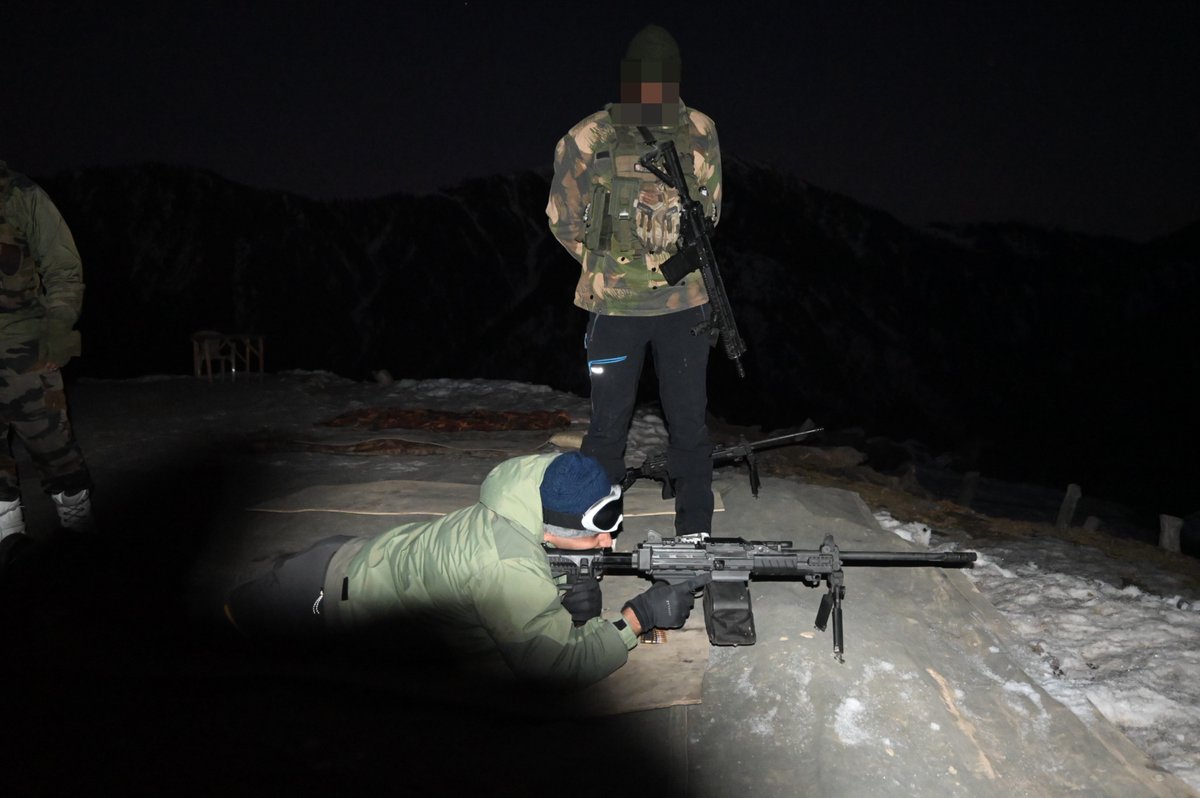
If the CO makes it part of the unit’s daily culture, standards will rise. The photograph is from my command days on the active Line of Control. We practised firing around the clock, and I made it a point to fire with the boys whenever I visited the forward posts.
Technology such as the Advanced Combat Target System can make practices more realistic, measurable and repeatable. But no target system can substitute for command emphasis, intelligent training design and relentless repetition.
The objective is not to produce soldiers who shoot well on range day.
It is to build soldiers who can identify correctly, react instinctively, overcome a failure and place the first effective shot when it truly matters.
Bir Kere Girince Saatlerce Çıkamayacağınız 50 Site
1.) 'https://t.co/FDTmt38jKw' — Dünyayı canlı uydu görüntüsüyle izleme
2.) 'https://t.co/Tytazsp6y2' — Şu an gökyüzündeki her uçağı görme
3.) 'https://t.co/b8trMj1vUi' — Denizdeki tüm gemileri anlık takip
4.) 'https://t.co/EYzDYh0BqF' — Rüzgar ve fırtınaların canlı haritası
5.) 'https://t.co/tJHTnBvUBe' — Dünyaya düşen yıldırımları anlık izleme
6.) 'https://t.co/ePbstmUfab' — Son depremlerin canlı listesi
7.) 'https://t.co/G7cSydNKiO' — İnterneti taşıyan okyanus kabloları
8.) 'https://t.co/3KOx1uP05V' — Ormanların yok oluşunu uydudan izleme
9.) 'https://t.co/BjXxDVBtur' — Dünyanın istatistikleri saniye saniye
10.) 'https://t.co/cO1EjkMwuG' — Şu an atılan tweet ve arama sayısı
11.) 'https://t.co/ciADXU3PhE' — Ülkelerin gerçek boyutlarını karşılaştırma
12.) 'https://t.co/LO6JWd0BlG' — Yüzyıllar öncesinin haritaları
13.) 'https://t.co/EEUvFXzGao' — 150 bin tarihi harita arşivi
14.) 'https://t.co/yK72tIFetv' — Gönüllülerin çizdiği dünya haritası
15.) 'https://t.co/QfXLWflDxA' — Rastgele birinin penceresinden dünyaya bakma
16.) 'https://t.co/ESMrPd5w78' — Şehirlerde sanal yürüyüş
17.) 'https://t.co/pRBm3f1ANH' — Dünyanın rastgele bir noktasına ışınlanma
18.) 'https://t.co/8JaKk4HmQi' — Dünyanın en tuhaf yerlerinin kataloğu
19.) 'https://t.co/qwJXW2a6zm' — Etkileşimli bilgi deneyimleri
20.) 'https://t.co/Sp9uLE2QOu' — Atomdan evrene ölçek yolculuğu
21.) 'https://t.co/2FitQ7k3ZI' — Güneş sistemini 3B gezme
22.) 'https://t.co/KH9VyPhaoW' — Tarayıcıda gerçek gökyüzü haritası
23.) 'https://t.co/JBLDnae59F' — NASA'nın günün astronomi fotoğrafı
24.) 'https://t.co/HuFaH5Zc2g' — NASA'nın tüm görsel arşivi ücretsiz
25.) 'https://t.co/T3QWBtfYKB' — Veriyle anlatılan görsel makaleler
26.) 'https://t.co/isIkHYtRCm' — Dünyanın gerçek verilerle hali
27.) 'https://t.co/NJ7TdwwdbA' — Dünya hakkındaki yanlış bildiklerimiz
28.) 'https://t.co/vmkn87BBGW' — Karmaşık veriyi görselleştirme
29.) 'https://t.co/eHqySW1EGw' — Dünya Bankası'nın açık verileri
30.) 'https://t.co/av0bjbISF2' — Türkiye'nin resmi istatistik veritabanı
31.) 'https://t.co/l3Mb5x5KkS' — Milyonlarca kitap, film ve yazılım arşivi
32.) 'https://t.co/B6NDL6Bxri' — Telifi düşmüş 70 bin ücretsiz kitap
33.) 'https://t.co/no8SFuA27T' — Dünyanın her kitabının kaydı
34.) 'https://t.co/I1TMHDw3qI' — ABD Kongre Kütüphanesi dijital arşivi
35.) 'https://t.co/yxkHTsqFnH' — Avrupa'nın kültürel miras arşivi
36.) 'https://t.co/wMcjgRaBht' — Amerika'nın dijital kütüphane koleksiyonu
37.) 'https://t.co/8MpQHB3zrG' — Müzeleri evden gezme
38.) 'https://t.co/i3Vt53wDvA' — Sanat eserlerini yüksek çözünürlükte indirme
39.) 'https://t.co/5ei05nWSvS' — 250 bin sanat eserinin arşivi
40.) 'https://t.co/2SpGcVKFiD' — Tarihin unutulmuş görsel hazineleri
41.) 'https://t.co/sSdBoLWEvB' — Ücretsiz kültür ve eğitim arşivi
42.) 'https://t.co/UyUZxtlbfh' — Met Müzesi'nin açık koleksiyonu
43.) 'https://t.co/23cxfWRaNy' — Müzik türlerinin soy ağacı
44.) 'https://t.co/gMDy3tUEMT' — Ülke ve on yıl seçip o dönemi dinleme
45.) 'https://t.co/WrXSWim8jr' — Wikipedia düzenlemelerini sese çevirme
46.) 'https://t.co/IcRIPgCDAS' — Rastgele bilgi kuyusu
47.) 'https://t.co/WoE9MNJ5PU' — Zaman, gündoğumu ve gökyüzü olayları
48.) 'https://t.co/VrkUoUal3M' — Bilim haberlerinin güncel akışı
49.) 'https://t.co/4Nwok7W5wn' — Bilimsel makalelerin ücretsiz ön baskıları
50.) 'https://t.co/DqmPFeYnrl' — Veriyi canlı kodla görselleştirme
İnternet, algoritmanın önünüze koyduğu o beş siteden ibaret değil.
9 FREE Courses Every PhD Students Needs
Research Methodology
https://t.co/WpuSa0gRXh
Research Methods
https://t.co/O7QotniR3j
Academic Writing
https://t.co/ZxfJ0PncJn
Thesis Writing
https://t.co/GiSqsKQMRX
Reproducible Research
https://t.co/wMYTmP45DY
Research Methodology
https://t.co/WpuSa0gRXh
Research Methods
https://t.co/O7QotniR3j
Academic Writing
https://t.co/ZxfJ0PncJn
Thesis Writing
https://t.co/GiSqsKQMRX
Reproducible Research
https://t.co/wMYTmP45DY
The longevity exercise no one over 40 is doing:
Plyometrics.
You lose your power to jump faster than you lose strength or muscle.
And almost no one knows how to rebuild it.
Here are 7 beginner plyometric exercises to get you jumping again (without injuries):
This is my story of how @BLK_Hospital, Karol Bagh cheated us through what I believe are serious billing malpractices.
My brother was admitted for just 3 days.
No surgery. Mainly medication + investigations.
Final gross bill: ₹1,70,809.
Admission date to Discharge: 11th August 26 to 13th August 26
Here’s what happened 🧵👇
A guy bought a $1,800 Samsung TV and watched it for 3 years.
Netflix. YouTube. Sports. Movies. Every night. Same screen. Same picture. He thought it looked fine. He assumed that's just what a TV looks like.
His friend, a home theater installer who calibrates 200+ TVs a year across luxury homes came over to watch a fight one Saturday night. He sat on the couch, looked at the screen for about 5 seconds, and said:
"You're in Vivid mode."
"What's Vivid mode?"
"It's the picture setting Samsung puts on every TV so it pops under the fluorescent lights at Best Buy. Maximum brightness. Oversaturated colors. Artificial sharpness cranked to 50. It's designed to catch your eye on a showroom wall next to 60 other TVs not for watching content in a living room. You've been watching a Best Buy demo reel on your couch for 3 years."
He picked up the remote and started going through Settings.
"Your skin tones are orange. Your motion smoothing is making every movie look like a soap opera. The eco mode is dimming your brightness by 40% during dark scenes. The sharpness filter is adding digital noise to every frame. Your HDMI ports are blocking HDR from your streaming stick. Your TV is taking screenshots of your screen and selling your viewing data. And Bixby has been listening through the remote's microphone since the day you plugged this in."
He changed 9 settings in 11 minutes.
The guy looked at the screen and said "did you buy me a new TV while I wasn't looking?"
His friend said: "Same TV. Same panel. Same $1,800 you spent 3 years ago. Samsung builds incredible displays and then ships them with settings designed for a retail store, not your living room. Nobody tells you to change them because Samsung makes money from the defaults you leave untouched."
Here's every setting he changed 🧵
E-20 से परेशान लोग क्या क्या रास्ते निकाल रहे हैं, ध्यान से देखिए.
किसानों को फायदा देने के नाम इथोनॉल लॉबी को फायदा पहुंचाया जा रहा है.
जबकि किसान तो लगातार इस पालिसी का विरोध कर रहे.
Somebody uploaded a phone recording of a Harvard algebra class from 2003, and it teaches one idea better than any polished course I've paid for.
The camera barely moves. A chalkboard, bad lighting, an instructor who clearly isn't performing for a camera. It's Benedict Gross, a real Harvard math professor, opening a course called Abstract Algebra. The kind of title that makes most people click away.
But watch what he actually does. He draws a little box of four numbers, a and b on top, c and d underneath. A two by two matrix. Nothing scary. Just four numbers in a square. Then he asks one question: can you undo it? Can you run this thing backwards and land exactly where you started?
Instead of hand-waving, he gives you a single test. Multiply a by d. Multiply b by c. Subtract. If that number, ad minus bc, is anything other than zero, the box can be reversed. If it comes out to zero, it can't. The whole thing collapses, folds the plane onto a line, and you can never get back what you started with. One subtraction decides everything.
Then the quiet payoff. He points out that all the boxes that pass this test fit together. Combine two of them, you get another one. Every one has a partner that undoes it. That neat little club has a name, a group, and the whole rest of the course grows out of that one word.
Four numbers in a square quietly became the reason your phone can rotate a photo and rotate it back. No music, no thumbnail bait. Just the moment where a box of numbers turns into something you can actually point at.
The math is free and public. So is the lecture. What nobody can hand you in one video is the feel for when a system is about to quietly break, right before the numbers blow up. That feel is the real edge, and it's built over a semester of doing it by hand, not one clip.
Sensitivity and Specificity:
The question is:👇
In a study, 200 of the 300 people with the disease had a positive test & 500 of the 700 people without the disease had a negative test
HOW TO DO CALCULATIONS: 👇
The first & important step is to prepare:
🙋♂️2 x 2 TABLE
1/n
MIT filmed a calculus course in black and white decades ago and it still teaches better than most of what shipped this year. Almost nobody watches it.
This is Calculus Revisited, Unit 1, Lecture 1, taught by Herb Gross. Analytic geometry from the ground up, chalk on a board, 1 camera locked in place.
Gross built the course for adults returning to math after years away. No prerequisites assumed. Every idea earned in front of you instead of quoted from a textbook.
The opening move is simple division written on the board. From there he shows why coordinates work at all, the thing most courses skip and every student silently fakes.
Watch how slowly he goes. Each step spoken out loud, nothing left implicit, the pace of someone who expects you to actually follow.
A backend engineer I know rewatched Unit 1 twice before touching linear algebra and said it fixed a gap he'd carried for 12 years.
MIT put the whole course online free under Creative Commons.
Production value aged badly. The teaching didn't.
Robert Sapolsky es un neurocientífico de Stanford que demostró que el estrés crónico es el asesino silencioso que los médicos ignoran.
Reveló 10 hábitos que haces todos los días y que te quitan años de vida.
1) Repasar conversaciones en tu cabeza