What a clown show Apple is running. They dump PWA one week, then restore it the next. They ban Epic, then allow them back. Maybe it would easier just to comply with the DMA in good faith the first time around? https://t.co/HPWKrXfzBV
Dive deeper into app development with Xojo licenses. Enjoy simple pricing, no royalties, and a 90-day money-back guarantee. Upgrade your toolkit now: https://t.co/jNb9Kuv9RW
#Xojo
"Between VSCode, WSL, and Intel’s latest desktop chips, I’ve been living with a PC that runs my programming tests faster than an M3 Max, and generally feels like a completely viable alternative to macOS." https://t.co/tP4UQNk1Ss
𝗧𝗼𝗽 𝟮𝟬 𝗦𝗤𝗟 𝗾𝘂𝗲𝗿𝘆 𝗼𝗽𝘁𝗶𝗺𝗶𝘇𝗮𝘁𝗶𝗼𝗻 𝘁𝗲𝗰𝗵𝗻𝗶𝗾𝘂𝗲𝘀
Here is the list of the top 20 SQL query optimization techniques I found noteworthy:
1. Create an index on huge tables (>1.000.000) rows
2. Use EXIST() instead of COUNT() to find an element in the table
3. SELECT fields instead of using SELECT *
4. Avoid Subqueries in WHERE Clause
5. Avoid SELECT DISTINCT where possible
6. Use WHERE Clause instead of HAVING
7. Create joins with INNER JOIN (not WHERE)
8. Use LIMIT to sample query results
9. Use UNION ALL instead of UNION wherever possible
10. Use UNION where instead of WHERE ... or ... query.
11. Run your query during off-peak hours
12. Avoid using OR in join queries
14. Choose GROUP BY over window functions
15. Use derived and temporary tables
16. Drop the index before loading bulk data
16. Use materialized views instead of views
17. Avoid != or <> (not equal) operator
18. Minimize the number of subqueries
19. Use INNER join as little as possible when you can get the same output using LEFT/RIGHT join.
20. Frequently try to use temporary sources to retrieve the same dataset.
Do you know what is 𝗤𝘂𝗲𝗿𝘆 𝗢𝗽𝘁𝗶𝗺𝗶𝘇𝗲𝗿? Its primary function is to determine 𝘁𝗵𝗲 𝗺𝗼𝘀𝘁 𝗲𝗳𝗳𝗶𝗰𝗶𝗲𝗻𝘁 𝘄𝗮𝘆 to execute a given SQL query by finding the best execution plan. The query optimizer takes the SQL query as input and analyzes it to determine how best to execute it. The first step is to parse the SQL query and create a syntax tree. The optimizer then analyzes the syntax tree to determine how to run the query.
Next, the optimizer generates 𝗮𝗹𝘁𝗲𝗿𝗻𝗮𝘁𝗶𝘃𝗲 𝗲𝘅𝗲𝗰𝘂𝘁𝗶𝗼𝗻 𝗽𝗹𝗮𝗻𝘀, which are different ways of executing the same query. Each execution plan specifies the order in which the tables should be accessed, the join methods, and any filtering or sorting operations. The optimizer then assigns a 𝗰𝗼𝘀𝘁 to each execution plan based on the number of disk reads and the CPU time required to execute the query.
Finally, the optimizer 𝗰𝗵𝗼𝗼𝘀𝗲𝘀 𝘁𝗵𝗲 𝗲𝘅𝗲𝗰𝘂𝘁𝗶𝗼𝗻 𝗽𝗹𝗮𝗻 with the lowest cost as the optimal execution plan for the query. This plan is then used to execute the query.
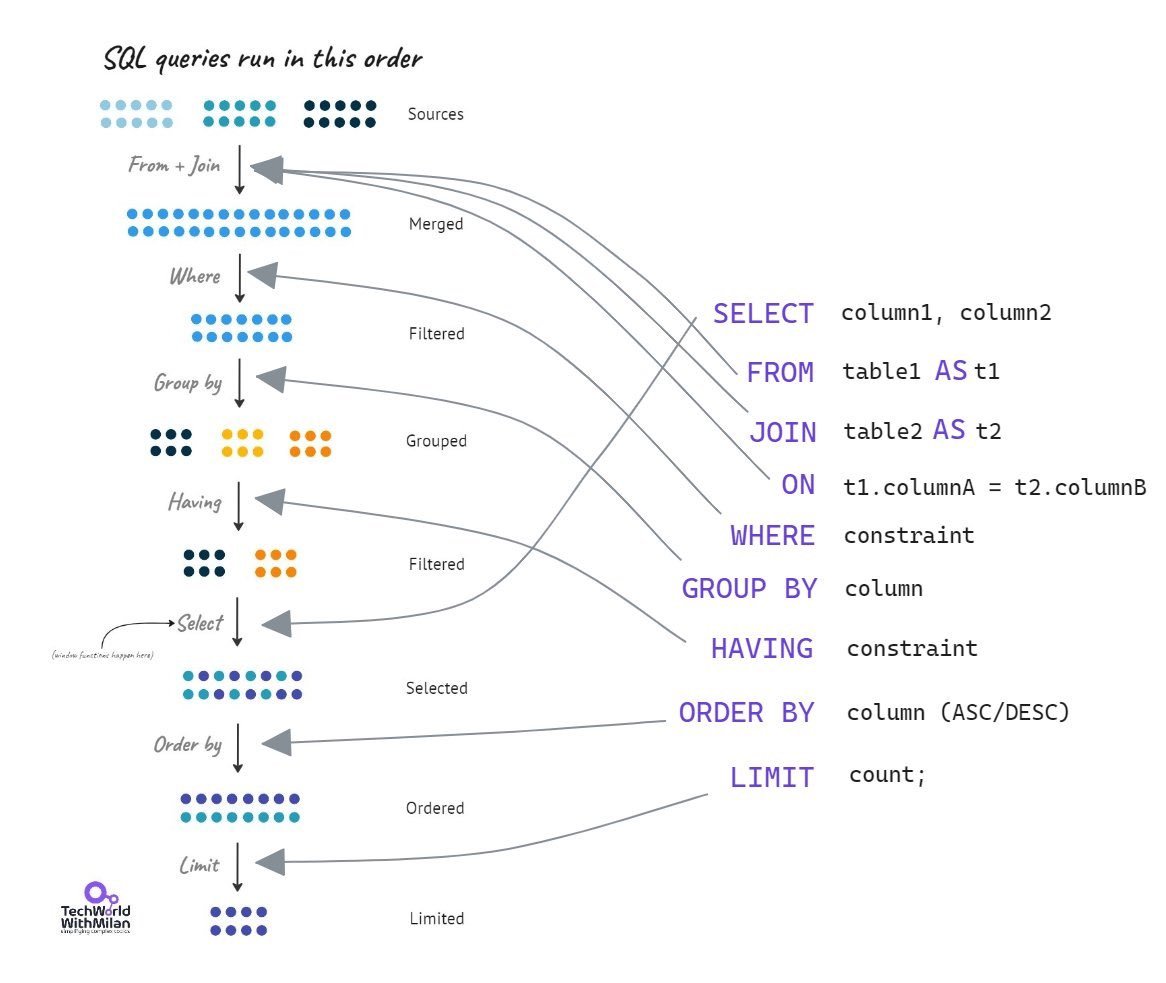
Check in the image the 𝗼𝗿𝗱𝗲𝗿 𝗶𝗻 𝘄𝗵𝗶𝗰𝗵 𝗦𝗤𝗟 𝗾𝘂𝗲𝗿𝗶𝗲𝘀 𝗿𝘂𝗻.
#technology #softwareengineering #programming #techworldwithmilan #sql
Say Goodbye to ChatGPT and hello to Bard.
Google Bard just got HUGE upgrade, and it's 10x powerful.
Here are 10 mind-blowing things you can do with Bard:
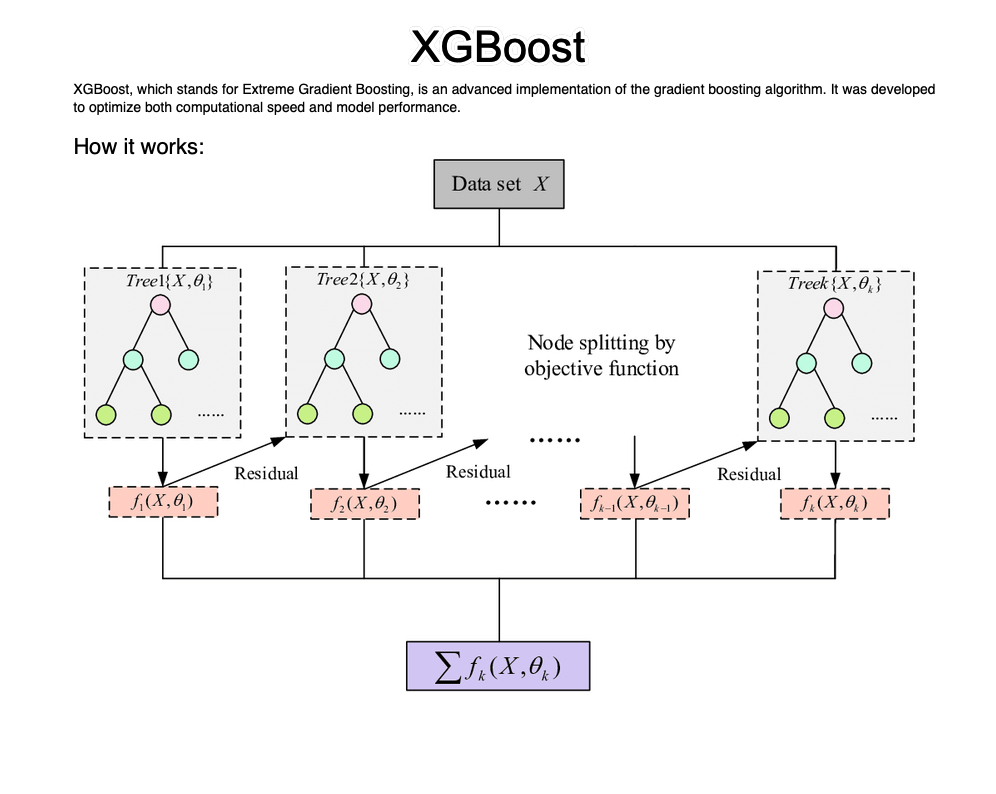
XGBoost is now the go-to number 1 must-have algorithm in my data science toolkit. But for years, I had no clue what I was doing. In 3 minutes, I’ll share 3 months of research (business case included). Let’s go:
1. XGBoost, which stands for Extreme Gradient Boosting, is an advanced implementation of the gradient boosting machine (GBM) algorithm. It was developed to optimize both computational speed and model performance.
2. Gradient Boosting Machine (GBM): GBMs are an ensemble approach that combines multiple weak learners (typically decision trees) to create a strong predictive model.
3. Difference between GBM and Random Forest: Random Forest also uses decision trees. However, the difference is how the trees are developed. GBM sequentially adds weak learners (shorter trees), where each one corrects its predecessor. RF constructs strong learners (large trees) in parallel using Bootstrap Aggregation (Bagging).
4. Performance: XGBoost is an ultra-fast implementation of GBM that includes high-efficiency, scalability, ability to handle sparse data, parallel learning, and regularization to reduce over-fitting. XGBoost tends to be more efficient than Random Forest and traditional GBM, and often provides better performance. This is why I like it so much.
5. Business Use Cases: I use XGBoost in many business cases. Let’s start with the one that made the most impact, a $12,000,000 sales increase. Lead scoring. In 2 years of developing a Lead Scoring Model that made my company $12,000,000, I used a number of different algorithms. I started with the most basic- Logistic Regression for classification probability of a customer purchasing. And over time, improved it with better algorithms, better and more complex features. The final iteration had XGBoost as a key model in the algorithm.
6. Business Use Case (Time Series): I later discovered that I could use XGBoost on time series for forecasting sales demand at the product level. This was a major improvement over less-scalable techniques (ARIMA, ETS) that had to be run iteratively on every product. We had 12,000+ products. XGBoost cut training times from 3 days to about 4 minutes. One thing to watch out for is that because it’s tree-based, XGBoost cannot predict beyond the maximum or below the minimum in a dataset. So differencing may be required.
===
There’s a lot more to learning Data Science for Business than just XGBoost. I’d like to help.
I put together a free on-demand workshop that covers the 10 skills that helped me make the transition to Data Scientist: https://t.co/LR39RJ5XKB
And if you'd like to speed it up, I have a live workshop where I'll share how to use ChatGPT for Data Science: https://t.co/EaMpKrJiqX
If you like this post, please reshare ♻️ it so others can get value.
Dive into Modern Delphi Web Development with our FREE 8-part tutorial series, "How It Works With Holger"! 🎥 Holger guides you in building a VCL app using TMS WEB Core. Elevate your Delphi skills! Explore details 👉 https://t.co/B1V32bVmvR





![KirkDBorne's tweet photo. [Download 211-page PDF]
The conceptual #Mathematics behind #MachineLearning with example-based learning: https://t.co/QpOLEEaatx
—————
#BigData #DataScience #AI #ML #LinearAlgebra #Calculus #Inference #Graphs #DirectedGraphs #DiscreteMathematics #Probability #Statistics https://t.co/iQDN1mHMDj](https://pbs.twimg.com/media/GDLjbL7WUAAQF7j.jpg)