L1s have been treated as static infrastructure for a decade.
Ship, freeze, hope demand catches up.
Today @Sei_Labs is sharing the giga roadmap, the plan for upgrading Sei into the blockchain for trading.
Giga is coming.
Introducing The Giga Roadmap.
The first public roadmap of the milestones leading to the Giga Upgrade.
Implementing the Giga Upgrade to the live network is an extraordinarily complex engineering task.
Follow every step from here to Giga: https://t.co/HrHWzi56e8
the wider acceleration of AI is pegged to 3 things you can't code or print: electricity, water and farmland
guess one could say that software ate the world but now the world is charging rent
perps are a trojan horse for an entirely new financial operating system. one where any asset with a price feed becomes tradable, 24/7, from anywhere, with transparent risk management enforced by code
their expansion into global equities is when things get really interesting
the entire history of economic progress is a story of substituting information for effort. AI has now removed knowledge as a constraint. the 'how' is now abundant. what's left, the actual scarce resource, is knowing what to do with it
develop taste. build conviction. move
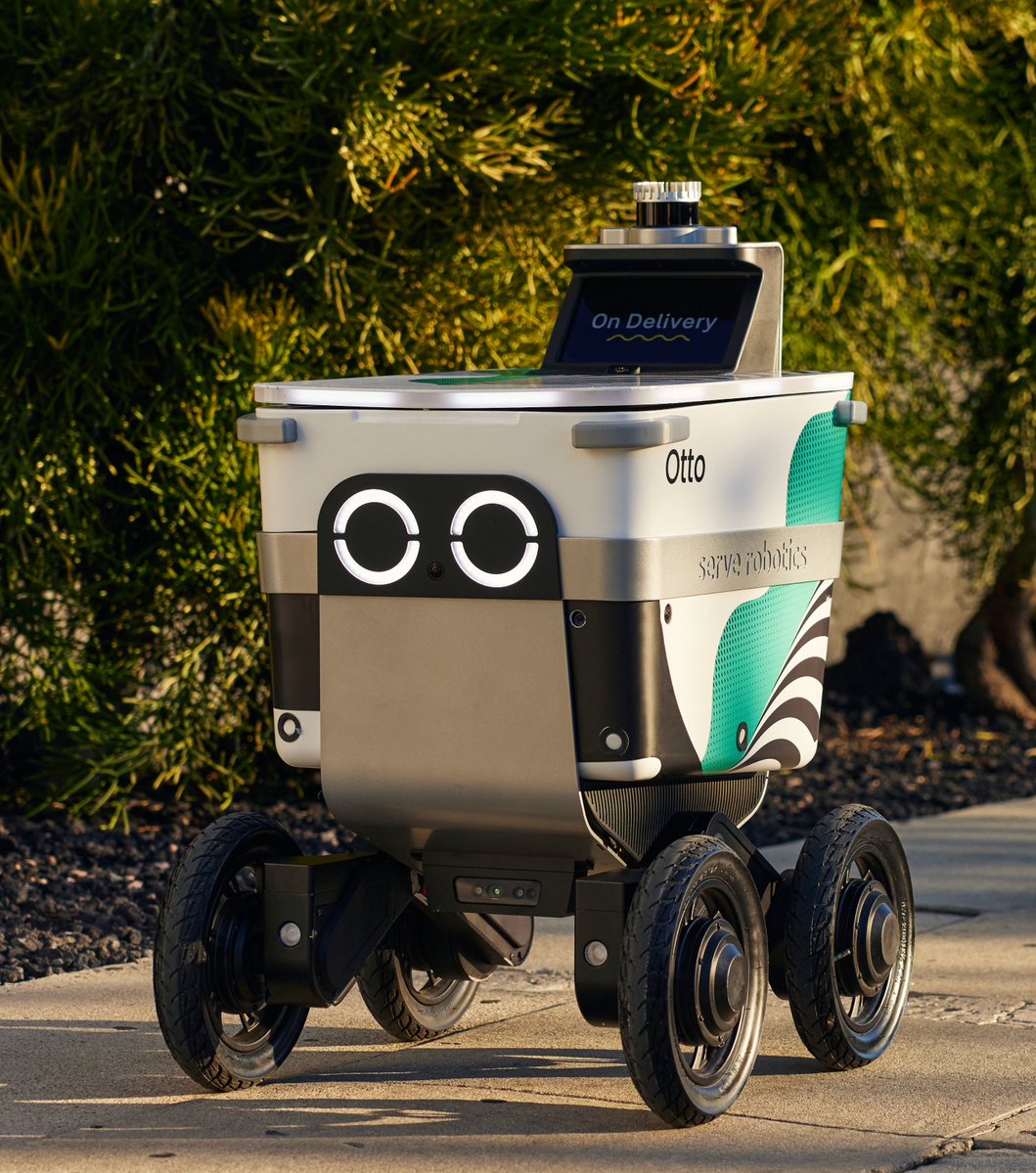
Pokemon Go players unknowingly helped train delivery robots after generating over 30 billion real-world scans through the game
That data is now being used to help autonomous robots navigate city streets
so a chinese university just published a paper of a humanoid holding tennis rallies with humans, reacting to balls travelling at 60 mph. if the s-curve on physical AI compounds the way language models did, then the world looks very different in 10 years
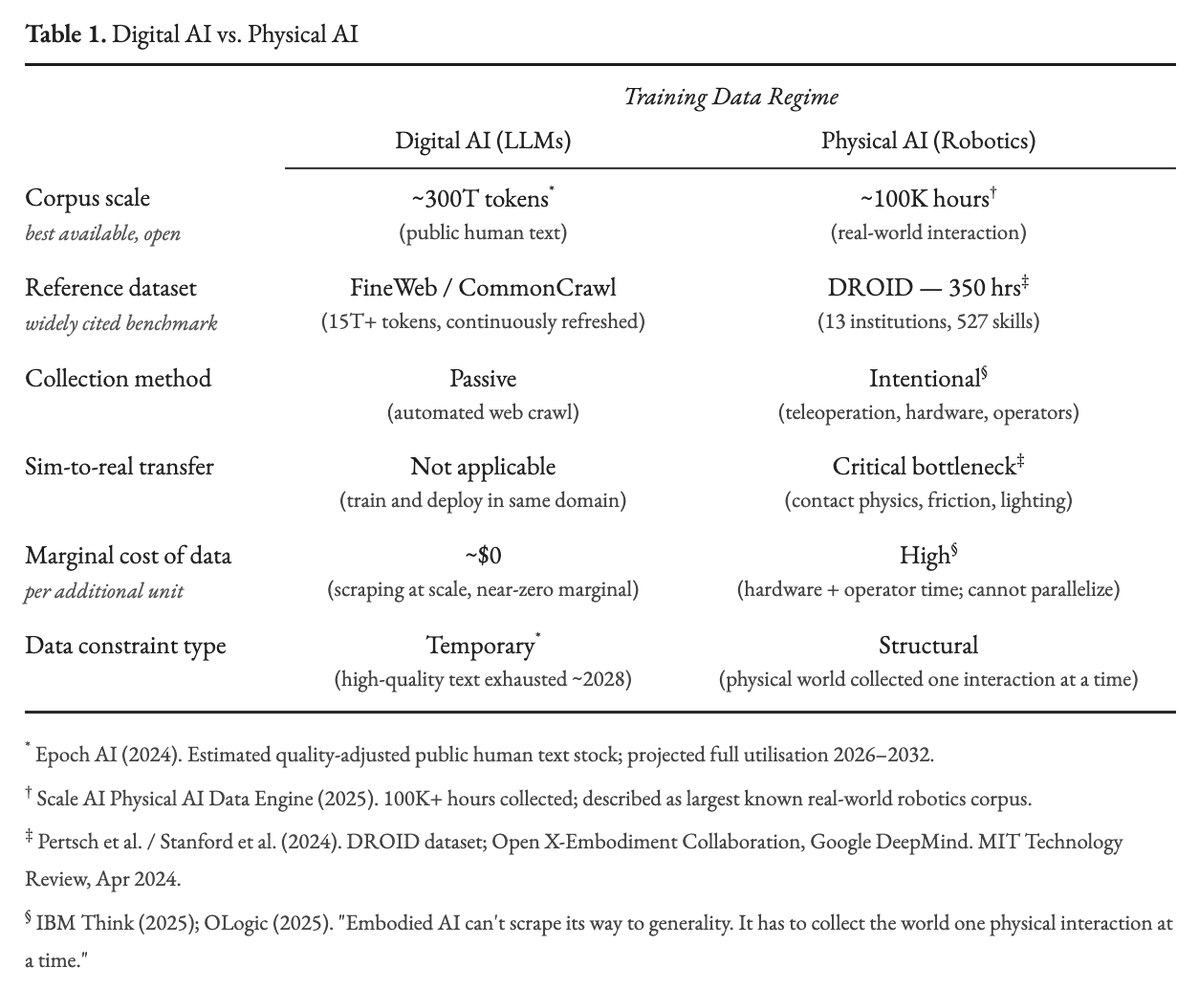
the real world has orders of magnitude less training data than the digital world
LLMs scraped the entire internet, robots have to collect the world one physical interaction at a time. goal? own the environment, shrink the problem space until your data is sufficient for the task
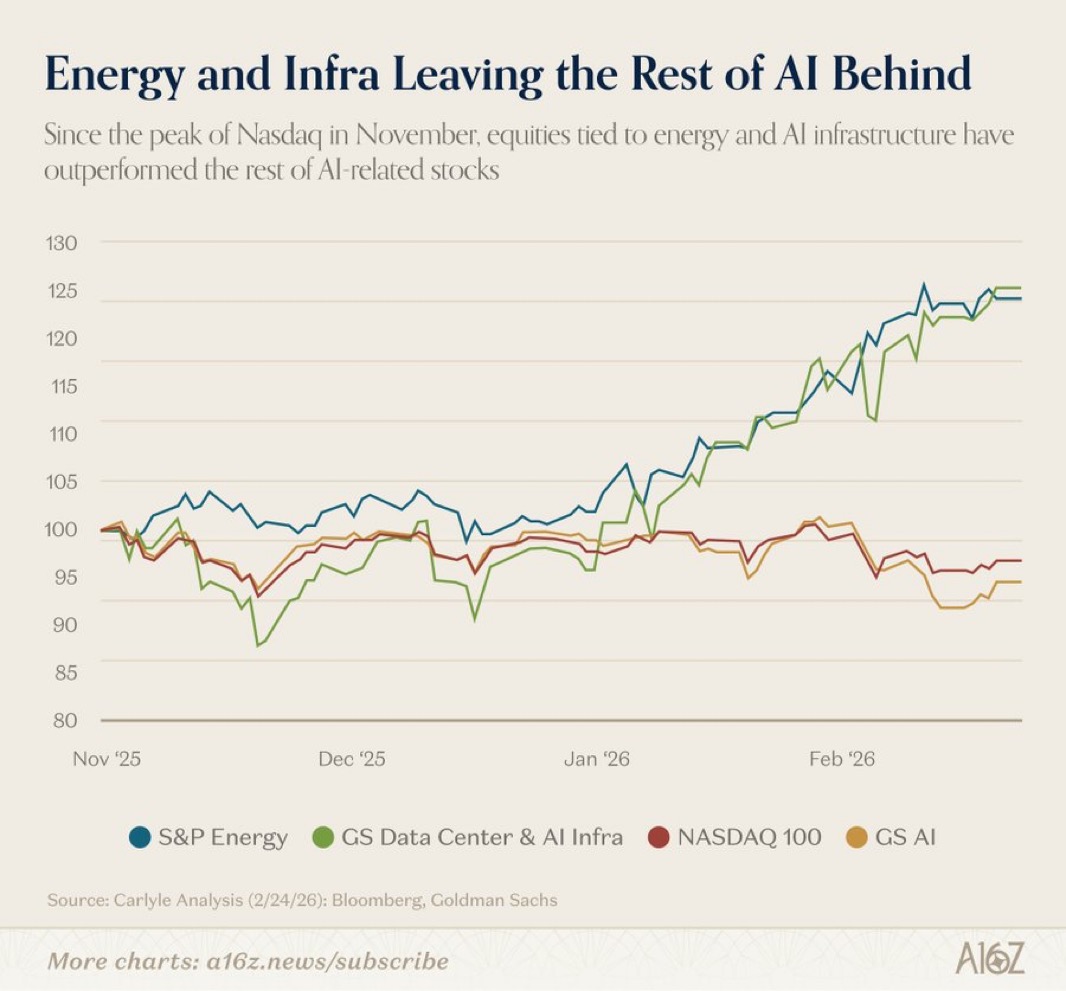
this is picks and shovels 2.0. there’s a clear shift from ‘who has the best model’ to ‘who can power the model’
every $1b in AI capex requires ~$200m in new power infrastructure that takes 3-7 years to build. hyperscalers are planning $650b combined capex this year…
youtube moment for software means the talent premium for pure engineering collapses
youtube made video free to produce, the result wasn’t millions of wealthy creators, it was one Mr Beast and a permanent long tail making nothing. software is about to follow the exact same curve
Anish Acharya: We're going to see a "YouTube moment for software":
"If you think about YouTube 20 years ago—we had lots of video and lots of television, and it was high production quality, and it wasn't clear that we needed more and 20 years later, YouTube's a $550 billion enterprise that would be one of the biggest companies in the world if it was independent."
"I think the same thing is going to happen for software. People want to make software, and for the first time they can—and they can distribute it and they can consume it."
"Sometimes it's going to be important software. Sometimes it's going to be totally trivial. It's going to be software for a bachelor party weekend, software for a joke, software for a prompt. We have this sort of seriousness about software that we had about video and television 20 years ago."
"Now it's like—I just took a video on my phone. It's going to be like—I just made an app on my phone. Same energy."
@illscience on BILLIONS with @GuillaumeMbh
when everyone can produce, nobody gets paid to produce. if software proliferates like content it kills the talent premium for pure software engineers
example: youtube destroyed the middle tier of media. the top still thrives but everything between the best and free gets gutted
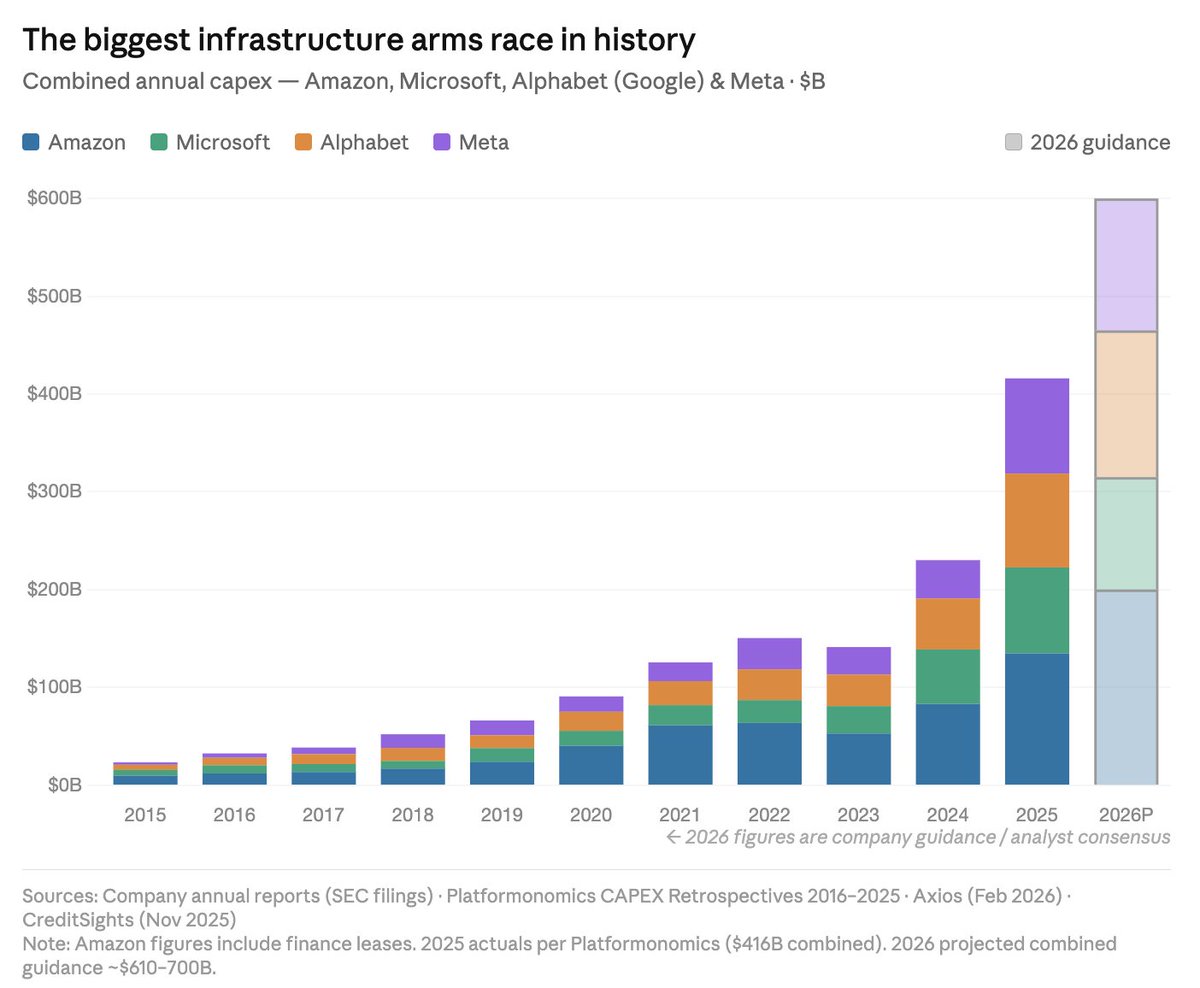
this is the biggest infrastructure arms race in history
in 2015, Amazon, Microsoft, Google and Meta spent $24 billion combined on infrastructure
in 2026, they'll spend $635 billion
the glue code era created an entire class of engineers whose primary skill was stitching together APIs and frameworks someone else built
now the field is essentially reverting to its original difficulty curve, with a rotation back to those who actually built the machines
Computer science is gradually returning to the domain of physicists, mathematicians, and electrical engineers as large language models automate much of what we currently call software engineering.
The field’s center of gravity is shifting away from manual code writing and toward deeper theoretical thinking, mathematical insight, and systems-level reasoning.
atoms are software
travis kalanick's manifesto is worth reading carefully. Atoms isn't just building robots, they're building computers made of mines, food infrastructure and transport instead of silicon
the market still prices industrials and tech as separate asset classes 🤔
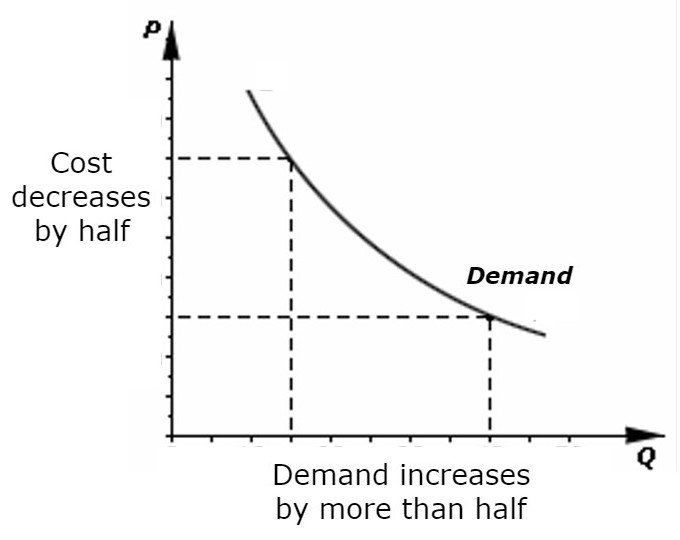
this is true, but whats also true is that inference costs have collapsed 100x+ in 3 years. frontier models like gpt-4 class performance cost ~$30-60 per million tokens. it's $0.40 today
Jevons paradox: when cost drops this fast, usage doesn't go up proportionally. it explodes
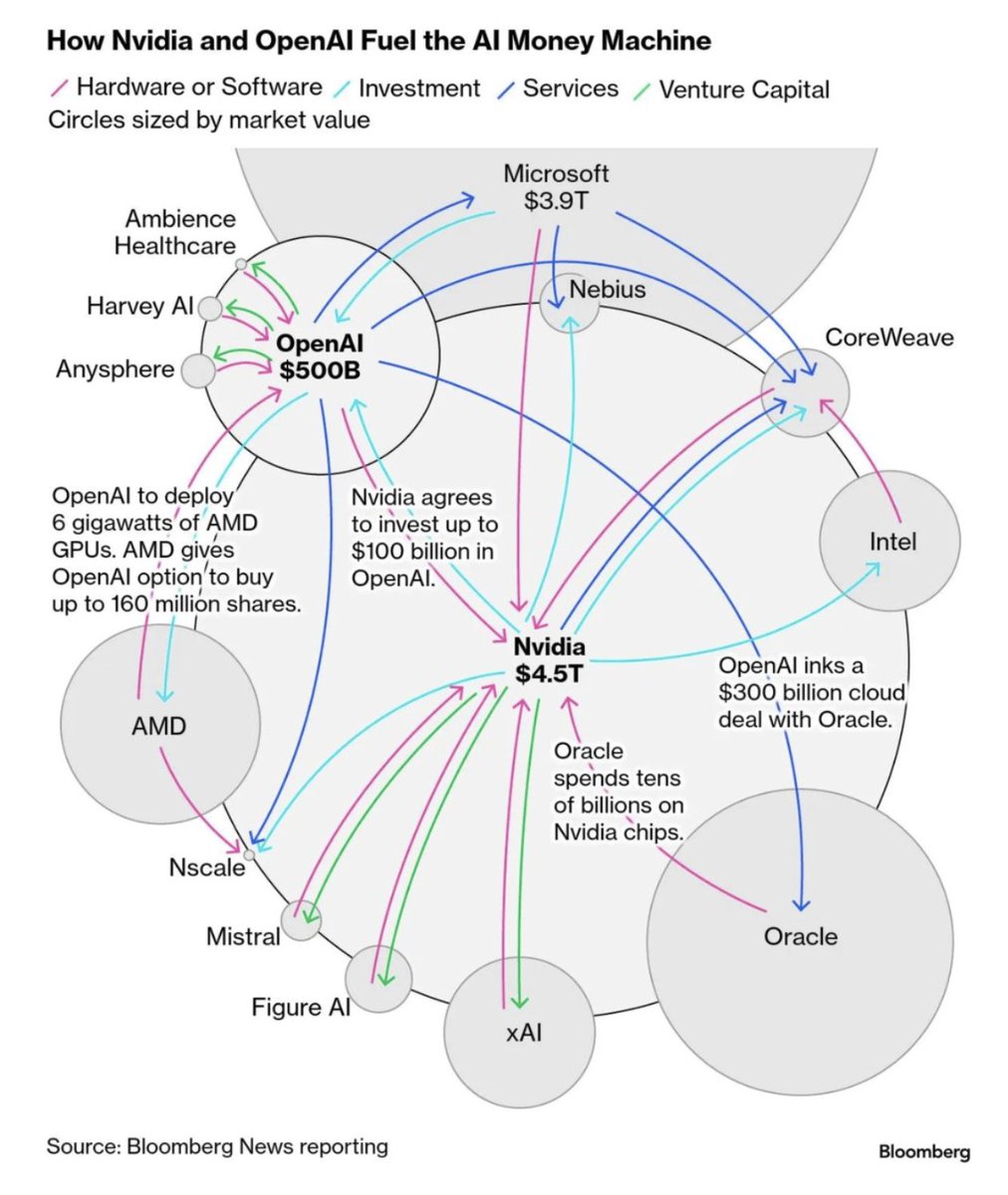
all roads lead to nvidia
they invest in openai. openai buys their chips. oracle buys their chips for openai data centers. coreweave buys their chips and rents them back to openai. nvidia then invests in coreweave
Jensen built the reserve currency of the ai economy
the moats that get drained first are the ones built on knowledge asymmetry. consulting, legal research, financial etc. anywhere the value prop was 'we know things you don't'
the moats that survive are the ones built on trust, distribution and physical constraints
last 60 days
> nyse building 24/7 blockchain stock trading platform
> nasdaq partnering with kraken to issue and distribute tokenized equities
> okx to distribute nyse tokenized equities to its users
> cme group launching 24/7 crypto futures and options
walls are coming down